Intro
If you are searching for Ahrefs Top 100 rankings, you have probably seen this message at least once:
_“We’re currently applying temporary limits to pagination in Rank Tracker to ensure platform stability and consistent data quality. Full SERP data will be restored once improvements are completed.”_
That message explains a lot.
Ahrefs does support Top 100 rank tracking, but it is:
- Updated weekly, not daily
- Frequently limited due to platform stability issues
- Subject to temporary SERP restrictions that remove full visibility
This article explains what that means in practice and why many teams move away once reliability becomes an issue.
How Ahrefs Top 100 rank tracking actually works
Ahrefs tracks rankings differently from tools built purely for rank tracking.
Here is the reality:
- Rankings are updated weekly
- Full Top 100 visibility depends on SERP pagination availability
- Pagination is sometimes temporarily restricted
- During restrictions, full SERP data is not available
- Users are asked to “wait” while fixes are applied
So while Ahrefs can track the Top 100, it does not guarantee consistent access to that data.
What “temporary pagination limits” mean for users
When Ahrefs limits pagination, this is what happens:
- Deep SERP pages are unavailable
- Positions beyond early pages may disappear
- Competitor data becomes incomplete
- Historical comparisons lose accuracy
- Rank tracking feels unstable
In other words, your rankings may still exist in Google, but the tool cannot reliably fetch or display them.
That creates uncertainty at exactly the moment when you need clarity.
Why weekly updates are already a problem
Even without stability issues, weekly-only updates create blind spots.
SEO does not move weekly. It moves daily.
When rankings update once per week:
- Volatility is hidden
- Algorithm reactions are delayed
- Link and content impact is harder to time
- Short-term gains and losses are missed
Add pagination issues on top of that, and you are no longer working with dependable data.
What this feels like in real SEO work
Users usually notice the problem when:
- Rankings stop updating without warning
- SERP depth suddenly disappears
- Competitor movements look incomplete
- Reports feel inconsistent week to week
- Trust in the data starts to drop
At that point, the issue is not features. It is confidence.
Why full, stable Top 100 tracking matters
SEO work rarely starts on page one.
The All-in-One Platform for Effective SEO
Behind every successful business is a strong SEO campaign. But with countless optimization tools and techniques out there to choose from, it can be hard to know where to start. Well, fear no more, cause I've got just the thing to help. Presenting the Ranktracker all-in-one platform for effective SEO
We have finally opened registration to Ranktracker absolutely free!
Create a free accountOr Sign in using your credentials
It starts here:
- Page 10 to page 7
- Page 7 to page 5
- Page 5 to page 3
This is where:
- Momentum builds
- Competitors emerge
- Content improvements show early signals
- Recoveries after updates begin
If Top 100 data is delayed or unavailable, those signals disappear.
How Ranktracker approaches Top 100 tracking
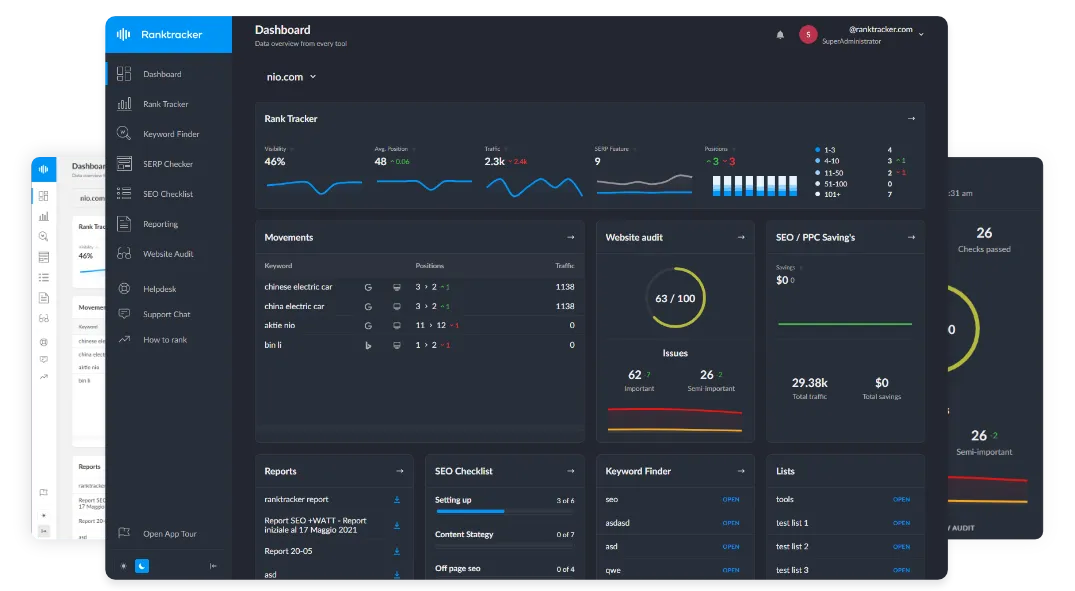
Ranktracker was rebuilt with one priority in mind: stable, complete SERP visibility.
Ranktracker provides:
- Daily Top 100 rank tracking
- Full SERP pagination, every time
- No temporary depth limits
- No reduced visibility during “maintenance”
- Consistent historical data
- Equal treatment for every keyword
If a keyword moves today, you see it tomorrow. No waiting for weekly refreshes. No missing SERP pages.
Ahrefs vs Ranktracker in simple terms
Ahrefs
- Weekly Top 100 updates
- Pagination sometimes restricted
- Full SERP visibility not guaranteed
- Rank tracking impacted by platform stability
Ranktracker
- Daily Top 100 updates
- Full SERP always fetched
- No pagination limits
- Built specifically for rank tracking
One treats rank tracking as a supporting feature. The other treats it as the core product.
Why Ahrefs users start looking for alternatives
Most users do not leave Ahrefs immediately.
They start questioning it when:
- Rankings stop updating reliably
- SERP depth disappears
- Weekly data feels too slow
- Stability messages become common
- Rank tracking becomes something they cannot fully trust
Once trust is gone, switching becomes inevitable.
Who Ahrefs rank tracking still works for
Ahrefs can still work if:
- Weekly updates are enough
- Occasional data gaps are acceptable
- Rank tracking is not mission critical
But if your SEO depends on:
- Daily decision making
- Full SERP visibility
- Reliable competitor tracking
- Consistent historical data
Then weekly updates with temporary limitations are not enough.
Bottom line
Ahrefs tracks Top 100 rankings weekly, but full SERP visibility is not always available due to ongoing pagination limits and stability issues.
Ranktracker tracks the full Top 100 daily, with no depth restrictions and no reliability warnings.
If rank tracking is something you rely on rather than tolerate, stability and frequency matter.