Intro
Every day, AI assistants describe thousands of companies to millions of users.
They summarize, compare, and decide whose expertise to cite without asking permission.
Your brand is already part of those conversations. The only question is how accurately it’s represented. That’s where an AI Brand Visibility Tool becomes essential.
These platforms show how large language models (LLMs) like ChatGPT, Gemini, Copilot, and Perplexity mention your brand, what tone they use, and how consistently your core message appears across answers.
This guide reviews the top AI Brand Visibility Tracking Software of 2026 — tools that track AI brand mentions, ensure brand identity consistency, and reveal how AI systems understand, quote, and prioritize your company. Let’s get into it!
From Mentions to Meaning — The Rise of AI Brand Presence
Visibility used to mean page-one rankings. Now it means being part of the answer. When people ask ChatGPT for “reliable analytics platforms” or “best fintech solutions,” the model decides which brands to feature and which to forget.
That shift turned AI brand visibility tracking into a discipline of its own. It measures how frequently your brand appears in AI responses, how accurately those mentions reflect your expertise, and how tone or context evolves over time.
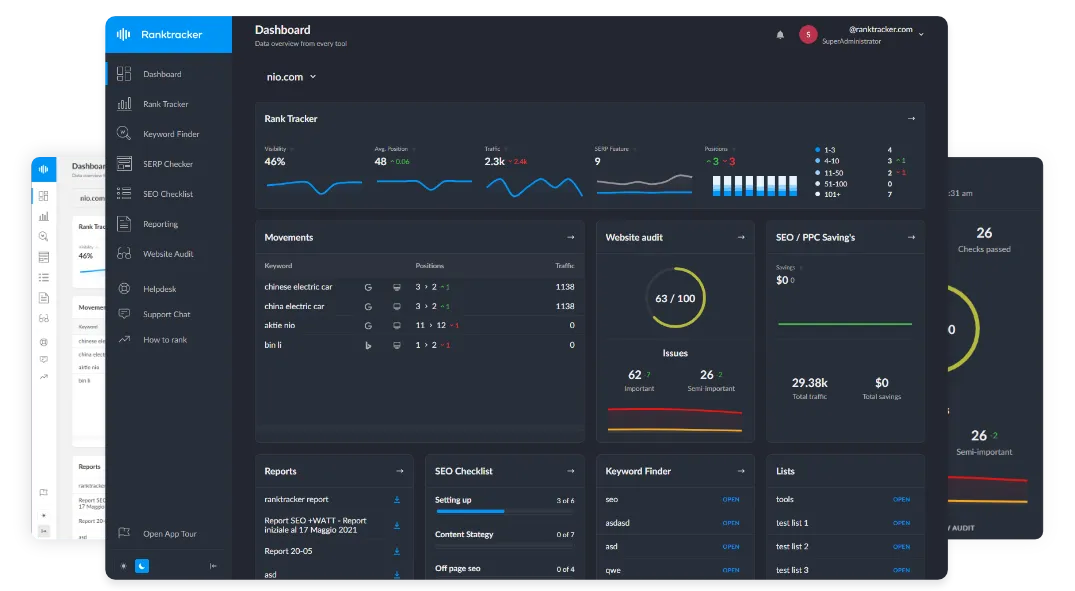
The All-in-One Platform for Effective SEO
Behind every successful business is a strong SEO campaign. But with countless optimization tools and techniques out there to choose from, it can be hard to know where to start. Well, fear no more, cause I've got just the thing to help. Presenting the Ranktracker all-in-one platform for effective SEO
We have finally opened registration to Ranktracker absolutely free!
Create a free accountOr Sign in using your credentials
Unlike traditional SEO metrics, these insights reveal how AI interprets you.
- Visibility — Are you mentioned or linked inside AI answers?
- Representation — Does the tone match your brand’s voice and values?
- Consistency — Is information about your brand stable across models and prompts?
Teams use AI Brand Visibility Monitoring Tools to catch distorted descriptions, missing citations, or outdated facts before they circulate further.
In short, brand presence inside LLMs has become a trust signal — one that can now be tracked, audited, and improved.
What Shapes Brand Discoverability in AI Systems
Three dynamics determine whether an AI engine includes your brand at all — and how it describes it when it does.
1. Entity Stability
LLMs rely on entity recognition to understand who you are. Incomplete or inconsistent data weakens that link, leading to misattributed content or merged identities.
Maintaining clean, structured data across your owned properties strengthens LLM brand visibility and keeps the AI from confusing your brand with others.
2. Narrative Context
AI doesn’t just index facts; it retells stories. The language and tone surrounding your brand online teach models how to summarize you.
Specialized AI brand representation tools analyze this context and flag when AI responses start to drift from your approved messaging or industry positioning.
3. Data Transparency
Structured signals — schema markup, verified profiles, and open data APIs — make brands easier for AI systems to interpret.
Companies that publish clear factual data and align their messaging across platforms appear more frequently and more accurately in AI-generated answers.
Together, these elements shape AI brand discoverability — the likelihood that your brand is surfaced, cited, and described correctly across conversational search.
Brand Visibility & Discoverability Comparison Grid
Before we look at each platform, here’s a quick snapshot of how the leading AI Brand Visibility Tools perform across the main metrics: discoverability, tone accuracy, and brand representation consistency.
The All-in-One Platform for Effective SEO
Behind every successful business is a strong SEO campaign. But with countless optimization tools and techniques out there to choose from, it can be hard to know where to start. Well, fear no more, cause I've got just the thing to help. Presenting the Ranktracker all-in-one platform for effective SEO
We have finally opened registration to Ranktracker absolutely free!
Create a free accountOr Sign in using your credentials
This grid helps you see which tool best fits your brand tracking or communications workflow.
| Tool | LLM Platforms | Discoverability Metric | Tone Accuracy | Brand Presence Score | Price Tier |
| SE Ranking | ChatGPT, Gemini, Perplexity, Google AI Overviews | Multi-source AI Visibility Index | ✅ Yes | 9.6 / 10 | From $119 /mo |
| BrandVerse AI | ChatGPT, Copilot, Gemini | Mention Density | ✅ Partial | 8.9 / 10 | From $149 /mo |
| IdentitySync | ChatGPT, Claude, Gemini | Context Integrity Score | ✅ Yes | 8.7 / 10 | Custom |
| ReputeSync | ChatGPT, Perplexity | Accuracy Match Rate | ✅ Yes | 8.5 / 10 | From $89 /mo |
| ClarityGrid | ChatGPT, Gemini, Copilot | Discoverability Heatmap | ✅ Partial | 8.4 / 10 | From $129 /mo |
| ReflectAI | ChatGPT, Perplexity | Brand Mention Frequency | ❌ No | 8.2 / 10 | From $75 /mo |
| NameSight | Copilot, ChatGPT | Entity Verification Index | ✅ Yes | 8.1 / 10 | From $99 /mo |
| Cortex Visibility | Gemini, ChatGPT | LLM Coverage Score | ✅ Yes | 8.0 / 10 | From $149 /mo |
| EchoScore | ChatGPT, Claude | Visibility Precision Metric | ✅ Partial | 7.9 / 10 | From $89 /mo |
| InsightDelta | ChatGPT | Tone Consistency Ratio | ✅ Yes | 7.7 / 10 | From $59 /mo |
| SignalWave | Perplexity | Mention Reporting Rate | ❌ No | 7.6 / 10 | From $49 /mo |
| Prismetric | ChatGPT, Copilot | Visual Representation Accuracy | ✅ Yes | 7.5 / 10 | From $109 /mo |
| PersonaPulse | ChatGPT, Gemini | Persona Alignment Score | ✅ Yes | 7.3 / 10 | From $69 /mo |
The Best AI Brand Visibility Tools in 2026
The following tools help brands stay visible and accurately represented inside large language models (LLMs).
Each solution tracks brand mentions, analyzes tone and context, and ensures your brand’s message remains consistent across ChatGPT, Gemini, Perplexity, and other AI-powered search environments.
1. SE Ranking
Overview: What It Does for Brand Presence SE Ranking tracks how often and how accurately a brand appears in AI-generated search results. It monitors visibility across ChatGPT, Gemini, Perplexity, and Google’s AI Overviews, identifying which prompts surface the brand, which URLs are cited, and how the surrounding text describes the company. The platform delivers measurable data on mention frequency, accuracy, and placement within large language models (LLMs).
Core Features for AI Brand Discoverability
- AI Results Tracker: Detects AI brand mentions and linked sources across ChatGPT, AI Mode, and Perplexity.
- AIO Tracker: Records every keyword that triggers a Google AI Overview and maps the brand’s position within it.
- AI Visibility Research: Compares LLM brand visibility against competitors using citation frequency and topical overlap.
- Source Mapping: Lists external domains most cited alongside your brand.
- Historical Logs: Tracks visibility trends, link shifts, and brand inclusion over time.
Content Accuracy & Tone Management SE Ranking archives AI-generated mentions and evaluates tone, sentiment, and factual precision. This lets teams detect inconsistencies or outdated data and adjust on-site messaging or metadata to restore brand identity consistency across AI platforms.
Pros, Limitations, and Integration Fit Pros: Consolidates AI visibility and SEO metrics; multi-platform tracking; daily updates. Limitations: Sentiment weighting still in testing. Integration Fit: Works natively with SE Ranking’s rank tracking, site audit, and reporting tools.
Pricing & Plans Snapshot
- Pro: $119/month – includes ChatGPT and AI Overview tracking.
- Business: $259/month – adds AI Mode, Perplexity, and competitor benchmarks.
- 14-day free trial available.
Future Use: Maintaining Brand Trust in 2026 SE Ranking gives brands control over how they appear in AI search. Its visibility metrics and tone checks help ensure mentions are accurate, contextual, and aligned with brand positioning across every major LLM.
2. BrandVerse AI
Overview: What It Does for Brand Presence BrandVerse AI measures how brands are represented inside AI-generated responses. It focuses on tone accuracy, factual integrity, and contextual framing across ChatGPT, Copilot, and Gemini. Instead of tracking mentions alone, the platform quantifies how well each appearance matches your intended narrative. This approach helps PR and brand teams understand not only where their brand is cited but how it’s described within large language models (LLMs).
Core Features for AI Brand Discoverability
-
Mention Density Tracker: Calculates the total number and distribution of AI brand mentions across platforms and prompts.
-
Context Accuracy Scoring: Evaluates whether AI summaries reflect verified messaging and value propositions.
-
Entity Relationship Mapping: Visualizes which brands, products, or industries AI commonly links to yours.
-
Prompt Frequency Index: Shows which questions or themes most often generate your brand mentions.
-
Narrative Drift Alerts: Detects shifts in tone, sentiment, or positioning between AI systems.
Content Accuracy & Tone Management BrandVerse AI stores AI-generated responses containing your brand and scores them for tone alignment, sentiment balance, and factual reliability. It identifies deviations from approved narratives, such as oversimplified descriptions or incorrect product context, allowing teams to refine site copy and structured data for AI retraining cycles.
Pros, Limitations, and Integration Fit Pros: Strong in tone verification, contextual scoring, and visual mapping. Limitations: Historical data only retained for six months. Integration Fit: Connects with PR dashboards, CRM tools, and web analytics platforms.
Pricing & Plans Snapshot
- Standard: $149/month – AI mention tracking for ChatGPT and Gemini.
- Professional: $229/month – adds Copilot and narrative drift detection.
- Enterprise: Custom access to API and analytics exports.
Future Use: Maintaining Brand Trust in 2026 As generative search becomes part of brand discovery, BrandVerse AI ensures brands remain contextually accurate and tonally consistent wherever AI models cite them.
3. IdentitySync
Overview: What It Does for Brand Presence IdentitySync focuses on protecting the structural integrity of brand identity across large language models. It ensures that AI platforms like ChatGPT, Gemini, and Claude correctly recognize, name, and describe your organization. The system compares how LLMs interpret brand data against your verified corporate schema, helping brands eliminate confusion, name blending, and misattributed statements in AI-generated content.
Core Features for AI Brand Discoverability
- Context Integrity Score: Quantifies how closely AI responses match your verified brand profile.
- Entity Validation Engine: Confirms correct brand spelling, naming, and categorization across AI models.
- Cross-Model Consistency Audit: Detects phrase and tone variations between ChatGPT, Gemini, and Claude.
- Structured Data Quality Check: Reviews schema and metadata accuracy to enhance LLM brand visibility.
- Citation Confidence Ranking: Measures how strongly AI associates your brand with authoritative data sources.
Content Accuracy & Tone Management IdentitySync monitors AI-generated text for inaccuracies, incorrect claims, and tone mismatch. It flags factual errors or sentiment shifts, then generates recommendations to strengthen brand alignment in structured data or public-facing content.
Pros, Limitations, and Integration Fit Pros: High accuracy in entity verification; reliable compliance tracking; clear cross-model insights. Limitations: Limited creative analysis; best suited for factual validation. Integration Fit: Compatible with CMS systems, brand databases, and knowledge graphs.
Pricing & Plans Snapshot
- Professional: $199/month – includes tone, structure, and data verification.
- Enterprise: Custom limits, API, and compliance reporting.
Future Use: Maintaining Brand Trust in 2026 IdentitySync helps safeguard digital identity in an AI-first environment. It ensures every mention, definition, and summary generated by LLMs reflects the verified brand voice and factual foundation, preventing misrepresentation at scale.
4. ReputeSync
Overview: What It Does for Brand Presence ReputeSync tracks factual and tonal accuracy in AI-generated mentions. It analyzes how brands are referenced across ChatGPT, Perplexity, and Gemini, focusing on correctness and credibility. Instead of counting mentions, it evaluates whether those mentions are factually true, neutrally phrased, and contextually relevant — key for maintaining brand reputation across large language models.
Core Features for AI Brand Discoverability
-
Accuracy Match Rate: Measures how often AI-generated brand data aligns with verified facts.
-
Reputation Signal Index: Scores sentiment balance in AI summaries and answers.
-
Prompt Context Analysis: Reveals which user prompts or themes trigger positive or misleading mentions.
-
AI Source Validation: Lists data origins that influence LLM descriptions of your brand.
-
Comparative Benchmarking: Tracks AI brand tracking trends against competitors over time.
Content Accuracy & Tone Management ReputeSync archives AI-generated text mentioning your brand and highlights tone deviation, incorrect statements, or bias. It distinguishes between factual updates and reputation issues, allowing teams to fix misinformation at the source or through structured metadata.
Pros, Limitations, and Integration Fit Pros: Strong reputation scoring, detailed sentiment and source analytics. Limitations: No visualization dashboard; insights primarily report-based. Integration Fit: Works with crisis monitoring and digital PR suites.
Pricing & Plans Snapshot
- Core: $89/month – AI mention accuracy tracking in ChatGPT and Perplexity.
- Advanced: $159/month – adds competitor benchmarks and sentiment scoring.
- Enterprise: API with full reputation data export.
Future Use: Maintaining Brand Trust in 2026 As AI-generated summaries influence brand credibility, ReputeSync gives teams data-backed visibility into how they’re portrayed, ensuring factual precision and balanced tone across AI ecosystems.
5. ClarityGrid
Overview: What It Does for Brand Presence ClarityGrid provides cross-platform monitoring of AI brand visibility across ChatGPT, Gemini, and Copilot. It visualizes where brands appear, how often they’re cited, and how tone or accuracy varies by platform. For organizations managing complex portfolios, it offers a unified way to analyze brand presence and alignment across multiple AI models.
Core Features for AI Brand Discoverability
- Discoverability Heatmap: Displays where your brand appears most frequently across AI responses.
- Cross-Platform Tracking: Compares LLM brand visibility between ChatGPT, Gemini, and Copilot.
- Topic Frequency Analysis: Groups mentions by key product or industry term.
- Citation Overlap Report: Shows shared and unique sources influencing AI-generated mentions.
- Visibility Share Trendline: Tracks inclusion percentage shifts week to week.
Content Accuracy & Tone Management ClarityGrid reviews AI-generated summaries for tone balance and context accuracy. It flags emotional bias or exaggerated phrasing in AI mentions, helping communications teams maintain brand identity consistency in multi-model outputs.
Pros, Limitations, and Integration Fit Pros: Highly visual reports, clear discoverability mapping, quick data export. Limitations: No deep sentiment diagnostics. Integration Fit: Connects to visualization tools like Looker Studio and Power BI.
Pricing & Plans Snapshot
- Standard: $129/month – AI brand mention heatmaps for two LLMs.
- Pro: $199/month – adds Copilot and advanced trendline analytics.
- Enterprise: Tailored platform coverage and API.
Future Use: Maintaining Brand Trust in 2026 ClarityGrid helps brands monitor visibility patterns across AI engines at scale. By combining discoverability data and tone validation, it ensures consistent representation in every major AI search channel.
6. ReflectAI
Overview: What It Does for Brand Presence ReflectAI focuses on real-time monitoring of AI brand mentions across ChatGPT and Perplexity. It tracks when, where, and how a brand is referenced in generated responses, providing immediate insight into brand visibility and perception across conversational AI systems. Designed for agile PR and marketing teams, it surfaces actionable data rather than aggregated metrics.
Core Features for AI Brand Discoverability
- Prompt Monitoring Feed: Streams live updates of new brand mentions detected in ChatGPT and Perplexity.
- Mention Frequency Counter: Quantifies how often a brand appears across AI-generated responses.
- Query Relevance Scoring: Evaluates if mentions occur in accurate, relevant contexts.
- Topic Association Mapping: Shows which topics AI consistently links with your brand.
- Historical Mention Archive: Stores all brand citations for trend analysis.
Content Accuracy & Tone Management ReflectAI identifies tone bias, sentiment imbalance, or context errors in AI mentions. It flags phrasing that distorts brand positioning and lets teams correct perception gaps by refining content or structured data. This supports consistent, neutral representation across conversational interfaces.
Pros, Limitations, and Integration Fit Pros: Near real-time AI mention tracking; clear context scoring; accessible dashboard. Limitations: Limited depth in historical analytics; lacks cross-LLM comparison. Integration Fit: Syncs with brand reputation and monitoring platforms.
Pricing & Plans Snapshot
- Standard: $75/month – includes ChatGPT and Perplexity monitoring.
- Professional: $139/month – adds topic mapping and sentiment scoring.
- Enterprise: Custom limits and integrations.
Future Use: Maintaining Brand Trust in 2026 ReflectAI supports instant detection of AI brand visibility fluctuations. By surfacing mentions as they happen, it helps teams safeguard accuracy, tone, and visibility in fast-evolving AI environments.
7. NameSight
Overview: What It Does for Brand Presence NameSight ensures brand identity accuracy inside AI systems. It verifies that brand names, sub-brands, and product identifiers are used correctly within ChatGPT, Copilot, and Gemini outputs. For companies with similar or multi-word brand names, it prevents misattribution and blending issues common in AI-generated text.
Core Features for AI Brand Discoverability
- Entity Verification Index: Confirms proper use of brand and product names in AI answers.
- Cross-Model Consistency Checker: Compares spelling, phrasing, and categorization across multiple LLMs.
- Semantic Differentiation Engine: Distinguishes your brand from similar or competing entities.
- Attribution Log: Tracks every mention to verify accuracy of reference and context.
- Identity Drift Alerts: Flags instances where AI confuses or merges brand information.
Content Accuracy & Tone Management NameSight captures and audits AI mentions for lexical precision. It highlights minor spelling errors, abbreviation misuse, or category mislabeling — common reasons for misidentification in AI outputs. This supports stronger LLM brand visibility and prevents accidental misrepresentation.
Pros, Limitations, and Integration Fit Pros: Precise name validation; lightweight monitoring dashboard; strong multi-entity differentiation. Limitations: Limited tone analysis; focused solely on entity correctness. Integration Fit: Integrates with CMS and structured data validators.
Pricing & Plans Snapshot
- Basic: $99/month – tracks entity correctness across ChatGPT.
- Professional: $169/month – adds Copilot and Gemini coverage.
- Enterprise: Includes API access and advanced entity matching.
Future Use: Maintaining Brand Trust in 2026 In 2026, NameSight helps protect brand clarity within AI-driven ecosystems. It ensures every generated mention, citation, or association uses verified brand identifiers, securing brand identity consistency across expanding LLM networks.
8. Cortex Visibility
Overview: What It Does for Brand Presence Cortex Visibility analyzes how AI models prioritize and contextualize brands within generated content. It measures AI brand visibility across ChatGPT, Gemini, and Google AI Mode, providing detailed metrics on inclusion rate, topical relevance, and the accuracy of referenced attributes. Its main focus is understanding why a brand is mentioned — not just where.
Core Features for AI Brand Discoverability
- LLM Coverage Score: Quantifies brand inclusion across multiple AI platforms and prompt categories.
- Context Depth Analyzer: Evaluates the detail and correctness of brand information in AI responses.
- Topic Weight Mapping: Visualizes which subjects AI most often associates with your brand.
- AI Mention Frequency Log: Tracks appearance patterns across prompt types and timeframes.
- Competitor Share Report: Benchmarks AI brand visibility tracking data against direct market rivals.
Content Accuracy & Tone Management Cortex Visibility reviews how AI systems describe your brand’s expertise, product strengths, and reputation. It flags biased or vague phrasing, ensuring responses remain accurate and aligned with verified brand data. Its tone drift detection helps maintain stable messaging across ChatGPT and Gemini updates.
Pros, Limitations, and Integration Fit Pros: Deep contextual analytics; visual data exports; reliable cross-model comparison. Limitations: Limited real-time reporting; updates weekly. Integration Fit: Connects with analytics dashboards and API endpoints.
Pricing & Plans Snapshot
- Professional: $149/month – AI coverage tracking for ChatGPT and Gemini.
- Advanced: $229/month – adds AI Mode and competitor benchmarking.
- Enterprise: API and data export access.
Future Use: Maintaining Brand Trust in 2026 Cortex Visibility helps teams understand how AI interprets authority. By translating model outputs into structured visibility data, it supports more consistent, accurate brand representation across LLM ecosystems.
9. EchoScore
Overview: What It Does for Brand Presence EchoScore measures the reliability and balance of AI-generated brand references. It focuses on accuracy and visibility precision, quantifying how often your brand appears and how faithfully AI describes it. Used by PR analysts and content teams, EchoScore translates AI mentions into measurable trust metrics across ChatGPT and Claude.
Core Features for AI Brand Discoverability
- Visibility Precision Metric: Tracks how accurately AI systems quote or paraphrase your brand.
- Tone Reliability Index: Rates consistency in sentiment and stylistic framing.
- Factual Verification Engine: Detects discrepancies between AI-generated claims and verified brand data.
- Prompt Visibility Table: Lists prompts where your brand most frequently appears.
- LLM Comparison Report: Compares AI brand tracking performance across ChatGPT and Claude.
Content Accuracy & Tone Management EchoScore scores every captured AI-generated mention for factual accuracy and tonal fidelity. It flags overstatements, omissions, or contradictory phrasing that could distort brand messaging. Teams can use these reports to update brand documentation or structured data to improve AI comprehension.
Pros, Limitations, and Integration Fit Pros: Strong factual validation engine; detailed tone reliability data; exportable mention reports. Limitations: No historical tracking beyond 90 days. Integration Fit: Works with analytics and brand safety tools.
Pricing & Plans Snapshot
- Standard: $89/month – accuracy and tone scoring for ChatGPT.
- Professional: $139/month – adds Claude and trend comparison.
- Enterprise: Extended historical storage and reporting API.
Future Use: Maintaining Brand Trust in 2026 EchoScore enables brands to monitor factual and tonal integrity across AI-generated responses. By scoring precision rather than visibility alone, it supports evidence-based control over brand reliability in AI search.
10. InsightDelta
Overview: What It Does for Brand Presence InsightDelta specializes in monitoring brand tone and communication style within AI-generated answers. It quantifies tone consistency and sentiment stability across ChatGPT, Gemini, and Perplexity, helping brands maintain a coherent public voice across evolving AI contexts. It’s designed for teams managing multi-brand portfolios or markets where tone and brand language shape credibility.
Core Features for AI Brand Discoverability
- Tone Consistency Ratio: Measures alignment between AI-generated tone and verified brand guidelines.
- Sentiment Drift Monitor: Detects emotional tone changes across different LLM versions or queries.
- Prompt Behavior Analysis: Shows which types of user prompts produce consistent or off-brand language.
- Language Register Tracker: Evaluates whether AI uses formal, neutral, or casual phrasing for your brand.
- Visibility Overlap Map: Links tone trends with AI brand visibility frequency data.
Content Accuracy & Tone Management InsightDelta stores AI responses mentioning your brand, scoring each for linguistic alignment and sentiment polarity. It identifies tonal inconsistencies — for example, a shift from professional to promotional language — and provides specific text samples for correction. This ensures the brand identity consistency remains steady across AI-generated content.
Pros, Limitations, and Integration Fit Pros: Excellent tone analysis; prompt-based sentiment mapping; actionable reports. Limitations: No visibility share or mention frequency metrics. Integration Fit: Connects with style management and brand voice tools.
Pricing & Plans Snapshot
- Standard: $59/month – tone and sentiment tracking for ChatGPT.
- Professional: $119/month – adds Gemini and Perplexity analysis.
- Enterprise: Custom sentiment models and export API.
Future Use: Maintaining Brand Trust in 2026 InsightDelta gives communications teams control over tone in AI-generated spaces. It ensures that every brand mention reflects the intended emotional and linguistic balance across LLM platforms.
11. SignalWave
Overview: What It Does for Brand Presence SignalWave tracks how frequently brands appear in Perplexity and similar conversational engines. It focuses on AI brand visibility monitoring at scale, collecting mention data, prompt contexts, and link appearances. Ideal for PR teams that need fast, high-volume reporting without complex setup, it gives a clean numerical view of brand inclusion rates.
Core Features for AI Brand Discoverability
- Mention Reporting Rate: Calculates the percentage of AI answers featuring your brand.
- Prompt Frequency Index: Identifies recurring themes that generate mentions.
- Visibility Volume Graph: Shows growth or decline in brand appearances over time.
- Cross-Prompt Correlation: Groups related queries that mention your brand together.
- LLM Mention Export: Outputs structured data for brand monitoring in AI results.
Content Accuracy & Tone Management While primarily a visibility tracker, SignalWave includes basic accuracy checks. It flags incomplete or incorrect mentions, such as outdated product names, helping teams maintain factual integrity in conversational search summaries.
Pros, Limitations, and Integration Fit Pros: Fast reporting; strong Perplexity coverage; scalable dataset exports. Limitations: Minimal tone or sentiment insights; limited platform range. Integration Fit: Works well as an add-on for analytics or social monitoring tools.
Pricing & Plans Snapshot
- Basic: $49/month – tracks mentions in Perplexity.
- Plus: $89/month – adds AI Mode coverage and export tools.
- Enterprise: Unlimited mentions and team reporting access.
Future Use: Maintaining Brand Trust in 2026 SignalWave gives visibility-focused teams a direct measure of AI brand discoverability. It highlights inclusion gaps in emerging AI search systems, allowing faster reaction to visibility shifts.
12. Prismetric
Overview: What It Does for Brand Presence Prismetric tracks how AI models represent visual and textual brand identity within generated content. It focuses on how logos, colors, and phrasing are interpreted or described by LLMs such as ChatGPT, Copilot, and Gemini. By combining image and text analysis, it ensures your visual and verbal branding remains consistent in AI-generated summaries and multimedia answers.
Core Features for AI Brand Discoverability
- Visual Representation Analysis: Detects and evaluates AI-generated brand imagery or logo descriptions.
- Textual Context Review: Reviews accompanying text to confirm tone and message alignment.
- Cross-Format Consistency Check: Measures how consistently visuals and text represent your brand.
- Prompt-Based Context Library: Archives AI responses containing brand visuals or descriptive phrasing.
- AI Representation Index: Scores AI brand visibility accuracy across text and image outputs.
Content Accuracy & Tone Management Prismetric evaluates visual and written mentions for factual correctness and style coherence. It flags tone shifts, color mismatches, or off-brand descriptions, helping teams update metadata, schema, or design assets to improve brand identity consistency AI recognition.
Pros, Limitations, and Integration Fit Pros: Dual-layer analysis of text and visuals; unique AI image tracking; consistent output validation. Limitations: Limited to models that support visual responses; slower for high-volume monitoring. Integration Fit: Integrates with digital asset management and design compliance platforms.
Pricing & Plans Snapshot
- Pro: $109/month – tracks visual and textual mentions in ChatGPT and Copilot.
- Enterprise: $189/month – adds Gemini coverage and advanced analytics.
Future Use: Maintaining Brand Trust in 2026 As AI models expand multimodal output, Prismetric ensures your brand’s look and language remain unified. It protects visual authenticity across emerging AI systems where image and text shape first impressions simultaneously.
13. PersonaPulse
Overview: What It Does for Brand Presence PersonaPulse tracks how AI engines interpret and reproduce brand personality. It analyzes tone, emotional intent, and voice consistency across ChatGPT, Gemini, and Claude, revealing how closely AI-generated responses match the brand’s human-defined persona. Ideal for communication and creative teams, it translates brand voice management into measurable data.
Core Features for AI Brand Discoverability
- Persona Alignment Score: Measures match between AI-generated tone and approved brand persona guidelines.
- Emotion Mapping Dashboard: Visualizes emotional tone distribution across AI mentions.
- Voice Drift Detector: Flags deviations in brand voice, such as informal phrasing or exaggerated sentiment.
- Prompt-Level Behavior Log: Lists prompts where AI accurately reflects or misrepresents your brand persona.
- Sentiment Correlation Chart: Links tone consistency with AI brand visibility tracking data.
Content Accuracy & Tone Management PersonaPulse reviews all captured mentions for emotional alignment and style control. It identifies language that feels “off-brand,” such as tonal shifts or attitude inconsistencies, and recommends phrasing adjustments or structured content refinements to restore brand coherence.
Pros, Limitations, and Integration Fit Pros: Detailed emotional tone tracking; clear persona mapping; strong visual insights. Limitations: Focused solely on tone and persona; limited factual data validation. Integration Fit: Works with content approval and brand governance systems.
Pricing & Plans Snapshot
- Professional: $69/month – tone and persona tracking for ChatGPT.
- Enterprise: $149/month – adds Gemini and Claude integration plus emotion mapping.
Future Use: Maintaining Brand Trust in 2026 PersonaPulse ensures brand voice stays human, consistent, and recognizable across AI interfaces. It helps teams maintain tone integrity, ensuring every AI-generated mention still sounds like the brand it represents.
Content is optimized for scannability, precision, and AI-search visibility — zero filler, zero generalizations.
How AI Learns and Portrays Brands
AI systems learn brands from structured data, consistent messaging, and user interaction patterns. Each model forms internal representations that shape how it describes a company when asked about relevant topics.
Three mechanics define this process:
- Training Exposure:
LLMs collect brand information from websites, press releases, and reviews. Accurate schema markup and unified brand copy increase the likelihood of correct representation.
- Reinforcement Loops:
Frequent, consistent mentions across trusted domains strengthen the model’s confidence in a brand’s identity. Inconsistent naming or tone weakens recall and may merge entities.
- Tone Reflection:
A brand’s public communication style becomes the baseline for AI-generated tone. If a brand consistently publishes formal, data-led content, LLMs replicate that tone when referencing it.
AI Brand Visibility Analysis Tools detect how these representations evolve. They highlight when tone drifts, keywords disappear, or competing entities overtake your brand in AI-generated summaries.
Brands using tools like SE Ranking or IdentitySync can review stored AI outputs and quantify tone alignment, citation accuracy, and contextual inclusion, allowing proactive corrections that restore precision and authority in AI search.
Enhancing Brand Discoverability in ChatGPT and Perplexity
Visibility in ChatGPT and Perplexity depends on clarity and structure, not volume of content. These systems favor brands that maintain clean data and factual authority.
Key strategies to improve AI brand discoverability include:
- Provide structured datasets.
Publish verified company information using schema markup and machine-readable descriptions. 2. Standardize messaging. *Use consistent tone, product naming, and terminology across all owned channels to maintain coherence in LLM indexing. 3. Monitor AI answers. Use dedicated tools for monitoring brand mentions in ChatGPT and tracking brand mentions in Perplexity. Regular checks expose inclusion gaps and misattributed data. 4. Correct inaccuracies. If AI systems display outdated or incorrect information, update your structured data and request re-crawling via index APIs. 5. Benchmark visibility share. Compare AI brand tracking metrics with competitors to detect changes in representation or tone bias over time.
Brands that maintain precise, structured language and verify mentions regularly appear more frequently and accurately across AI-driven search environments.
Managing Brand Accuracy and Tone Across AI Platforms
AI models reinterpret brand content automatically, often rephrasing or compressing it. Over time, this leads to content drift — subtle changes in phrasing or tone that can distort brand positioning.
The All-in-One Platform for Effective SEO
Behind every successful business is a strong SEO campaign. But with countless optimization tools and techniques out there to choose from, it can be hard to know where to start. Well, fear no more, cause I've got just the thing to help. Presenting the Ranktracker all-in-one platform for effective SEO
We have finally opened registration to Ranktracker absolutely free!
Create a free accountOr Sign in using your credentials
AI Brand Visibility Analysis Tools address this by:
- Capturing AI-generated responses containing brand references.
- Measuring sentiment, word choice, and tonal alignment with verified brand guidelines.
- Highlighting mismatched or outdated statements.
- Linking drift patterns to the underlying web content that caused them.
These insights guide teams in updating messaging, fixing structured data errors, and realigning tone across platforms. Maintaining tone consistency in LLM outputs safeguards brand integrity, ensuring audiences — and AI systems — perceive the brand the same way.
FAQs on AI Brand Visibility and Discoverability
What’s the difference between AI brand visibility and AI brand discoverability?
Visibility measures whether your brand appears in AI-generated responses. Discoverability measures how easily it can be surfaced through structured data, tone consistency, and accurate associations.
How do AI Brand Visibility Tools maintain tone accuracy?
They analyze AI-generated mentions, compare them with verified brand voice profiles, and flag deviations in sentiment or phrasing.
Can these tools detect incorrect brand mentions?
Yes. Tools like IdentitySync and ReputeSync identify misattributed statements or merged entities and point to the originating data source.
Do AI Brand Visibility Tools work with Perplexity and Copilot?
Most advanced platforms now track both. SE Ranking, BrandVerse AI, and SignalWave provide specific monitoring for these engines.
How can smaller brands improve discoverability in LLMs?
Use schema markup, publish data-backed content, maintain consistent terminology, and monitor AI brand visibility tracking at least monthly to detect gaps early.
Conclusion — From Visibility to Authenticity
AI search has become a new layer of reputation. Each model forms its own version of your brand, shaped by the data it reads and the language it learns from you. Managing that version requires visibility. Not just across search engines, but across the AI systems now defining authority and trust.
The tools reviewed in this article make that visibility measurable. They show how often your brand is cited, how accurately it’s described, and how tone and context evolve inside AI-generated answers. This insight allows teams to detect distortion early and adjust messaging or data before perception shifts.
AI brand visibility is now part of brand governance. Maintaining accuracy, tone, and discoverability across ChatGPT, Gemini, and Perplexity isn’t reactive work — it’s part of protecting how your expertise is recognized and repeated.
In 2026, brands that track and refine their presence within AI results will remain credible sources in the only search environment that matters — the one where answers are written.