
Intro

AI made content production easy. Search engines made quality at scale hard.
In 2026, the biggest SEO failures aren’t caused by using AI — they’re caused by using AI without structure, restraint, or intent clarity. Sites publishing hundreds or thousands of AI-generated pages now face three compounding risks:
- Detectable AI footprints
- Keyword and intent cannibalization
- Quiet spam classification or deindexing
None of these show up as penalties. They show up as stagnation, volatility, or slow disappearance.
This article explains how AI content can scale safely — and exactly how most sites get it wrong.
AI Content Isn’t the Problem — Patterns Are
Search engines do not punish AI-generated content by default.
Google repeatedly states that content quality and usefulness matter more than how content is produced.
What gets filtered out is patterned low-value publishing.
The All-in-One Platform for Effective SEO
Behind every successful business is a strong SEO campaign. But with countless optimization tools and techniques out there to choose from, it can be hard to know where to start. Well, fear no more, cause I've got just the thing to help. Presenting the Ranktracker all-in-one platform for effective SEO
We have finally opened registration to Ranktracker absolutely free!
Create a free accountOr Sign in using your credentials
AI at scale creates patterns humans rarely do:
- Identical sentence structures
- Predictable paragraph rhythm
- Overuse of generic qualifiers
- Repeated topical framing
- Uniform page intent
At small volume, this goes unnoticed. At scale, it becomes obvious.
Search engines don’t detect “AI.” They detect unoriginal structure at scale.
What AI Footprints Actually Look Like
AI footprints are not stylistic quirks — they are systemic signals.
Common footprint patterns include:
- Pages with identical outlines across dozens of URLs
- Repeated intro logic (“In today’s digital landscape…”)
- Consistent paragraph length and pacing
- Overuse of safe, neutral language
- Predictable FAQ sections added everywhere
Individually harmless. Collectively suspicious.
At scale, these patterns signal automation without intent.
Cannibalization Is the Silent Killer of AI Sites
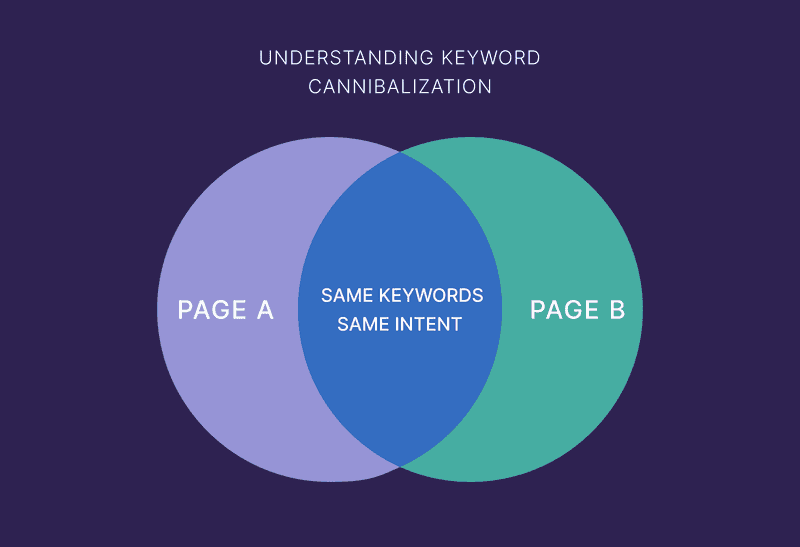
The most common failure of AI-scaled content isn’t spam — it’s self-competition.
Cannibalization happens when:
- Multiple pages target the same intent
- Pages differ only by phrasing
- AI generates “unique” text for identical problems
AI is excellent at rephrasing. Search engines are excellent at recognizing sameness.
Why Cannibalization Is Worse With AI
Human writers naturally:
- Merge ideas
- Escalate depth
- Avoid repeating themselves
AI doesn’t — unless instructed.
At scale, this leads to:
- Impression splitting
- Ranking volatility
- Pages rotating in and out
- No page gaining authority
To search engines, this looks like topic confusion.
The All-in-One Platform for Effective SEO
Behind every successful business is a strong SEO campaign. But with countless optimization tools and techniques out there to choose from, it can be hard to know where to start. Well, fear no more, cause I've got just the thing to help. Presenting the Ranktracker all-in-one platform for effective SEO
We have finally opened registration to Ranktracker absolutely free!
Create a free accountOr Sign in using your credentials
Spam in 2026 Is Mostly Quiet
Forget manual actions and warnings.
Modern spam classification looks like:
- Indexing slowdown
- Pages never ranking
- Sudden impression decay
- Entire sections losing visibility
No alerts. No messages. Just disappearance.
AI content triggers spam systems when:
- It adds no new insight
- It exists only to rank
- It repeats known information
- It scales without editorial logic
Spam is no longer about deception. It’s about redundancy at scale.
How to Scale AI Content Safely
AI can absolutely be used at scale — if the system is designed correctly.
1. Scale Topics, Not Pages
The biggest mistake is scaling URLs instead of coverage.
Bad approach:
- One keyword → one page → infinite variations
Correct approach:
- One topic → one authoritative resource → structured depth
Before creating a new page, ask: “Does this represent a new problem — or just a new phrasing?”
If it’s phrasing, consolidate.
2. Lock Intent Before Generation
Every page must have a single dominant intent:
- Informational
- Comparative
- Transactional
- Navigational
AI must be instructed not to drift.
Mixed-intent pages are a major AI footprint because they feel unfocused and generic.
Clear intent leads to:
- Better rankings
- Less cannibalization
- Stronger topical signals
3. Use Template Variation With Logic
Templates are not bad. Static templates are.
Safe AI scaling requires:
- Conditional sections
- Variable ordering
- Context-based explanations
- Different depth levels per page
If every page has the same:
- Headings
- Section count
- Paragraph length
…you’re leaving a footprint.
Human Oversight Is Not Optional
AI should generate raw material, not finished authority.
Human intervention is required to:
- Decide what should exist
- Remove redundant pages
- Merge overlapping intent
- Add experience and prioritization
- Normalize terminology
Sites that “publish and forget” AI content fail fastest.
AI accelerates publishing. Humans control meaning.
Internal Linking Prevents AI Collapse
Strong internal linking is one of the best defenses against AI-related risk.
Internal links:
- Clarify topic boundaries
- Prevent cannibalization
- Signal hierarchy
- Reinforce authority
Pages without internal context are more likely to be treated as disposable.
SEO platforms like Ranktracker help teams track topic-level visibility and overlap — critical when AI content expands rapidly.
What to Monitor When Scaling AI Content
Traffic is a lagging indicator.
The All-in-One Platform for Effective SEO
Behind every successful business is a strong SEO campaign. But with countless optimization tools and techniques out there to choose from, it can be hard to know where to start. Well, fear no more, cause I've got just the thing to help. Presenting the Ranktracker all-in-one platform for effective SEO
We have finally opened registration to Ranktracker absolutely free!
Create a free accountOr Sign in using your credentials
Watch instead:
- Index coverage by section
- Pages gaining impressions but not rankings
- Multiple URLs ranking for the same query
- Sections losing visibility simultaneously
These are early signs of footprint or cannibalization problems.
What Actually Works in 2026
AI content that survives and scales well shares common traits:
- Clear topical ownership
- Fewer, stronger pages
- Consistent terminology
- Human editorial logic
- Intent-first structure
The sites that fail:
- Publish too much
- Consolidate too little
- Let AI decide structure
- Measure success by volume
The Core Rule of AI Content at Scale
If removing 30% of your AI content would improve your site — you scaled too fast.
AI didn’t lower the bar. It raised the cost of mistakes.
Used correctly, AI lets you scale clarity. Used poorly, it scales confusion.
Search engines reward the first. They quietly erase the second.

