
Intro
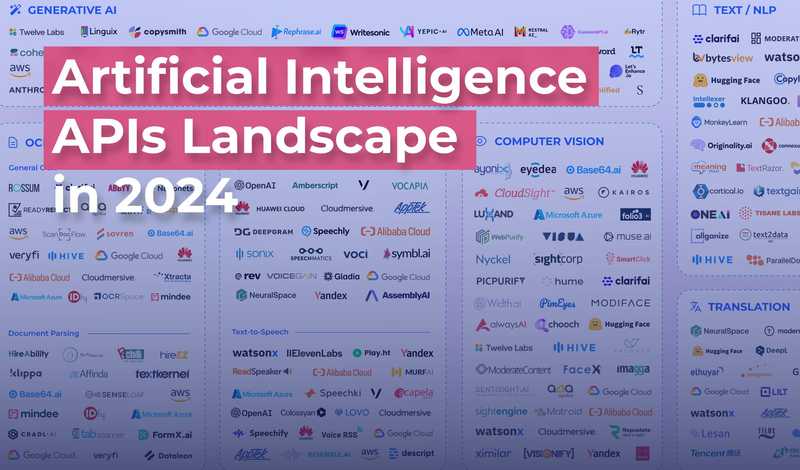
API and infrastructure companies sit at the foundation of the modern internet.
They power:
- Mission-critical applications and platforms
- Payment flows, authentication, messaging, and data pipelines
- Entire SaaS, fintech, and marketplace ecosystems
- Uptime, latency, security, and scalability guarantees
Unlike application-layer software, API and infrastructure choices are hard to undo. Once integrated, switching costs are high and mistakes are expensive.
AI Overviews now sit between developers, architects, and your infrastructure.
Google is no longer just ranking cloud providers, API platforms, or documentation pages. It is explaining infrastructure roles, architectural trade-offs, performance expectations, and reliability boundaries — directly in the SERP.
For API and infrastructure companies, this is not an SEO visibility issue. It is a technical interpretation, expectation-setting, and trust-qualification issue.
The All-in-One Platform for Effective SEO
Behind every successful business is a strong SEO campaign. But with countless optimization tools and techniques out there to choose from, it can be hard to know where to start. Well, fear no more, cause I've got just the thing to help. Presenting the Ranktracker all-in-one platform for effective SEO
We have finally opened registration to Ranktracker absolutely free!
Create a free accountOr Sign in using your credentials
This article is part of Ranktracker’s AI Overviews series and explains how AI Overviews affect API & infrastructure companies, how developer and buyer behaviour changes, how Google evaluates infrastructure credibility, what content shapes AI summaries, and how infrastructure providers can win when AI pre-filters platforms before a single integration decision is made.
1. Why AI Overviews Are Especially Influential in API & Infrastructure Search
API and infrastructure queries are:
- Highly architectural
- Risk-sensitive
- Easy to misunderstand without context
- Often confused across layers (API vs platform vs cloud)
This makes them ideal AI Overview territory.
API & Infrastructure Queries That Commonly Trigger AI Overviews
Examples include:
- “What is an API gateway?”
- “API vs webhook vs event streaming”
- “Is [API provider] reliable?”
- “Cloud infrastructure vs PaaS”
- “When to use managed infrastructure”
Google now responds with:
- Clear role definitions
- Architecture-level explanations
- Reliability and scaling caveats
- Use-case and non-use-case framing
If your positioning relies on marketing abstraction (“end-to-end,” “infinite scale,” “serverless everything”), AI Overviews will reinterpret your role — often stripping away hype.
AI Overviews Replace Brand-Led Infrastructure Discovery
Historically:
- Infrastructure companies relied on brand authority
- Developers learned limitations after adoption
- Sales and docs corrected misconceptions later
AI Overviews now:
- Define expectations early
- Filter out mismatched use cases
- Penalise vague or inflated claims
API and infrastructure companies no longer compete on brand recognition alone. They compete on how accurately AI can explain what their system actually does.
2. How AI Overviews Change Developer & Buyer Behaviour
AI Overviews fundamentally reshape who even evaluates your infrastructure.
Awareness → Architectural Fit Happens in the SERP
Before clicking, developers now:
- Understand what layer you operate in
- Know whether you’re core infra, middleware, or tooling
- Eliminate platforms that don’t fit their architecture
This reduces low-fit trials and abandoned integrations.
Consideration → Reliability & Predictability Checks
When users do click, they want to validate:
- “Is this production-grade?”
- “Are SLAs real or marketing?”
- “What happens under load or failure?”
Landing pages without technical depth bounce immediately.
Adoption → Trust Over Innovation Claims
Infrastructure is adopted when:
- Failure modes are documented
- Trade-offs are explicit
- Scaling and cost behaviour is predictable
Innovation without reliability reduces adoption, not increases it.
3. The Infrastructure Traffic Illusion
Many API and infrastructure companies observe:
- Lower blog traffic
- Fewer casual sign-ups
- Higher activation quality
- Better long-term retention
This can feel like stagnation.
In reality:
AI Overviews are filtering curiosity traffic, not real infrastructure demand.
The shift is from experimentation-driven adoption to architecture-driven commitment.
4. How Google Evaluates API & Infrastructure Companies for AI Overviews
Google applies system-level credibility heuristics.
4.1 Architectural Accuracy Is Non-Negotiable
AI Overviews favour companies that:
- Clearly define their infrastructure layer
- Avoid category blending
- Explain dependencies and integrations honestly
Misclassification destroys trust.
4.2 Reliability Framing Matters More Than Features
AI distrusts infrastructure content that:
- Focuses on features without uptime context
- Avoids discussing limits
- Hides operational complexity
Stability explanations build authority.
4.3 Entity-Level Trust Overrides Page SEO
API and infrastructure companies are evaluated as operational systems, not SaaS products.
Signals include:
- Consistency across docs, status pages, and marketing
- Alignment between SLAs and claims
- Long-term accuracy under incidents and outages
One misleading reliability claim can weaken trust across the domain.
5. The Strategic Shift for API & Infrastructure SEO
Old Infrastructure SEO
- Rank cloud and API keywords
- Push performance claims
- Drive free-tier sign-ups
- Let docs handle reality
AI-First Infrastructure SEO
- Educate before adoption
- Define architecture precisely
- Pre-qualify production use cases
- Optimise for long-term trust
If Google doesn’t trust your system description, it will explain infrastructure reality without you.
6. API & Infrastructure Content That Shapes AI Overviews
6.1 “What Layer Does This Solve?” Content
AI Overviews rely heavily on pages that:
- Explain where the service sits in the stack
- Compare accurately to alternatives
- Avoid over-generalisation
These directly shape SERP summaries.
6.2 Reliability, SLAs & Failure-Mode Content
AI values content that:
- Explains uptime guarantees clearly
- Describes degradation and fallback
- Avoids “always available” language
Honesty increases AI inclusion.
6.3 Scaling & Cost Reality Content
AI prefers platforms that:
- Explain cost behaviour at scale
- Highlight common surprises
- Avoid hidden-cost ambiguity
Transparency builds trust.
6.4 “When Not to Use This” Content
AI cannot infer:
- Poor-fit architectures
- Regulatory or latency edge cases
- Operational overhead thresholds
Companies that state these explicitly gain authority.
7. How API & Infrastructure Sites Should Structure Content for AI Overviews
Lead With Architectural Role
Key pages should open with:
- The layer you operate in
- Core responsibilities
- Explicit exclusions
AI extracts early content aggressively.
Avoid Absolute Infrastructure Claims
Winning infrastructure companies:
- Use conditional language
- Reference trade-offs
- Explain dependencies
AI penalises absolutes in systems engineering.
Standardise System Language Site-Wide
Authority platforms:
- Align docs, marketing, and status messaging
- Avoid conflicting architecture explanations
- Maintain canonical system definitions
Consistency compounds AI trust.
8. Measuring Infrastructure SEO Success in an AI Overview World
Traffic is no longer the KPI.
API & infrastructure companies should track:
- AI Overview inclusion
- Brand mentions in architectural summaries
- Activation-to-production rate
- Long-term retention
- Desktop vs mobile AI visibility
SEO becomes infrastructure-grade expectation management, not lead generation.
9. Why AI Overview Tracking Is Critical for API & Infrastructure Companies
Without AI Overview tracking, infrastructure teams cannot see:
- How their system is being described
- Whether reliability claims are trusted
- Which competitors define architecture narratives
- When expectations diverge before adoption
This is where Ranktracker becomes strategically essential.
The All-in-One Platform for Effective SEO
Behind every successful business is a strong SEO campaign. But with countless optimization tools and techniques out there to choose from, it can be hard to know where to start. Well, fear no more, cause I've got just the thing to help. Presenting the Ranktracker all-in-one platform for effective SEO
We have finally opened registration to Ranktracker absolutely free!
Create a free accountOr Sign in using your credentials
Ranktracker enables API and infrastructure companies to:
- Track AI Overviews for infrastructure and architectural keywords
- Monitor desktop and mobile summaries
- Compare AI visibility with Top 100 rankings
- Detect misinterpretation and trust gaps early
You cannot manage infrastructure adoption without AI-layer visibility.
10. Conclusion: AI Overviews Reward Infrastructure Companies That Tell the Systems Truth
AI Overviews do not hurt API and infrastructure companies. They hurt vague, hype-driven infrastructure marketing.
In an AI-first infrastructure SERP:
- Architecture beats branding
- Reliability beats novelty
- Constraints beat promises
- Trust beats traffic
API and infrastructure companies that adapt will:
- Attract production-ready users
- Reduce churn and incident fallout
- Shorten evaluation cycles
- Become reference points in AI explanations
The infrastructure SEO question has changed.
It is no longer:
The All-in-One Platform for Effective SEO
Behind every successful business is a strong SEO campaign. But with countless optimization tools and techniques out there to choose from, it can be hard to know where to start. Well, fear no more, cause I've got just the thing to help. Presenting the Ranktracker all-in-one platform for effective SEO
We have finally opened registration to Ranktracker absolutely free!
Create a free accountOr Sign in using your credentials
“How do we rank for cloud or API keywords?”
It is now:
“Does Google trust us to explain how our system actually behaves?”
Companies that earn that trust don’t lose visibility — they become the infrastructure context layer AI relies on when developers and businesses make irreversible architectural decisions.

