
Intro
How do you build a B2C website that converts?
You see, the secret to boosting sales isn’t simply a question of aesthetics or user experience design (although these elements definitely do make a difference). Nor is it just about describing your solutions’ features.
Instead, the key to high-performing B2C website design lies in user-centricity.
One of the biggest mistakes brands make when creating websites is trying to mold the content to what they wish to communicate. However, focusing on the unique characteristics of the B2C buyers’ journey pays off much more than focusing on your products.
The reason for this is simple. Although often driven by value (with most consumers seeking quality, affordability, and convenience), the typical B2C buyer’s journey is filled with emotional decision-making elements. People often make impulsive purchase decisions. They choose brands based on emotional or value-based alignment. And they often expect instant gratification from their buying activities.
With this in mind, a great B2C website combines clarity with emotional impact, all the while creating enjoyable browsing and checkout experiences that foster trust.
The All-in-One Platform for Effective SEO
Behind every successful business is a strong SEO campaign. But with countless optimization tools and techniques out there to choose from, it can be hard to know where to start. Well, fear no more, cause I've got just the thing to help. Presenting the Ranktracker all-in-one platform for effective SEO
We have finally opened registration to Ranktracker absolutely free!
Create a free accountOr Sign in using your credentials
This article will provide an overview of the key web elements that convert visitors into customers, with a strong focus on designing for the B2C mindset.
Clarity in Above-the-Fold Messaging
One of the most effective methods to instantly engage web visitors and convince them they’re in the right place to resolve their pain points is to prioritize clarity in above-the-fold messaging.
There are several reasons why this design tactic works.
On the one hand, optimizing the hero section of your website for engagement aligns with the way consumers interact with websites. According to eyetracking data from the NN Group, web users spend the majority of their page-viewing time (57%, to be precise) looking at content in the first screenful of a page.
On the other hand, this strategy also aligns with what B2C buyers expect from brand experiences. Data shows that 73% of consumers want businesses to demonstrate a high level of understanding of their unique needs. Additionally, 81% of buyers prefer companies that provide personalized brand interactions.
So, if you’re looking to turn web visitors into customers, prioritize instant clarity in the hero section of your homepage.
Explore visual and copy elements that can build confidence in your products’ quality and effectiveness. And try to minimize the number of elements and claims you show in the first screenful, focusing instead on strong headlines and attractive CTAs.
The All-in-One Platform for Effective SEO
Behind every successful business is a strong SEO campaign. But with countless optimization tools and techniques out there to choose from, it can be hard to know where to start. Well, fear no more, cause I've got just the thing to help. Presenting the Ranktracker all-in-one platform for effective SEO
We have finally opened registration to Ranktracker absolutely free!
Create a free accountOr Sign in using your credentials
For instance, the Performance Lab homepage is an excellent example of engaging and conversion-inspiring above-the-fold clarity. The core message and value propositions are easy to understand. They focus on clear customer-facing benefits. And they’re sufficiently backed by proof — both the scientific references and the product’s impressive star rating.
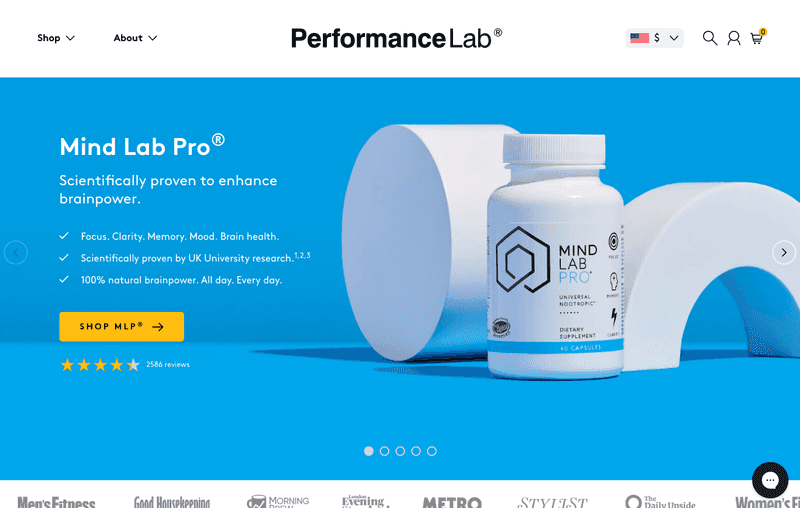
Source: performancelab.com
Emotional Visuals That Align with Your Brand Promise
Emotional connection is crucial in the B2C sales cycle.
Experts strongly agree that most end consumers make buying decisions subconsciously.
Sometimes, it’s because they feel a connection with a brand (or its values). Other times, the driver of their shopping behavior lies in people’s inability to resist impulse shopping (more on this later).
Additionally, many people see buying as a way to acquire a lifestyle or status they aspire to, with the latest data suggesting that 39% of consumers fall into the category of aspirational buyers.
Considering these consumer behaviors, it’s evident that a conversion-inspiring B2C website needs to use emotional marketing and sales tactics to turn visitors into customers. One of the most effective methods to do this is using relevant lifestyle imagery and brand storytelling to build brand connections.
By enriching your B2C website with visuals that align with your target audience’s specific aspirations — whether that involves owning luxurious products, a form of self-improvement transformation, or a specific lifestyle — you can effectively create a connection in which your offer becomes the key to getting what they want.
For example, take a look at how Icecartel does it. This brand sells high-end moissanite jewelry. But if you look at its website design, you’ll see that the content it uses doesn’t just focus on available products. Instead, the most prominent web element — the hero section video — emphasizes the craftsmanship and uniqueness of each product, instantly positioning Ice Cartel’s products as aspirational pieces that align with a specific lifestyle, which is desirable to this brand’s target audience.
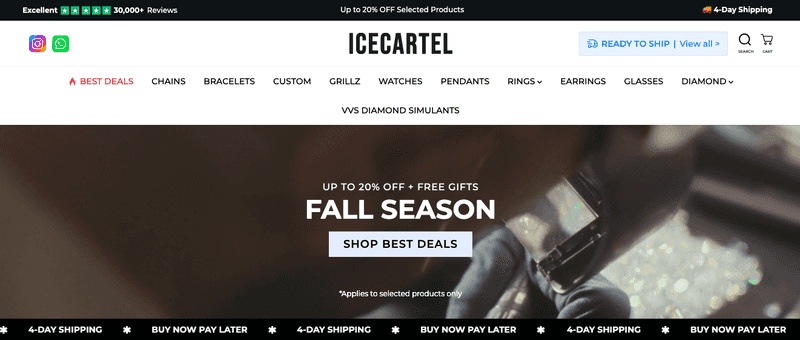
Source: icecartel.com
Multiple Discovery Pathways Through UI Elements
When shopping online, end consumers demand convenience.
A recent consumer trends survey from Morgan Stanley found that 77% of people consider it a key factor when making purchase decisions, with the most sought-after benefits being comfort, speed, accessibility, and availability. Moreover, the survey results suggest that consumers are willing to pay a premium for a more convenient shopping experience, showing the tremendous impact of user-centric website elements on conversion rates.
If you’re looking for B2C web design tactics that will engage your target audience and guide them toward the lower stages of the buyer’s journey, it’s a good idea to focus on product discovery pathways.
Ultimately, end consumers want perfect solutions to their pain points. However, they’re not necessarily willing to take a deep dive into the product-evaluation process.
In addition to often being impatient during the shopping journey, end consumers can also get easily overwhelmed by too many options, causing them to delay buying due to analysis paralysis.
That’s why designing UI elements that simplify the product discovery and selection process could be an exceptional method to help your prospects find what they need and shorten the sales cycle.
To optimize your website for easy product discovery, start with your navigation menu. Aim for simplicity and intuitive product grouping. And do your best not to make the mistake of overcategorizing your solutions — a common UX mistake harms web visitors’ browsing experience and leads to site abandonment.
Secondly, ensure that your website features a powerful search function in a prominent spot. After all, 69% of web visitors go straight to search when landing on a website. And many treat retail sites as search engines, so don’t make it difficult for them to find what they need.
Finally, and this is especially important if you have a large inventory, ensure that your website’s category pages are designed to guide shoppers efficiently toward the right solution. A great example comes from Sewing Parts Online, which structures its product category pages to accommodate multiple entry points for finding the correct sewing part.
A good example to look at is their Singer Sewing Machine Parts collections page. Rather than limiting users to generic product filters, the page allows visitors to search by their sewing machine’s model number or browse through a neatly organized list of models under the brand name. This approach mirrors how end consumers naturally think about their needs. They may not know the exact part name, but they usually know their machine model.
By letting customers navigate directly through brand- and model-specific pathways, Sewing Parts Online removes friction from the browsing experience, reduces the likelihood of errors, and helps shoppers quickly pinpoint compatible parts. This not only improves convenience but also builds trust, as users feel confident that they’re selecting the right product for their specific setup.
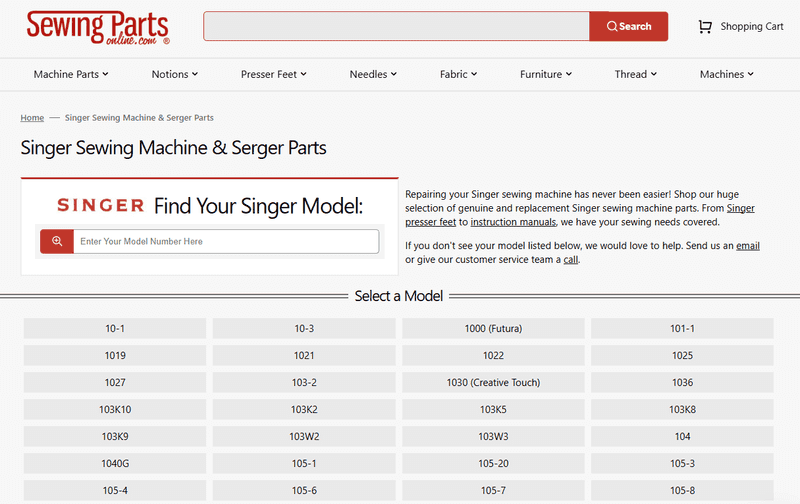
Source: sewingpartsonline.com
Engaging Product Videos That Drive Confidence
We’ve already mentioned that most consumers want convenience from brands. Considering that, it comes as no surprise that the demand for ease of shopping also applies to the process of learning about products.
According to Wyzowl’s Video Marketing Statistics, 78% of consumers prefer learning about products by watching short videos (compared to just 9% who’d choose text-based articles, or 3% who are interested in infographics.
By incorporating high-quality, informative product videos into your B2C web design, you won’t just make it simpler for your audience to learn about the benefits you offer. More importantly, this content format is exceptionally engaging, making it easier to get web visitors to want to learn more about your solutions.
What’s best is that there are numerous ways you can use product videos throughout your website.
In addition to featuring them in the hero section of your website for instant visitor engagement and product positioning, you can also use them as supplementary content during the product evaluation process. For example, Pergola Kits USA uses animated video renders to help shoppers visualize a product in space, knowing real-world performance falls among the biggest considerations for such items.
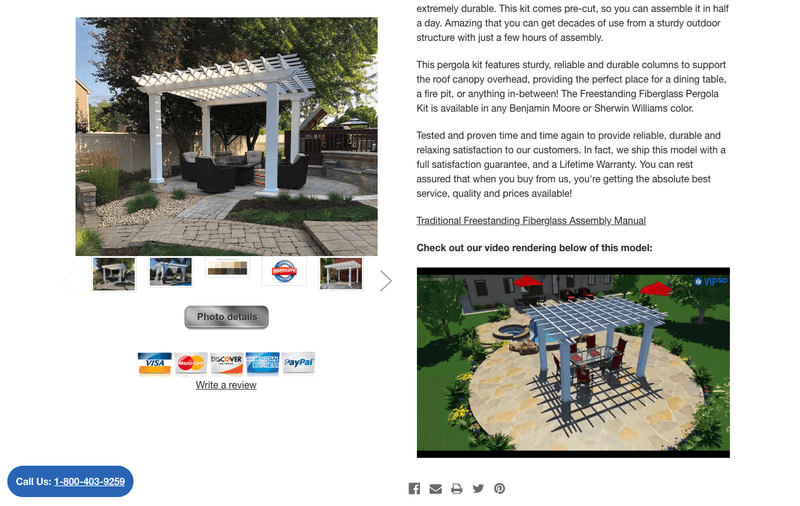
Source: pergolakitsusa.com
Prominent Promotional and Urgency Triggers
We’ve already mentioned the role of emotions in driving people’s buying decisions. But while building relationships with your leads is one method of encouraging more web visitors to convert, it’s not the fastest way to boost sales.
In fact, if you look at prevalent shopping behavior trends, you’ll quickly realize that one of the most effective methods for driving conversions is to rely on your target audience’s impulses.
For instance, most people can’t resist impulse purchases. In fact, a 2025 survey discovered that 70% of shoppers have made an unplanned buying decision after receiving a discount offer. And 62% of people say flash sales and limited-time offers drive their purchase behavior.
So, if you’re looking to enrich your B2C website with design elements that drive conversions, why not create some prominent promotional and urgency triggers?
For example, Nour Hammour uses a pop-up that offers web visitors access to private sales and 10% off their first purchase in exchange for signing up for the brand’s newsletter.

Source: nour-hammour.com
Or how about doing something similar to Nomad? This brand uses a prominent banner to emphasize that flat-rate shipping (and free delivery over $150) as well as that all duties and taxes are prepaid for items sold on the website. Furthermore, the Nomad website includes a smart notification system to alert web visitors about fresh product drops, using the appeal of novelty to drive impulse purchases.
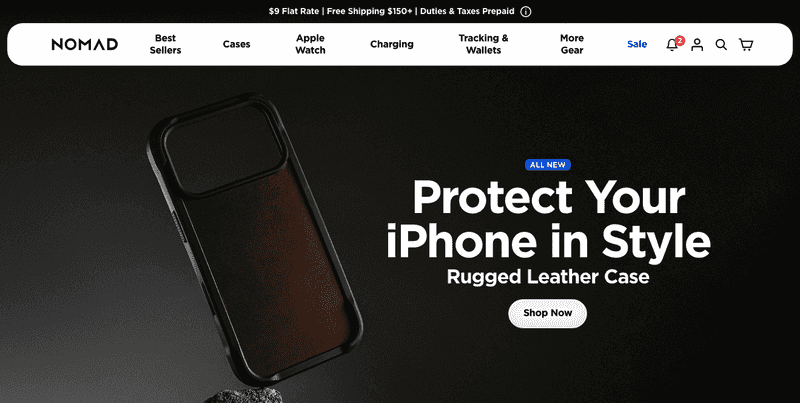
Source: nomadgoods.com
Simple, Reassuring Checkout Process
Last but not least, when exploring B2C website design strategies for boosting conversions, remember that convincing web visitors to add an item to their carts isn’t enough. They also have to complete their purchase process for your business to benefit.
The issue, however, is that most web visits — even those with a high purchase intent — don’t turn into sales. As of 2025, the average cart abandonment rate is 70.22%, with 18% of shoppers abandoning their purchases due to a complicated checkout process.
So, if you want to invest in website elements that’ll help you turn more visitors into customers, consider simplifying your checkout process and making it more trustworthy for your target audience.
The All-in-One Platform for Effective SEO
Behind every successful business is a strong SEO campaign. But with countless optimization tools and techniques out there to choose from, it can be hard to know where to start. Well, fear no more, cause I've got just the thing to help. Presenting the Ranktracker all-in-one platform for effective SEO
We have finally opened registration to Ranktracker absolutely free!
Create a free accountOr Sign in using your credentials
Elementary shopping cart optimization tactics, like allowing guest checkout, providing a variety of payment options, highlighting buy now pay later services, and incorporating trust signals into your site’s design, are more than enough to make shopping with your business feel safe for your audience.
If you want, you can also explore advanced UI design strategies, such as using automated free shipping calculator pop-ups, which is what Waterstones does to encourage higher AOVs.

Source: waterstones.com
Final Thoughts
Even though boosting conversion rates on your B2C site may seem like a complicated process, it’s entirely doable with the right design strategies. The tactics outlined in this article are guaranteed to engage and nurture web visitors. Plus, they’re easy to incorporate into almost any website, making them a great choice if you’re looking to boost sales.

