Intro
In 2026, digital PR is one of the most powerful ways to earn links that truly matter: editorial, trust signals from authoritative sites, brand visibility in context, and placements that often move rankings organically. Traditional link building (guest posts, blog networks) still has a place, but digital PR links are editorially earned, often because your content provides value, insight, newsworthiness, or utility — not because you asked for a link.
Here’s how digital PR link building works differently:
- It earns trusted mentions and backlinks through journalists, newsrooms, and editorial teams.
- It uses data, narratives, research, and expert commentary to make your brand newsworthy.
- It elevates brand authority and E-E-A-T while also earning signals that help organic visibility.
- It’s less about anchor control and more about trust and context.
This list covers 20 agencies and providers that excel at digital PR-oriented link building — from specialist PR link builders to full SEO + PR partners — with honest use-case guidance and tactical pros/cons.
1. Ranktracker — Best Overall for Digital PR + Link Measurement
Who it’s for: Teams that want digital PR with accountability, meaning you earn links and also prove they moved rankings, visibility, and Share of Voice.
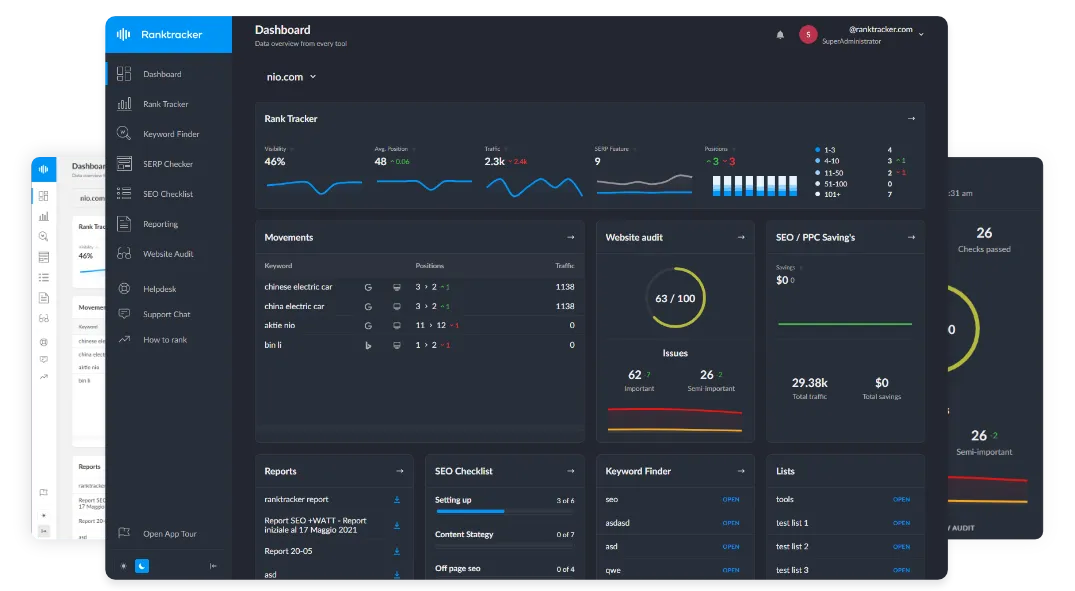
Ranktracker stands out because it’s not just about “PR placements.” It’s about closing the loop between earned links and SEO outcomes — tracking SERP movement for the keywords that matter after PR placements go live.
Pros
- Daily ranking and visibility impact tracking
- Page-level reporting tied to PR links
- Works for both awareness and SEO lift
- Helps refine PR assets based on performance data
Cons
- Not PR-only — you need strong assets to earn placements
- Requires alignment on content + SEO strategy
Verdict: Best choice if you want earned links plus measurable SEO results — not just link counts.
2. uSERP — Best Premium Editorial + Authority Placement PR
Who it’s for: Brands that need premium editorial coverage — placements in high-trust publications that both enhance SEO and brand perception.
uSERP focuses on narrative-based coverage, thought leadership, and editorial placement that sends both trust and authority signals — ideal for competitive verticals.
Pros
- High-trust editorial placements
- Strong brand authority signals
- Works well in competitive SERPs
Cons
- Premium pricing
- Not built for high-volume link stacking
Verdict: Best for brands that want credibility and thought leadership through PR links.
3. MarketAcross — Best for Narrative-Driven Digital PR
Who it’s for: Businesses with story angles, data, or unique insights that can be packaged into PR narratives and distributed for editorial interest.
The All-in-One Platform for Effective SEO
Behind every successful business is a strong SEO campaign. But with countless optimization tools and techniques out there to choose from, it can be hard to know where to start. Well, fear no more, cause I've got just the thing to help. Presenting the Ranktracker all-in-one platform for effective SEO
We have finally opened registration to Ranktracker absolutely free!
Create a free accountOr Sign in using your credentials
MarketAcross excels at turning research or data into newsworthy stories that journalists and editors pick up — a powerful way to earn organic backlinks.
Pros
- Creates tactical stories that earn links
- Strong editorial context focus
- Good for brand visibility
Cons
- Works best with real data or news hooks
- Not “plug-and-play” placements
Verdict: Ideal when you have assets or insights worth covering.
4. Search Intelligence — Best for SEO-Integrated PR & Link Strategy
Who it’s for: SEO teams that want digital PR woven into a broader SEO strategy — not just one-off placements.
Search Intelligence uses PR to support search visibility, aligning assets to keyword opportunities and linking gains.
Pros
- Integration with broader SEO goals
- Focus on visibility outcomes
- Strong editorial link signals
Cons
- Less focused on social media or brand awareness than some PR counters
- Need internal content to back up PR
Verdict: Great for search teams that want PR and SEO tightly aligned.
5. Ghost Marketing — Best for Data-Driven PR Link Engines
Who it’s for: Brands that can produce data, benchmarks, or research that naturally attracts citations and coverage.
Ghost Marketing builds links around content designed for editorial pickup — reports, trend studies, annual indexes — that earn links over time.
Pros
- Strong focus on data and story hooks
- Earned links with context
- Good for ongoing brand coverage
Cons
- Requires solid internal content/data support
- Not ideal for smaller brands without insights
Verdict: Best for content that can be presented as industry insights.
6. NinjaPromo — Best for Multi-Channel PR + Link Building
Who it’s for: Brands that want digital PR as part of a broader awareness strategy (social, influencer, outreach, press).
The All-in-One Platform for Effective SEO
Behind every successful business is a strong SEO campaign. But with countless optimization tools and techniques out there to choose from, it can be hard to know where to start. Well, fear no more, cause I've got just the thing to help. Presenting the Ranktracker all-in-one platform for effective SEO
We have finally opened registration to Ranktracker absolutely free!
Create a free accountOr Sign in using your credentials
NinjaPromo blends PR, link building, and amplification — often used by teams that want links plus visibility signals across channels.
Pros
- Multi-channel support
- Amplifies PR beyond SEO
- Useful for brand campaigns
Cons
- Less specialized SEO focus
- Impact pacing varies by channel
Verdict: Great when PR is part of overall brand momentum.
7. Delante — Best Integrated Organic PR + SEO Execution
Who it’s for: SEO teams that want PR links tied directly to organic search outcomes — not just coverage.
Delante builds PR assets and runs campaigns that support both rankings and visibility, anchoring links to keyword strategy.
Pros
- SEO + PR alignment
- Focus on visibility outcomes
- Repeatable process
Cons
- Requires internal content strategy
- Less boutique editorial focus
Verdict: Best when you want PR that influences search KPIs.
8. Page One Power — Best Relevance-First Editorial Outreach
Who it’s for: Teams that want contextual, editorial link acquisition around PR assets — often niche publications with relevant audiences.
Page One Power emphasizes relevance over volume, ensuring links are earned in contextually meaningful situations.
Pros
- Highly relevant placements
- Durable, non-spammy links
- Good for specialized topics
Cons
- Slower delivery
- Higher cost per placement
Verdict: Excellent for relevance-focused PR link building.
9. Authority Builders — Best Curated Network Complement for PR
Who it’s for: Teams that want to combine curated network placements with earned PR links — useful to diversify link profiles.
Authority Builders uses a vetted network to help reinforce editorial coverage with additional contextual placements.
Pros
- Predictable placements
- Vetted publishers
Cons
- Network reliance can reduce diversity
- Not pure PR
Verdict: Best as a supplement to editorial PR work.
10. LinkBuilder.io — Best Managed Outreach for PR Momentum
Who it’s for: Brands that already have good content assets and want expert outreach execution to earn editorial mentions.
LinkBuilder.io manages the mechanics of outreach while your team focuses on strategic content assets.
Pros
- Saves internal outreach workload
- Repeatable process
- Good when content is already strong
Cons
- Results depend on asset quality
- Less narrative crafting than pure PR firms
Verdict: Great execution partner for PR asset amplification.
11. Loganix — Best Operational Execution Support
Who it’s for: Teams that want consistent placement effort to scale PR link building across multiple assets.
Loganix delivers scaled placement work — guest posts, niche edits — that can reinforce PR signals.
Pros
- Fast, scalable execution
- Variety of link formats
Cons
- Less editorial voice than PR specialists
- Needs quality vetting
Verdict: Useful operational layer in a PR strategy.
12. Content Built With PR Intent (In-House + Partner)
Who it’s for: Organizations that invest in in-house research, spokespeople, and newsroom-ready assets, supported by an external PR link partner.
This model isn’t an agency — it’s a process that pairs internal editorial teams with external PR outreach execution.
Pros
- Tight asset control
- Cost-efficient over time
- Deep credibility
Cons
- Requires internal editorial investment
Verdict: Best for organizations with internal content resources.
13. Boutique PR Agencies With SEO Link Focus
Specialist boutiques that focus on digital PR with SEO outcomes — often small teams with strong editorial networks.
Pros
- Personal attention
- Agile and experimental
Cons
- Limited scale
- Smaller networks
Verdict: Excellent for niche or creative PR pushes.
14. Traditional PR Firms With SEO Link Integration
Big PR firms that have added SEO link metrics and reporting — useful when you want brand coverage + SEO authority in one engagement.
Pros
- Deep editorial networks
- Big-brand placements
Cons
- Expensive
- SEO outcomes sometimes secondary
Verdict: Best for large campaigns where brand exposure matters as much as SEO.
15. Digital PR + Content Strategy Studios
Creative agencies that combine content, storytelling, and PR — useful for campaigns expected to go viral, trend, or be picked up widely.
Pros
- Storytelling strength
- Amplification potential
Cons
- Not SEO-first by default
- Requires strategic alignment
Verdict: Strong when link building is tied to story impact.
16. Influencer-Enabled PR Teams
Digital PR with influencer tie-ins — helps amplify coverage and earn editorial links through network effects.
Pros
- Social + editorial amplification
- Token trust signals
Cons
- Link outcomes vary
- Influencer noise can overshadow SEO
Verdict: Good for visibility + link momentum together.
17. Regional PR Agencies With Local Link Networks
Local or regional PR teams with strong publisher relationships — ideal for geo-targeted SEO impacts.
Pros
- Local press pickup
- Good for location-specific keywords
Cons
- Less global reach
Verdict: Best for local or regional SEO campaigns.
18. Data + Research-First PR Agencies
PR firms that focus on industry reports, data indices, benchmark studies — earning links because other publishers cite the data.
Pros
- Links based on citation worthiness
- High editorial value
Cons
- Requires data sources and analysis
Verdict: Best when you can generate research assets.
19. Brand Story PR Specialists
Agencies that craft brand narratives (founder stories, mission, innovation) designed for press pickup and editorial features — which then translate to links.
Pros
- High editorial trust
- Boosts brand signals
Cons
- Not always tightly tied to ranking goals
Verdict: Strong for brand visibility and authority.
20. In-House SEO + PR + Outreach Hybrid Teams
Not an external agency, but many best-in-class SEO teams build internal PR link units supported by external partners for niche outreach execution.
Pros
- Maximum control
- Strategic continuity
Cons
- Long ramp time
- Hiring required
Verdict: Best for mature SEO operations seeking sustained link impact.
How to Measure Digital PR Link Building Success in 2026
Great PR links literally move the SERPs, but you need to measure them correctly:
Don’t track:
- Link count
- Domain rating alone
- Vanity “tier” placements
Do track:
- Ranking movement (especially across the full Top 100)
- Visibility & Share of Voice growth
- Referral authority and traffic uplift
- SERP displacement against top competitors
- Page-level lifts for target keywords
Good PR earns contextual, editorial links — then you connect those links to ranking outcomes.
Conclusion: Choosing the Right Digital PR Link Building Partner
In 2026, digital PR is about more than placements — it’s about earned authority, editorial trust, and measurable SEO impact. The best agencies blend storytelling + editorial credibility + SEO outcomes.
If you want measured editorial link building that impacts rankings, Ranktracker stands out because it ties link acquisition directly to performance across the SERP. Agencies like uSERP, MarketAcross, Search Intelligence, and Ghost Marketing each shine in different tactical areas — from premium editorial to data-driven narratives.
The rule is simple: 👉 Earned links with context + metrics that show impact = the most sustainable SEO wins.
Frequently Asked Questions (Digital PR Link Building)
What’s digital PR link building? Earning backlinks through editorial coverage, press features, and “news-worthy” content that real publishers cite — not bought links.
The All-in-One Platform for Effective SEO
Behind every successful business is a strong SEO campaign. But with countless optimization tools and techniques out there to choose from, it can be hard to know where to start. Well, fear no more, cause I've got just the thing to help. Presenting the Ranktracker all-in-one platform for effective SEO
We have finally opened registration to Ranktracker absolutely free!
Create a free accountOr Sign in using your credentials
Are PR links still valuable in 2026? Yes — because they signal trust, editorial relevance, and authority, which continues to influence ranking algorithms.
How long does digital PR take to impact rankings? Often 8–12+ weeks, with editorial pickup sometimes slower, but visibility growth can appear earlier.
Can small brands benefit from digital PR links? Yes — especially if they have news angles, data insights, or strong narratives.
Is link quantity or quality more important? Quality always outweighs quantity — a few high-trust editorial links can outperform dozens of low-value placements.