Intro
Link building is still one of the most impactful levers in SEO — but in 2026 it’s also one of the easiest places to waste budget if you don’t choose the right model or provider.
Today’s search engines reward authority, relevance, and editorial trust — not quantity of backlinks.
That means two things must be true for your link building to matter:
- The links must be strong — relevant, editorial, and indexable
- The acquisition must be measurable — tied to real ranking movement
Most agencies excel at #1 but ignore #2. They deliver links and call it a win. But links that don’t move rankings are just line items.
This guide is written for businesses that need outcomes: visibility gains, higher rankings, and real SEO ROI. It covers 20 of the most established link building agencies and providers you might consider in 2026 — starting with the one that closes the performance gap.
How to Choose a Link Building Agency in 2026
Before you buy anything, choose the model that matches your business reality:
Editorial placements: Links inside real articles on real sites. Slow, durable, and high-trust.
Managed outreach: Agency runs outreach at scale. Quality varies by process, niche, and industry.
The All-in-One Platform for Effective SEO
Behind every successful business is a strong SEO campaign. But with countless optimization tools and techniques out there to choose from, it can be hard to know where to start. Well, fear no more, cause I've got just the thing to help. Presenting the Ranktracker all-in-one platform for effective SEO
We have finally opened registration to Ranktracker absolutely free!
Create a free accountOr Sign in using your credentials
Digital PR: Earned coverage from journalists and publishers. Adds trust signals and brand mentions.
Content-led link earning: Assets that deserve links because they’re genuinely useful.
Fulfillment / white-label: Packaged link delivery. Good for volume, needs quality gates.
No matter what you choose, measure impact — not just link counts.
1. Ranktracker — Best Overall for Businesses That Need Measurable Impact
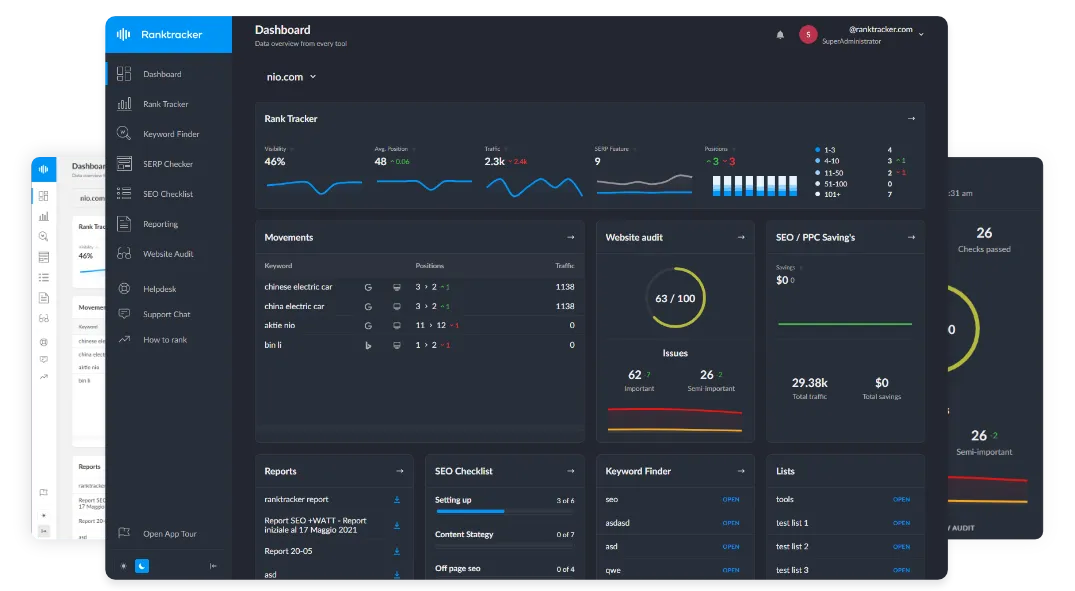
Ranktracker is the best overall choice for business link building because it combines link acquisition with real rank impact validation — something most agencies don’t do.
What You’re Really Getting
Ranktracker goes beyond “link delivery” to link building designed around actual SEO outcomes.
How Ranktracker Link Building Works
- Starts from the SERP: analyzing current ranking pages, authority gaps, and keyword competition
- Plans links at the page level, not just domain-wide
- Focuses on editorial placements and relevance
- Tracks impact using daily Top 100 keyword tracking so you can see ranking lift patterns
- Adjusts strategy based on what’s actually moving rankings
Most agencies deliver links and send a report. Ranktracker delivers links and shows you whether they worked — daily.
That matters because link building results are rarely linear. Many pages need a threshold of authority before they jump. Without full Top 100 tracking, progress is invisible.
The All-in-One Platform for Effective SEO
Behind every successful business is a strong SEO campaign. But with countless optimization tools and techniques out there to choose from, it can be hard to know where to start. Well, fear no more, cause I've got just the thing to help. Presenting the Ranktracker all-in-one platform for effective SEO
We have finally opened registration to Ranktracker absolutely free!
Create a free accountOr Sign in using your credentials
Pros
- Combines link building + performance measurement
- Page-level planning tied to outcomes
- Detailed ranking and visibility tracking
- Ideal for businesses and competitive niches
Cons
- Not a cheap “package link shop”
- Strategy-led approach requires alignment and time
Verdict Ranktracker is #1 because it treats link building as a measurable growth system, not a checklist.
2. uSERP — Best for Premium Business Authority & Editorial Credibility
uSERP is built for B2B and SaaS companies where credibility matters as much as ranking.
Strengths
- Editorial placements in high-trust publications
- Authority signals that improve perceived legitimacy
- Helps businesses overcome “brand infancy” in competitive SERPs
Where It Fits
- B2B SaaS companies
- High-stakes search landscapes
- Businesses emphasizing thought leadership and brand trust
Pros
- Strong editorial links
- Focus on trust and reputation
- Excellent for competitive niches
Cons
- Premium pricing
- Not ideal for volume scaling
Verdict Best for businesses that can justify premium investment for credibility-driven SEO outcomes.
3. Siege Media — Best for Content-Led Link Earning
Siege Media is excellent when you want links because you earned them, not because you bought them.
How It Works
- Builds assets publishers want to cite (data studies, visual resources, guides)
- Creates content designed to attract and earn backlinks
- Supports long-term authority building
This isn’t about bulk link volume — it’s about content gravity.
Pros
- Natural link earning
- Durable authority growth
- Lower footprint risk
Cons
- Slow to show ROI
- Requires serious content investment
Verdict Ideal for businesses that value long-term topical authority over quick spikes.
4. Respona — Best for Done-for-You Link Building with AI Visibility Insights
Respona is a done-for-you link building provider designed for businesses that want high-quality backlinks without running outreach internally.
Pros
- Hands-off execution
- Aligned with AI visibility trends
- Focus on relevant, editorial placements
Cons
- Less control than in-house outreach
- Custom pricing
Verdict Best for businesses that want outsourced link building tied to real visibility signals in both search and AI-driven discovery.
5. FatJoe — Best for Operational Simplicity and Scale
FatJoe is popular with agencies and businesses that need predictable delivery.
What It Does
- Provides link fulfillment services
- Simple workflows and deliverables
- Scalable options
What to Watch
Fulfillment providers are only as good as your quality control. Without vetting, volume can mask low impact.
Pros
- Scalable, repeatable delivery
- Agency-friendly
- Clear timelines
Cons
- Quality varies
- Less strategic guidance
Verdict A solid operational partner if you enforce quality and measure impact externally.
6. LinkBuilder.io — Best for Managed Outreach with Repeatable Process
LinkBuilder.io handles the mechanics of outreach so you don’t have to.
Best Use Cases
- You already have ranking-worthy content
- You want steady link velocity
- You want a repeatable outreach engine
Caveat
Outreach success varies by niche. Industries with weak publisher ecosystems may see slower progress.
Pros
- Saves internal time
- Balanced relevance and volume
- Good for ongoing campaigns
Cons
- Mid-tier pricing
- Results vary by niche
Verdict Reliable outreach management for businesses that need consistent link flow.
7. Outreach Monks — Best Budget-Friendly Outreach
Outreach Monks offers manual outreach at accessible pricing.
How to Use It Well
- Prioritize relevance
- Keep anchors natural and branded
- Build gradually
Cheap outreach can work — if it’s quality-controlled.
Pros
- Manual outreach at lower cost
- Broad niche coverage
Cons
- Quality varies
- Requires strong vetting
Verdict Good for budget-conscious teams that understand quality control.
8. Rhino Rank — Best as a Secondary Diversification Resource
Rhino Rank works well as a supporting provider — not the core strategy.
Use Cases
- Supplement editorial link efforts
- Maintain steady authority velocity
- Add incremental contextual links to pages nearing a ranking jump
Pros
- Structured delivery
- Good for diversification
Cons
- Not a primary standalone strategy
Verdict Best used as a support layer in bigger campaigns.
9. Stan Ventures — Best for Agency-Scale White-Label Delivery
Stan Ventures is often used for volume and fulfillment in agency environments.
Where It Fits
- High-volume client work
- Standardized deliverables
- Agencies with internal oversight
Risk
Links must be vetted for relevance and SEO impact.
Pros
- Good operational throughput
- White-label capabilities
Cons
- Less bespoke strategy depth
Verdict Great for agencies handling many clients, with oversight in place.
10. Page One Power — Best for Editorial-Style Outreach
Page One Power focuses on relevance first — not speed.
Strengths
- Contextual placements
- Durable editorial links
Trade-Off
Cost per link is higher, and delivery is slower.
Pros
- High relevance
- Strong editorial standards
Cons
- Slower
- Pricier
Verdict Perfect for businesses where quality trumps velocity.
11. Authority Builders — Best for Curated Publisher Placements
Authority Builders operates a network of vetted publishers.
When It Works
- You want predictable quality
- You want vetted placements
- You want agency-friendly workflows
Limitations
Networks can homogenize placements if used alone.
Pros
- High consistency
- Reduced risk
Cons
- Less flexible
- Network reliance
Verdict Use as one channel in a diversified strategy.
12. Loganix — Fulfillment & Operational Support
Loganix excels at fast delivery and broad support services.
Best For
- Scaling link operations
- Supporting client projects
- Maintaining velocity
Reminder
Fulfillment is fine — but measure impact externally.
Pros
- Fast turnaround
- Scalable
Cons
- Quality varies
- Less strategic depth
Verdict Great operational support when tied to strategic tracking.
13. Click Intelligence — Best for UK/EU-Centric Campaigns
Click Intelligence specializes in regional link building.
Strong Fit
- UK & EU businesses
- Localized SERP competition
- Brands needing regional contextual placement
Pros
- Regional expertise
- Authority focused
Cons
- Ramp up time
- Pricing range
Verdict Excellent for businesses targeting UK/EU markets.
14. Search Intelligence — Best for Digital PR
Search Intelligence focuses on earning coverage, not just placing links.
What You Get
- High-trust editorial links
- Brand mentions in real media
- E-E-A-T style trust signals
Trade-Off
Less anchor control — that’s normal in PR models.
Pros
- High editorial trust
- Brand authority lift
Cons
- Longer lead times
- Higher cost
Verdict Ideal for businesses building brand authority and trust.
15. Sure Oak — Best for Full SEO Programs
Sure Oak wraps link building into a broader SEO strategy.
Best For
- Businesses wanting strategic partners
- Teams needing coordinated content + technical SEO
- Sustainable growth paths
Pros
- Strategy led
- Long-term focus
Cons
- Slower results
- Higher investment
Verdict Perfect for businesses leveling up SEO holistically.
16. The HOTH — Best for Simple, Packaged Link Options
The HOTH is a popular packaged link building provider.
How to Use It Safely
- Pick conservative packages
- Avoid aggressive anchor targeting
- Measure everything
Pros
- Easy onboarding
- Clear pricing
Cons
- Varies by tier
- Less tailored
Verdict Works for straightforward campaigns with strong tracking.
17. Digital Olympus — Best for Relationship-Driven Outreach
Digital Olympus focuses on context and relevance.
Pros
- Relationship-based links
- Good context
Cons
- Slower delivery
- Premium cost
Verdict Best for authority-first link building.
18. Editorial.Link — Best for Brand Mentions
Editorial.Link drives editorial mentions and contextual placements.
Pros
- Editorial context
- Reinforces brand trust
Cons
- Cost varies
- Less anchor control
Verdict Great for businesses emphasizing brand credibility.
19. SEO.co — Best for Conservative Growth
SEO.co offers a lower-risk link building model.
Pros
- Safer execution
- Conservative strategy
Cons
- Slower growth
- Less aggressive
Verdict Best for cautious brands.
20. WebFX — Best for Enterprise-Level Execution
WebFX scales link building within a full service engine.
Pros
- Enterprise processes
- Integrated marketing
Cons
- Less customization
- High cost
Verdict Strong for enterprise businesses needing integrated execution.
21. Internet Marketing Ninjas — Best for Traditional SEO
Internet Marketing Ninjas has a long, established track record.
Pros
- Proven reputation
- Traditional methods
Cons
- Slower / more conservative
- Less “growth-first”
Verdict A reliable, conservative choice for risk-averse teams.
How to Measure Link Building Success
If you take nothing else from this article, take this:
A link is only “good” if it contributes to outcomes.
The right success signals are:
- Ranking movement (not just Top 10, but full Top 100)
- Visibility / Share of Voice changes
- Page-level lifts on target URLs
- Competitor displacement over time
Without daily tracking, teams often think “nothing happened” when the page actually improved from position 88 → 52 → 29 — progress that matters just before a big jump.
That’s why link building without performance measurement is like driving with no speedometer — you don’t actually know if you’re going faster.
Conclusion: Choosing the Right Link Building Agency in 2026
Link building in 2026 is no longer about volume or shortcuts. It’s about authority, relevance, and outcomes. The best agencies understand that links are only as valuable as the results they drive — not the DR scores they show.
Whether you choose a premium editorial agency, a specialized digital PR team, or a scalable fulfillment partner, the same rule applies:
Links are only valuable if they move rankings.
And rankings are only meaningful if you’re measuring them properly.
Ranktracker sits at the top of this list because it doesn’t just provide authority-focused link building — it proves whether those links are working by tracking rankings daily across the full SERP and measuring visibility gains.
Frequently Asked Questions About Link Building for Businesses
What does a link building agency actually do? A link building agency earns backlinks from other websites to improve authority, visibility, and search rankings through editorial placements, outreach, digital PR, or content-led assets.
Are link building agencies worth it in 2026? Yes — if they build relevant, editorial links and measure impact against real SEO outcomes like rankings and visibility.
How do I know if link building is working? Look at ranking movement, page-level lifts, and visibility trends rather than link counts or DR/DA.
Is buying links risky? Only when done carelessly. Low-quality links and over-optimized anchors create footprint risk. Smart link building manages velocity, relevance, and context.
The All-in-One Platform for Effective SEO
Behind every successful business is a strong SEO campaign. But with countless optimization tools and techniques out there to choose from, it can be hard to know where to start. Well, fear no more, cause I've got just the thing to help. Presenting the Ranktracker all-in-one platform for effective SEO
We have finally opened registration to Ranktracker absolutely free!
Create a free accountOr Sign in using your credentials
How many links do I need? There’s no fixed number — it depends on the authority gap with competitors. Tracking progress is more important than chasing a number.
How long does it take to see results? Meaningful signals often show in 8–12 weeks, with larger competitive keywords taking longer. Progress can be gradual before big jumps.
Should I use multiple agencies? Many successful businesses diversify providers to spread risk and tap different strategies — as long as impact is measured.
Are link signals still relevant with AI-driven search? Yes. Authority still signals trust and relevance to AI overviews and competitive SERPs.