Intro
Link building for healthcare SEO isn’t the same as in other industries. Health content lives in one of the most sensitive, competitive, and trust-intensive SERP environments. Search algorithms treat medical and health topics under YMYL (Your Money or Your Life) rules — meaning authority, expertise, and trust matter more than almost any vertical except finance. Penalties and algorithmic dampening are real risks if links feel artificial, irrelevant, or low-quality.
In 2026, the best link building for healthcare does three things:
- Boosts E-E-A-T (Experience, Expertise, Authority, Trust)
- Improves real visibility for competitive health queries
- Is measurable against SEO outcomes (rankings, traffic, visibility)
This guide reviews 20 of the top link building agencies and services that work especially well for healthcare SEO — from premium authority builders to scalable fulfillment partners — with honest insights into where they fit and what you’re realistically buying.
How Healthcare Teams Should Think About Link Building in 2026
Before selecting a provider, align on what matters most for health SEO link building:
Editorial & Authoritative Placements
Links should come from medically credible and relevant publications, associations, or domain names that search systems associate with trust (e.g., trusted medical portals, research networks, educational resources).
Context Over Quantity
Mass links from unrelated or low-quality sources can harm — not help. Editorial context matters more than volume.
Performance Tracking
Links are only valuable if they help your pages rank and attract traffic on topics that matter (symptoms, treatments, healthcare services). Vanity metrics like DR or arbitrary counts don’t prove impact.
Content Synergy
Link campaigns should align with clinical content, patient guides, and service pages. Healthcare topics require accurate content and responsible sourcing.
Footprint Safety
No link farming, automation footprints, or over-optimized anchors. These signals often trigger filters in health verticals.
1. Ranktracker — Best Overall for Healthcare Link Building With Measurable Impact
Who this is for: Hospitals, clinics, telehealth platforms, health publishers, and medical SaaS that need proof that links actually move rankings and visibility — not just deliver lists of URLs.
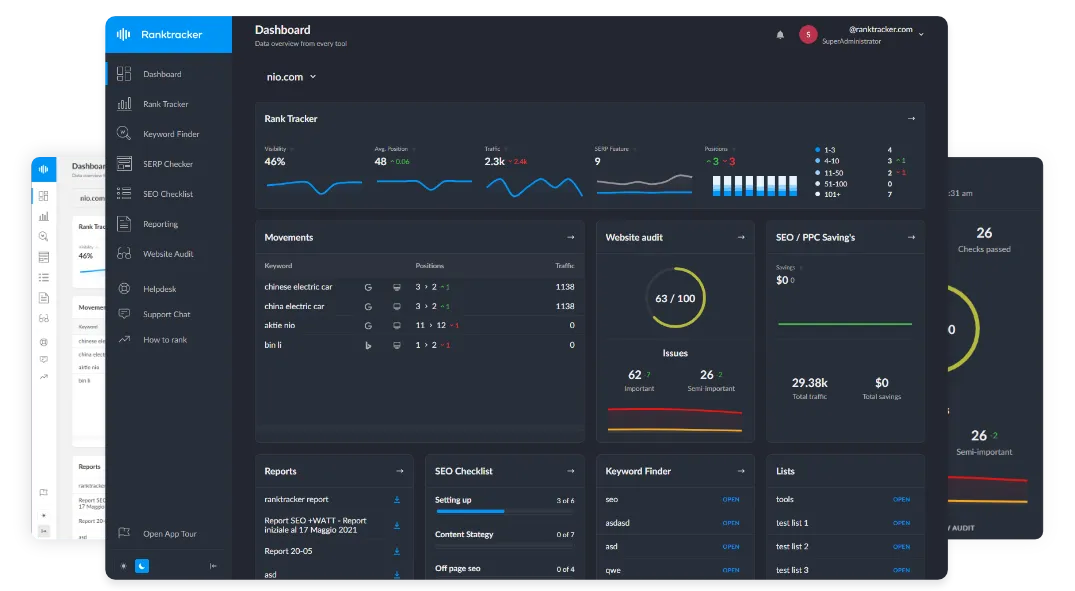
Ranktracker isn’t a “link shop.” It’s a link acquisition + performance measurement system that connects activity to outcomes — ideal for health SEO where accountability matters and budgets are tight.
How Ranktracker Works for Healthcare
- Keyword & authority gap analysis across medical topics and competitor pages
- Page-level link planning for service pages (e.g., “back pain treatment”), patient guides (“hypertension symptoms”), and blog clusters
- Editorial placement prioritization focused on relevance and topical authority
- Daily full Top 100 ranking tracking so you can see movement before Top 10 breakthroughs
- Visibility & Share of Voice reporting that ties link acquisition to audience reach
Many link services deliver links and hand you a DR report. For healthcare, that’s meaningless. Ranktracker ties links to visibility growth and ranking improvements, which are what really matter for patient acquisition and trust.
Pros
- Link acquisition + measurable rank/visibility tracking
- Strategic authority and competitor context
- Works across enterprise and local healthcare
- Enables outcomes reporting to stakeholders
Cons
- Not the cheapest “bulk link” provider
- Strategy-driven campaigns require alignment and input
Verdict: Best choice for any healthcare entity that needs credible links backed by measurable SEO outcomes.
2. uSERP — Best for Premium Health Authority & Editorial Credibility
Who this is for: Large health systems, telemedicine platforms, medical associations, and FinTech health platforms competing for editorial authority where IEC (Information, Expertise, Credibility) matters.
uSERP concentrates on high-trust editorial placements in top publications — not just SEO directories — which is crucial in health verticals where trust signals equal conversions.
Pros
- Premium editorial placements in trusted outlets
- Strong trust signals for YMYL topics
- Supports brand credibility in and out of search
Cons
- Premium price tag
- Not designed for high-volume fulfillment
Verdict: A strategic choice if credibility and market trust drive both SEO and patient or platform adoption.
3. Siege Media — Best for Content-Led Link Earning That Compounds Over Time
Who this is for: Healthcare brands with strong content engines — research pieces, thought leadership, data-rich guides, and evidence-based articles.
The All-in-One Platform for Effective SEO
Behind every successful business is a strong SEO campaign. But with countless optimization tools and techniques out there to choose from, it can be hard to know where to start. Well, fear no more, cause I've got just the thing to help. Presenting the Ranktracker all-in-one platform for effective SEO
We have finally opened registration to Ranktracker absolutely free!
Create a free accountOr Sign in using your credentials
Siege Media creates assets that deserve links — data studies, visualizations, interactive resources — which are highly linkable because they add genuine value.
Pros
- Natural link earning from authoritative content
- Durable earned link signals
- Low footprint risk
Cons
- Slow ROI — assets earn links over months
- Not cheap; requires content investment
Verdict: Best for organizations that can create high-value assets and want links that compound authority over time.
4. FatJoe — Best White-Label Fulfillment With Predictable Delivery
Who this is for: Healthcare agencies and internal teams that need orderly link deliveries without constant management.
FatJoe provides structured link fulfillment that is operationally predictable — useful for supporting category and service page authority.
Pros
- Predictable output
- White-label friendly
- Integrates into workflows easily
Cons
- Quality varies by tier
- Needs internal vetting for healthcare relevance
Verdict: Good operational partner if you enforce quality control.
5. LinkBuilder.io — Best Managed Outreach Execution
Who this is for: Health SEO teams that want done-for-you outreach — prospecting, pitching, follow-ups, and relationship building — without building a team in-house.
LinkBuilder.io handles outreach execution, letting internal teams focus on clinical content and compliance.
Pros
- Saves internal time
- Steady, consistent outreach cadence
- Works well with strong foundational content
Cons
- Results vary by niche competitiveness
- Costs higher than simple outreach engines
Verdict: Solid choice for medium-to-large health SEO programs with outreach needs.
6. Outreach Monks — Best Budget Manual Outreach
Who this is for: Small clinics, niche health blogs, and early-stage health businesses with limited budgets.
The All-in-One Platform for Effective SEO
Behind every successful business is a strong SEO campaign. But with countless optimization tools and techniques out there to choose from, it can be hard to know where to start. Well, fear no more, cause I've got just the thing to help. Presenting the Ranktracker all-in-one platform for effective SEO
We have finally opened registration to Ranktracker absolutely free!
Create a free accountOr Sign in using your credentials
Outreach Monks delivers manual outreach at approachable pricing — but quality control is essential, especially in health niches where relevance and trust are highly scrutinized.
Pros
- Budget-friendly
- Manual outreach (no automation footprint)
Cons
- Variable quality
- Requires strong vetting and anchor control
Verdict: Good starting partner — deliverables must be vetted carefully.
7. Rhino Rank — Best Supplemental Partner for Diversification
Who this is for: Healthcare entities that want additional link sources alongside primary editorial campaigns.
Rhino Rank provides reliable output that helps diversify your link profile, which guards against over-reliance on a single strategy.
Pros
- Consistent delivery
- Helps spread domain signals
Cons
- Not a primary strategy driver
- Less bespoke customization
Verdict: Best used as a supplementary layer in diversified link plans.
8. Stan Ventures — Best for High-Volume Link Execution
Who this is for: Large healthcare networks, specialists with many service pages, multi-location clinics, and medical insurers needing consistent link velocity across numerous pages.
Stan Ventures acts as a production engine — useful when throughput matters.
Pros
- High volume delivery
- White-label workflows
Cons
- Requires internal oversight
- Less bespoke strategy depth
Verdict: Practical for high-volume environments.
9. Page One Power — Best Relevance-First Editorial Outreach
Who this is for: Healthcare brands that prioritize strong contextual relevance over raw numbers.
Page One Power focuses on placements that align with topic clusters — ideal for medical content where context and reliability matter.
Pros
- High editorial relevance
- Durable placements
Cons
- Slower delivery
- Higher cost per link
Verdict: Excellent for relevance-driven healthcare content.
10. Authority Builders — Best Curated Publisher Network Placements
Who this is for: Healthcare teams that want predictable, vetted placements without chaotic prospecting.
Authority Builders runs a curated publisher network — useful when consistency matters more than cherrypicking every individual opportunity.
Pros
- Curated quality
- Predictable workflow
Cons
- Network reliance risk
- Less flexible than bespoke outreach
Verdict: A dependable option within a diversified strategy.
11. Loganix — Best Operational Support & Quick Execution
Who this is for: Healthcare teams needing fast turnaround while broader strategy or content development is underway.
Loganix executes links quickly — ideal for maintaining momentum.
Pros
- Quick delivery
- Scalable
Cons
- Less strategic guidance
- Quality control required
Verdict: Strong operational partner when paired with tracking.
12. Click Intelligence — Best for UK/EU Healthcare Campaigns
Who this is for: Healthcare brands targeting regionally specific markets (UK/EU) with unique publisher ecosystems and trust signals.
Click Intelligence brings regional editorial relationships into play — useful when local authority matters.
Pros
- Regional expertise
- Authority placements tuned for regional audiences
Cons
- Requires time to ramp
Verdict: Excellent for localized healthcare strategies.
13. Search Intelligence — Best for Healthcare Digital PR & Coverage
Who this is for: Health organizations with data, research, stories, or narratives that media outlets might cover.
Search Intelligence focuses on PR-led link building, which yields editorial signals that search engines and users perceive as strong trust indicators.
Pros
- High editorial trust
- Brand visibility lift
Cons
- Limited anchor control
- Longer lead times
Verdict: Great for thought leadership campaigns and research visibility.
14. Sure Oak — Best for Integrated SEO + Link Strategy
Who this is for: Healthcare organizations that want link building embedded into a broader SEO ecosystem (content strategy, technical SEO, analytics).
Sure Oak weaves link acquisition into the wider SEO roadmap.
Pros
- Strategy-led
- Sustainable growth
Cons
- Slower to show ranking shifts
- Higher investment
Verdict: Best for holistic, long-term SEO programs.
15. The HOTH — Best Packaged Healthcare Link Options
Who this is for: Healthcare teams that want straightforward, packaged link options that are easy to scope and sell internally.
The HOTH’s structured offerings help forecast budgets and deliverables.
Pros
- Clear onboarding
- Predictable packages
Cons
- Quality varies by tier
Verdict: Good starter option with careful selection.
16. Digital Olympus — Best Relationship-Driven Outreach
Who this is for: Healthcare brands that value relationship-first link building (e.g., partnerships with medical associations, local press, niche health blogs).
Pros
- Relationship-focused placements
- Contextual relevance
Cons
- Slower cadence
Verdict: Excellent where context and trust matter over sheer volume.
17. Editorial.Link — Best for Brand Mentions & Authority Signals
Who this is for: Healthcare teams building brand narratives and educational presence across ecosystems.
Pros
- Editorial visibility
- Trust reinforcement
Cons
- Less anchor control
Verdict: Strong when credibility and visibility matter beyond raw metrics.
18. SEO.co — Best Conservative, Low-Risk Link Strategy
Who this is for: Healthcare entities that want low-risk execution — avoiding aggressive tactics while maintaining steady growth.
Pros
- Lower footprint risk
- Steady authority growth
Cons
- Slower gains
Verdict: Good for risk-averse strategies.
19. WebFX — Best Full SEO + Link Execution at Scale
Who this is for: Large health systems or multi-brand healthcare platforms that want link building integrated with full SEO execution (technical, content, analytics).
Pros
- Integrated delivery
- Systemized workflows
Cons
- Less bespoke nuance
Verdict: Good for enterprise health SEO programs.
20. Internet Marketing Ninjas — Best Traditional, Conservative SEO + Link Methods
Who this is for: Healthcare teams that value proven, conservative methodologies over experimentation.
Pros
- Established reputation
- Conservative execution
Cons
- Slower results
- Not growth-first
Verdict: Reliable choice for safety-first strategies.
How Healthcare SEO Should Measure Link Building Success in 2026
In healthcare, a backlink is only valuable if it helps your content rank for the queries that matter and drive the visibility that aligns with business goals (patient inquiries, appointment bookings, downloads, service interest, etc.).
Measure link building by:
- Ranking movement across the full Top 100 (not just the Top 10)
- Visibility and Share of Voice increases
- Traffic lifts to key service or informational pages
- SERP share vs competitors with established authority
- Engagement correlation with ranking changes
Vanity metrics (DR, link counts) don’t prove impact. Tools that track full SERP depth show real progress — especially incremental moves like 78 → 51 → 29 that matter before you break top visibility tiers.
Conclusion: Choosing the Right Link Building Partner for Healthcare SEO in 2026
Link building in healthcare SEO is not about volume or shortcuts — it’s about editorial relevance, trust, topical authority, and measurable outcomes.
Whether you choose a premium editorial partner, a managed outreach expert, a content-led earning strategy, or a fulfillment partner, the same rule stands:
👉 Links are only valuable if they contribute to real ranking gains, visibility growth, and measurable business outcomes.
Ranktracker sits at the top because it uniquely ties link acquisition to measurable SEO impact — the most critical missing piece for most healthcare link building programs today.
Frequently Asked Questions About Healthcare Link Building
Are backlinks still important for healthcare SEO in 2026? Yes — but only when they are relevant, editorial, and tied to measurable outcomes, not raw counts.
The All-in-One Platform for Effective SEO
Behind every successful business is a strong SEO campaign. But with countless optimization tools and techniques out there to choose from, it can be hard to know where to start. Well, fear no more, cause I've got just the thing to help. Presenting the Ranktracker all-in-one platform for effective SEO
We have finally opened registration to Ranktracker absolutely free!
Create a free accountOr Sign in using your credentials
How long before link building affects healthcare rankings? Meaningful movement typically shows in 8–12+ weeks, depending on competition and content quality.
Do healthcare sites need national or local links? Both — but links must match search intent (informational health queries vs local service inquiries).
Is aggressive link building risky in healthcare? Yes. Low-quality or irrelevant links can trigger filters, especially in YMYL verticals.
How many links does a healthcare site need? There’s no fixed number. Focus on closing the authority gap against competitors for your priority queries.