Intro
In 2026, link building for publishers looks very different than it did even a few years ago. It’s no longer about collecting links for the sake of DR numbers — it’s about authority, context, editorial trust, and measurable SEO impact.
For publishers, links are traffic drivers, ranking accelerators, and credibility validators. They influence visibility for both audience-centric informational queries and monetizable topics that drive subscription or ad revenue.
What makes publisher SEO unique:
- Content isn’t just about ranking — it’s about audience engagement
- Topic clusters span hundreds or thousands of pieces
- Competition includes both niche authority sites and global brands
- Editorial quality and contextual relevance matter more than link counts
In 2026, the best link building partners for publishers are those that:
- Deliver editorially relevant placements (not cheap directories)
- Align with content strategy and topical relevance
- Support measurable ranking and visibility outcomes
- Scale without creating footprint risk
This guide reviews 20 of the best link building agencies and services for publishers — with where each fits, what they actually offer, and honest pros/cons so you can choose based on your goals.
How Publishers Should Think About Link Building in 2026
Before you evaluate providers, understand what good link building really means for a publisher:
Editorial Relevance
Links should come from contextually relevant sites — ideally in the same vertical or serving the same audience.
Authority and Trust Signals
Google and other search engines use links as credibility votes. For publishers, high-trust placements help both ranking and reader perception.
Measurable SEO Impact
Link building must tie to ranking movement, visibility lift, and traffic growth — not just a list of URLs delivered.
Diversification
Too much reliance on a single source or network creates risk. A diversified link mix helps stability.
Integration With Content Strategy
Good links should amplify existing content clusters and support editorial goals (e.g., awareness, expertise, authority, monetization).
1. Ranktracker — Best Overall for Publishers That Need Measurable Impact
Who this is for: Publishers who need proven performance and visibility tied to link acquisition — not just link delivery.
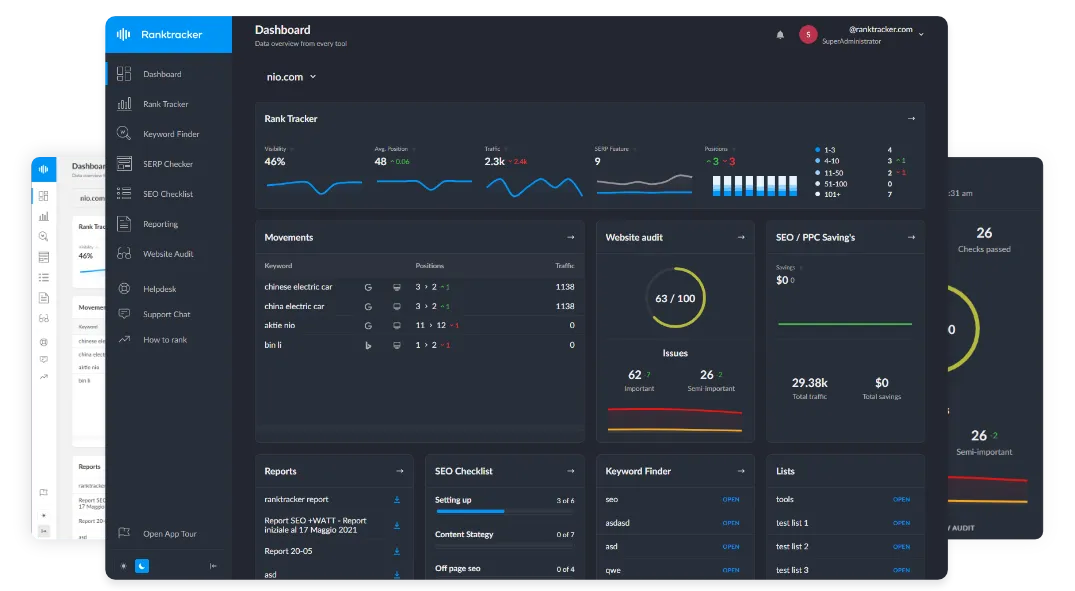
Ranktracker isn’t just a link vendor — it’s a link strategy + impact measurement system. For publishers running hundreds or thousands of posts, this matters.
How Ranktracker Works for Publishers
- Topical & keyword gap analysis across your content clusters
- Link plans built around strategic ranking opportunities — not just backlink counts
- Daily Top 100 rank tracking so you can see movement in visibility — including positions that matter before the Top 10
- Share of Voice reporting that connects link acquisition with aggregate visibility
- Adjustment guidance based on what signals are actually moving rankings
Why this matters for publishers: Many links show up after content is published, but without tracking you can’t see whether they helped move pages from position 72 → 45 → 28 — which is real progress.
Pros
- Link building + measurable rank impact
- Page/section-level strategic planning
- Visibility and competitive context included
- Great for data-driven editorial teams
Cons
- Not the cheapest link-only provider
- Strategy-led campaigns require alignment and priority setting
Verdict: Best choice for publishers who want link acquisition plus clear outcomes — not just link counts.
2. uSERP — Best for Premium Editorial & Authority Placements
Who this is for: Publishers in competitive verticals (tech, business, health, finance) that need trust signals and editorial positioning.
uSERP focuses on securing editorial placements in high-trust media — which boosts both SEO authority and brand credibility with readers.
The All-in-One Platform for Effective SEO
Behind every successful business is a strong SEO campaign. But with countless optimization tools and techniques out there to choose from, it can be hard to know where to start. Well, fear no more, cause I've got just the thing to help. Presenting the Ranktracker all-in-one platform for effective SEO
We have finally opened registration to Ranktracker absolutely free!
Create a free accountOr Sign in using your credentials
Pros
- Premium editorial placements in trusted outlets
- Signals that boost both authority and perception
- Well-suited for competitive verticals
Cons
- Costs are premium
- Not built for high volume outreach
Verdict: Smart choice if credibility and visibility in competitive SERPs matter most.
3. Siege Media — Best for Content-Led Link Earning at Scale
Who this is for: Publishers that can leverage high-value content assets (data studies, trend reports, guides) that naturally earn links.
Siege Media’s philosophy is content that earns links because it’s genuinely valuable — not just because you reached out.
Pros
- Natural link earning
- Assets that compound authority over time
- Low risk
Cons
- Long time to ROI
- Requires deep content investment
Verdict: Best for publishers that invest in cornerstone or flagship content designed to attract links.
4. FatJoe — Best White-Label Fulfillment for Reliable Delivery
Who this is for: Publishers and media agencies that want predictable link deliveries without strategy overhead.
FatJoe is operationally reliable — structured deliveries that integrate easily into workflows.
Pros
- Predictable output
- White-label friendly
- Scalable
Cons
- Quality varies by tier
- Less strategic guidance
Verdict: Practical link delivery partner if paired with internal measurement.
5. LinkBuilder.io — Best Managed Outreach Execution
Who this is for: Publishers that want a turnkey outreach engine without internal overhead.
LinkBuilder.io handles outreach — prospecting, pitching, follow-up and negotiation — which frees editorial teams to focus on content.
The All-in-One Platform for Effective SEO
Behind every successful business is a strong SEO campaign. But with countless optimization tools and techniques out there to choose from, it can be hard to know where to start. Well, fear no more, cause I've got just the thing to help. Presenting the Ranktracker all-in-one platform for effective SEO
We have finally opened registration to Ranktracker absolutely free!
Create a free accountOr Sign in using your credentials
Pros
- Saves internal effort
- Consistent link velocity over time
Cons
- Outcome quality varies by niche
- Mid-tier pricing
Verdict: Good option for publisher teams that lack dedicated outreach capacity.
6. Outreach Monks — Best Budget Outreach With Manual Workflow
Who this is for: Smaller publisher networks or niche blogs getting started with manual outreach.
Outreach Monks offers manual outreach at lower prices, but quality control is essential.
Pros
- Affordable entry point
- Manual outreach (no bot footprint)
Cons
- Variable site quality
- Internal vetting required
Verdict: Good starter partner — best paired with strong internal QA.
7. Rhino Rank — Best Supplemental Source for Diversified Link Sources
Who this is for: Publishers that want a steady supplemental link source alongside core campaigns.
Rhino Rank provides reliable delivery that helps diversify link sources.
Pros
- Predictable delivery
- Helps diversify profiles
Cons
- Not primary strategy driver
- Less bespoke work
Verdict: Works well as a support layer in diversified link plans.
8. Stan Ventures — Best for High-Volume Fulfillment
Who this is for: Large publishers with many content clusters that need consistent link velocity.
Stan Ventures provides a high-throughput link building engine — good for scaling multiple topics and sections.
Pros
- Volume delivery
- White-label ready
Cons
- Requires oversight
- Less strategic nuance
Verdict: Good execution partner for high-volume needs.
9. Page One Power — Best Relevance-First Editorial Outreach
Who this is for: Publishers that care much more about contextual relevance than raw numbers.
Page One Power emphasizes contextual, relevant placements — which aligns well with content authorities.
Pros
- High editorial relevance
- Durable placement quality
Cons
- Slower delivery
- Higher price per link
Verdict: Excellent for publishers focused on relevance first.
10. Authority Builders — Best Curated Publisher Network Placements
Who this is for: Publishers looking for predictable, vetted links without chaotic prospecting.
Authority Builders operates a curated network — reducing random quality variance.
Pros
- Consistent quality
- Easy internal QA
Cons
- Network reliance
- Less flexible than bespoke outreach
Verdict: Reliable option within a diversified strategy.
11. Loganix — Best Operational Support + Quick Execution
Who this is for: Publishers needing fast fulfillment while internal strategy and editorial planning run in parallel.
Loganix fills execution gaps quickly so you maintain link velocity.
Pros
- Fast turnaround
- Scalable
Cons
- Less strategic guidance
- Requires vetting
Verdict: Good as execution support.
12. Click Intelligence — Best for UK/EU Publisher Campaigns
Who this is for: Publishers targeting UK/EU search ecosystems with regional nuances.
Click Intelligence brings regional publisher relationships that help influence localized SERP authority.
Pros
- Regional expertise
- Authority-focused placements
Cons
- Takes time to ramp
Verdict: Great for localized publisher domains and regional content strategies.
13. Search Intelligence — Best for Digital PR & Coverage
Who this is for: Publishers with unique stories, data, or editorial narratives that media outlets want to cover.
Search Intelligence emphasizes PR-led link building — which sends trust signals and visibility beyond typical SEO.
Pros
- High editorial trust
- Brand authority lift
Cons
- Anchor control limited
- Longer lead times
Verdict: Best for publishers with PR-worthy content and narratives.
14. Sure Oak — Best for Integrated SEO + Link Strategy
Who this is for: Publishers that want link building embedded in a broader SEO program (content, technical, analytics).
Sure Oak integrates link building with content planning, site structure, and analytics.
Pros
- Strategy-led
- Sustainable growth
Cons
- Slower to show movement
Verdict: Great for holistic publisher SEO.
15. The HOTH — Best Packaged Publisher Link Options
Who this is for: Publishing teams that want simple, packaged options that are easy to scope and forecast.
The HOTH offers structured plans that can be easily budgeted.
Pros
- Easy onboarding
- Predictable packages
Cons
- Quality varies by tier
Verdict: Good basic choice when paired with internal tracking.
16. Digital Olympus — Best Relationship-Driven Outreach
Who this is for: Publishers that prioritize relationship-first outreach and contextual relevance.
Pros
- Relationship-centric links
- Contextual relevance
Cons
- Slower cadence
Verdict: Solid for authority-first builds.
17. Editorial.Link — Best for Brand Mentions & Authority Signals
Who this is for: Publishers that want authority signals and brand reinforcement.
Pros
- Strong editorial perception
- Trust reinforcement
Cons
- Less anchor control
Verdict: Great when brand credibility matters with audiences and search engines alike.
18. SEO.co — Best Conservative, Low-Risk Link Strategy
Who this is for: Publishers who want steady, low-risk link building without aggressive tactics.
Pros
- Lower risk
- Consistent authority growth
Cons
- Slow visibility lift
Verdict: Best for cautious, stability-focused approaches.
19. WebFX — Best Full-Service SEO + Link Delivery at Scale
Who this is for: Large publishing networks that want link building integrated with full SEO execution.
Pros
- Systemized delivery
- Integrated execution
Cons
- Less boutique nuance
Verdict: Good for publishers that need an all-in SEO partner.
20. Internet Marketing Ninjas — Best Traditional SEO + Conservative Tactics
Who this is for: Publishers that value proven, conservative methods over aggressive experimentation.
Pros
- Established reputation
- Traditional best practices
Cons
- Not growth-first
- Slower results
Verdict: Reliable for risk-averse publisher teams.
How Publishers Should Measure Link Building Success in 2026
A link is only “good” if it helps your content rank and drive traffic.
Measure link building by:
- Ranking movement across the full Top 100 — not just the Top 10
- Visibility and Share of Voice growth
- Category and cluster-specific performance
- Organic traffic lifts tied to content clusters
- Competitive displacement over time
If you judge success by DR or link counts alone, you’re tracking vanity metrics — not ROI.
Publishers need tools that track full SERP depth so you can see progress even in early rank lifts like 84 → 57 → 29 — which often signal major future gains.
Conclusion: Choosing the Right Link Building Partner for Publishers in 2026
Link building for publishers in 2026 is about relevance, editorial trust, topical authority, and measurable outcomes — not link counts.
Whether you choose high-trust editorial partners, managed outreach experts, or scalable fulfillment engines, the core requirement stays the same:
👉 Links only matter if they help your content and topic clusters rank and drive visibility growth.
Ranktracker tops this list because it pairs link acquisition with measurable ranking outcomes — the biggest missing capability in most publisher SEO programs.
Frequently Asked Questions About Link Building for Publishers
Are backlinks still important for publishers in 2026? Yes — but only when they are relevant, editorial, and tied to measurable outcomes instead of vanity metrics.
The All-in-One Platform for Effective SEO
Behind every successful business is a strong SEO campaign. But with countless optimization tools and techniques out there to choose from, it can be hard to know where to start. Well, fear no more, cause I've got just the thing to help. Presenting the Ranktracker all-in-one platform for effective SEO
We have finally opened registration to Ranktracker absolutely free!
Create a free accountOr Sign in using your credentials
How long until link building impacts rankings? Meaningful movement usually shows within 8–12+ weeks, depending on competition.
Should publishers focus on cluster authority or individual articles? Both — but linking into topic clusters often yields faster visibility gains than isolated pages.
Do all links have to be editorial? Editorial links are the best trust signals, but diversified profiles (contextual, editorial, outreach) deliver the most sustainable outcomes.
How many links does a publisher need? There’s no fixed number — focus on closing the authority gap with competitors for the keywords that matter most.