
Intro
When someone pulls out their phone and searches “best pizza near me” or “emergency plumber,” where you appear on Google Maps can literally decide whether they click your listing or move on to the next business. Local search is high-intent and high-converting — you’re not competing for attention, you’re competing for action.
That’s why local rank tracking matters. If you can’t measure where you rank across neighborhoods, you can’t improve it. And if you’re only tracking an “average position” from one location, you’re basically flying blind.
Local rankings vary massively by GPS coordinate. You can be #1 three streets away and invisible five streets in the other direction — which is why marketers and agencies increasingly rely on geo-grid tracking and Local Pack / Maps tracking rather than standard SERP trackers.
This guide breaks down the five best local rank tracking tools for marketers in 2026 — the ones that help you understand hyperlocal visibility, win more Local Pack placements, and prove ROI.
What Are Local Rank Tracking Tools?
Local rank tracking tools are SEO platforms designed to measure where a business appears in location-specific search results.
Unlike traditional rank trackers that report a “global” or “national” position, local rank trackers reveal how you rank when someone searches from:
- a specific city
- a specific neighborhood
- a specific ZIP/postcode
- GPS coordinates
- a defined service area
They typically track three key surfaces:
- Organic results (localized blue links)
- Local Pack rankings (the map-based 3-pack)
- Google Maps rankings (positions inside Maps)
The key capability is geo-grid tracking — checking the same keyword across many points in your service area, then visualizing it as a grid/heatmap so you can instantly see where you’re strong and where you’re invisible.
Why You Need a Local Rank Checker Tool
Local SEO isn’t “one ranking.” It changes depending on where the searcher is standing.
A proper local rank tracker helps you:
- Monitor hyperlocal performance (rankings by neighborhood, not averages)
- Win the Local Pack (where most local clicks happen)
- Track multi-location brands (franchises and service-area businesses)
- Benchmark competitors (who owns which neighborhoods)
- Prove ROI (rankings + traffic + conversions in one narrative)
Essential Features to Look for in Local Rank Tracking Software
The best tools in 2026 usually include:
- Geo-grid precision with adjustable map size/density
- Separate tracking for Organic vs Local Pack vs Maps
- Competitor overlays and comparison grids
- Multi-location dashboards (plus rollups)
- Automated reporting (white-label if you’re an agency)
- SEO context like SERP features, audits, keyword discovery, and integrations
5 Best Local Rank Tracking Tools for 2026
- Ranktracker – Best all-in-one local rank tracking + SEO execution platform
- Nightwatch – Strong geo-grid tracking and clean reporting
- BrightLocal – Best local SEO suite (citations + reviews + rankings)
- Localo – Best for simple heatmap visuals and quick client communication
- Keyword.com – Best budget-friendly option for accurate local tracking
1) Ranktracker (Best Overall)
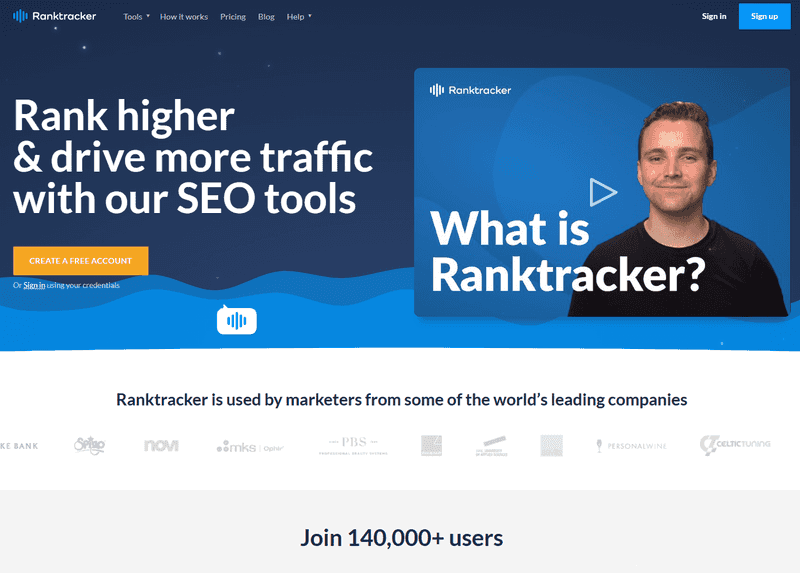
The All-in-One Platform for Effective SEO
Behind every successful business is a strong SEO campaign. But with countless optimization tools and techniques out there to choose from, it can be hard to know where to start. Well, fear no more, cause I've got just the thing to help. Presenting the Ranktracker all-in-one platform for effective SEO
We have finally opened registration to Ranktracker absolutely free!
Create a free accountOr Sign in using your credentials
If you’re serious about local SEO in 2026, you don’t just need a tool that shows rankings — you need a platform that helps you improve them.
That’s why Ranktracker is #1.
It’s not only a local rank tracker. It’s a complete SEO control center that ties local rank visibility to the workflows that actually move the needle: keyword discovery, competitive analysis, SERP feature tracking, audits, and reporting.
What Ranktracker does best for local SEO
Local tracking across Google + location segmentation Track your local rankings by city/region and monitor how visibility shifts across different markets — essential for service-area businesses and multi-location brands.
Local Pack + SERP feature awareness Local SEO isn’t just “position #3.” You’re competing for visibility across SERP features and local surfaces. Ranktracker helps you monitor the presence and volatility of those features.
Competitor visibility comparisons You can benchmark local keywords against competitors and quickly spot where you’re losing visibility — and which pages/keywords are responsible.
All-in-one workflow (no fragmented tools) Instead of using one tool for tracking, another for research, and another for audits, Ranktracker brings the essentials into one place:
- Top 100 Rank Tracker
- Keyword Finder
- SERP Checker
- Web Audit
- Backlink Checker
- Backlink Monitor
- SEO Checklist
- Reporting workflows
That matters for local businesses because local SEO is continuous — citations drift, competitors push reviews, Google updates pack logic, and rankings fluctuate by proximity.
Best for
Agencies, local businesses, and multi-location brands that want one platform to track local rankings and actually improve them through SEO workflows.
Pros
- Unified SEO + local rank tracking workflow
- Strong competitor and SERP context for local keywords
- Reporting-ready for agencies and internal teams
- Built to scale across markets and clients
Cons
- More powerful than “simple heatmap-only tools,” so setup is a little more involved
2) Nightwatch
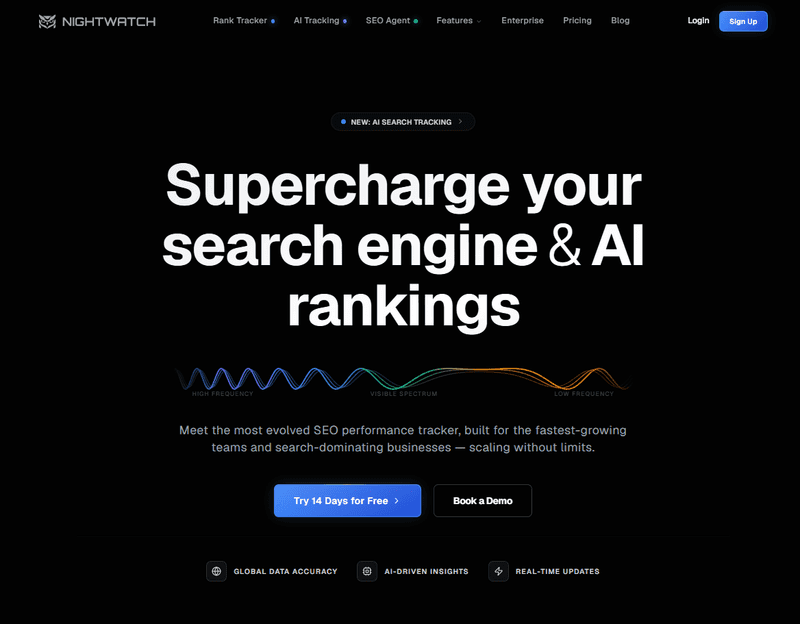
The All-in-One Platform for Effective SEO
Behind every successful business is a strong SEO campaign. But with countless optimization tools and techniques out there to choose from, it can be hard to know where to start. Well, fear no more, cause I've got just the thing to help. Presenting the Ranktracker all-in-one platform for effective SEO
We have finally opened registration to Ranktracker absolutely free!
Create a free accountOr Sign in using your credentials
Nightwatch is a strong local tracking option when you want clean dashboards, reporting, and geo-grid style tracking workflows.
Best for
Agencies and teams that prioritize reporting and visual rank tracking.
Pros
- Strong geo-grid tracking and presentation
- Good reporting workflow
- Solid for multi-location tracking
Cons
- More of a tracking-first platform than a full “execution ecosystem”
3) BrightLocal
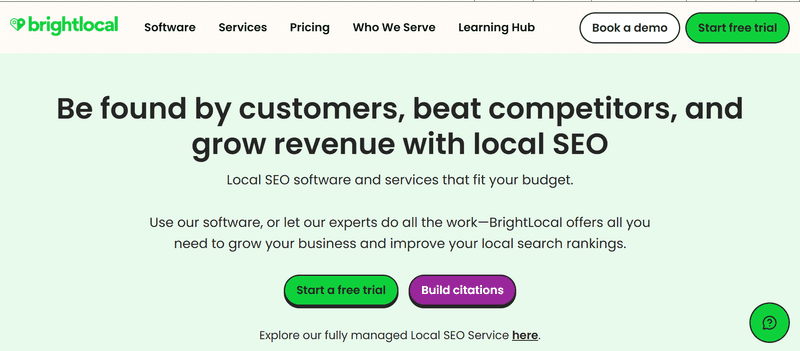
BrightLocal is a go-to local SEO suite because it bundles rankings with citations, NAP consistency, and reviews.
Best for
Agencies and franchises needing citations + review monitoring baked in.
Pros
- Citation and NAP tools included
- Review monitoring and reputation workflows
- Strong local SEO reporting
Cons
- Can feel cluttered because it does everything
- Pricing scales quickly with lots of locations
4) Localo
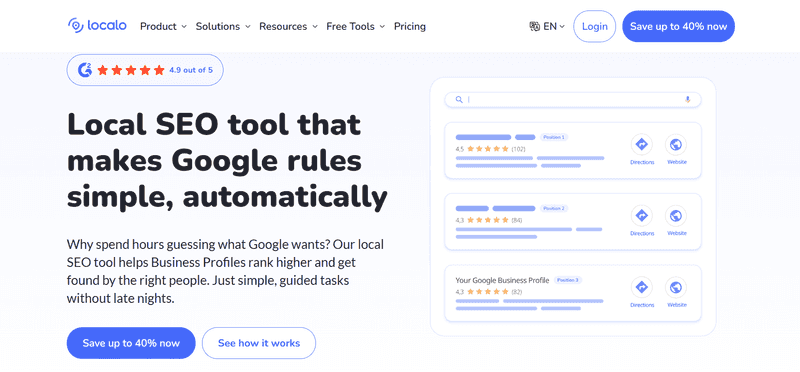
Localo is excellent for simple, visual heatmaps that clients and business owners instantly understand.
Best for
Businesses that want quick visibility understanding and easy reporting visuals.
Pros
- Best-in-class visualization
- Easy to show stakeholders
- Quick to interpret
Cons
- Fewer broader SEO execution tools than all-in-one platforms
5) Keyword.com
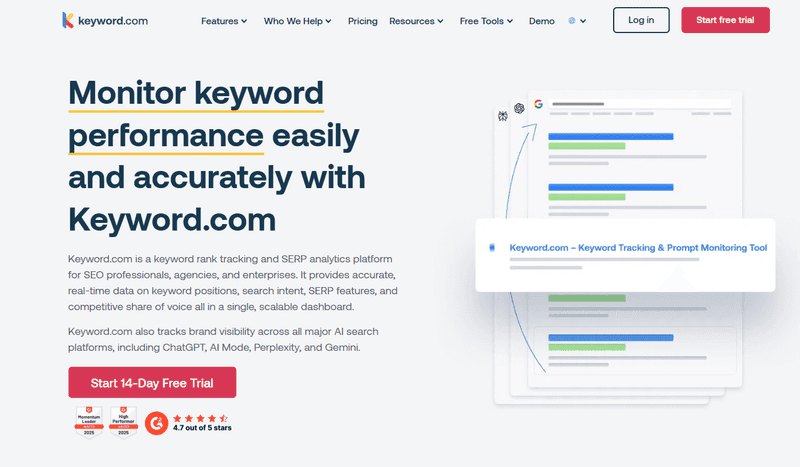
Keyword.com is a practical, budget-friendly option for accurate local rank tracking without enterprise pricing.
Best for
Small businesses, consultants, and startups that need accurate location tracking cheaply.
Pros
- Affordable entry point
- Reliable tracking
- Straightforward setup
Cons
- Less sophisticated visuals than heatmap-focused tools
- Limited “suite depth” compared to full SEO platforms
Frequently Asked Questions
What’s the difference between local and regular rank tracking?
Regular rank tracking shows rankings from one generalized location (or averages). Local rank tracking uses GPS coordinates and location segmentation to show what searchers see across neighborhoods, plus Local Pack and Maps visibility.
How often should I track local rankings?
Weekly is usually enough for steady monitoring. Track more frequently if you’re actively optimizing GBP, launching new location pages, or operating in a highly competitive area.
Can I track multiple business locations?
Yes — and if you’re doing franchise or agency work, you’ll want rollup dashboards plus per-location segmentation so your reporting doesn’t become chaos.

