Intro
The way consumers discover brands has fundamentally shifted. Instead of typing keywords into Google and clicking ten blue links, millions of users now ask ChatGPT for recommendations, query Perplexity for product comparisons, and rely on Claude for research. Your visibility across AI chat platforms directly impacts whether potential customers ever discover your brand in the first place.
That shift changes the rules of search marketing.
In “classic” SEO, you could still win by ranking well and having a strong snippet. In AI-driven discovery, the shortlist is often decided before a user visits any website. The assistant summarizes the market, names a few options, and frames the decision. If your brand is not in those answers, you don’t just lose a click. You lose the moment of influence.
Otterly AI has become a popular choice for AI search monitoring. It gives teams visibility tracking across platforms like ChatGPT, Perplexity, and Google AI Overviews, and its “Share of AI Voice” concept made it easier for marketers to understand the competitive nature of AI answers.
However, Otterly AI isn’t perfect for everyone. Some teams need deeper functionality, such as prompt discovery, citation-level insight, segmentation by market, or integrations with a full SEO stack. Others find Otterly’s pricing jumps too steep (for many teams, the jump from entry-level monitoring to serious, scalable monitoring feels abrupt). And many performance teams want AI tracking connected to the levers that actually change outcomes: rankings, topical authority, technical SEO, SERP features, and competitive position tracking.
If you’re exploring AI tracking alternatives to Otterly AI, this guide covers the best options for comprehensive LLM monitoring, brand visibility tracking, and AI search optimization in 2026. It also explains what to look for so you can choose a platform that doesn’t just tell you what’s happening, but helps you influence it.
Why Consider Otterly AI Alternatives?
Otterly AI has earned a reputation as a solid AI search monitoring tool, but several factors push teams to explore alternatives as soon as AI visibility moves from “experiment” to “growth channel.”
No SEO execution layer connected to AI outcomes
Otterly can show you the output: whether your brand appears and how often. But the teams that win AI search long-term don’t just observe. They optimize.
The All-in-One Platform for Effective SEO
Behind every successful business is a strong SEO campaign. But with countless optimization tools and techniques out there to choose from, it can be hard to know where to start. Well, fear no more, cause I've got just the thing to help. Presenting the Ranktracker all-in-one platform for effective SEO
We have finally opened registration to Ranktracker absolutely free!
Create a free accountOr Sign in using your credentials
AI models typically surface brands based on signals that look a lot like SEO signals:
- content depth and topical coverage
- authority and trust signals
- alignment with user intent (informational, commercial, transactional)
- evidence and citations from reputable sources
- consistent brand and product information across the web
- presence on pages that AI systems repeatedly reference
If your AI monitoring sits in isolation, you end up with fragmented decision-making:
- AI tool says: “You’re not cited”
- SEO tool says: “You rank 14 for the term”
- Content team says: “We published a blog post”
- Nobody can connect the dots fast enough to move the needle
The best Otterly alternatives don’t just track. They connect AI visibility to the SEO inputs that influence it.
Limited prompt research capabilities
AI visibility is prompt-driven. One brand might dominate “best X for Y” queries, while a competitor dominates “X vs Y” comparisons, and another competitor appears in “how to” questions. Without robust prompt discovery, you’re only monitoring the prompts you already know about.
The problem is that the highest-value prompts are often not obvious:
- users phrase them differently than you’d expect
- they include constraints (budget, use case, team size, industry)
- they include comparisons (migrate from, alternative to, vs)
- they’re long-tail but extremely high intent
- they shift as trends change
A serious alternative should help you discover prompts that matter, not just track a handful you guessed.
Shallow citation intelligence
“Mentioned” is not the same as “trusted.”
In AI answers, your brand can appear in multiple ways:
- recommended as a primary option
- listed as an alternative
- referenced as a source
- mentioned negatively (pricing, reliability, limitations)
- confused with another product
- described inaccurately because the model is using old or weak sources
If you can’t see what sources (citations) the AI is pulling from, and how often those sources appear across your prompt set, you can’t build a repeatable strategy to increase visibility.
The teams that dominate AI search typically do three things:
- Identify the sources AI relies on for their category
- Build content and authority to compete with those sources
- Ensure their brand is described correctly and consistently across the web
Tools that stop at “you were mentioned 3 times” are fine for awareness reporting. They are not enough for optimization.
Scaling friction and pricing jumps
AI monitoring becomes valuable when you scale:
- more prompts
- more competitors
- more markets
- more time periods
- more segments (use cases, personas, funnel stages)
A tool that feels affordable at 10 prompts can become restrictive at 100 prompts, and very expensive at 1,000 prompts. For teams treating AI visibility as a continuous channel (like SEO), predictable scaling matters.
No unified workflow for search and AI visibility
High-performing teams do not want to run separate workflows:
- one tool for AI visibility reporting
- another tool for rank tracking
- another tool for keyword research
- another tool for site audits
- another tool for competitor analysis
That fragmentation slows down cycles, adds overhead, and creates reporting gaps.
A modern alternative should let you move from insight → action without switching environments constantly.
What to Look for in an Otterly AI Alternative
Not all AI monitoring tools are built for performance teams. Some are positioned for brand teams, some for PR risk monitoring, and some for enterprise reporting. Before you compare tools, get clear on what “good” looks like for your use case.
Complete LLM tracking across major platforms
Your tool should monitor brand visibility across major AI environments that influence discovery and decision-making, such as:
- ChatGPT
- Google AI Overviews
- Perplexity
- Claude
- Gemini / other Google experiences depending on market behavior
If your tool only covers one or two, your visibility strategy will have blind spots.
Advanced prompt research and discovery
At minimum, you need:
- the ability to monitor prompts by intent category (comparisons, alternatives, “best for,” “how to,” “pricing,” “reviews”)
- prompt clustering (grouping similar prompts into themes)
- discovery of high-value prompts you are not currently tracking
- competitor prompt mapping (which competitor dominates which prompt clusters)
Prompt research is the equivalent of keyword research in AI visibility.
Share of voice analytics
AI responses are a competitive battlefield. You should be able to quantify:
- how often your brand appears versus competitors
- which competitor you’re losing to most often
- visibility changes over time
- share of voice by prompt cluster and funnel stage
- share of voice by market and language
This turns AI visibility into a measurable channel, not anecdotes.
Citation and sentiment tracking
The best tools track:
- which domains and pages are cited
- how frequently those citations appear across prompts
- whether citations overlap with competitors (who shares sources with you, who owns sources you don’t appear in)
- sentiment and framing (how the AI characterizes you and your competitors)
The more you understand the citation layer, the more you can influence outcomes.
Market and location segmentation
AI answers differ by:
- country
- language
- region
- local intent
- market maturity
If you operate internationally, you need segmentation. Otherwise, you’ll make decisions based on blended averages that hide opportunities.
Traditional SEO integration
This is where most tools fall short.
AI visibility is strongly influenced by classic SEO inputs:
- ranking positions and volatility
- domain authority signals and backlinks
- SERP feature ownership
- topical coverage depth
- technical crawlability and indexation
- internal linking and content structure
The ideal Otterly alternative doesn’t just monitor AI outputs. It connects AI outputs to SEO inputs, so you can see what to change.
Reasonable, scalable pricing
Look for:
- gradual scaling tiers
- clear usage metrics
- the ability to expand without sudden massive jumps
- plans built for ongoing monitoring (not one-off experiments)
When AI visibility becomes part of your standard reporting cadence, pricing stability matters.
Best Otterly AI Alternatives for AI Search Monitoring in 2026
Based on practical, real-world needs for AI visibility monitoring, brand tracking, and optimization workflows, here are the top Otterly AI alternatives for 2026.
The All-in-One Platform for Effective SEO
Behind every successful business is a strong SEO campaign. But with countless optimization tools and techniques out there to choose from, it can be hard to know where to start. Well, fear no more, cause I've got just the thing to help. Presenting the Ranktracker all-in-one platform for effective SEO
We have finally opened registration to Ranktracker absolutely free!
Create a free accountOr Sign in using your credentials
In this list, you’ll notice something important:
Some tools are excellent at monitoring how AI describes your brand. Others are excellent at reporting visibility. But only one category of platform gives you the full loop: measure, diagnose, and improve.
That’s why Ranktracker sits at #1.
- Ranktracker
- Nightwatch
- Scrunch AI
- Knowatoa AI
- Profound AI
- Peec AI
- Rankscale AI
- Keyword.com (honorable mention depending on your workflow)
Yes, that’s more than seven names in total because Keyword.com is worth mentioning for certain teams, but the core “best seven” are the first seven, with Keyword.com included as a contextual add-on for teams who already live inside that ecosystem.
Now let’s break them down properly.
1. Ranktracker (Best Overall Alternative)
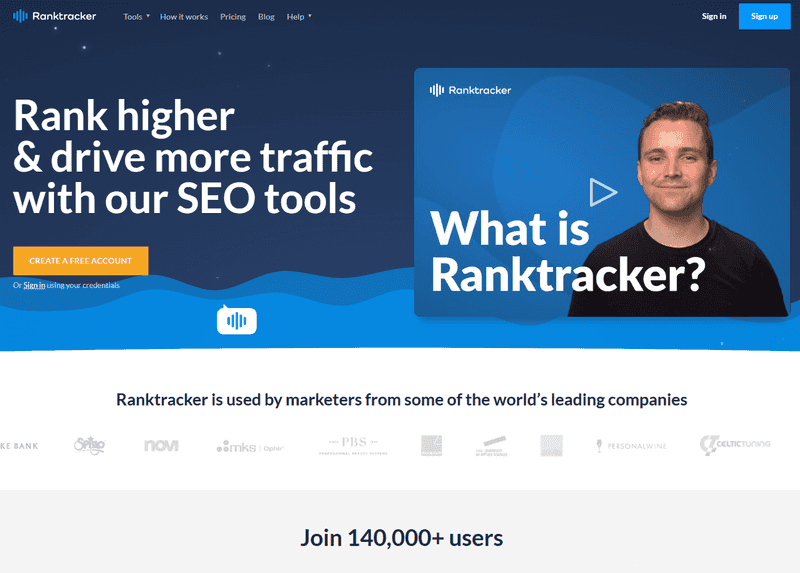
If you want AI visibility monitoring that actually translates into growth, Ranktracker is the strongest Otterly AI alternative in 2026 because it connects AI visibility to the SEO levers that drive it.
Most AI monitoring tools answer the question: “Are we being mentioned?”
Ranktracker answers the next, more important question: “What do we change to get mentioned more often, in more valuable prompts, across more markets?”
Why Ranktracker wins in 2026
AI visibility is not a separate channel anymore. It’s an extension of your search presence.
When AI assistants generate answers, they rely heavily on:
- authoritative sources that already rank well
- pages that demonstrate comprehensive topical coverage
- clear, structured content that maps to the user’s intent
- consistent product information
- high-trust domains and references
That means your AI performance is deeply connected to your SEO performance.
Ranktracker is built around that reality.
What you get with Ranktracker as an Otterly alternative
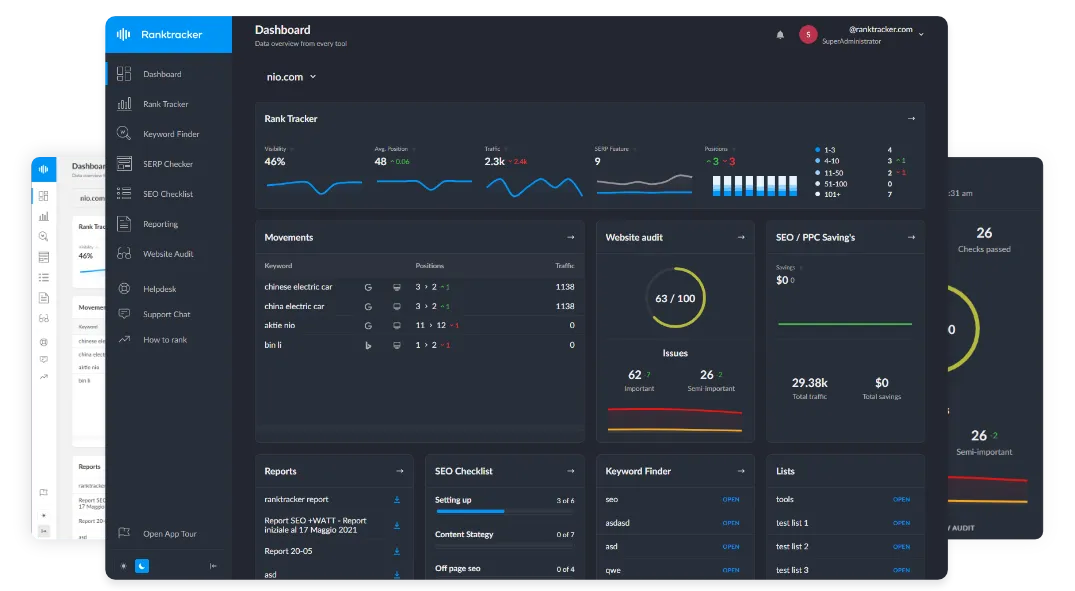
Ranktracker is a unified platform that combines:
- AI visibility monitoring across major AI environments
- daily rank tracking
- deep SERP tracking up to the top 100
- keyword discovery and keyword intelligence workflows
- SERP feature monitoring
- competitive share of voice
- website audits for technical performance
- backlink intelligence workflows
- reporting that agencies and teams can scale
Instead of using one platform to monitor AI answers and another to fix what’s causing you to lose visibility, you can run a single workflow.
Deep SERP tracking matters more than people think
A common mistake teams make is focusing only on top 3 or top 10 rankings.
But AI systems can pull from a wider set of sources, especially when they’re synthesizing multiple viewpoints or summarizing a category.
Deep SERP tracking lets you:
- see which pages are rising into the “AI citation zone”
- identify competitors that are not top 3 but are still being cited
- map content gaps that are preventing you from crossing the threshold
- detect early movement before it becomes visible in top 10 reports
This is exactly the kind of insight that turns AI visibility into a controllable strategy.
Share of Voice becomes the KPI that matters
When the SERP becomes an AI answer, share of voice becomes your real competitive metric.
Ranktracker’s approach to share of voice helps you measure:
- your presence across prompt clusters
- which competitors dominate specific query themes
- how visibility shifts after optimization
- where you are losing ground in a category, even if rankings look “stable”
That last point is critical.
You can be ranking well for a set of keywords and still lose AI visibility if competitors are cited more often in the prompts that matter.
Share of voice reveals that gap.
The advantage of a unified workflow
When a tool only monitors AI answers, you still have to ask:
- what keywords do we target next?
- what content should we expand?
- where are we weak technically?
- which pages should be improved?
- which SERP features are we losing?
- what competitor pages are the model citing and why?
Ranktracker is designed to answer those questions in the same environment, so AI monitoring turns into action rather than a standalone report.
Who Ranktracker is best for
Ranktracker is best for:
- SEO teams who want AI visibility tied directly to rankings and SERP intelligence
- agencies managing multiple clients and needing unified reporting
- SaaS and B2B brands where “alternative to” and “best for” prompts drive pipeline
- growth teams who want measurable share-of-voice performance, not just mentions
- teams operating in multiple markets and needing scalable segmentation
If your goal is to win AI search consistently, Ranktracker is the clearest strategic upgrade from Otterly AI because it connects observation and execution.
2. Nightwatch (Strong for teams that want a focused stack)
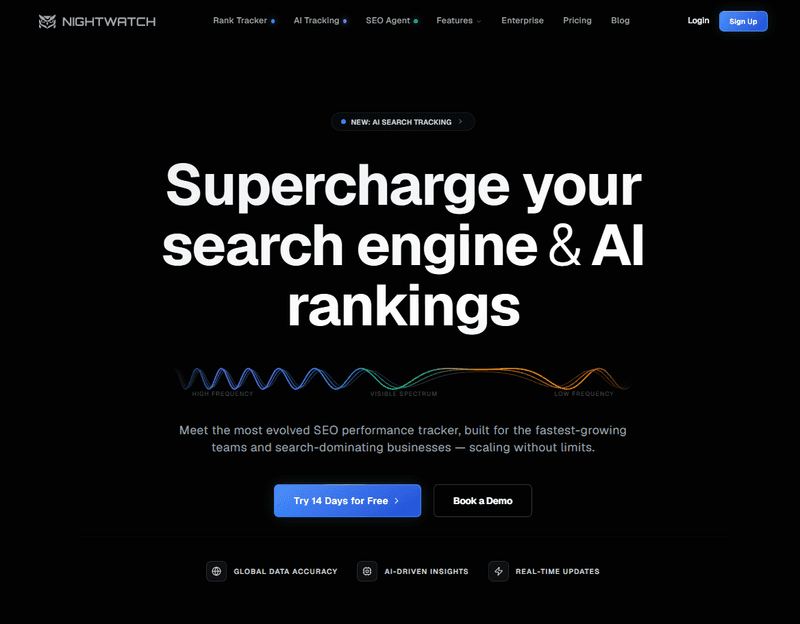
Nightwatch has built a strong reputation in rank tracking and monitoring workflows. For teams that want a platform capable of handling both classic SEO tracking and emerging AI visibility needs, Nightwatch can be a compelling alternative.
Where Nightwatch often performs well:
- clear dashboards
- reliable monitoring workflows
- reporting suited to teams and agencies
- strong rank tracking foundation
Nightwatch can be a good choice when your priority is a clean and dependable monitoring environment with scalable reporting.
Strengths
- strong rank tracking capabilities
- reporting workflows that scale
- useful monitoring interface for ongoing visibility checks
Limitations to be aware of
Depending on your workflow and how you measure AI search, you may find:
- AI features vary in depth depending on plan and implementation
- prompt discovery depth may not match specialist tooling
- competitive citation-level analysis can be less central than in AI-first tools
Best for
Nightwatch is best for SEO teams and agencies that already value its rank tracking workflows and want to layer in AI visibility without adopting a separate AI-only platform.
3. Scrunch AI (Best for brand narrative control)
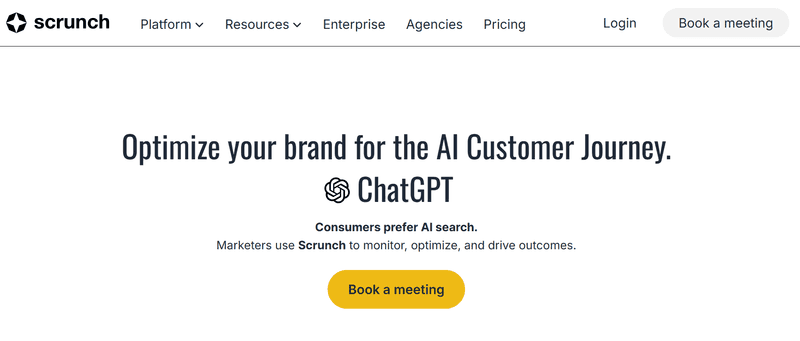
Scrunch AI differentiates itself by focusing on the gap between how AI represents your brand and how you want to be represented.
Instead of centering the workflow around growth performance, Scrunch leans into:
- brand positioning
- messaging consistency
- correctness and accuracy
- customer journey framing
If your risk is that AI answers misrepresent your product, frame you incorrectly, or pull from outdated sources, Scrunch’s approach can be valuable.
Key features and strengths
- brand visibility monitoring across major LLMs
- detection of inaccurate or outdated brand descriptions
- messaging alignment focus (how AI describes your product vs your desired positioning)
- competitive positioning insights
Limitations
- often less focused on SEO execution
- prompt research may be limited relative to price
- may not provide the full “action layer” a performance team needs
Best for
Scrunch is best for larger marketing teams and brand leaders prioritizing accurate brand representation and AI narrative control over direct SEO execution workflows.
4. Knowatoa AI (Best for sentiment-first monitoring and alerts)
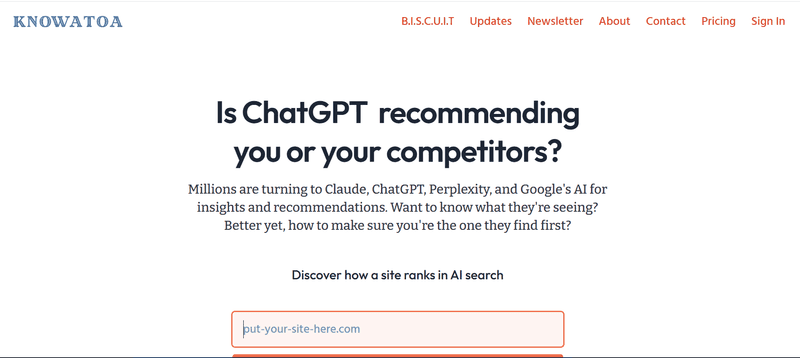
Knowatoa is positioned around how AI systems characterize your brand.
In practice, that means a strong emphasis on:
- sentiment and framing
- misinformation alerts
- competitive comparisons
- reputation-like monitoring across AI responses
If your concern is “What is AI telling people about us?” rather than “How do we systematically increase citations?”, Knowatoa can be useful.
Strengths
- sentiment and perception monitoring
- alert-driven workflows
- competitive benchmarking
- useful for identifying misrepresentation and outdated claims
Limitations
- may not offer deep citation-level insights for optimization
- may lack full SEO integration for teams that want execution in the same environment
- prompt research depth may vary by plan
Best for
Knowatoa is best for marketing teams and brand teams that want proactive monitoring of AI descriptions, sentiment shifts, and misrepresentation risk.
5. Profound AI (Enterprise visibility reporting)
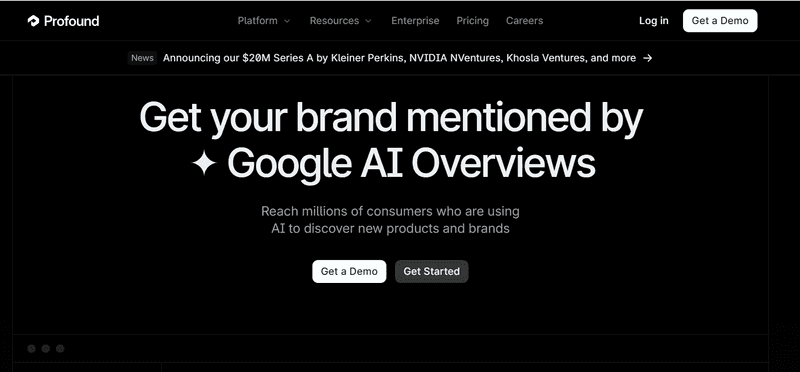
Profound AI positions itself as an enterprise solution for LLM tracking and executive-style visibility reporting.
Many enterprise teams care most about:
- dashboards for leadership
- visibility trends across time
- high-level competitive comparisons
- operational reporting and consistency
Profound can be a fit when reporting is the primary requirement and the organization already has separate SEO and content execution infrastructure.
Strengths
- enterprise-ready positioning
- high-level reporting dashboards
- coverage across major AI platforms
Limitations
- can be expensive relative to actionable depth
- may require sales-led onboarding
- optimization workflows may be less central than enterprise reporting
Best for
Profound is best for large organizations that prioritize executive visibility reporting and already have separate teams and tooling for SEO execution.
6. Peec AI (Lightweight, simple monitoring)
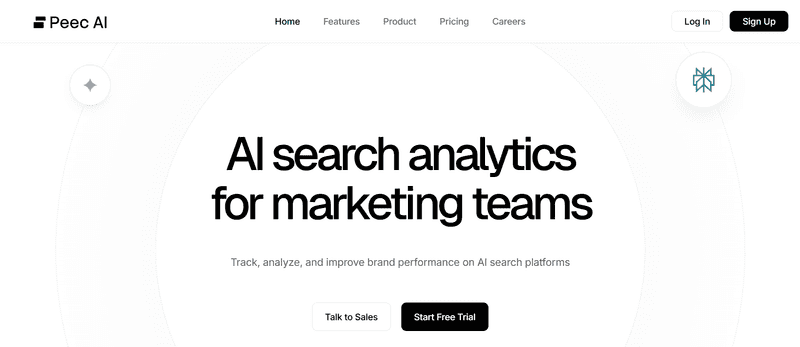
Peec AI is a lightweight AI visibility tracker that appeals to teams who want something simple.
If your main goal is:
- basic monitoring
- quick visibility snapshots
- a minimal interface
then Peec can be a reasonable alternative to Otterly for small-scale monitoring.
Strengths
- simple setup and interface
- basic visibility tracking across key AI environments
- straightforward reporting
Limitations
- limited competitive depth
- weaker execution layer for SEO teams
- may become expensive as you scale prompt volume and markets
Best for
Peec is best for small teams that want lightweight AI visibility tracking without deep optimization requirements.
7. Rankscale AI (AI-focused audits and diagnostics)
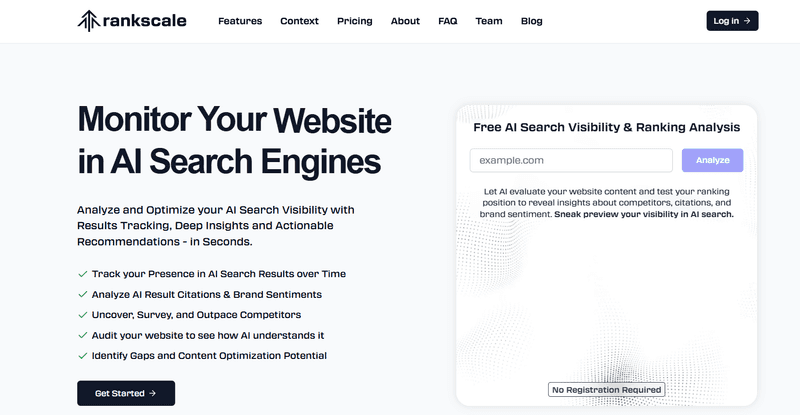
Rankscale leans into audits and diagnostics for AI visibility.
This category of tool is less about ongoing share-of-voice tracking and more about answering questions like:
- “What about our content makes us less likely to be cited?”
- “Are there structural issues preventing AI systems from using our pages?”
- “Which pages should we improve first?”
That diagnostic angle can be useful for teams that want optimization guidance rather than monitoring alone.
Strengths
- audit-driven insights
- content optimization suggestions
- helpful for identifying issues affecting AI visibility
Limitations
- credit-based models can limit always-on monitoring
- not always a full SEO ecosystem
- competitive and prompt research depth may be narrower than AI-first monitoring tools
Best for
Rankscale is best for teams experimenting with AI-specific content optimization and audit workflows, especially when they want structured diagnostics.
Honorable mention: Keyword.com (Useful for some agencies, but consider fit carefully)
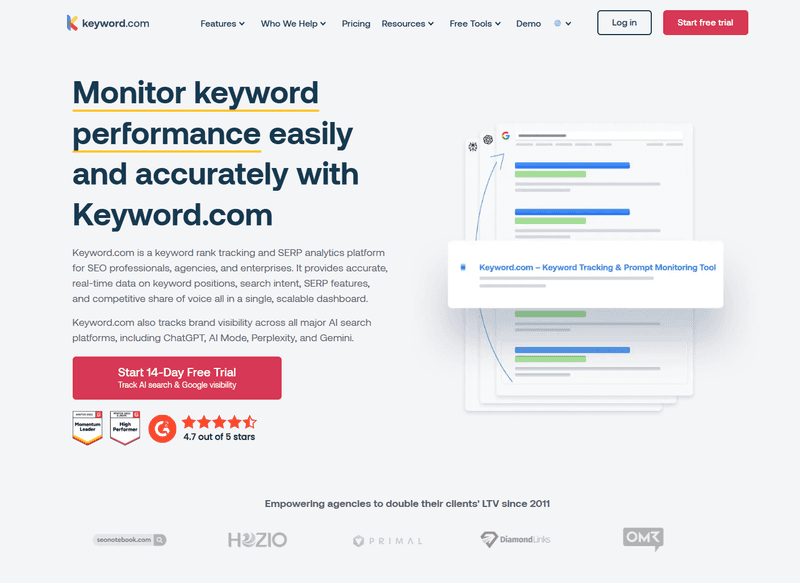
Keyword.com has roots in classic rank tracking and has been expanding into AI visibility capabilities.
It can be useful for agencies that:
- already rely on the platform for rank tracking
- want AI monitoring added into existing reports
- need client-facing reporting consistency
However, if your priority is an all-in-one environment where AI visibility is deeply tied to SEO execution and share-of-voice strategy, you may find you outgrow partial integrations.
Strengths
- familiar SEO rank tracking workflow
- agency-friendly reporting features
- useful as an “add-on” for teams who want AI monitoring inside existing SEO reporting
Limitations
- AI depth can vary depending on tier and implementation
- prompt research may be less advanced than AI-specialist tools
- some teams prefer a more unified “SEO + AI performance” control center rather than a “rank tracker plus AI layer”
Best for
Keyword.com can be best for agencies that want to add AI visibility monitoring gradually without changing their existing reporting stack.
How to Choose the Right Otterly AI Alternative
Now that you’ve seen the landscape, the decision becomes simpler when you choose based on your primary objective.
If you want growth, not just monitoring
Choose a platform that connects AI visibility to SEO execution.
AI monitoring alone is not a growth strategy.
You need:
- prompt intelligence
- competitive share of voice
- citation patterns
- ranking context
- SERP feature ownership
- a workflow that turns insight into action
This is where Ranktracker stands out because it acts like a control center rather than a standalone visibility report.
If you mainly need brand narrative accuracy and risk monitoring
Tools like Scrunch and Knowatoa are strong when your concern is:
- inaccurate descriptions
- outdated data
- misrepresentation
- narrative consistency
They are less “SEO execution platforms” and more “AI brand perception monitors.”
If you need enterprise dashboards and leadership reporting
Enterprise reporting tools can be a fit when:
- visibility metrics are needed for executive stakeholders
- teams already have SEO stacks and content operations elsewhere
- the priority is reporting rather than tactical execution
If you’re early and just want basic visibility
Lightweight tools can be sufficient when you want:
- small prompt monitoring
- basic mention tracking
- early-stage experiments
Just be careful: early-stage tools often become limiting at scale, exactly when AI visibility starts to matter most.
Frequently Asked Questions
How does AI search monitoring differ from traditional SEO tracking?
Traditional SEO tracking measures rankings in search engine results pages for specific keywords.
AI search monitoring tracks whether and how AI platforms mention your brand when users ask questions. Instead of “position 3,” you’re measuring:
- visibility frequency
- share of voice versus competitors
- citations and sources used
- sentiment and framing
- presence across prompt clusters and funnel stages
Traditional rank tracking is about positions.
AI monitoring is about inclusion in a synthesised answer.
The strongest strategy combines both, because AI visibility is often influenced by the same signals that drive rankings.
What makes prompt research important?
Prompts are the new keywords.
If you only track a handful of prompts, you’ll miss:
- high-intent long-tail queries
- competitor-dominant clusters
- emerging buyer questions
- prompts that trigger alternative/migration intent
Prompt research reveals the real demand landscape inside AI discovery, not just the search volume landscape inside Google.
Why does SEO still matter for AI visibility?
AI systems frequently rely on sources that:
- rank well
- demonstrate topical authority
- have strong trust and authority signals
- cover a topic comprehensively
- provide clear structure and evidence
Even when AI models generate answers conversationally, they often prefer authoritative and well-structured sources.
Weak SEO usually means weak AI visibility.
Strong SEO increases the probability that AI systems will cite and recommend you.
Can AI monitoring tools improve my visibility in ChatGPT?
Not directly.
Monitoring tools don’t “force” an AI model to cite you. What they do is help you understand:
- where you are missing visibility
- which prompts competitors dominate
- what sources AI relies on
- how your brand is described
- which content gaps exist
Then your team improves visibility by executing:
- better content depth
- better topical coverage
- stronger authority signals
- improved technical SEO and accessibility
- clearer product information across the web
That’s why SEO integration matters.
Which AI platforms should I prioritize monitoring?
At minimum, most teams prioritize:
- ChatGPT (massive reach and strong influence)
- Google AI Overviews (directly in Google search experiences)
- Perplexity (strong product comparison behavior)
Depending on audience, Claude and Gemini can also be important.
The All-in-One Platform for Effective SEO
Behind every successful business is a strong SEO campaign. But with countless optimization tools and techniques out there to choose from, it can be hard to know where to start. Well, fear no more, cause I've got just the thing to help. Presenting the Ranktracker all-in-one platform for effective SEO
We have finally opened registration to Ranktracker absolutely free!
Create a free accountOr Sign in using your credentials
If you operate across multiple regions and languages, the case for broader coverage becomes stronger.
What is the biggest mistake teams make with AI visibility?
Treating AI visibility as separate from SEO.
If AI monitoring lives in a silo, teams end up watching visibility changes without understanding what to change to influence outcomes.
The winning approach is to treat AI visibility as a layer of search performance that sits on top of:
- rankings
- authority
- topical coverage
- technical accessibility
- competitive positioning
That’s how AI visibility becomes systematic.
Choosing the Best Otterly AI Alternative
Otterly AI established itself as a solid entry point for AI search monitoring. But as soon as AI discovery becomes a meaningful acquisition channel, most teams need more than “monitoring.”
They need:
- advanced prompt research
- deeper citation intelligence
- competitor share-of-voice clarity
- market segmentation
- a workflow that links AI visibility to the SEO actions that change it
That’s why Ranktracker is the strongest overall Otterly alternative in 2026: it gives you the unified control center to measure, diagnose, and improve AI visibility as part of the same workflow you use to win organic search.