Intro
As generative search becomes the default interface to information, the world faces a new foundational challenge:
How do we prove what is real, what is human, what is original — and what has been altered or generated by AI?
Search, social media, journalism, and even ecommerce now depend on content provenance, the ability to verify:
✔ where content came from
✔ how it was created
✔ what tools assisted
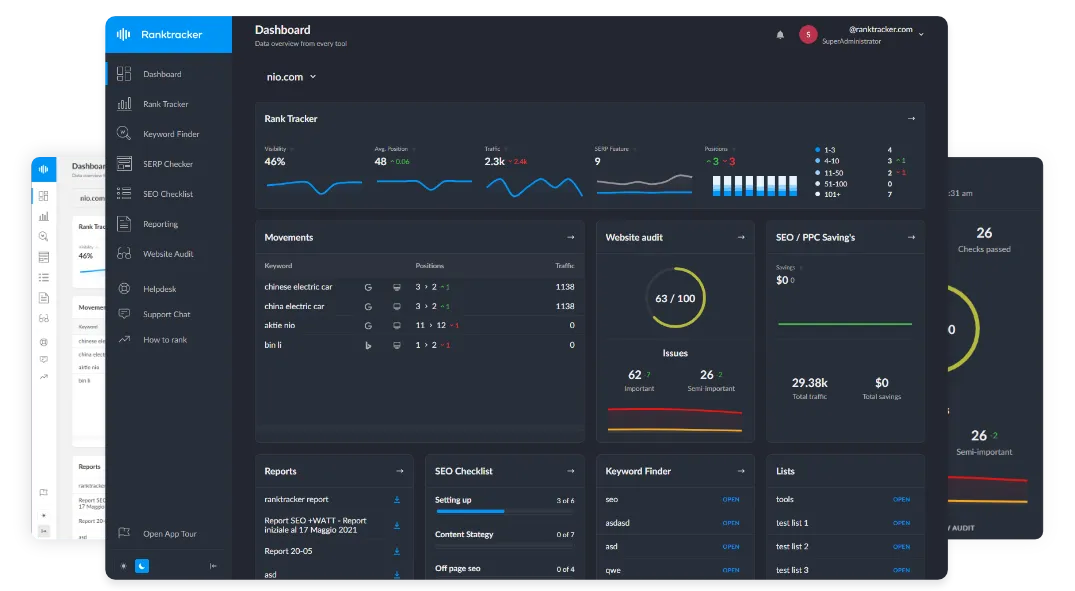
The All-in-One Platform for Effective SEO
Behind every successful business is a strong SEO campaign. But with countless optimization tools and techniques out there to choose from, it can be hard to know where to start. Well, fear no more, cause I've got just the thing to help. Presenting the Ranktracker all-in-one platform for effective SEO
We have finally opened registration to Ranktracker absolutely free!
Create a free accountOr Sign in using your credentials
✔ whether it’s authentic
✔ whether it’s been edited
✔ whether it’s AI-generated
Enter C2PA (Coalition for Content Provenance and Authenticity) and digital watermarking, the emerging global standards that allow machines — including LLMs, search engines, social platforms, and crawlers — to verify content integrity at scale.
In an era where synthetic media blends seamlessly with human content, provenance isn’t optional. It’s a survival mechanism for:
✔ SEO
The All-in-One Platform for Effective SEO
Behind every successful business is a strong SEO campaign. But with countless optimization tools and techniques out there to choose from, it can be hard to know where to start. Well, fear no more, cause I've got just the thing to help. Presenting the Ranktracker all-in-one platform for effective SEO
We have finally opened registration to Ranktracker absolutely free!
Create a free accountOr Sign in using your credentials
✔ AI visibility
✔ brand trust
✔ misinformation prevention
✔ intellectual property protection
This guide explains why C2PA and watermarking matter, how they work, and what marketers must do to prepare for a provenance-driven future.
1. Why Provenance and Watermarking Matter in 2025
The shift from “web pages” to AI-generated answers changes everything.
When LLMs produce summaries, they need to know:
✔ which sources are trustworthy
✔ which content is genuine
✔ which materials were produced ethically
✔ which creators are authoritative
✔ which media is safe to cite
Without provenance, AI models treat all content as equal — including:
✘ deepfakes
✘ AI spam
✘ synthetic misinformation
✘ artificially manipulated media
✘ stolen or scraped content
✘ hallucinated material
C2PA and watermarking restore order by embedding machine-verifiable authenticity at the content level.
In the new ecosystem of AI-driven search, provenance = visibility. No provenance = uncertainty → downranking → avoidance by AI.
2. What Is C2PA? (Coalition for Content Provenance and Authenticity)
C2PA is an open technical standard created by:
✔ Adobe
✔ Microsoft
✔ Intel
✔ BBC
✔ Sony
✔ Truepic
✔ Arm
Its purpose:
To embed tamper-proof provenance information into media itself.
This includes:
✔ images
✔ videos
✔ audio
✔ documents
✔ AI-generated media
✔ edited media
The C2PA standard attaches a cryptographically signed manifest containing:
-
who created the content
-
what device was used
-
what software assisted
-
what edits were made
-
what AI tools contributed
-
the content’s revision history
This creates an unbroken chain of trust.
3. What Is Digital Watermarking?
Digital watermarking embeds hidden, machine-readable signatures inside content.
Unlike C2PA, which is explicit metadata, watermarks are:
✔ invisible
✔ resilient to cropping
✔ resilient to compression
✔ detectable by LLMs, crawlers, and platforms
✔ cryptographically linked
Watermarking is used for:
-
AI image recognition
-
deepfake detection
-
copyright attribution
-
authenticity scanning
-
content tracing
-
regulatory compliance
-
platform-level moderation
-
LLM ingestion signals
Most major AI platforms now require or encourage watermarking for synthetic media.
4. Why Provenance Matters for SEO and LLM Optimization
This is the part most marketers don’t yet understand:
Search engines and LLMs increasingly prefer content with provenance.
Here’s why:
1. AI Overviews need reliable sources
Google Gemini’s AI Overview requires trustworthy inputs. C2PA signals help the system decide what to cite.
2. Perplexity and ChatGPT Search rank higher-trust sources
LLMs use authenticity signals to avoid hallucinating from low-trust data.
3. Provenance helps LLMs distinguish original work from AI-spam
Watermarked content stands out as:
✔ authentic
✔ high-quality
✔ human-led
✔ traceable
4. It protects your brand from content theft
If someone copies your content, the provenance chain reveals:
✔ the original creator
✔ the timestamps
✔ the signature sequence
✔ the content hash
This is enormous for SEO and intellectual property.
5. Future ranking factors will include authenticity signals
Google’s March 2025 documentation already hints at:
-
“verified provenance signals”
-
“synthetic media labeling”
-
“human-review transparency”
Brands with provenance will outperform brands without it.
5. The Role of C2PA in Fighting Misinformation, Deepfakes, and AI Spam
LLMs hallucinate partly because the web is polluted.
C2PA solves this by providing:
-
✔ a verified chain of custody
-
✔ a tamper-proof authenticity record
-
✔ declared AI-assisted steps
-
✔ device-level capture signatures
-
✔ edit history
This prevents:
-
deepfake distribution
-
political misinformation
-
identity manipulation
-
deceptive ecommerce product images
-
fake reviews with AI images
-
generated personas pretending to be experts
For SEO:
C2PA becomes the trust layer that separates real, authoritative content from algorithmically generated noise.
6. How C2PA Works (Simplified Technical Overview)
C2PA embeds a “manifest” inside the file containing:
1. Asset Metadata
Who created it When Device Coordinates (optional) Software versions
2. Action History
Edits Filters AI-generated steps Model versions Cropping Rewrites
3. Cryptographic Signatures
Each step is signed with secure keys.
4. Verification System
Browsers, crawlers, LLMs, and platforms can verify:
✔ authenticity
✔ integrity
✔ edit trail
✔ creator identity
If tampered:
C2PA → flags → platform → reduced visibility
This creates a global chain of trust for digital media.
7. Why Watermarking Matters for LLMs
AI systems rely heavily on watermarks when:
✔ training
✔ indexing
✔ citation selection
✔ safety classification
✔ answer generation
✔ content filtering
Watermarks help models identify:
-
✔ synthetic vs. original content
-
✔ copyrighted vs. free-to-train content
-
✔ safe vs. unsafe media
-
✔ verified vs. unverified assets
This gives watermarked content an advantage in generative search.
8. How Marketers Should Implement C2PA and Watermarking (2025 Playbook)
Here’s the recommended workflow.
1. For Images
Use C2PA-enabled tools:
✔ Adobe Photoshop
✔ Adobe Lightroom
✔ Adobe Express
✔ Truepic
✔ Microsoft Designer
✔ Midjourney v6+
✔ DALL·E (via OpenAI watermarking)
Plugins automatically embed provenance.
2. For Video
Use:
✔ Adobe Premiere
✔ After Effects
✔ Sony/Microsoft video pipelines
✔ C2PA-manifest exporters
3. For AI-Generated Media
Always:
✔ attach a provenance manifest
✔ embed an AI-generated label
✔ declare model + version
✔ watermark the imagery
This is required for regulatory compliance in many jurisdictions.
4. For Written Content
While C2PA is still visual-first:
✔ embed provenance metadata in JSON-LD
✔ track revision history
✔ disclose AI assistance
✔ sign content hashes
✔ maintain author identity pages
✔ provide machine-readable authorship
This improves AI citation likelihood.
5. For Brand Assets and Documentation
Watermark:
✔ diagrams
✔ charts
✔ UX/UI mockups
✔ product illustrations
✔ demo screenshots
LLMs ingest these as factual anchors during summarization.
9. What Happens If You Ignore Provenance? (The Risks)
Ignoring provenance and watermarking carries serious consequences:
1. Lower trust from LLMs
Models prefer authenticated sources. Unauthenticated content is more likely to be omitted.
2. Lower trust in generative search
AI Overviews may downrank unverifiable media.
3. Loss of digital authenticity
Your content can be copied, edited, manipulated — with no trace.
4. Copyright vulnerability
Without provenance, proving authorship becomes nearly impossible.
5. Reputational damage
Fake or manipulated content can circulate resembling your brand.
6. Regulatory penalties
EU and U.S. regulations increasingly require transparency for AI-produced media.
7. Increased hallucination risk
LLMs often hallucinate when lacking provenance signals — filling gaps with guesses.
10. How Ranktracker Supports Provenance-Aware SEO
Ranktracker tools help implement and monitor provenance:
Web Audit
Detects metadata gaps where provenance tags should live.
Keyword Finder
Develops content that benefits from verified authorship and human expertise.
SERP Checker
Shows how authenticity signals influence entity ranking and category placement.
Backlink Checker & Monitor
Strengthens external consensus — critical for provenance credibility.
AI Article Writer
Produces structured, human-reviewed content that pairs perfectly with provenance metadata.
Ranktracker becomes the operational backbone for provenance-informed search visibility.
Final Thought:
Provenance Is Becoming the Trust Layer of the Entire Internet
C2PA and digital watermarking are not trends — they are the new authenticity infrastructure for the AI era.
In a world flooded with synthetic content, brands that adopt provenance will:
✔ be preferred by LLMs
✔ appear more often in AI Overviews
✔ earn user trust
The All-in-One Platform for Effective SEO
Behind every successful business is a strong SEO campaign. But with countless optimization tools and techniques out there to choose from, it can be hard to know where to start. Well, fear no more, cause I've got just the thing to help. Presenting the Ranktracker all-in-one platform for effective SEO
We have finally opened registration to Ranktracker absolutely free!
Create a free accountOr Sign in using your credentials
✔ avoid misinformation
✔ maintain authority
Provenance is not about controlling AI. It’s about making AI trust you.
The future of SEO and LLM optimization will belong to brands that can prove their content’s origin, authorship, and authenticity — across every platform and every AI model.