Intro
Even though Google’s Google Bard brand has since been replaced by Google Gemini, the original Bard comparison still attracts traffic because of long-running search interest and content that references Bard directly in training and historical contexts. In 2026, understanding the difference between Claude and Bard remains useful for SEO and content research — especially if your audience is still searching for “Claude vs Bard” today.
This article compares Claude and Bard historically, focusing on AI reasoning vs AI search influence, their strengths and weaknesses, and practical workflows for SEO and content professionals.
Overview of Both Tools
What Is Claude?
Claude is developed by Anthropic and is designed as a reasoning-centric large language model that emphasizes:
- Structured logic and deep contextual understanding
- Longer conversational history and context windows
- Safety-focused outputs and controlled reasoning
Claude excels in tasks that require coherent and in-depth explanation, such as content structuring, research synthesis, and long-form writing.
What Is Bard? (Historical Context)
Bard was Google’s generative AI chatbot originally built on Google’s LaMDA family of models. It was designed to provide interactive conversational responses, often with access to web-sourced information and real-time data. Bard was later rebranded and evolved into what is now called Gemini. (Wikipedia)
Historically, Bard’s strengths were its:
- Integration with Google Search and real-time data retrieval
- Ability to answer queries with up-to-date information
- Conversational responses tied to external search signals
While Bard as a standalone product no longer exists under that branding, its historical behavior and initial positioning against other AI models still matter for SEO content that targets legacy search queries.
Core Difference: AI Reasoning vs AI Search
Claude is a reasoning engine — it processes input context and generates content based on structured logic and extensive internal knowledge.
Bard (historically) was an AI search-informed interface — it aimed to combine generative language capabilities with real-time search results and web-sourced information.
That distinction led to two different strengths:
- Claude ➝ Focused reasoning, deeper contextual understanding
- Bard ➝ Access to real-time information and web-based answers (DigiPix Artificial Intelligence)
Although Gemini now carries the legacy of Bard, understanding the Claude vs Bard comparison helps capture how users previously evaluated reasoning vs search-powered generative AI.
Accuracy and Source Attribution
Claude
Claude does not have live access to the internet or real-time web search by default. It generates output based on its trained model and any content you include in your prompt.
Its strengths include:
- Detailed logical responses
- Low risk of fabrication if prompts are clear
- Consistent structured output
But Claude relies on internal model knowledge, not real-time citations.
Bard (Historical)
Bard was unique early on because it used web-connected data to generate responses, meaning:
- Answers could reflect recent information
- Real-world facts could be referenced
- Integration with search signals helped retrieval-based responses
However, Bard’s reliance on real-time results also meant occasional inaccuracies if search results were poor or ambiguous. (DigiPix Artificial Intelligence)
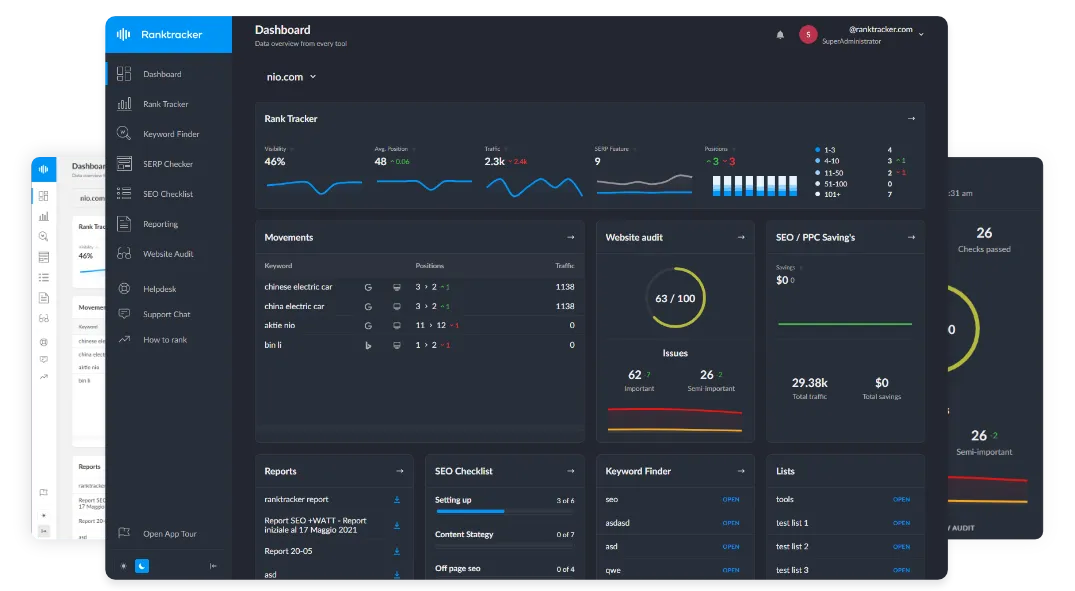
The All-in-One Platform for Effective SEO
Behind every successful business is a strong SEO campaign. But with countless optimization tools and techniques out there to choose from, it can be hard to know where to start. Well, fear no more, cause I've got just the thing to help. Presenting the Ranktracker all-in-one platform for effective SEO
We have finally opened registration to Ranktracker absolutely free!
Create a free accountOr Sign in using your credentials
This dynamic difference — reasoning vs retrieval — defined much of the debate over which AI “knows better.”
Which Was Better for Research?
From an SEO and research standpoint, each model served a different use case:
Claude for Structured Analysis
Claude was often better for:
- Deep topic synthesis
- Logical summaries
- Multi-step reasoning
- Longer content generation
You could feed Claude source texts and get comprehensive breakdowns even without current web context.
Bard for Real-Time Information
Because Bard could surface internet-sourced information, it was historically better for:
- Quick factual lookup
- Up-to-date references
- Research that requires the latest data
- Connecting queries to web content
But fetching web data did not guarantee accuracy, and Bard’s real-time dependence sometimes led to inconsistent answers. (DigiPix Artificial Intelligence)
SEO Content Implications
If your target keyphrase includes “Claude vs Bard,” you should consider how users perceive each in terms of:
- Reasoning and structure (Claude)
- Search-informed answers (Bard)
From an SEO workflow perspective, the most effective method in 2026 looks like this:
- Use Claude to generate structured content outlines and deep explanations.
- Use historical Bard/ Gemini context to reference real-time data where relevant.
- Validate keywords and search intent in Ranktracker.
- Analyze SERP competitor content.
- Publish and track Top 100 rankings daily.
- Iterate based on performance data.
This workflow transforms AI output from plausible content into measurable ranking performance.
Strengths and Weaknesses (Historical)
Claude
Strengths:
- Deep reasoning and logical coherence
- Long context handling
- Strong at complex queries
- Less likely to hallucinate with well-structured prompts
Weaknesses:
- No default live web access
- Not inherently real-time
Bard
Strengths:
- Historical access to real-time web information
- Search-driven answers
- Recent data integration
Weaknesses:
- Inconsistent accuracy at times
- Real-time access does not guarantee reliability
- Now rebranded and evolved into Gemini, meaning the pure Bard version is legacy
Use Case Guide (Historical)
Choose Claude if you want:
- Deep explanatory outputs
- Multi-document reasoning
- SEO briefs and long-form content
- Structured, logic-driven writing
Consider Bard (historical context) if you want:
- Answers tied to real-time search data
- Quick retrieval-based responses
- Early scenarios where web context mattered most
Since Bard has evolved into Gemini, today you would often compare Claude vs Gemini for live search-enabled AI.
Final Verdict: Claude vs Bard (Why Traffic Still Exists)
Although Google Bard’s branding has been retired and merged into Gemini, the historical comparison remains relevant for SEO because:
- Many queries still target Bard by name
- Users remember Bard from earlier in the AI evolution
- Legacy comparisons still attract search volume
Claude’s reasoning strength and Bard’s historical search-informed output reflect two ends of the AI spectrum:
- Claude ➝ reasoning and structure
- Bard ➝ search and retrieval
For content teams in 2026, the optimal strategy blends AI generation with data validation and real-world signals:
Generate → Validate in Ranktracker → Analyze SERPs → Publish → Track Top 100 Rankings Daily
That system ensures AI content actually competes in search rather than simply being plausible text.