Intro
Ranking content today requires more than keywords, it requires alignment between search intent, structure, visuals, and user experience. Search engines reward articles that are useful, well-organized, and engaging. This guide walks through the core components of writing articles that rank, with practical tools for every stage of the process.
1. Start With Search Intent, Not Just Keywords
Before choosing keywords, understand why someone is searching. Are they looking for information, comparisons, or solutions? Articles that match intent outperform those that simply target volume.
Best practices:
- Analyze top-ranking pages to identify patterns
- Match content depth to intent (short answers vs long guides)
- Use secondary keywords to support the main topic
Helpful tools:
- SEMrush – Identifies keyword intent and SERP competition
- Ahrefs – Shows ranking difficulty and search behavior
- LowFruits – Finds low-competition ranking opportunities
- Ranktracker – Shows search intent classification and tracks daily Top 100 rankings, helping you confirm whether your content matches intent across the entire SERP
2. Plan the Article Before Writing
Well-ranking articles are structured intentionally. Outlines help ensure coverage, logical flow, and scannability—three things search engines strongly favor.
Best practices:
- Build outlines from competitor headings
- Use clear H2 and H3 hierarchy
- Answer related questions within the same article
Helpful tools:
- Frase – Generates SERP-based outlines
- Surfer – Compares structure against ranking pages
- Notion – Organizes outlines and content workflows
3. Write for Readability and Engagement
Search engines track how users interact with your content. If readers bounce quickly, rankings suffer. Clear writing keeps people scrolling.
Best practices:
- Short paragraphs and sentences
- Use examples and explanations, not filler
- Write for humans first, algorithms second
Helpful tools:
- Hemingway Editor – Improves clarity and simplicity
- Grammarly – Enhances grammar and tone
- WordCounter – Tracks length and keyword balance
4. Optimize On-Page SEO Naturally
On-page SEO helps search engines understand what your article is about without compromising readability.
Best practices:
- Optimize title tags and meta descriptions
- Use internal links strategically
- Add keyword variations naturally
Helpful tools:
- Yoast – Guides on-page SEO fundamentals
- RankMath – Advanced on-page optimization features
- Clearscope – Improves topical relevance
5. Strengthen Articles With Photography and Visuals
Images are no longer optional. Photography improves engagement, accessibility, and time-on-page—all ranking signals.
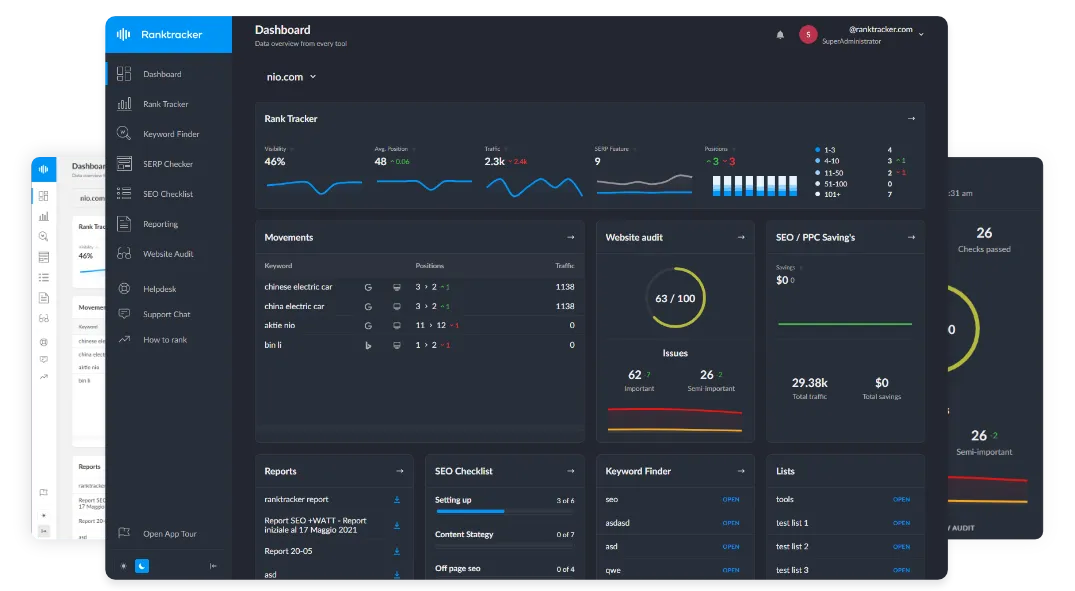
The All-in-One Platform for Effective SEO
Behind every successful business is a strong SEO campaign. But with countless optimization tools and techniques out there to choose from, it can be hard to know where to start. Well, fear no more, cause I've got just the thing to help. Presenting the Ranktracker all-in-one platform for effective SEO
We have finally opened registration to Ranktracker absolutely free!
Create a free accountOr Sign in using your credentials
Best practices:
- Use images that support the text (not decoration)
- Add descriptive alt text for SEO and accessibility
- Include editorial or real-world photography for credibility
Helpful tools:
- Vecteezy – Editorial and commercial photography, including lifestyle, entertainment and sports photography
- Pexels – Clean visuals for blog content
- Canva – Creates featured images and visual assets
6. Improve Page Speed and User Experience
Fast, clean pages rank better. Large images, cluttered layouts, and poor mobile optimization hurt performance.
Best practices:
- Compress images before upload
- Ensure mobile responsiveness
- Reduce unnecessary scripts
Helpful tools:
- Google PageSpeed Insights – Measures speed and UX
- GTmetrix – Diagnoses loading issues
- TinyPNG – Optimizes images without quality loss
7. Update, Promote, and Track Performance
SEO content isn’t “publish once and move on.” Pages that are regularly updated, promoted, and monitored tend to hold rankings longer and recover faster from algorithm changes. Ongoing optimization is what turns good articles into long-term traffic assets.
Best practices:
-
Refresh key articles every 6–12 months to keep content accurate and competitive
-
Add new data, examples, or visuals to improve depth and engagement
-
Track ranking changes, clicks, and visibility to spot declines or growth early
Helpful tools:
-
Google Search Console – Monitors impressions, clicks, and query-level performance
-
BuzzSumo – Identifies promotion and distribution opportunities
-
Ahrefs Content Explorer – Tracks backlinks and content performance
-
Ranktracker – Monitors daily Top 100 rankings, visibility trends, and performance changes after updates so you can measure what actually moves the needle
Conclusion
Creating SEO articles that rank and get read isn’t about chasing algorithms—it’s about building content that aligns with how people search and how they consume information. The strongest-performing articles are intentional at every stage: they start with search intent, follow a clear structure, prioritize readability, and are supported by visuals and solid technical foundations.
Just as important, ranking content is maintained, not finished. Regular updates, performance tracking, and smart promotion ensure articles stay competitive as search results evolve. When intent, quality, structure, and ongoing optimization work together, SEO content becomes a long-term asset rather than a one-time effort.