
Intro
For years, “helpful content” was misunderstood as a volume problem.
Write more words. Add more sections. Cover more keywords.
That approach no longer works — and in many cases, it actively hurts performance.
In 2026, search engines don’t reward content for being long. They reward it for being understandable, extractable, and reliable. Helpfulness is no longer measured by how much you say, but by how clearly information is structured.
Word count doesn’t make content helpful. Structure does.
How “Helpful Content” Is Actually Evaluated Now
Search engines no longer judge pages in isolation.
They evaluate:
- How quickly an answer is delivered
- Whether sections have clear roles
- If information can be reused safely
- Whether the page fits cleanly within a topic
Google doesn’t need more text. It needs less ambiguity.
The All-in-One Platform for Effective SEO
Behind every successful business is a strong SEO campaign. But with countless optimization tools and techniques out there to choose from, it can be hard to know where to start. Well, fear no more, cause I've got just the thing to help. Presenting the Ranktracker all-in-one platform for effective SEO
We have finally opened registration to Ranktracker absolutely free!
Create a free accountOr Sign in using your credentials
AI Overviews, featured snippets, and answer engines depend on structured explanations. Content that rambles — even if it’s accurate — becomes risky to reuse.
That’s why shorter, clearer pages increasingly outperform longer, unfocused ones.
Why Word Count Became a Misleading Proxy
Word count was once a shortcut.
Longer content tended to:
- Cover more subtopics
- Include more context
- Earn more backlinks
But that correlation broke when:
- AI made content creation cheap
- Long-form became bloated
- Pages tried to answer everything at once
Now, excessive length often signals:
- Weak intent control
- Topic overlap
- Redundancy
- Cannibalization
Search engines interpret this as uncertainty — not authority.
Structure Is How Search Engines Understand Helpfulness
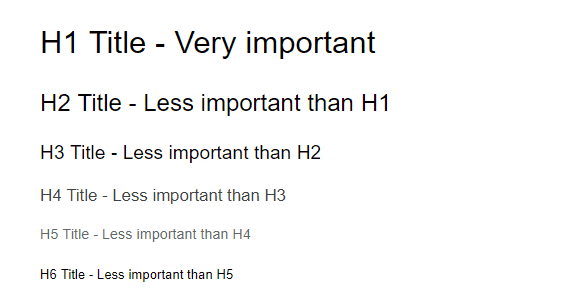
Modern search systems don’t “read” like humans.
They look for:
- Clear question–answer alignment
- Logical section progression
- Stable definitions
- Consistent terminology
If a page lacks structure, search engines struggle to:
- Identify the primary answer
- Extract safe summaries
- Decide which query it satisfies
This reduces:
- Ranking stability
- SERP feature eligibility
- AI citation likelihood
What “Helpful” Looks Like Structurally
1. One Page, One Primary Purpose
Helpful content commits to a single dominant intent.
Bad structure:
- Definition + comparison + sales pitch + tutorial
Good structure:
- Clear definition
- Supporting explanation
- Contextual examples
When a page tries to do everything, it becomes unclear what it’s for.
The All-in-One Platform for Effective SEO
Behind every successful business is a strong SEO campaign. But with countless optimization tools and techniques out there to choose from, it can be hard to know where to start. Well, fear no more, cause I've got just the thing to help. Presenting the Ranktracker all-in-one platform for effective SEO
We have finally opened registration to Ranktracker absolutely free!
Create a free accountOr Sign in using your credentials
AI systems prefer decisive pages.
2. Answers Come Before Explanations
Helpful content answers first.
The opening section should:
- Directly address the query
- Use plain language
- Avoid preamble and storytelling
If users (or AI) have to scroll to find the answer, the page is already underperforming.
3. Sections Have Clear Jobs
Every section should exist for a reason.
Examples:
- Definition
- Why it matters
- How it works
- Common mistakes
- Practical application
If two sections serve the same purpose, one should be removed.
Redundancy reduces trust.
4. Each Paragraph Must Stand Alone
AI systems extract content in fragments.
Helpful paragraphs:
- Make sense without context
- Avoid vague references (“this”, “that”, “it”)
- State complete thoughts
If a paragraph can’t be reused safely, it’s less likely to be trusted at all.
Why AI Made Structure Mandatory
AI-driven search increased the cost of ambiguity.
Answer engines and AI summaries need content that:
- Can be quoted accurately
- Won’t mislead users
- Doesn’t require interpretation
This favors:
- Short, explicit answers
- Clean formatting
- Predictable structure
Platforms like:
- ChatGPT
- Perplexity
- Gemini
…prioritize content that already behaves like an answer — not an essay.
Why Long Content Still Works (Sometimes)
Length itself isn’t bad.
Long content works when:
- The topic genuinely requires depth
- Sections are non-overlapping
- The structure is explicit
- The reader can navigate easily
Long content fails when it:
- Repeats ideas
- Fills space for SEO
- Lacks hierarchy
- Mixes intents
A 3,000-word page can be helpful. A 1,200-word page can be unhelpful.
Structure decides — not length.
The Hidden Risk of “Over-Helpful” Content
Many pages fail because they try to anticipate every question.
This creates:
- Bloated intros
- Tangential sections
- Conflicting signals
- Diluted relevance
Search engines prefer:
- Clear answers to clear questions
Not:
- Everything about everything
Helpfulness is about precision, not coverage.
How to Audit Content for Real Helpfulness
Instead of asking: “Is this long enough?”
Ask:
- Can the main answer be found in 10 seconds?
- Does every section add something new?
- Is the intent obvious without reading the whole page?
- Could AI summarize this without distortion?
If the answer is no, structure — not word count — is the problem.
SEO platforms like Ranktracker emphasize topic clarity, SERP feature eligibility, and content structure because these signals align with how helpfulness is evaluated today.
What SEO Teams Should Stop Doing
To align with modern “helpful content” standards, teams should stop:
- Chasing minimum word counts
- Padding intros
- Repeating definitions
- Publishing without intent locking
- Confusing depth with value
More text doesn’t equal more help.
Clear structure does.
The New Definition of Helpful Content
In 2026, helpful content is content that:
- Answers the question quickly
- Explains only what’s necessary
- Uses clear hierarchy
- Avoids contradiction
- Can be safely reused
It respects:
- The user’s time
- The search engine’s constraints
- The AI’s need for clarity
Final Takeaway
“Helpful content” was never about word count.
The All-in-One Platform for Effective SEO
Behind every successful business is a strong SEO campaign. But with countless optimization tools and techniques out there to choose from, it can be hard to know where to start. Well, fear no more, cause I've got just the thing to help. Presenting the Ranktracker all-in-one platform for effective SEO
We have finally opened registration to Ranktracker absolutely free!
Create a free accountOr Sign in using your credentials
It was always about structure — and AI simply made that impossible to ignore.
Search engines now reward content that:
- Knows what it’s answering
- Says it clearly
- Stops when the answer is complete
If your content isn’t performing, the solution is rarely “write more.”
It’s almost always:
- Remove
- Clarify
- Reorder
- Simplify
Helpful content isn’t longer.
It’s cleaner.

