Intro
In 2026, a website is more than just a digital brochure; it’s the primary driver of business growth. For Liverpool businesses, combining web design and SEO is essential to attract, engage, and convert online visitors. A visually appealing website that doesn’t rank in search engines misses its potential, while a high-ranking site with poor usability frustrates visitors and damages trust.
Statistics show that over 60% of internet traffic comes from mobile devices, and the average user expects websites to load in under three seconds. Poorly designed websites lead to high bounce rates, lost leads, and reduced sales. Meanwhile, Google rewards sites that prioritize user experience, accessibility, speed, and technical SEO.
For Liverpool businesses, local competition is fierce. Services like restaurants, retail, and professional services are all competing for visibility. By aligning web design with SEO, you create a website that not only looks professional but also ranks higher in search results, drives meaningful traffic, and converts visitors into loyal customers.
For expert help in creating high-performing websites, check out Web Design Liverpool.
1. Mobile-First Design: A Ranking Essential
Google now uses mobile-first indexing, which means the mobile version of your website is the primary version for ranking purposes. With more users browsing via smartphones and tablets than ever before, ignoring mobile design is a costly mistake.
Key Tips for Liverpool Businesses:
- Responsive layouts: Ensure your site adapts seamlessly to different screen sizes, from phones to desktops.
- Fast load times: Compress images, enable caching, and consider lightweight frameworks.
- Touch-friendly navigation: Buttons, menus, and forms should be easy to use on smaller screens.
- Viewport optimization: Make sure text and images scale correctly for mobile devices.
Impact on SEO: Mobile-friendly sites reduce bounce rates, increase dwell time, and improve engagement metrics, all of which are critical ranking signals. For example, a Liverpool café that displays its menu clearly on mobile and allows easy table booking is more likely to appear in local searches like “best café Liverpool” than one with a non-responsive site.
2. Clean Site Structure and Navigation
A well-organized website improves both user experience and search engine crawling. Search engines rely on clear hierarchies to understand your content and distribute authority across pages.
Best Practices:
- Flat hierarchy: Important pages should be no more than two clicks from the homepage.
- Internal linking: Link to relevant pages to guide users and spread link equity.
- Breadcrumbs: Help visitors understand their location on the site and improve structured data.
Example: A Liverpool marketing agency might structure its site as: Homepage → Services → SEO Services → Local SEO for Liverpool Businesses. This makes it easy for both users and search engines to navigate.
3. Page Speed and Technical SEO
Website speed is a critical ranking factor and affects user engagement. Slow-loading pages frustrate visitors and reduce conversions.
The All-in-One Platform for Effective SEO
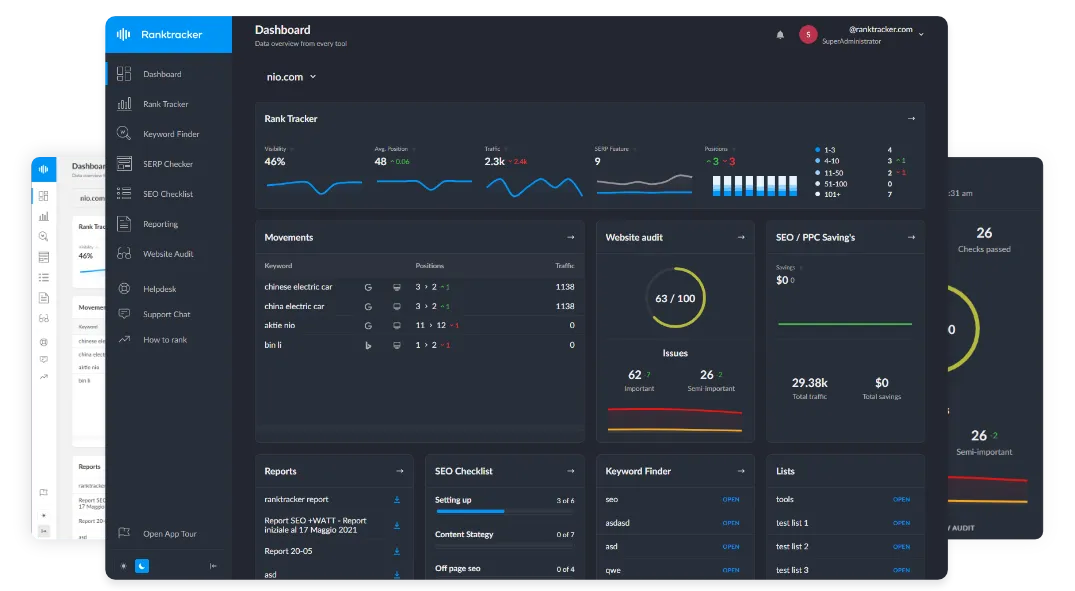
Behind every successful business is a strong SEO campaign. But with countless optimization tools and techniques out there to choose from, it can be hard to know where to start. Well, fear no more, cause I've got just the thing to help. Presenting the Ranktracker all-in-one platform for effective SEO
We have finally opened registration to Ranktracker absolutely free!
Create a free accountOr Sign in using your credentials
Action Steps:
- Compress images without losing quality using tools like TinyPNG.
- Minify code: CSS, JavaScript, and HTML should be streamlined.
- Browser caching: Store static files locally for repeat visitors.
- Content Delivery Network (CDN): Distribute content globally for faster load times.
- Core Web Vitals: Monitor metrics like LCP (Largest Contentful Paint) and CLS (Cumulative Layout Shift).
Example: A Liverpool e-commerce site reduced load time from 6s to 2s by compressing images and enabling caching, improving both rankings and conversions.
4. On-Page SEO: Content Placement and Metadata
Even a visually stunning website needs strategic on-page SEO to rank well.
Important Elements:
- Headings (H1-H6): Use descriptive headings that include relevant keywords.
- Meta titles and descriptions: Optimize for click-through rate.
- Alt text for images: Improves accessibility and lets Google understand visuals.
- Calls-to-action (CTAs): Position strategically to drive engagement and conversions.
Our SEO services in Liverpool help businesses implement these strategies effectively, ensuring content is optimized and user-friendly.
Tip: Integrate local keywords naturally. For example, a web design agency might use phrases like “Web Design Liverpool” or “Liverpool SEO services” in headings and content without keyword stuffing.
5. User Experience (UX) and Engagement Metrics
User engagement is increasingly important for rankings. Google measures time on site, bounce rate, and pages per session. Websites with strong UX retain visitors longer, improving these metrics.
UX Best Practices:
- Readable typography: Use clear fonts with sufficient line spacing.
- Accessibility: Include keyboard navigation, sufficient colour contrast, and alt text for images.
- Interactive elements: Subtle animations and hover effects enhance engagement.
- Logical layout: Guide users’ eyes naturally through your content with whitespace and visual cues.
Example: A Liverpool café redesigned its website with simplified menus, high-quality images, and clear booking buttons. Bounce rates dropped 35% and rankings improved for “Liverpool café near me.”
6. Local SEO for Liverpool Businesses
For local businesses, ranking in nearby searches is essential. Optimizing your website for local SEO ensures your target audience finds you.
Steps to Optimize:
- Claim and optimize your Google Business Profile.
- Ensure NAP consistency (Name, Address, Phone number) across directories.
- Embed Google Maps on your contact page.
- Use local schema markup to signal your location to search engines.
- Incorporate location-specific keywords naturally.
Example: A Liverpool florist optimized their homepage for “Florist Liverpool” and added Google Maps with service areas. Within three months, they ranked in the top 3 for local search queries.
7. AI Tools in Web Design and SEO
Artificial intelligence is transforming web design and SEO workflows.
Use Cases:
- Content generation: AI tools can create drafts, meta descriptions, and internal linking suggestions.
- Design assistance: AI recommends layouts, colour schemes, and responsive templates.
- User behaviour analysis: Heatmaps and AI-powered analytics identify UX improvements.
For Liverpool businesses, AI tools help automate repetitive tasks, optimize content, and improve both design and search rankings.
8. Security, HTTPS, and Trust
Secure websites build trust with users and are favoured by search engines.
The All-in-One Platform for Effective SEO
Behind every successful business is a strong SEO campaign. But with countless optimization tools and techniques out there to choose from, it can be hard to know where to start. Well, fear no more, cause I've got just the thing to help. Presenting the Ranktracker all-in-one platform for effective SEO
We have finally opened registration to Ranktracker absolutely free!
Create a free accountOr Sign in using your credentials
Action Steps:
- Install an SSL certificate (HTTPS).
- Keep CMS, plugins, and themes updated.
- Use firewalls and security plugins to prevent attacks.
- Regularly backup your website to avoid data loss.
Secure websites not only protect users but also improve rankings, as Google rewards HTTPS-enabled sites.
9. Analytics and Continuous Improvement
Web design and SEO require ongoing monitoring. Analytics allows you to make data-driven improvements.
Key Metrics:
- Organic traffic trends
- Bounce rate and dwell time
- Conversion rates
- Keyword rankings
Tools like Google Analytics, Google Search Console, Ahrefs, and SEMrush provide insights into performance. Liverpool businesses can use these insights to iterate content, improve UX, and optimize for local SEO continuously.
10. Conclusion
A successful website in 2026 is more than just visually appealing — it seamlessly combines aesthetic design, intuitive usability, and technical SEO. For Liverpool businesses, investing in these areas ensures higher search engine rankings, improved user engagement, and stronger conversion rates.
By strategically integrating professional web design with SEO best practices, businesses can create a website that not only attracts visitors but also converts them into loyal customers. Staying ahead of design trends, optimizing for local search, and continually refining your site based on analytics will keep your business competitive in Liverpool’s fast-moving digital landscape.