Intro
Personal injury SEO is not “regular SEO” with a lawyer label slapped on top.
Personal injury lawyer SEO requires a specialized approach that accounts for competitive search rankings, strict ethical considerations, and high-intent search behavior.
In 2026, personal injury law firms are competing in one of the most expensive, most aggressive search environments on the internet.
Personal injury lawyers face intense competition for visibility in markets where search demand is high and differentiation is difficult. Personal injury attorneys must also meet strict credibility expectations. The value of a single signed case can justify serious spend, which is exactly why search results are crowded with firms that have deep budgets, mature domains, and years of authority behind them.
That reality creates two outcomes:
- You cannot rank personal injury pages with surface-level work.
- You cannot afford an SEO partner who is not built for accountability.
This guide covers 10 strong personal injury lawyer SEO service providers for 2026. Each option includes a clear breakdown of what they do well, where they fall short, and what type of firm they are best suited for.
If you are deciding who to trust with your PI pipeline this year, this is the comparison you want.
Why Personal Injury Lawyer SEO Is Harder in 2026
Personal injury law has always been competitive. SEO for personal injury operates within a uniquely aggressive segment of the legal industry, where authority, relevance, and trust signals determine visibility. Personal injury law firms operate in a space where personal injury cases, claims, and practice-area relevance directly influence organic performance.
The All-in-One Platform for Effective SEO
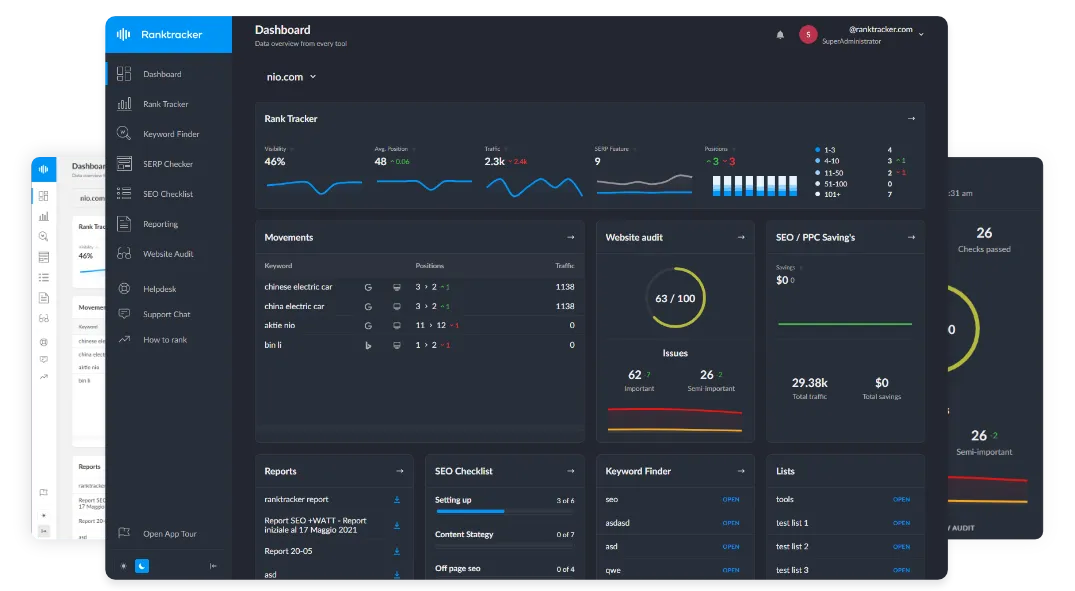
Behind every successful business is a strong SEO campaign. But with countless optimization tools and techniques out there to choose from, it can be hard to know where to start. Well, fear no more, cause I've got just the thing to help. Presenting the Ranktracker all-in-one platform for effective SEO
We have finally opened registration to Ranktracker absolutely free!
Create a free accountOr Sign in using your credentials
But 2026 adds pressure from multiple directions at once.
1. The SERP is more crowded than ever
For most PI terms, you are not just fighting other law firms. Personal injury lawyers must also compete with platforms and directories that dominate high-intent searches. Search engines surface a limited number of results despite high demand.
You are fighting:
- Google Local Services Ads and paid placements
- Map pack search results that capture high-intent clicks
- Aggregators and directories with national authority
- Local competitors running content and link acquisition at scale
That means even if your website is “good,” it can still be invisible. SEO for personal injury must account for crowded results and limited above-the-fold visibility. Search engines prioritize results that meet strict quality thresholds.
2. Search engines reward trust and proof, not volume
In 2026, generic content does not move the needle. Search engines want signals that your firm is real, legitimate, and authoritative. These signals are especially important for personal injury lawyers operating in competitive metropolitan areas. Search engines assess these signals consistently across competitive personal injury markets.
Modern search engines evaluate structured data, content relevance, and technical health when determining search engine rankings across competitive personal injury searches.
That includes:
- Strong local prominence (reviews, citations, location signals)
- Structured site architecture and clean internal linking
- Keyword research and SEO strategy development aligned with personal injury search intent
- Well-written, practice-specific pages that answer real PI questions
- Technical health that supports speed and indexability
- Ethical authority building that does not risk penalties
3. Personal injury clients are more selective
Even if you rank in search engines, the work is not finished. Personal injury lawyers must convert visibility into consultations through clear messaging and accessible contact pathways.
Personal injury SEO that actually performs also requires a conversion strategy, because PI traffic is high intent but skeptical. People want proof, clarity, and an easy path to contact.
Effective personal injury SEO helps connect personal injury clients and potential clients with law firms positioned to generate qualified leads.
The All-in-One Platform for Effective SEO
Behind every successful business is a strong SEO campaign. But with countless optimization tools and techniques out there to choose from, it can be hard to know where to start. Well, fear no more, cause I've got just the thing to help. Presenting the Ranktracker all-in-one platform for effective SEO
We have finally opened registration to Ranktracker absolutely free!
Create a free accountOr Sign in using your credentials
If your SEO agency cannot connect rankings to signed cases, you are going to waste time and money. Effective SEO for personal injury ties visibility directly to intake performance.
Tracking search results, keyword rankings, and search engine results pages helps personal injury law firms understand whether SEO efforts are translating into meaningful visibility.
How We Evaluated These Personal Injury SEO Services
This list is not based on who has the loudest search engine marketing.
Each SEO for a personal injury provider was evaluated using the criteria that actually matter in PI:
- Demonstrated legal and PI experience
- Ability to compete in high-value local markets
- Technical SEO depth (not just blog publishing)
- Local SEO execution for map results and proximity-heavy searches
- Local SEO strategies that support visibility in local searches and local search results
- Content strategy built around case-driving intent
- Transparency in reporting and deliverables
- Conversion optimization focus, not just traffic numbers
These factors reflect the realities personal injury lawyers face when competing for high-value cases.
You will also see honest pros and cons for every company.
The Top 10 Personal Injury Lawyer SEO Services for 2026
1. Fortress

Fortress exists because the SEO industry has a credibility problem.
Fortress was built out of founder Gerrid Smith’s frustration with SEO agencies that could not deliver on what they sold. Gerrid had already spent years in SEO and had personally scaled a business in a highly competitive and regulated environment. Fortress grew from that “skin in the game” approach, where the only thing that matters is results.
For personal injury law firms, that matters. PI SEO requires an agency that understands what it takes to win difficult SERPs, not one that relies on vague activity reports.
What Fortress focuses on for Personal Injury Law firms
Fortress campaigns for personal injury attorneys are built around search rankings that drive signed cases. This approach aligns with how many personal injury lawyers evaluate marketing performance.
That typically includes:
- Keyword selection tied to high-intent case acquisition
- Technical SEO and site performance to support aggressive growth
- On-page conversion optimization so traffic becomes consultations
- Local SEO execution that supports map visibility (like Google Business Profile optimization, local citations, and consistent business information across legal directories)
- Authority-building designed for competitive markets
- Transparent milestones, timelines, and measurable progress
Fortress also emphasizes accountability, including performance-driven positioning that aligns incentives with outcomes.
Pros
- Strong accountability culture, built around outcomes
- Technical SEO depth, not just content production
- Strategy aligned with PI case acquisition, not vanity metrics
- Conversion-focused SEO that improves intake potential
- Built by an SEO veteran with real operating experience
Cons
- Pricing can be a better fit for firms ready to invest consistently in competitive PI markets
Best for: personal injury law firms that want serious growth, clear performance expectations, and an SEO partner that treats search rankings like a business outcome, not a marketing activity.
2. BluShark Digital

BluShark Digital positions itself as a legal-focused agency built around modern execution. Their services are often considered by personal injury lawyers seeking structured SEO support.
Their messaging emphasizes technical optimization, content, link building, and local visibility for law firms.
BluShark is often chosen by personal injury law firms that want a structured agency with legal-market awareness and a full-stack approach.
Pros
- Strong legal-market positioning and process-driven delivery
- Good fit for firms that want both organic and local visibility
- Offers multiple digital services under one umbrella
Cons
- Larger agency structures can feel less boutique depending on account setup
Best for: PI firms that want a legal-focused provider with broad capabilities and a structured process.
3. Nifty Marketing

Nifty is known in legal marketing circles and often appeals to firms that want strong creative, content, and visibility support. Personal injury lawyers who value brand presentation may find this approach relevant.
Their site messaging focuses on helping law firms enhance their marketing performance and growth.
Pros
- Recognizable name in legal marketing
- Can be a strong fit for firms that want content + brand presence support
- Typically well-suited to firms that want a more “marketing-forward” approach
Cons
- May be a stronger fit for markets where content and brand differentiation can carry more weight than technical edge alone
Best for: PI firms that want a legal marketing partner with strong branding and content support, paired with SEO execution.
4. MeanPug Digital

MeanPug positions itself as a growth partner for plaintiff firms, including personal injury, with an emphasis on signed cases and full-service marketing support.
This positioning often resonates with personal injury lawyers focused on intake growth.
Their public messaging is direct: they specialize in helping plaintiff firms get more signed cases.
Pros
- Plaintiff-firm positioning and case-focused marketing approach
- Strong creative and brand capabilities, which matter for PI conversion
- Often a fit for firms that want more than “just SEO”
Cons
- Best suited for firms that want a broader marketing partner, not an SEO-only engagement
Best for: PI firms that want a full-service partner with plaintiff experience and strong creative execution.
5. Civille

Civille is positioned as a “full digital solution for law firms,” combining websites with marketing services like SEO and PPC. Personal injury lawyers considering platform-based solutions may evaluate this model differently than standalone SEO services.
This model can appeal to PI firms that want a tighter connection between website performance, lead handling, and marketing.
Pros
- Law-firm-specific platform approach with website + marketing alignment
- Strong fit for firms that want an integrated system rather than separate vendors
- Website performance emphasis can help PI conversion
Cons
- Platform-based systems may be less flexible for firms with specialized internal workflows
Best for: PI firms that want an integrated website + marketing solution built for legal.
6. Justia Marketing Solutions

Justia is one of the most established names in legal marketing. Many personal injury lawyers are familiar with Justia through its broader legal ecosystem. They offer a broad set of services for law firms, including websites, SEO, directory placements, and advertising support. For PI firms, Justia can be appealing because it combines marketing services with a large legal ecosystem.
Pros
- Long-standing legal marketing provider with wide service coverage
- Strong infrastructure and resources for firms that want stability
- Can be a fit for firms that want marketing support tied to a larger legal platform
Cons
- Broad provider models can feel less custom than smaller, specialized agencies
Best for: PI firms that want an established legal marketing provider with a broad ecosystem and multiple service options.
7. FindLaw Lawyer Marketing

FindLaw is positioned as a one-stop marketing provider working exclusively with attorneys and law firms.
They offer SEO, websites, directories, and other marketing services under a broader brand umbrella.
Pros
- Legal-exclusive positioning with broad service availability
- Can work well for firms that want consolidated services under one provider
- Established brand presence in legal marketing
Cons
- Often best suited for firms that prefer a consolidated vendor relationship over a highly specialized PI growth partner
Best for: PI firms that want a consolidated vendor and an established legal marketing name.
8. AttorneySync
AttorneySync positions itself around accountability and ethical legal marketing, with services spanning SEO, websites, and digital growth strategy. This emphasis can appeal to personal injury lawyers concerned about long-term compliance and transparency.
They also emphasize a “no long-term contracts” approach and ownership of assets, which many firms care about after bad vendor experiences.
Pros
- Strong positioning around accountability and transparency
- Ethical, legal-market-aware marketing approach
- Emphasis on client ownership of assets, which protects firms
Cons
- Typically, a stronger fit for firms that want a traditional agency structure with flexible terms rather than performance-based guarantees
Best for: PI firms that want an accountable partner with ethical legal marketing principles and strong operational clarity.
9. Market My Market

Market My Market is a well-known SEO and content marketing agency that has a specific legal marketing offering and content resources. Personal injury lawyers seeking educational resources alongside execution may find value in this model.
They promote customized SEO and marketing strategies for law firms, including personal injury marketing.
Pros
- Strong content marketing foundation with legal-specific offerings
- Good fit for firms that want consistent publishing tied to SEO goals
- Public-facing training and resources can help firms understand the “why” behind the work
Cons
- Content-led strategies perform best when paired with strong technical and authority work in top PI markets
Best for: PI firms that want a content-forward SEO strategy supported by a known marketing team.
10. LawRank
LawRank positions itself as a law firm SEO agency offering SEO, PPC, local SEO, and web design, with messaging centered on rankings and lead generation. These services are often evaluated by personal injury lawyers who want optional growth channels beyond SEO.
For PI firms, LawRank can be a fit when you want a legal-focused agency with services that extend beyond SEO.
Pros
- Legal marketing focus with core SEO offerings
- Broader services are available for firms that want SEO plus PPC and design
- Clear positioning around helping firms improve rankings and performance
Cons
- Often best suited for firms whose needs match a combined SEO and growth-services model
Best for: PI firms that want legal SEO plus optional growth services like PPC and web design.
What to Look for in a Personal Injury SEO Service in 2026
If you want a simple filter for decision-making, use this.
1. Do they understand PI economics?
A PI SEO strategy that drives “traffic” but not “cases” is a failure. A structured personal injury SEO strategy prioritizes relevance, conversion pathways, and long-term online visibility.
Your agency should talk about:
- practice-area intent
- signed-case value
- intake friction
- conversion rates
- qualified leads versus unqualified calls
If they do not bring that up, they are not thinking like an owner. SEO for personal injury must prioritize relevance and conversion, not just impressions.
2. Can they explain how they build authority without putting you at risk?
PI SEO often fails because agencies chase shortcuts. Sustainable link building focuses on earning high-quality backlinks through credible sources rather than exploiting tactics that violate search engine guidelines.
You want clarity around:
- link acquisition standards
- brand mentions and digital PR
- local citations and prominence building
- what they will not do
If the agency cannot explain its link strategy clearly, that is a red flag.
3. Do they have a technical SEO backbone?
Most PI sites lose rankings because they are slow, bloated, or structurally messy. Search engines penalize poor performance and unclear architecture.
A serious PI SEO partner should address:
- Core Web Vitals and speed
- indexation and crawl efficiency
- site architecture for practice areas and locations
- schema and structured data
- internal link systems that support authority flow
4. Are they willing to be accountable?
Accountability can take different forms, but you should not accept a relationship built on “trust us.”
You want:
- clear deliverables
- real reporting, not fluff
- progress benchmarks
- clear ownership of what happens next
Common Mistakes Personal Injury Firms Make With SEO
Mistake 1: Choosing based on price
In PI Search Engine Optimization, cheap work is expensive. It typically leads to:
- weak content that does not rank
- low-quality authority strategies
- wasted months with no movement
- potential long-term penalties if shortcuts are used
If your market is competitive, you need competence, not bargains.
Mistake 2: Publishing content with no strategy
Posting blogs without a content architecture is not a plan. Keyword research helps structure content around intent rather than volume.
Personal injury SEO content needs:
- clear practice-area page strategy
- location page strategy (where appropriate)
- supporting informational content that builds authority
- internal linking that moves relevance toward money pages
Content must be built like a system.
Mistake 3: Ignoring conversion optimization
Ranking is only step one. Search engines reward engagement signals that indicate user satisfaction.
If your site is not built to convert, you are paying to attract visitors who leave.
The All-in-One Platform for Effective SEO
Behind every successful business is a strong SEO campaign. But with countless optimization tools and techniques out there to choose from, it can be hard to know where to start. Well, fear no more, cause I've got just the thing to help. Presenting the Ranktracker all-in-one platform for effective SEO
We have finally opened registration to Ranktracker absolutely free!
Create a free accountOr Sign in using your credentials
That includes:
- clear call handling and tracking
- prominent consultation pathways
- trust signals (reviews, results, credentials, media)
- pages that answer real objections
FAQ: Personal Injury Lawyer SEO Services for 2026
1. How long does personal injury SEO take in 2026?
In many markets, personal injury lawyers can see measurable movement in 3 to 6 months, but meaningful PI results often take 9 to 12 months. Competitive metros can take longer, especially for core PI head terms.
2. What is the biggest ranking factor for PI firms right now?
There is no single factor, but PI winners usually combine strong local prominence, clean technical foundations, authoritative content, and consistent off-site authority building.
3. Should a PI firm focus on local SEO or organic SEO first?
Most firms need both. SEO for personal injury works best when local and organic strategies are developed together. Local SEO captures map and proximity-based searches, while organic supports practice pages, long-tail PI queries, and broader authority. A strong PI strategy builds them together.
4. Do PI firms still need content in 2026?
Yes, but not generic content. Personal injury lawyers need practice-area pages and supporting content that answers real PI questions and demonstrates credibility. Publishing for volume alone is not enough.
5. How do I know if my SEO agency is actually doing the work?
You should be able to see:
- Organic traffic trends monitored through tools such as Google Analytics and Google Search Console, reflecting the impact of your SEO investment
- Technical audit findings and fixes that improve your law firm's website health and support on-page optimization
- Content plans and published assets with proper keyword research, targeting relevant keywords and long tail keywords specific to personal injury law SEO
- Authority growth signals, including high-quality backlinks, links, mentions, citations, and local business listings
- Reporting tied to keyword rankings, traffic quality, conversions, and local SEO success in the search engines
- Clear documentation of SEO efforts and implementation progress to ensure alignment with your personal injury attorney SEO strategy
If you only receive vague SEO strategy reports, that is a problem.
6. What is a reasonable monthly budget for PI SEO?
Budgets vary by market size and goals. Competitive PI markets generally require higher monthly investment because authority building, content, and technical work must be consistent and aggressive.
7. Is it risky to switch PI SEO agencies?
It can be, but staying with a non-performing agency is usually worse. The key is to transition carefully: preserve technical equity, maintain tracking, and avoid sudden structural changes that harm indexation.
8. Should my PI firm invest in PPC if we are doing Search Engine Optimization?
Often yes. PPC can produce immediate leads while SEO compounds. The strongest firms run both, with shared conversion learnings across channels.
9. What should be included in a real PI SEO service package?
At minimum:
- technical SEO and site health improvements
- local SEO and Google Business Profile strategy
- practice and location page strategy
- content production aligned to PI intent
- ethical authority building
- conversion optimization and tracking
These essential SEO strategies focus on optimizing your law firm's website with relevant keywords and local SEO tactics to attract more qualified leads. Incorporating tools like Google Keyword Planner ensures targeting the best personal injury keywords, helping your firm stand out in the competitive personal injury space.
Final Takeaway
Personal injury SEO in 2026 is not about activity. It is about outcomes. Search engines ultimately reflect how well a site meets user intent.
Every agency on this list can be a viable option depending on your personal injury firm’s size, market, and growth targets. Some are better for integrated website platforms. Some are better for full-service marketing. Some are better for content-driven growth.
But the firms that win the PI search engine consistently choose partners that treat rankings like a business objective, not a marketing experiment. This mindset is increasingly common among personal injury lawyers investing seriously in search visibility.
If your goal is to build sustained visibility and turn that visibility into signed cases, start with a partner built for accountability and execution.