Intro
For most of SEO’s history, deleting pages felt dangerous.
More pages meant more keywords. More keywords meant more traffic. More traffic meant growth.
In 2026, that logic often backfires.
With selective indexing, AI-driven evaluation, and topic-level trust now dominating modern search, removing content is sometimes the fastest way to improve rankings. Content pruning has shifted from a risky cleanup task into a strategic SEO lever.
This article explains why content pruning works today, when deleting pages helps rankings, and how to do it without damaging visibility.
Why “More Content” Stopped Working
Search engines no longer reward sheer volume.
The All-in-One Platform for Effective SEO
Behind every successful business is a strong SEO campaign. But with countless optimization tools and techniques out there to choose from, it can be hard to know where to start. Well, fear no more, cause I've got just the thing to help. Presenting the Ranktracker all-in-one platform for effective SEO
We have finally opened registration to Ranktracker absolutely free!
Create a free accountOr Sign in using your credentials
Instead, they evaluate:
- Topic clarity
- Content consistency
- Index efficiency
- Trust signals at the site level
Large sites with thousands of low-value or overlapping pages now suffer from quality dilution.
Google has become far more selective about what it indexes and ranks. Crawling is cheap. Indexing is not.
Pages that don’t justify their existence quietly disappear from visibility — and they often drag stronger pages down with them.
What Content Pruning Actually Is
Content pruning is not mass deletion.
It’s the deliberate process of:
- Removing low-value pages
- Consolidating overlapping content
- Redirecting redundant URLs
- Clarifying topical focus
The goal is not to shrink your site. The goal is to increase average content quality across the domain.
Search engines evaluate patterns. Pruning improves the pattern.
Why Pruning Improves Rankings in 2026
1. It Reduces Index Bloat
Index bloat happens when:
- Many pages are crawled but rarely ranked
- Content overlaps heavily
- Pages target near-identical intent
These pages consume crawl budget and dilute topical signals.
The All-in-One Platform for Effective SEO
Behind every successful business is a strong SEO campaign. But with countless optimization tools and techniques out there to choose from, it can be hard to know where to start. Well, fear no more, cause I've got just the thing to help. Presenting the Ranktracker all-in-one platform for effective SEO
We have finally opened registration to Ranktracker absolutely free!
Create a free accountOr Sign in using your credentials
When pruned, search engines:
- Re-crawl important pages more often
- Re-evaluate remaining content more positively
- Associate the site with fewer, clearer topics
Ranking stability often improves within weeks.
2. It Strengthens Topical Authority
Topical authority is about clarity, not coverage.
If your site publishes:
- Ten weak pages on a topic
- Versus three strong, comprehensive ones
The second option almost always performs better in AI-driven SERPs.
Pruning removes noise so your best content can represent the topic without contradiction or dilution.
3. It Improves Internal Linking Signals
Weak pages often:
- Receive few internal links
- Create dead ends
- Fragment authority
By removing them and redistributing internal links toward stronger pages, you:
- Concentrate semantic signals
- Reinforce key hubs
- Clarify intent pathways
Internal linking becomes meaningful instead of mechanical.
Which Pages Should Be Pruned
Not every underperforming page should be deleted. The key is why it underperforms.
Pages That Are Prime Pruning Candidates
- Pages with impressions but no rankings
- Pages targeting the same intent as another URL
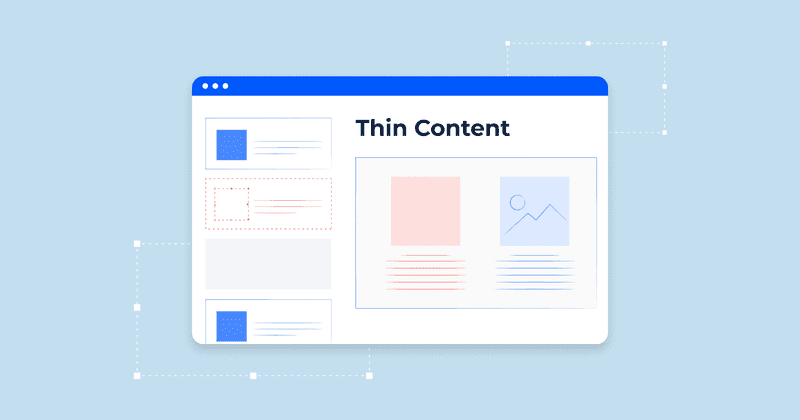
- Thin pages created for scale
- Outdated content with no traffic or links
- Programmatic pages with no differentiation
These pages add complexity without adding value.
Pages That Should Usually Be Kept
- Pages with backlinks
- Pages supporting important internal links
- Pages ranking for long-tail queries
- Pages serving a clear conversion role
Underperformance alone is not a reason to delete.
Delete, Merge, or Improve? The 3-Way Decision
Every page should fall into one of three actions.
1. Delete (and Redirect)
Delete when:
- The page has no traffic
- No links
- No strategic purpose
Use a 301 redirect if a close alternative exists.
2. Merge (and Canonicalize)
Merge when:
- Multiple pages answer the same question
- Content overlap is high
- Intent is identical
Consolidation often produces ranking lifts because the resulting page is stronger and clearer.
3. Improve (and Reposition)
Improve when:
- The topic matters
- The page has some visibility
- The content is simply weak
Not all pruning is deletion. Sometimes pruning is focus.
Why AI Search Makes Pruning Mandatory
AI-driven systems don’t just rank pages — they evaluate site trust patterns.
Answer engines like:
- ChatGPT
- Perplexity
- Gemini
…prefer sources that:
- Are consistent
- Avoid contradictions
- Demonstrate confidence
- Cover topics cleanly
A bloated site with conflicting or shallow pages is harder to trust and less likely to be cited.
Pruning increases citation eligibility — even if traffic stays flat initially.
Common Pruning Mistakes to Avoid
- Deleting pages with backlinks without redirects
- Pruning based only on traffic
- Removing content without improving internal links
- Mass deletions without intent analysis
- Assuming AI-generated pages are automatically bad
Bad pruning causes ranking drops. Strategic pruning causes lifts.
What SEO Gains Look Like After Pruning
Successful pruning often leads to:
- Improved ranking stability
- Increased impressions for remaining pages
- Higher average rankings
- Better crawl efficiency
- Stronger topical signals
Traffic may not spike immediately — but visibility quality improves first, which leads to more durable growth.
SEO platforms like Ranktracker help teams evaluate performance at the topic level, making it easier to see when pruning improves overall visibility rather than page-by-page traffic.
How Often Should You Prune?
Content pruning is not a one-time cleanup.
Best practice in 2026:
- Quarterly audits for large sites
- Biannual audits for smaller sites
- Continuous pruning for programmatic content
Search changes fast. Old assumptions age poorly.
The Mental Shift SEOs Must Make
The hardest part of content pruning is emotional.
Deleting content feels like admitting failure.
In reality, pruning is:
- Refinement, not retreat
- Focus, not loss
- Optimization, not destruction
Search engines reward clarity. Clarity often requires subtraction.
Final Takeaway
In 2026, SEO success isn’t about how much content you have.
The All-in-One Platform for Effective SEO
Behind every successful business is a strong SEO campaign. But with countless optimization tools and techniques out there to choose from, it can be hard to know where to start. Well, fear no more, cause I've got just the thing to help. Presenting the Ranktracker all-in-one platform for effective SEO
We have finally opened registration to Ranktracker absolutely free!
Create a free accountOr Sign in using your credentials
It’s about how much of your content deserves to exist.
Pages that:
- Don’t rank
- Don’t convert
- Don’t support authority
…don’t help your site.
Deleting them often does.
Content pruning is no longer an advanced tactic. It’s a maintenance requirement for modern SEO.