
Intro
AI search tools like Perplexity and ChatGPT have changed how your audience looks for answers to their challenges. Instead of searching for broad keywords, now, they are querying specific problem statements.
They ask longer, more contextual questions and expect direct, precise replies.
As a result, the fundamental philosophies around SEO have changed. What used to work before these generative search platforms came up may not give desirable results.
Unfortunately, most businesses are stuck with the same SEO mistakes: optimizing for keywords, following traditional checklists, and creating in-depth content on broad topics.
These SEO errors compound over time. First, they affect the site’s visibility, which later translates into fewer leads and even fewer conversions. By the time they realize what’s wrong, they’ve already lost ground to their competitors.
In this article, let’s look at ten such SEO mistakes in 2026, understand how they affect your website, and discuss practical tips to undo them.
1. Relying on Bloated Tech Stack
You likely use a pile of different tools to keep your SEO machine running — keyword research platforms, content editors, analytics dashboards, CMS integrations, social schedulers, and spreadsheets full of ideas.
The All-in-One Platform for Effective SEO
Behind every successful business is a strong SEO campaign. But with countless optimization tools and techniques out there to choose from, it can be hard to know where to start. Well, fear no more, cause I've got just the thing to help. Presenting the Ranktracker all-in-one platform for effective SEO
We have finally opened registration to Ranktracker absolutely free!
Create a free accountOr Sign in using your credentials
Each looks useful on its own, but together they create a bloated tech stack that steals time and focus. Jumping between apps kills productivity because each team member loses context due to data silos.
Worst of all, the scattered workflows mean your SEO impact suffers because nothing lives in one place and nothing drives consistent execution.
That’s why modern teams are moving to unified content management suites that bring multiple SEO and content workflows together. Instead of toggling between doc editors, SEO checkers, calendars, and publishing tools, you work from one central hub.
StoryChief is a leading unified content management platform that combines writing, SEO optimization, collaboration, and publishing in a single editor, with real-time SEO suggestions and readability tips as you write.
It also supports team collaboration, task assignments, approval flows, and multi-channel publishing — all with a single content calendar and analytics to track performance.
With everything in one place, you save time, reduce errors, and finally align productivity with SEO impact.
2. Managing All SEO Workflows In-House
SEO today covers far more than content and keywords. It includes technical audits, site performance fixes, schema markup, internal linking, content updates, migrations, and ongoing WordPress maintenance.
The All-in-One Platform for Effective SEO
Behind every successful business is a strong SEO campaign. But with countless optimization tools and techniques out there to choose from, it can be hard to know where to start. Well, fear no more, cause I've got just the thing to help. Presenting the Ranktracker all-in-one platform for effective SEO
We have finally opened registration to Ranktracker absolutely free!
Create a free accountOr Sign in using your credentials
Trying to handle every one of these workflows internally sounds efficient, but it rarely is. Building a team with deep expertise across all areas takes time, budget, and strong operational processes. Even then, priorities compete, and important tasks get delayed.
This is one of the most common SEO mistakes that can slow down even the most fundamental workflows due to dependencies.
Content teams, for example, wait until technical issues are fixed by engineers to publish content, stalling campaigns.
It affects both short and long-term results. The biggest loss here is that it costs the team crucial momentum, leading to missed organic opportunities.
A smarter approach is to keep strategy, content, and performance monitoring in-house while offloading execution-heavy, one-time tasks.
Technical SEO fixes, page speed optimization, site migrations, and other tasks can be offloaded to white-label WordPress development partners. They can quickly complete these technically complex tasks in the background while you focus on creating and distributing content.
This hybrid approach can be balanced based on your current preferences and needs. For instance, if you wish to outsource content for a particular campaign, you can try it while freeing up more internal resources to drive SEO on a more strategic level.
3. Keyword Stuffing While Ignoring Search Intent
Search intent is the reason behind a query. In 2026, search engines now evaluate whether your page truly solves the user’s problem. Informational, commercial, navigational, and transactional intents all require different content approaches.
Simply using the right terms and phrases over and over won’t cut it anymore.
Many SEO teams unknowingly engage in keyword stuffing instead of elevating the content quality to match user intent. Repeating phrases across headings and paragraphs does not answer questions.
On the contrary, these types of SEO mistakes signal manipulation, and AI-driven search systems spot this trend quickly to penalize your website.
Pages may rank briefly, then slide down as engagement drops because users will bounce due to forced and unhelpful content. Over time, this hurts topical authority and overall organic visibility.
Fixing this starts with intent-first planning, where you analyze the search results before you write any content piece. Identify what formats, depth, and angles already satisfy the query. Then fabricate your message that matches that expectation clearly and efficiently.
After drafting, insert keywords that fit naturally to support meaning and enhance search visibility.
Basically, your on-site pages should be structured around answers, examples, and next steps that help your readers achieve tangible objectives.
When your content aligns with why users search, rankings improve, engagement increases, and SEO performance becomes sustainable again.
4. Low-Quality, Thin, and Outdated Content
Low-quality, thin, and outdated content lacks depth, repeats surface-level ideas, or no longer reflects current realities. Thin pages target keywords without fully answering questions. Outdated content includes old stats, obsolete tactics, or examples that no longer apply.
Over time, they quietly erode your SEO performance.
Search engines now evaluate content at a site-wide level. When many weak pages exist, trust drops across the domain. Rankings decline gradually, making it harder for you to detect.
It begins with depleting engagement metrics before affecting common indicators like site ranking, impressions, and organic traffic. Additionally, it wastes crawl budgets that add little value, which limits the visibility of any strong, useful content you may have.
This SEO mistake often happens due to scale pressure.
Teams focus on publishing content fast to hit targets without assessing them for quality, while postponing content audits.
To fix this, the first step is to audit your content regularly to identify pages that need consolidation, expansion, or removal. Then, start refreshing high-potential posts with updated insights, examples, and intent alignment.
You can also merge overlapping articles into stronger resources, which will also improve the dwell time per page. The ultimate goal should be fewer but better pages over constant publishing.
5. Ineffective Internal Linking Strategy
Internal linking is how you connect pages within your own site to help search engines discover content, understand topic relationships, and distribute authority across pages.
When done well, internal links improve crawl efficiency and increase the visibility of important pages. They also guide users toward deeper, more relevant content.
Most internal linking SEO mistakes come from neglect, where links get added randomly or only during initial publishing. Over time, this buries essential pages deep in your website. And most of the existing internal links emerge from vague, repetitive, or over-optimized anchor texts.
This makes your older content redundant quickly, decreasing its visibility and ROI. As a result, strong pages fail to pass value, and high-potential content struggles to rank.
If you have a lot of content on your website or you publish articles about multiple topics, it is essential to map the fundamental structure. Map your core topics and supporting pages clearly and use internal links to reinforce those relationships.
It is advantageous to link high-authority pages to priority content intentionally, as long as they are relevant and provide value to the reader. Here, it’s pivotal to keep the anchor text descriptive and natural, which captures the target link’s content semantically.
Moreover, avoid excessive links that confuse users or dilute value. Rather have a handful of internal links that keep the on-site experience engaging.
6. Poor Technical SEO and Crawlability Issues
Technical SEO covers the infrastructure that allows search engines to access, crawl, and understand your site. It includes site architecture, page speed, mobile readiness, indexation, structured data, and server health.
When these elements get neglected, crawlability issues appear quickly, making it difficult for search engines to find pages on your website effectively or at all.
These problems rarely feel urgent at first because on the surface, pages exist, content looks fine, and traffic decline appears seasonal.
Over time, however, SEO mistakes around technical elements limit growth. Important pages remain undiscovered or underweighted while duplicate URLs dilute relevance, capping rankings, even when content quality improves.
You need to first discover the extent of technical SEO issues on your website that are affecting crawlability with an audit. It will uncover crawl errors, indexation gaps, and other performance bottlenecks.
Then, prioritize the fixes and tackle them in a structured way.
The next step is to simplify the site’s architecture so key pages sit within a few clicks. Clean up redirects, duplicate content, and broken links. All of it improves the reading and browsing experience on your websites while making it easier for search bots to find and rank your content in 2026.
7. Neglecting Mobile-First Experience
A mobile-first web experience means designing and optimizing your site for mobile users before desktop users. Layout, content, performance, and interactions should all work seamlessly on smaller screens.
This is no longer optional as search engines primarily evaluate the mobile version of your site to determine rankings and visibility.
Ignoring mobile-first principles hurts SEO faster than many brands realize. When pages load more slowly, text becomes hard to read, buttons feel cramped, and navigation breaks on mobile, search engines interpret these signals as poor relevance and usability.
Over time, these SEO mistakes decline your organic visibility, even if desktop performance looks strong.
To fix this, perform in-depth mobile-focused audits. It is better to test your live website on real devices rather than just emulators. Then, focus on optimizing loading speed by reducing scripts and heavy assets for the mobile version of your pages.
Furthermore, your site’s theme and content layouts should adapt cleanly across screen sizes and operating systems.
Finally, when crafting content, keep the message concise and scannable. The interactive elements, such as forms, buttons, and menus, should be ergonomically designed, encouraging users to engage more.
8. Weak Core Web Vitals
Core Web Vitals focus on loading speed, visual stability, and interactivity across pages to reflect the real user experience on your website. These parameters in 2026 directly influence SEO performance because search engines prioritize pages that feel fast and reliable for users.
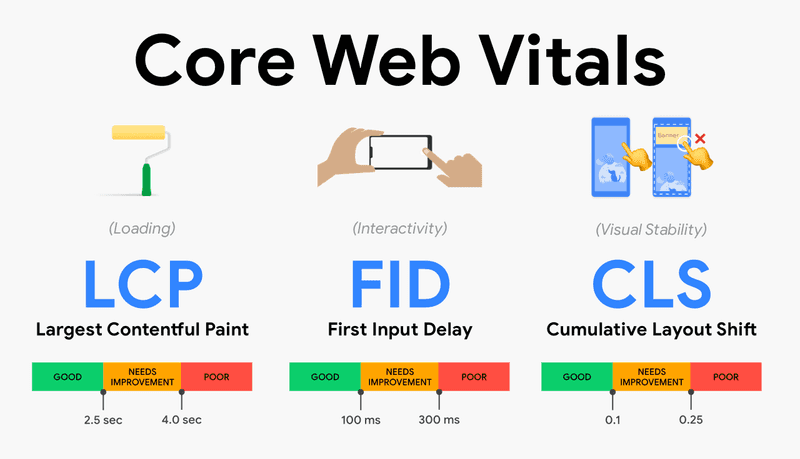
When these vitals are suboptimal, users get frustrated and leave, which drops engagement, increases bounce rates, and declines organic rankings.
Even if you have well-written content that solves real problems, you will struggle to retain readers on your website due to its sluggish performance. This gradually affects the whole website, reducing your brand’s credibility within your niche.
Elevating the core web vitals requires a structured optimization approach. You can tackle this SEO issue by first spotting pages that are particularly slow or broken.
Common SEO mistakes that lead to this include large images, unnecessary scripts, unreserved spaces for images or ads, deprioritized critical content, and poor server response times.
As you make these edits, continually track the core web vitals on desktop and mobile devices across browsers and operating systems. Eventually, your site will become fast and stable, keeping users for longer to improve organic conversions.
9. Overlooking On-Page SEO Elements
On-page SEO elements are the building blocks that help search engines understand your content. They include title tags, meta descriptions, headings, URLs, internal links, image alt text, and content structure.
Each element sends context and relevance signals to improve visibility and click-through rates.
Making SEO mistakes with these elements limits organic visibility because AI-driven search systems and traditional search bots rely on clear structure and semantic cues. Missing title tags or vague H1s, for instance, reduce discoverability by confusing the topic focus.
Similarly, unoptimized URLs dilute relevance, and images without alt text miss accessibility and search opportunities.
The most effective approach is to include the best content publication practices to avoid such SEO blunders altogether. Whenever finalizing the draft, check each on-page SEO element and optimize it accordingly.
If your existing pages suffer from weak or missing fields, the first objective is to find them and rank them based on importance. As a rule of thumb, title tags and meta details are most important. Then, you can dive into the image captions, alt tags, and other on-page SEO elements.
10. Lack of Continuous, Ongoing Efforts
SEO requires constant effort because search never stands still. Algorithms of traditional search engines and AI research platforms get smarter to evaluate content differently.
Additionally, competitors publish new content that addresses shifting user behavior to stay relevant and credible. Your site also undergoes changes through updates, launches, and experiments. In 2026, these variables move faster than ever, which means SEO cannot be treated as a one-time project.
One of the biggest SEO mistakes is approaching these action items as a setup task. Over time, issues rack up, affecting your rankings. By the time you realize the impact on visibility, credibility, and conversions, it’s often too late and requires a lot of resources for recovery.
It is critical to dedicate a specified number of hours per week toward SEO work. Assign ownership around repair-oriented tasks, such as site audits and content refreshes.
At the same time, monitor performance trends rather than looking at the numerical value of the key performance indicators (KPIs). After every update, no matter how minor, review the site’s technical health to ensure everything works as intended.
To keep this process effective, encourage your SEO team to be collaborative and document their methodologies. It will help you discover more efficient methods to improve SEO performance in 2026.
Wrapping Up
The most important thing about SEO mistakes in 2026 is that they need to be fixed quickly through proven methods. Fortunately, there are battle-tested solutions to common SEO blunders to help fast-moving brands hit the ground running.
A bloated tech stack slows teams down, so unified content and SEO workflows restore focus and execution speed. Managing every SEO task in-house creates bottlenecks, while selective outsourcing keeps momentum without losing control.
The All-in-One Platform for Effective SEO
Behind every successful business is a strong SEO campaign. But with countless optimization tools and techniques out there to choose from, it can be hard to know where to start. Well, fear no more, cause I've got just the thing to help. Presenting the Ranktracker all-in-one platform for effective SEO
We have finally opened registration to Ranktracker absolutely free!
Create a free accountOr Sign in using your credentials
Keyword stuffing fails because it ignores intent, which is why intent-first content planning delivers lasting rankings. Thin and outdated content weakens site-wide trust, but regular audits and content refreshes rebuild authority.
Poor internal linking hides important pages, while a clear topic structure and intentional links surface them. Technical SEO neglect blocks crawlability, but structured audits and prioritized fixes reopen growth paths.
Ignoring mobile-first experience hurts usability, whereas mobile-focused optimization protects visibility. Weak Core Web Vitals frustrate users, yet performance tuning restores engagement. Overlooked on-page elements confuse search engines, while consistent optimization clarifies relevance.
Finally, treating SEO as a one-time task stalls progress, but continuous effort keeps your site competitive.

