Intro
SEO testing has never been harder — or more misunderstood.
In the past, experiments were clean:
- Change a title
- Adjust internal links
- Add content
- Watch rankings move
In 2026, AI Overviews, selective indexing, intent blending, and zero-click behavior have blurred cause and effect. Many “tests” now produce noise instead of insight.
But SEO testing is not dead.
It has simply shifted away from micro-tweaks and toward structural experiments that affect trust, clarity, and visibility at scale.
This article explains which SEO experiments still produce real gains in 2026 — and which ones no longer justify the effort.
Why Most SEO Tests Fail Today
Modern SEO testing fails for three main reasons:
- The wrong success metric
- The wrong testing surface
- The wrong time horizon
AI-driven search dampens short-term volatility. Small changes rarely move needles in isolation — especially when SERPs are dominated by AI summaries and SERP features.
If a test doesn’t change how a page or site is understood, it usually won’t matter.
The All-in-One Platform for Effective SEO
Behind every successful business is a strong SEO campaign. But with countless optimization tools and techniques out there to choose from, it can be hard to know where to start. Well, fear no more, cause I've got just the thing to help. Presenting the Ranktracker all-in-one platform for effective SEO
We have finally opened registration to Ranktracker absolutely free!
Create a free accountOr Sign in using your credentials
Google now evaluates:
- Topic-level patterns
- Site-wide trust signals
- Consistency over time
Single-page tweaks often get absorbed without visible impact.
What SEO Testing Still Works in 2026
The experiments that still work share one trait: They change meaning, not just markup.
1. Internal Linking Structure Tests (High Impact)
Internal linking tests remain one of the most reliable levers in modern SEO.
Effective experiments include:
- Rebuilding topic clusters
- Redefining hub-and-spoke hierarchies
- Changing link directionality (clusters → hub vs hub → clusters)
- Reducing irrelevant cross-topic links
These tests work because they:
- Clarify topical boundaries
- Strengthen authority signals
- Improve AI understanding of site structure
Results usually appear as:
- More stable rankings
- Broader query coverage
- Improved impression consistency
This is not instant — but it compounds.
2. Content Consolidation vs Expansion Tests
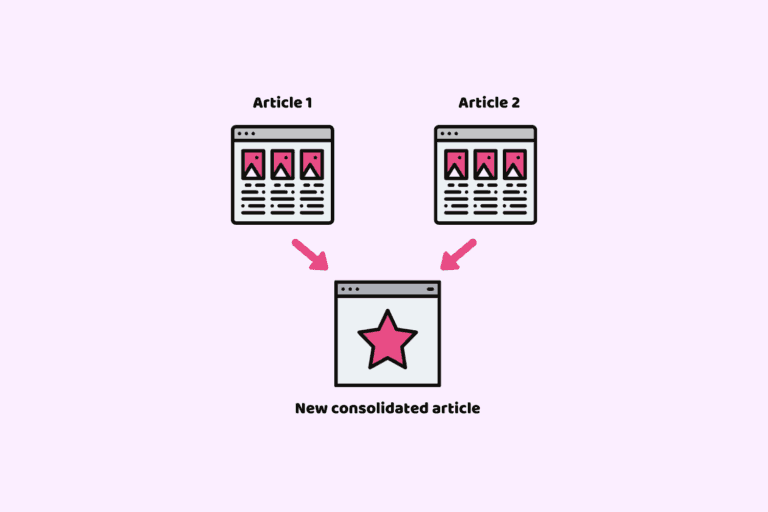
One of the most effective 2026 tests is subtraction.
Experiments that consistently work:
- Merging overlapping pages
- Redirecting cannibalized URLs
- Replacing multiple weak pages with one strong resource
These tests often produce:
- Ranking lifts
- Impression concentration
- Reduced volatility
They work because AI systems reward clarity and confidence, not redundancy.
If two pages answer the same intent, one is unnecessary.
3. Snippet-First Content Structure Tests
Testing how answers are structured still works — when done correctly.
High-performing tests include:
- Moving direct answers to the top
- Reducing hedging language
- Tightening definitions to 40–60 words
- Rewriting sections to be extractable
These changes don’t always improve CTR — but they often:
- Increase featured snippet wins
- Improve AI Overview inclusion
- Stabilize rankings during updates
Snippet-ready structure is now a trust test, not a traffic test.
4. Intent-Locking Experiments
Many pages fail because they try to satisfy multiple intents.
The All-in-One Platform for Effective SEO
Behind every successful business is a strong SEO campaign. But with countless optimization tools and techniques out there to choose from, it can be hard to know where to start. Well, fear no more, cause I've got just the thing to help. Presenting the Ranktracker all-in-one platform for effective SEO
We have finally opened registration to Ranktracker absolutely free!
Create a free accountOr Sign in using your credentials
Intent-locking tests include:
- Removing commercial CTAs from informational pages
- Separating comparison content from definitions
- Rewriting pages to serve one dominant purpose
Results often include:
- Higher relevance
- Improved SERP feature eligibility
- Less ranking fluctuation
AI systems prefer decisive pages.
Ambiguous intent is a ranking liability in 2026.
5. Brand Entity Reinforcement Tests
Entity-focused experiments now outperform many technical tests.
Effective tests include:
- Standardizing brand descriptions across pages
- Strengthening “about” and author context
- Reinforcing topic associations internally
- Adding consistent explanatory language
These changes:
- Rarely spike traffic
- Often increase impressions
- Improve long-term visibility
They work because they improve entity recognition, not keyword density.
SEO platforms like Ranktracker increasingly emphasize visibility and topic-level signals because these are the areas where testing still produces durable gains.
What SEO Tests No Longer Produce Reliable Gains
Many classic SEO tests now underperform or mislead.
Low-value experiments in 2026 include:
- Title tag keyword shuffling
- Minor meta description changes
- Single internal link additions
- Keyword density adjustments
- Isolated schema tweaks
These changes are often:
- Too small
- Too local
- Too easily neutralized by AI summaries
They may still work at the margins — but they’re rarely worth prioritizing.
How to Test SEO Properly in 2026
Test at the System Level
Instead of testing one page, test:
- A content cluster
- A section of the site
- A repeated pattern
AI systems respond to patterns, not exceptions.
Measure Visibility, Not Just Rankings
Use metrics like:
- Impression growth by topic
- SERP feature inclusion
- Ranking stability
- Query coverage expansion
Traffic is lagging and noisy. Visibility reveals structural impact.
Expect Slower, More Durable Results
Modern SEO tests:
- Take longer to validate
- Produce fewer spikes
- Create more stability
This is a feature, not a flaw.
The All-in-One Platform for Effective SEO
Behind every successful business is a strong SEO campaign. But with countless optimization tools and techniques out there to choose from, it can be hard to know where to start. Well, fear no more, cause I've got just the thing to help. Presenting the Ranktracker all-in-one platform for effective SEO
We have finally opened registration to Ranktracker absolutely free!
Create a free accountOr Sign in using your credentials
Fast tests often indicate fragile gains.
The New SEO Testing Mindset
SEO testing in 2026 is less about “what changed” and more about:
- “What did this clarify?”
- “What did this remove?”
- “What did this reinforce?”
Tests that reduce ambiguity win. Tests that add complexity usually fail.
AI didn’t kill SEO experimentation. It raised the standard for what counts as a meaningful test.
Final Takeaway
SEO testing still works — but only when it targets structure, intent, and trust.
In 2026, the experiments that produce real gains are those that:
- Clarify topical authority
- Remove redundancy
- Strengthen internal relationships
- Improve extractability and reuse
Micro-optimizations are increasingly invisible. Structural improvements still compound.
The SEOs who win aren’t testing more. They’re testing better questions.