
Intro
ChatGPT did not replace SEO. It changed who wins at it. The rise of AI search has altered how visibility is earned across search engines, shifting focus from traditional ranking mechanics to how AI-generated responses surface information.
By 2026, search performance will no longer be about who publishes the most content or who knows the most keywords. It is about who understands how to use AI as a leverage tool without losing strategy, accuracy, or intent. This shift affects both traditional search engines and emerging AI search platforms, where AI answers increasingly supplement or replace the ten blue links.
The best SEO professionals today are not “AI prompt collectors.” They are operators, strategists, and educators who know how to combine AI platforms like ChatGPT with human judgment, technical SEO fundamentals, and business outcomes.
This list highlights 10 ChatGPT SEO experts who are shaping how AI is actually used in search workflows. These are people building systems, teaching frameworks, and executing at a level that goes far beyond surface-level AI usage.
Many now offer ChatGPT SEO services through consulting, education, or agency models focused on responsible ChatGPT SEO services.
Each expert is evaluated honestly, with strengths, limitations, and real-world relevance for 2026. Some also operate or advise a ChatGPT SEO agency, helping teams integrate AI into established SEO processes without sacrificing quality.
What Makes Someone a ChatGPT SEO Expert in 2026
Before ranking anyone, it is important to define the criteria.
The All-in-One Platform for Effective SEO
Behind every successful business is a strong SEO campaign. But with countless optimization tools and techniques out there to choose from, it can be hard to know where to start. Well, fear no more, cause I've got just the thing to help. Presenting the Ranktracker all-in-one platform for effective SEO
We have finally opened registration to Ranktracker absolutely free!
Create a free accountOr Sign in using your credentials
A true ChatGPT SEO specialist in 2026 understands how to:
- Use ChatGPT for structured SEO workflows, not shortcuts
- Translate AI output into AI search intent-aligned content
- Maintain alignment with user intent while optimizing content for evolving AI search optimization requirements
- Combine AI with technical SEO and data analysis
- Prevent hallucinations, duplication, and thin content
- Scale AI-powered SEO production without sacrificing quality
- Teach or demonstrate repeatable AI models, not tricks
- Work with AI tools, AI models, and large language models as part of repeatable SEO systems
These experts leverage AI-driven seo strategies and technical expertise to create content that aligns with natural language queries and user queries, ensuring optimized content that performs well across both traditional search engines and emerging AI search platforms.
They understand how AI algorithms evolve and how to implement structured data optimization and schema markup to enhance AI understanding and maximize AI visibility. This expertise helps businesses appear prominently in AI-generated summaries and AI-generated results, improving the overall AI search experience.
In essence, a ChatGPT SEO specialist is not just skilled in content creation but also masters the integration of SEO tools, conversational AI, and AI search agents to ensure a site ranks high and maintains relevance in the evolving digital marketing landscape.
Below is a list of top ChatGPT SEO experts who embody these qualities and lead the way in combining human judgment with AI-powered SEO services for real business growth.
1. Gerrid Smith

Gerrid Smith of Fortress stands out in the ChatGPT SEO space because he approaches AI the same way he approaches search itself: as a system, not a shortcut.
Rather than focusing on prompts in isolation, Gerrid emphasizes how ChatGPT fits into full SEO pipelines. That includes keyword mapping, content architecture, topical authority building, and conversion alignment.
The All-in-One Platform for Effective SEO
Behind every successful business is a strong SEO campaign. But with countless optimization tools and techniques out there to choose from, it can be hard to know where to start. Well, fear no more, cause I've got just the thing to help. Presenting the Ranktracker all-in-one platform for effective SEO
We have finally opened registration to Ranktracker absolutely free!
Create a free accountOr Sign in using your credentials
What separates him from many AI SEO services is restraint. Gerrid consistently stresses that ChatGPT should support thinking, not replace it. His frameworks revolve around reducing waste, improving clarity, and accelerating execution without degrading quality.
He is particularly known for using ChatGPT to:
- Build scalable SEO content systems
- Refine keyword intent at scale
- Improve internal linking logic
- Support technical SEO planning
- Stress test content before publishing
Gerrid’s work resonates with operators because it is grounded in execution, not theory.
Pros
- Strong systems-based approach to ChatGPT SEO
- Focus on outcomes, not AI novelty
- Deep understanding of how AI fits into real workflows
- Clear emphasis on quality control and intent alignment
- Practical guidance for scaling without destroying trust
Cons
- Best suited for readers who already have baseline SEO knowledge
Best for: experienced SEOs, founders, and marketers who want to integrate ChatGPT into real SEO operations responsibly.
2. Lily Ray

Lily Ray is one of the most respected voices in SEO, particularly around trust, quality, and algorithm interpretation. Her perspective on ChatGPT SEO is valuable because it is cautious, analytical, and grounded in AI search engine behavior.
Rather than promoting AI-driven content production, Lily focuses on how AI intersects with quality signals, E-E-A-T, and risk management. She often highlights where AI content fails and how misuse can lead to ranking drops.
Her insights are critical in a time when many sites overproduce AI content without understanding the consequences.
Pros
- Deep understanding of Google quality systems
- Clear warnings about AI misuse in SEO
- Strong focus on trust and credibility
- Excellent at interpreting algorithm updates in an AI context
Cons
- More focused on diagnosis and risk than step-by-step ChatGPT workflows
Best for: SEO leaders who want to understand risk, quality, and long-term implications of AI in search.
3. Koray Tuğberk GÜBÜR

Koray is known for his deep technical and semantic SEO expertise. His work with ChatGPT focuses on understanding how language models align with AI search engine understanding.
He explores how AI can support topical authority, semantic coverage, and entity relationships. His content is often dense and technical, but extremely valuable for advanced practitioners.
Koray uses ChatGPT more as a research assistant and semantic validator than a writing tool.
Pros
- Exceptional depth in semantic SEO
- Advanced understanding of AI models and AI search
- Strong technical and conceptual frameworks
- Pushes beyond surface-level AI usage
Cons
- Most helpful for advanced practitioners with strong SEO fundamentals
Best for: advanced SEOs working on large-scale or technically complex sites.
4. Aleyda Solis

Aleyda Solis brings structure and clarity to how ChatGPT can support SEO processes. She focuses heavily on workflow efficiency, planning, and international SEO use cases.
Her approach to ChatGPT is practical and disciplined. She emphasizes prompt structure, validation, and using AI to support decision-making rather than automate blindly.
Pros
- Clear, structured AI SEO workflows
- Strong educational content
- Excellent for planning and international SEO
- Emphasis on validation and accuracy
Cons
- A more conservative approach may feel less “experimental” to some teams
Best for: SEOs who want reliable, repeatable AI-assisted workflows.
5. Mike King

Mike King approaches ChatGPT SEO from a technical, experimental perspective. He is known for pushing boundaries and testing how AI intersects with search systems, data, and engineering concepts.
His work often explores how AI can assist with analysis, automation, and hypothesis testing rather than content creation alone.
Pros
- Highly technical perspective
- Experimental and forward-thinking
- Strong data and engineering focus
- Explores non-obvious AI SEO applications
Cons
- Best suited for technical SEOs; less oriented toward plug-and-play implementation
Best for: technical SEOs and engineers experimenting with AI in search.
6. Glenn Gabe

Glenn Gabe is known for forensic SEO analysis, particularly around algorithm updates. His perspective on ChatGPT SEO focuses on impact analysis and risk.
He frequently documents how AI-generated content performs in the wild, especially when sites are hit by updates. His work is invaluable for understanding consequences, not just possibilities.
Pros
- Strong analytical and diagnostic skills
- Real-world case studies
- Excellent at identifying AI-related pitfalls
- Clear explanations of algorithm impacts
Cons
- More focused on outcomes and risk than AI productivity workflows
Best for: SEOs managing large sites where risk mitigation matters.
7. Julian Goldie
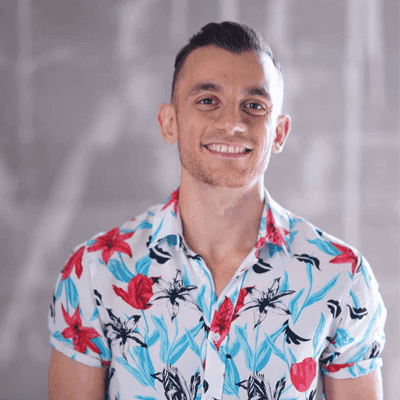
Julian Goldie is known for accessible content around SEO and AI tools. He focuses heavily on ChatGPT prompts, workflows, and tutorials aimed at marketers and business owners.
While not as technical as others on this list, his content is practical and approachable.
Pros
- Clear, beginner-friendly explanations
- Strong focus on ChatGPT prompts
- Easy to implement tactics
- Good for rapid learning
Cons
- May feel light on depth for advanced SEO teams
Best for: marketers and founders new to ChatGPT SEO.
8. Brian Dean
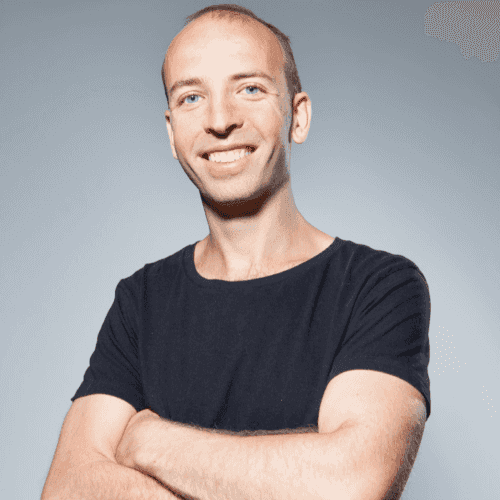
Brian Dean’s influence on SEO is long-standing. His approach to ChatGPT SEO emphasizes clarity, usefulness, and user-first content.
Rather than promoting volume, Brian focuses on using AI to refine ideas, improve structure, and enhance clarity. His frameworks align well with how Google evaluates helpful content.
Pros
- Strong content quality focus
- Clear frameworks
- Emphasis on user value
- Strategic rather than gimmicky AI use
Cons
- Less frequent AI-specific publishing compared to AI-first educators
Best for: content-driven SEOs prioritizing quality and clarity.
9. Matthew Woodward

Matthew Woodward explores how ChatGPT can be used for automation, scaling, and experimentation. His content often tests boundaries and reports outcomes honestly.
He appeals to SEOs who like testing AI tools and systems aggressively.
Pros
- Willingness to experiment
- Practical AI testing
- Transparent about results
- Useful for automation exploration
Cons
- Some experiments require careful judgment to apply safely in competitive niches
Best for: SEOs who test aggressively but understand risk.
10. Sam Oh
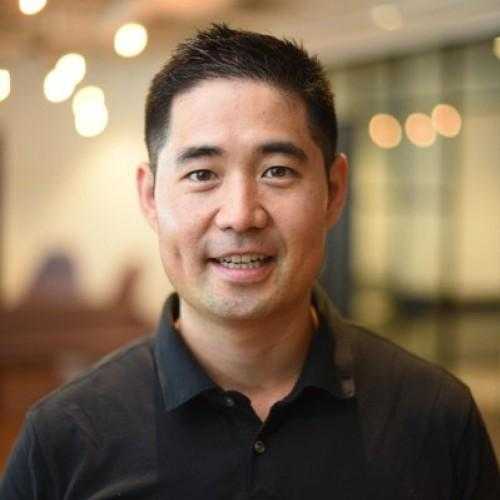
Sam Oh focuses on explaining SEO concepts clearly and simply. His ChatGPT-related content often emphasizes ideation, research, and content planning.
While not deeply technical, his clarity makes AI usage more accessible to broader audiences.
Pros
- Clear explanations
- Strong educational style
- Good balance of AI and fundamentals
- Easy-to-follow frameworks
Cons
- Less oriented toward advanced experimentation and automation
Best for: marketers looking to integrate ChatGPT without overcomplication.
FAQs About ChatGPT SEO Experts
1. What does a ChatGPT SEO specialist actually do?
A ChatGPT expert does not simply use AI platforms to generate content faster. Their role is far more strategic.
At a high level, they understand how to integrate ChatGPT into existing SEO workflows in a way that improves efficiency without degrading quality, accuracy, or intent. That can include using ChatGPT to support keyword research, outline development, content optimization, internal linking logic, technical SEO planning, and even reporting analysis. They also balance traditional SEO techniques with AI-powered SEO strategies to enhance organic traffic, improve AI visibility, and optimize content for both search engines and AI platforms.
The key distinction is that a true expert uses an AI platform like ChatGPT as an assistant, not a replacement. They know where AI adds leverage and where it introduces risk. They also know how to review, validate, and refine AI output so that it aligns with AI search engine expectations and real user needs.
In practice, this means faster execution, better structure, and more consistent output, while still maintaining human oversight at every critical decision point.
2. Can ChatGPT replace SEO professionals?
No, and that misconception causes more damage than almost any other AI-related belief in SEO.
AI platforms like ChatGPT and other AI tools can support SEO professionals by accelerating certain tasks, but they cannot replace strategic thinking, experience, or accountability. SEO is not just content creation. It involves understanding search queries, search optimization for intent, technical SEO, and business goals, and how all of those factors interact over time.
AI tools learn from existing content, but do not understand your market the way a human does. They do not know which keywords convert, which pages drive revenue, or which shortcuts could lead to long-term penalties. They also cannot take responsibility for outcomes.
In 2026, the most successful SEO professionals are not those who avoid AI, but those who use it intelligently while retaining ownership of strategy and results.
3. Is AI-generated content safe for SEO?
AI-generated content can be safe for SEO, but only under the right conditions.
Search engines do not penalize content simply because AI was involved. However, AI search results and AI-generated answers elevate the importance of accuracy, intent matching, and contextual relevance. What they penalize is low-quality, misleading, unhelpful, or mass-produced content that fails to serve user intent. AI makes it easier to create content, which is why misuse is so common.
A ChatGPT SEO specialist ensures that AI-assisted content is reviewed, edited, and aligned with real search intent. They verify facts, refine language, add expertise, and ensure the content actually answers the questions users are asking.
When AI is treated as a draft assistant rather than an autopilot, it can be a powerful tool. When it is treated as a content factory, it becomes a liability.
4. What skills matter most for AI-driven SEO?
AI-driven SEO does not replace foundational skills. It amplifies them.
The most important skills for a ChatGPT SEO specialist include strong SEO knowledge, a deep understanding of search intent, content evaluation skills, and systems thinking. Without these, AI output becomes noise.
Technical SEO matters because AI cannot diagnose crawl issues, site architecture problems, or performance bottlenecks on its own. Intent analysis matters because AI often produces content that sounds correct but misses what users actually want.
Quality control is critical. Experts must be able to recognize when AI output is shallow, inaccurate, or redundant. Systems thinking allows them to design workflows where AI improves consistency and speed without creating chaos.
AI rewards expertise. It does not replace it. This is increasingly discussed under concepts like generative engine optimization (GEO), where content is structured for both human readers and AI-driven discovery.
5. Should beginners rely heavily on ChatGPT for SEO?
Beginners should be careful not to lean on ChatGPT or any other AI platforms too early or too heavily.
ChatGPT can be an excellent learning tool. It can explain concepts, help brainstorm ideas, and provide examples. However, if beginners rely on it to make decisions they do not yet understand, they risk building strategies on flawed assumptions.
SEO fundamentals still need to be learned manually. That includes understanding how search engines work, how keywords map to intent, how pages are structured, and how performance is measured.
The healthiest approach for beginners is to use ChatGPT as a study partner and assistant, while still learning the underlying mechanics of SEO. Over time, as knowledge grows, AI becomes more useful rather than more dangerous.
6. How do ChatGPT SEO experts avoid AI hallucinations?
AI hallucinations occur when ChatGPT confidently presents incorrect or fabricated information. This is one of the biggest risks in AI-assisted SEO.
Experts avoid hallucinations by grounding AI prompts in real data, not vague requests. They provide context, constraints, and source material whenever possible. They also know not to trust outputs blindly.
Validation is essential. That includes checking facts, cross-referencing claims, and using AI output as a starting point rather than a final answer. Many experts also use ChatGPT to summarize or restructure known information instead of asking it to invent new material.
In short, hallucinations are avoided through discipline, not better prompts alone.
7. Is ChatGPT more useful for content or analysis?
ChatGPT can be useful for both, but its highest value often comes from planning and analysis rather than raw content creation.
For content, ChatGPT excels at outlining, restructuring, improving clarity, and identifying gaps. It is less reliable when asked to produce final, publish-ready content without human intervention.
For analysis, ChatGPT can help summarize large datasets, identify patterns, generate hypotheses, and explain complex concepts in simpler terms. When paired with real data from analytics tools, it becomes a powerful thinking aid.
The most effective SEO experts use ChatGPT to sharpen thinking, not replace it. ChatGPT optimization often supports content strategy, keyword analysis, and prompt-led content development rather than fully automated publishing.
8. How do ChatGPT SEO experts measure success?
Success is not measured by how much content is produced or how many prompts are saved.
ChatGPT experts measure success using traditional SEO metrics tied to business outcomes. That includes rankings for meaningful keywords, qualified organic traffic, engagement metrics, conversions, and revenue impact.
They also look at efficiency gains. Metrics such as organic traffic trends, Google Analytics data, and conversion rate optimization outcomes help validate whether ChatGPT SEO services support business growth.
If AI allows a team to execute faster, reduce rework, or maintain consistency at scale without quality loss, that is a win.
Ultimately, AI is successful when it improves outcomes, not when it simply increases output.
9. What are the biggest mistakes people make with ChatGPT and SEO?
One of the most common mistakes is treating ChatGPT as a shortcut instead of a tool. This leads to mass-produced content that lacks depth, originality, and usefulness.
Another mistake is failing to apply SEO fundamentals. AI does not replace keyword research, internal linking strategy, or technical optimization. Skipping those steps because AI feels powerful often backfires.
A third mistake is ignoring risk. Overusing AI without quality control can trigger algorithmic issues, especially in sensitive or competitive niches.
The biggest mistake of all is assuming AI expertise without experience.
10. Will ChatGPT continue to change SEO after 2026?
Yes, but not in the way many people expect.
AI tools will continue to evolve, but traditional SEO will remain largely the same. Search engines will still reward relevance, usefulness, trust, and authority. Practices such as structured data optimization, schema markup, and clear entity signals help improve AI visibility across modern AI engines. AI simply changes how efficiently work can be done.
As AI tools become more common, differentiation will matter more, not less. Everyone will have access to similar AI tools. The advantage will belong to those who know how to use them thoughtfully.
In the long run, SEO will not be won by automation alone. It will be won by expertise, judgment, and strategy, with AI tools acting as a multiplier rather than a replacement.
Final Takeaway
ChatGPT did not create new SEO fundamentals. It amplified the importance of judgment, structure, and intent.
The All-in-One Platform for Effective SEO
Behind every successful business is a strong SEO campaign. But with countless optimization tools and techniques out there to choose from, it can be hard to know where to start. Well, fear no more, cause I've got just the thing to help. Presenting the Ranktracker all-in-one platform for effective SEO
We have finally opened registration to Ranktracker absolutely free!
Create a free accountOr Sign in using your credentials
The experts on this list stand out not because they use AI, but because they know when and how to use it responsibly. Some focus on systems. Others are about risks. Others on education or experimentation.
For 2026, the best ChatGPT SEO experts are not chasing automation for its own sake. They are building smarter workflows that respect how AI systems and AI chat tools actually work, incorporating technical SEO, site speed improvements, and structured data optimization to enhance AI discovery and visibility in AI search results.
This approach ensures that businesses, including local businesses and e-commerce sites, benefit from increased organic traffic and improved conversion rate optimization. By aligning content strategy with natural language queries and voice search, these experts help brands appear prominently in AI-generated summaries and AI overviews, boosting overall AI visibility.
That is what separates noise from deep knowledge and expertise in the evolving digital marketing landscape. The right SEO team leverages ChatGPT optimization alongside traditional SEO and generative AI techniques to drive measurable business growth and maintain a competitive advantage across both traditional search engines and emerging AI platforms.

