
Intro

If you’ve spent just a year or two in the SEO industry, you’re already well aware of the fact that search is no longer about typing a few words into a box. With voice assistants, AI chatbots, and multimodal platforms, the way people discover information is shifting right under our noses.
This is bigger than a technical update.
It’s a cultural change in how people ask questions and how businesses get seen. If your strategy is still focused on rankings alone, you’re already playing last year’s game. The next wave is about preparing for a future where AI decides what gets surfaced, and voice assistants speak for your brand… or worse, ignore it entirely.
That said, if you want to prepare yourself for this new shift, keep reading as we’ll discuss how AI and voice search are rewriting the rules of discovery, visibility, and brand influence.
The Shift from Keywords to ‘Conversations’
Traditional search was keyword-driven: people typed short, clipped queries like “best running shoes” or “Italian restaurant NYC.”
Voice and AI have changed the rhythm.
The All-in-One Platform for Effective SEO
Behind every successful business is a strong SEO campaign. But with countless optimization tools and techniques out there to choose from, it can be hard to know where to start. Well, fear no more, cause I've got just the thing to help. Presenting the Ranktracker all-in-one platform for effective SEO
We have finally opened registration to Ranktracker absolutely free!
Create a free accountOr Sign in using your credentials
Now it’s: “What’s the best running shoe for flat feet if I mostly jog in the mornings?” or “Find me an Italian restaurant nearby that’s still open and has outdoor seating.”
AI models track context across multiple questions, remembering what you asked before and shaping results accordingly. That means your content can’t live in isolation. It has to connect dots.
Edward Tian, CEO of GPTZero, said, “In mobile e-commerce, speed and personalization matter, but so does trust. As AI creates more automated product descriptions and reviews, retailers must ensure transparency so consumers know when content is authentically human.”
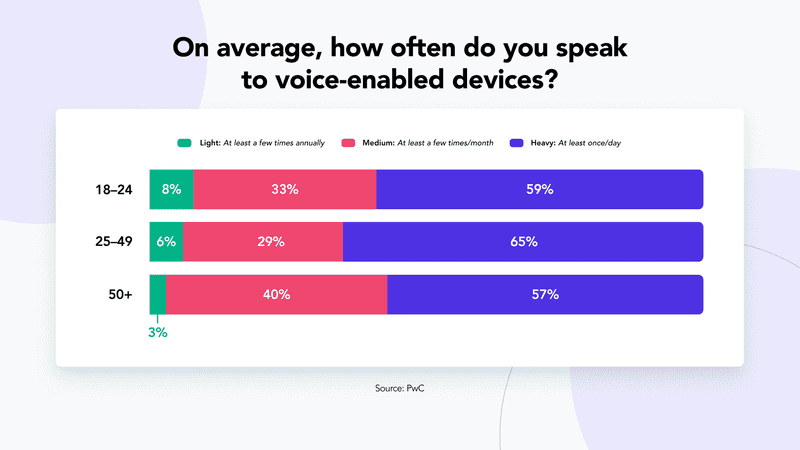
Around two-thirds of adults aged 25 to 49 now speak to their voice-enabled devices at least once a day, making this age group the most active daily users of voice search. Younger adults, 18 to 24, were instrumental in driving early adoption of the technology, while those over 50 are gradually catching up.
This shows that voice search is becoming a mainstream way for the most digitally engaged demographics to access information.
The All-in-One Platform for Effective SEO
Behind every successful business is a strong SEO campaign. But with countless optimization tools and techniques out there to choose from, it can be hard to know where to start. Well, fear no more, cause I've got just the thing to help. Presenting the Ranktracker all-in-one platform for effective SEO
We have finally opened registration to Ranktracker absolutely free!
Create a free accountOr Sign in using your credentials
For businesses looking to strengthen their online presence in this evolving search landscape, partnering with a reputable web development company in Dallas TX can ensure your site is technically optimized for both traditional and voice-activated queries. A local Dallas web development firm can help implement structured data, speed improvements, and conversational content formats that AI assistants prefer.
Source: Invoca
Imagine building FAQ content that anticipates follow-ups or writing guides structured like conversations. When AI strings these pieces together, your brand is part of an evolving exchange instead of a one-off answer.
AI as the New Search Layer
Google isn’t the only gatekeeper anymore. Gal Orian Harel, Co-Founder & CEO of Blix.ai, explains, “ChatGPT, Gemini, and Perplexity are acting as intermediary search engines. Users are skipping traditional search entirely. They are asking AI assistants for answers instead.”
That shifts the battlefield.
You could be ranking on Google, yet completely absent when someone asks the same question to an AI model. Why? Because AI responses are based on training data, structured content, and sources it can “trust” to generate answers.
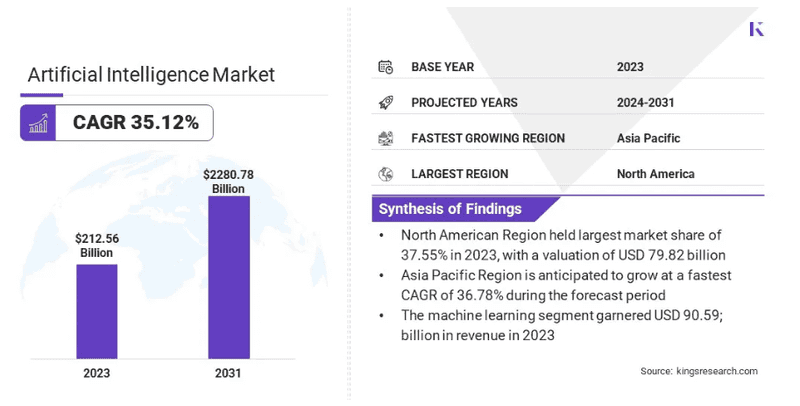
By 2030, the AI models market is expected to reach $2,280 billion, and the growth isn’t slowing down. It’s shaping up to be the next big wave, just like search engines were in the early 2000s.
Source: Kings Research
Back then, businesses that didn’t go digital missed out on huge opportunities, got buried in Google, and lost revenue.
The same lesson applies today: if companies don’t adapt to AI-driven search and voice interfaces, they risk being invisible to a growing portion of their customers.
Kirstie Hall, CMO at Fursonafy, said, “Visibility has always been about timing — getting the right branded product in front of the right audience. AI-driven search works the same way. If your content isn’t structured to be found and summarized by AI, you miss those critical discovery moments.”
Making your content AI-readable is now as important as SEO. That means structured data, concise explanations, and authoritative sourcing.
Think about how an AI would summarize your article in a sentence. If your content doesn’t break down into clean, verifiable chunks, it won’t surface in these AI-driven interactions.
The Rise of Zero-Click Discovery
Voice assistants and AI rarely send people to websites. They answer directly. It’s the ultimate zero-click environment — helpful for users, brutal for brands that rely on traffic.
“The game isn’t about clicks anymore; it’s about presence inside the answer itself. If Siri, Alexa, or ChatGPT names your product or cites your article, you win. If not, you’re invisible,” says Rameez Ghayas Usmani, Award-Winning HARO Link Builder & CEO of HARO Link Building.
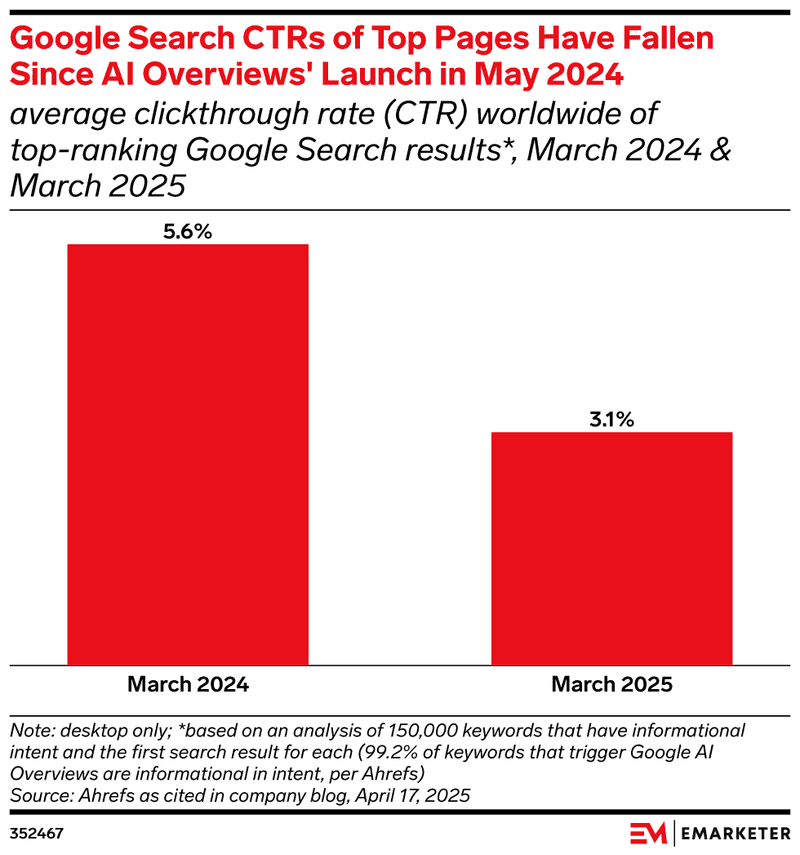
Even new updates in Google, which has been the major search engine to generate organic traffic, have resulted in lower clicks for top results. That’s because of the fact that search behaviour is changing, and they’d rather prioritize that behaviour instead of risking losing this new race.
_Source: emarketer _
This requires rethinking ROI. Brand mentions, answer share, and assistant visibility will matter more than CTR. Winning here means building authority so strong that AI wants to reference YOU.
Local Search Reinvented by Voice
Voice thrives in local contexts. Most “near me” or “open now” queries come through mobile or smart assistants.
Noah Lopata, CEO of Epidemic Marketing, “For businesses, this means local SEO has to evolve beyond simple keywords. It’s about building recognizable digital footprints — consistent branding, reviews, and user interactions that AI can track and recall when a customer asks for ‘that place I liked last time.’”
The twist is that AI will soon personalize local results by default. Instead of asking for “a coffee shop,” users will ask, “Find me the coffee shop I liked last time,” and AI will know exactly where to send them.
Research shows that nearly 46% of people use voice search on their mobile devices every day for local queries; things like finding a nearby restaurant, checking store hours, or asking for directions.
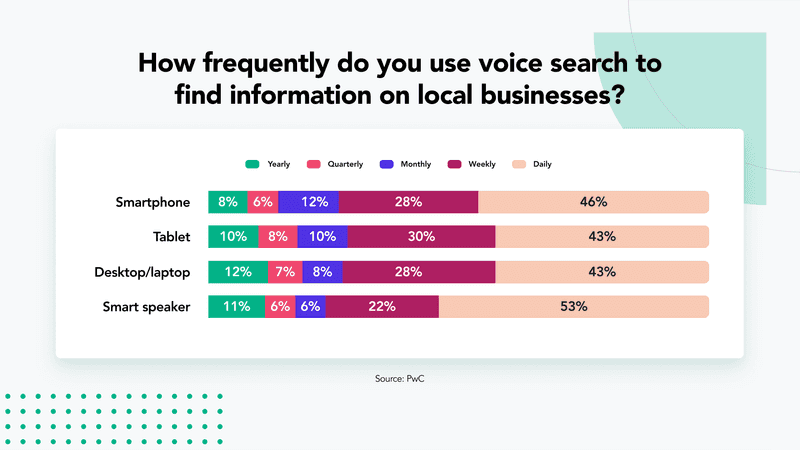
Image Source: Invoca
That may sound like just a fraction, but when you scale it across millions of smartphone users, it represents hundreds of millions of daily interactions where businesses can be discovered… or completely missed.
For small businesses, this is both a challenge and an opening. Google Business profiles need to be bulletproof: updated hours, accurate categories, and loads of customer reviews. Structured reviews with keywords like “great vegan options” or “open late” make you discoverable for hyper-specific voice queries.
Kenny Philliips, Founder & CEO of Inbound Suits, mentions, “Small businesses need a digital presence that AI can read easily. Your website, business profile, and content all have to be structured so virtual assistants can pull the right information instantly—otherwise, you risk being invisible to local customers.”
It’s also about micro-moment targeting. If AI knows a customer is on their way home and asks for “something quick to eat nearby,” the assistant will pull options that are optimized not just for search, but for context.
Local SEO has never been this dynamic, and the businesses that adapt fastest will win the “always listening” customer.
The Battle for Featured Voice Snippets
Voice assistants don’t give ten results—they give one answer. That single answer has become the ultimate SEO battleground. Even if your content ranks #1 in traditional search, it can remain invisible if it isn’t structured for AI-driven responses.
Alison Lancaster, CEO of Pressat, “Structured content is key. Clear headings, bullet points, and actionable steps help AI understand and share your insights, while also guiding users through complex career topics efficiently.”
Winning a featured snippet now requires clarity, authority, and immediate utility. Break content into concise, actionable chunks. Use headers that answer questions directly, and leverage tables, numbered lists, or bullet points that AI assistants can read and relay quickly. This ensures your expertise is visible to both AI and human audiences.
For businesses, this means thinking like a human + AI hybrid audience. You want your content to satisfy the human who asks the question and the AI that decides which answer to present. This dual focus changes not only how you write, but how you structure and validate your information.
Beyond formatting, the topics you cover must reflect authority in your field. AI tends to reference content that demonstrates expertise, consistency, and relevance. By aligning your content with trends, best practices, and actionable insights in your industry, you increase the likelihood that AI will prioritize your material in its answers.
Strategic Steps for Businesses
Here are key steps businesses can take to stay ahead:
Map Conversational Intent
Start by analyzing the actual questions your customers ask. Voice search is inherently conversational, and users often ask follow-up questions. Understanding these patterns is key.
People often frame queries based on context: a client looking for office solutions might ask, “Which office layout improves productivity?” while someone shopping for furniture might wonder, “What sofa material is easiest to maintain?” Mapping these conversational paths helps reveal the underlying intent and priorities of your audience, far beyond what static keywords show.
Building content around multi-turn dialogues helps AI deliver information more completely. Each answer should naturally lead to the next likely question. For example, someone asking about office ergonomics may next want guidance on desk layouts, seating options, or storage solutions.
The All-in-One Platform for Effective SEO
Behind every successful business is a strong SEO campaign. But with countless optimization tools and techniques out there to choose from, it can be hard to know where to start. Well, fear no more, cause I've got just the thing to help. Presenting the Ranktracker all-in-one platform for effective SEO
We have finally opened registration to Ranktracker absolutely free!
Create a free accountOr Sign in using your credentials
Eli Harel, Partner at Lice Busters, adds, “Search queries reflect experiences. Users don’t just seek a product, they want solutions that fit their space and style. Understanding how people talk about furniture, comfort, or design trends allows you to create content that resonates at every step.”
Invest in Structured Data
Schema markup isn’t optional anymore; it’s how AI understands, categorizes, and cites your content. From FAQs to product descriptions to local business listings, structured formats give AI the signals it needs to surface your expertise in voice assistants, chatbots, and answer boxes.
Ákos Doleschall, Managing Director at Hustler Marketing, mentions, “Implementing FAQ schema, product schema, and local business schema makes your content understandable to AI. This ensures your information gets cited accurately in recommendations and answers. And for industries like home services, local expertise, and technical guidance, schema ensures your solutions are discoverable exactly when users need them.”
Plus, well-marked content increases your chances of being included in featured snippets, voice responses, and AI recommendations. Even if your website ranks high in traditional search, without structured data, AI assistants may overlook your content in favor of sources they can parse more easily.
OPtimize for Zero-Click Outcomes
Many voice search interactions don’t lead to clicks. Instead, focus on creating content that answers questions directly. Snippets, concise summaries, bullet points, and microcontent blocks are perfect for AI to pull from, ensuring your brand is part of the answer even without a user visiting your site.
Monitor AI Visibility
Traditional ranking reports no longer tell the full story. In an AI-first environment, visibility is measured by how often your brand or content appears in voice assistants, AI chat outputs, and recommendation engines. For healthcare providers and clinics, this can mean being cited as a trusted source for medical advice, clinic services, or patient guidance—AI is now a gatekeeper for patient engagement before they even visit your website.
Conclusion
Stop thinking of SEO as “ranking” and start thinking of it as an AI visibility strategy. Your content must serve both humans and machines, anticipate conversation flows, and provide actionable, trustable information.
By acting now, companies don’t just survive the next wave of search — they control it, shaping how users discover, interact with, and trust their brand in a voice-first, AI-powered world.

