Intro
Google Search isn’t just evolving — it’s being rebuilt in real time.
Google AI Mode is the clearest sign of that shift.
Instead of acting like a directory of websites, Google is moving toward an experience where it understands your question, generates an answer, and guides your next step — all before you click anything.
For SEOs, publishers, and businesses, that changes everything.
Because the new goal isn’t only to “rank pages”… it’s to become one of the sources Google trusts enough to summarize.
What Is Google AI Mode?
Google AI Mode is an AI-powered search experience that uses generative AI to create a direct answer inside Google Search.
It’s built for searches where users want:
- a clear explanation
- a decision-ready summary
- step-by-step guidance
- comparison-style answers
- follow-up suggestions
Instead of sending users away to five different links, AI Mode aims to complete the research journey inside the SERP, while still citing and linking to external sources.
The All-in-One Platform for Effective SEO
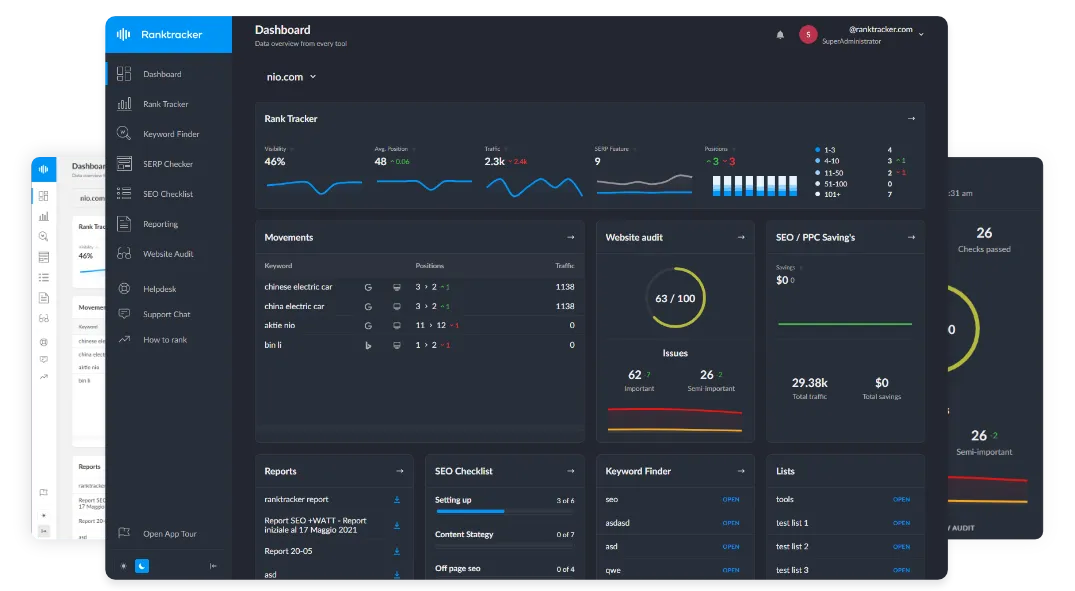
Behind every successful business is a strong SEO campaign. But with countless optimization tools and techniques out there to choose from, it can be hard to know where to start. Well, fear no more, cause I've got just the thing to help. Presenting the Ranktracker all-in-one platform for effective SEO
We have finally opened registration to Ranktracker absolutely free!
Create a free accountOr Sign in using your credentials
In practice, AI Mode turns Google Search into something closer to:
-
a research assistant
-
a structured summary engine
-
a guided Q&A system
Why Google AI Mode Exists (And Why It’s Not Just “A Feature”)
AI Mode exists because search behavior has changed.
Users don’t search like robots anymore. They search like they’re speaking to someone who can think.
Modern queries often look like:
- “What’s the best option for my situation?”
- “Compare these two tools but focus on pricing + scalability”
- “Explain it simply but don’t dumb it down”
- “Give me a plan I can follow today”
- “What should I avoid so I don’t waste time?”
Old-school search results weren’t designed for this.
AI Mode is Google’s answer to conversational search, and it’s also Google’s defense against tools like ChatGPT and Perplexity.
AI Mode vs Traditional Google Search (What Users Actually Experience)
Let’s keep it simple.
Traditional Search
You ask:
best SEO software for agencies
You get:
- ads
- list posts
- category pages
- review blogs
- a bunch of options
- and you figure it out yourself
AI Mode
You ask the same thing and Google responds with:
- a quick summary of the best choices
- clear differences (features, pricing, ideal use cases)
- recommendations based on intent
- follow-up prompts like:
- “Best for white-label reporting?”
- “Best for local SEO clients?”
- “Best if I need daily rank tracking?”
It’s not a “results page.” It’s a decision engine.
Is Google AI Mode the Same as AI Overviews?
They’re connected, but they’re not identical.
Google AI Overviews
- appear as an AI-generated summary at the top of a normal SERP
- show citations / supporting links
- still keep the classic layout beneath
Google AI Mode
- is more “full-screen AI search”
- feels more conversational and guided
- supports deeper research and follow-ups
- pushes users toward staying inside Google longer
A simple way to remember it:
AI Overviews = AI added to Search
AI Mode = Search built around AI
How Google AI Mode Works (In Plain English)
Google AI Mode isn’t a random chatbot guessing answers.
It still depends on Google’s core systems:
- crawling and indexing
- ranking signals
- topic authority
- entity understanding
- trusted sources and consistency
The difference is what Google does after it understands the query:
- It pulls relevant information from multiple sources
- It summarizes it into a structured response
- It cites links when appropriate
- It suggests natural follow-up questions
- It keeps the user “in the journey”
In other words:
The All-in-One Platform for Effective SEO
Behind every successful business is a strong SEO campaign. But with countless optimization tools and techniques out there to choose from, it can be hard to know where to start. Well, fear no more, cause I've got just the thing to help. Presenting the Ranktracker all-in-one platform for effective SEO
We have finally opened registration to Ranktracker absolutely free!
Create a free accountOr Sign in using your credentials
Google used to say, **“Here are the best pages.”
**Now it increasingly says, “Here’s the answer (and here’s what to read if you want proof).”
What Types of Searches Trigger Google AI Mode?
AI Mode performs best when the search requires reasoning, comparing, or multiple steps.
Common trigger categories include:
Comparisons and “best” queries
- best SEO tools for ecommerce
- Ranktracker vs alternatives
- best keyword tracking software for agencies
Strategy and learning
- what is topical authority
- how to build an internal linking strategy
- how to recover from a traffic drop
Planning and decision making
- how to migrate from WordPress to Next.js without losing SEO
- how to launch a site and rank in 30 days
- what to do when indexing is fine but rankings don’t move
Problem-solving queries
-
why pages aren’t ranking despite backlinks
-
why impressions are rising but clicks are down
-
how to fix keyword cannibalization
How AI Mode Changes SEO (The Important Part)
AI Mode doesn’t kill SEO.
But it shifts the reward system.
Informational traffic becomes harder to “own”
A lot of content that once got easy clicks is now answered inside Google.
That includes:
- simple definitions
- basic how-to posts
- listicles without original insights
- “intro-level” guides
If your content is only designed to rank for top-of-funnel informational terms, AI Mode can reduce your clicks even if rankings stay stable.
The real SEO win becomes “being cited”
Ranking #1 is great.
But in AI Mode, your content may not be clicked unless it’s:
- cited clearly
- seen as reliable
- uniquely useful compared to others
This is why many SEOs are shifting toward:
- GEO (Generative Engine Optimization)
- AEO (Answer Engine Optimization)
- entity-first content strategy
The new goal is:
Become a source the AI wants to quote, not just a page Google can rank.
What Google AI Mode Rewards (And What It Punishes)
Here’s the honest breakdown.
AI Mode rewards content that is:
- clear and structured
- fact-based and specific
- topically deep
- written by someone who understands the subject
- updated and maintained
- supported by examples
- internally consistent across a full topic cluster
AI Mode punishes content that is:
- generic
- repetitive
- surface-level
- “SEO-first, user-second”
- copycat content that adds no new value
- overly optimized but not genuinely helpful
This is why the classic “write 2,000 words and sprinkle keywords” strategy is falling apart.
How to Optimize for Google AI Mode (Actionable + SEO-Realistic)
If you want to show up in AI Mode, your content needs to be extractable, trustworthy, and complete.
Answer the query early (without fluff)
The first 5–10 lines matter more than ever.
If your intro takes 200 words to “warm up,” AI Mode will ignore you.
Your page should clearly deliver:
- a definition
- what it means
- why it matters
- what to do next
Use structure Google can reuse
AI Mode loves content that is naturally organized into answer blocks:
- short paragraphs
- bullet points
- clear H2s and H3s
- step-by-step instructions
- “mistakes to avoid” sections
- mini FAQs
Write like you’re training an evaluator (not an algorithm)
The best content for AI Mode feels like:
- written by a real expert
- tested in real situations
- confident and specific
- honest about edge cases
Not “the internet says…”
Build a topic cluster, not a one-off article
AI Mode (and AI Overviews) strongly favors sites that cover a topic fully.
For example, if you write about AI Mode, supporting pages could include:
- AI Mode vs AI Overviews
- How AI Mode affects CTR
- How to track AI Mode visibility
- How to build content for AI citations
- GEO vs SEO for 2026
- AI SERP volatility and monitoring
When Google sees consistent depth, it trusts you more.
What Google AI Mode Means for Businesses (SaaS, Agencies, Ecommerce)
If you’re running a business, AI Mode changes where the value comes from.
Brand becomes the moat
People won’t click 10 options anymore.
They’ll see 3–5 recommended sources and trust what the AI summarizes.
So the goal becomes:
- be mentioned
- be cited
- be compared
- be consistently visible across the topic
Your money pages matter even more
Top-of-funnel clicks may decrease.
But commercial pages still win, especially when your content leads users to:
- product comparisons
- alternatives pages
- landing pages that match specific use cases
- solution pages by industry or role
This is exactly why modern SEO strategies are shifting toward:
-
product-led SEO
-
use-case pages
-
jobs-to-be-done content
-
mid-funnel conversion content
What Should You Track If AI Mode Becomes the Default?
If AI Mode expands further (and it likely will), you’ll need visibility beyond “rank position.”
You should track:
- which keywords trigger AI answers
- where your brand is being mentioned
- which pages are being cited
- whether AI Mode reduces clicks on informational posts
- whether commercial pages gain higher-quality traffic
- how SERP layouts change month-to-month
This is also why traditional “rank tracking only” doesn’t tell the full story anymore.
You need:
-
SERP feature visibility
-
AI Overview monitoring
-
Top-10 / Top-100 movement
-
intent-based tracking
Final Thought: Is Google AI Mode a Threat or an Opportunity?
It’s both.
The All-in-One Platform for Effective SEO
Behind every successful business is a strong SEO campaign. But with countless optimization tools and techniques out there to choose from, it can be hard to know where to start. Well, fear no more, cause I've got just the thing to help. Presenting the Ranktracker all-in-one platform for effective SEO
We have finally opened registration to Ranktracker absolutely free!
Create a free accountOr Sign in using your credentials
If your content is shallow, AI Mode becomes a traffic killer.
But if your site becomes a trusted source on a topic, AI Mode becomes a compounding advantage — because Google is effectively promoting your expertise inside the answer itself.
The winners in this new search era will be the brands that stop writing for rankings…
…and start writing to become the source.