Intro
 How AI Search Is Changing Local Business Discovery
A few years ago, someone looking for a plumber would type "plumber near me" into Google, scroll through a map pack, read a few reviews, and call one of the top results. That still happens, but a growing number of people skip the search results entirely and ask an AI tool instead. They type or speak a question to ChatGPT, Google's AI Overview, or another AI assistant and get back a recommendation rather than a list of links to browse.
For local businesses, this shift matters more than most have realised. Ranking well in traditional search doesn't automatically translate into showing up in AI-generated answers, and the signals that drive AI recommendations are not identical to those that drive Google rankings.
What's Actually Changing
Research from BrightLocal shows that AI is now the fourth most common way consumers start a local search, behind Google Search, Google Maps, and social media, but ahead of Yelp and other dedicated review platforms. More than one in five consumers report using AI to find or get a recommendation for a local business. Among younger demographics, the proportion is higher.
What this means practically: if someone asks ChatGPT for "the best Thai restaurant near downtown Austin," the answer they receive doesn't come from that user's location data or from a sponsored listing. It comes from whatever sources the AI has ingested about local Thai restaurants in Austin, weighted by citation frequency, review quality, and the consistency of information about each business across the web.
A business that has excellent Google reviews but thin or inconsistent information across other directories, review sites, and local news coverage may do well in traditional local search and poorly in AI-generated recommendations. The inverse is also possible: a business that has been featured in local media, mentioned in food blogs, and cited across multiple review platforms may be recommended by AI more than its Google ranking would predict.
Why AI Recommendations Work Differently From Search Rankings
Traditional local SEO is built around a relatively predictable set of signals: Google Business Profile optimisation, proximity, review count and rating, citations, and website authority. These signals tell Google which results to show for a given local search query.
AI assistants don't work the same way. They pull from a broader set of sources and weigh factors differently. The businesses that tend to appear in AI recommendations are those that are referenced often and consistently across many different types of sources. A dentist mentioned on the local chamber of commerce website, cited in a local news article, reviewed on multiple platforms, and described consistently with the same name, address, and phone number across all of them is more likely to surface in an AI answer than one whose information varies or whose presence is limited to a Google Business Profile.
The All-in-One Platform for Effective SEO
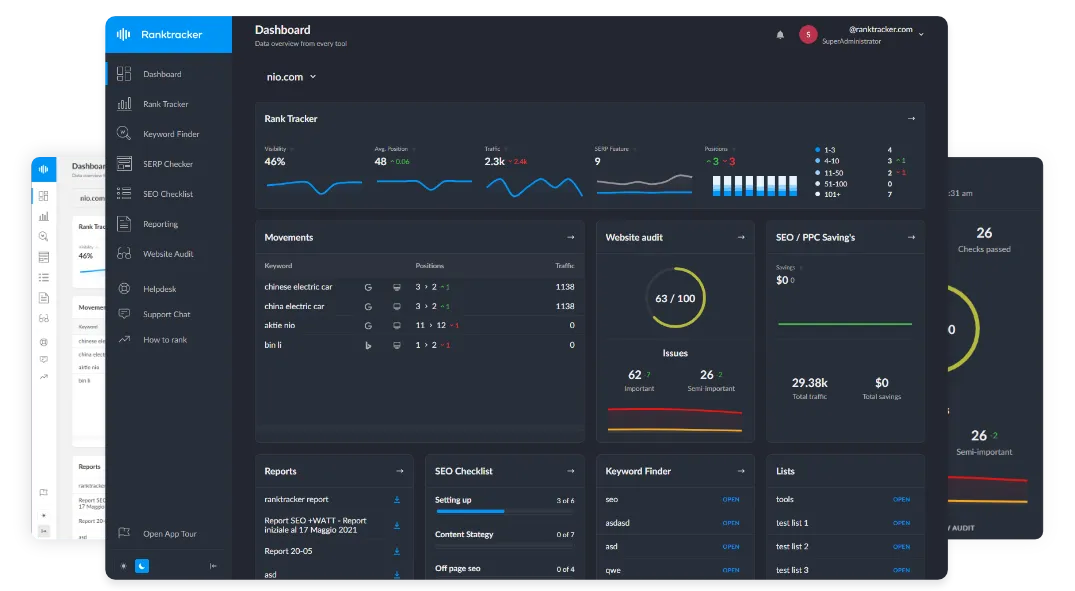
Behind every successful business is a strong SEO campaign. But with countless optimization tools and techniques out there to choose from, it can be hard to know where to start. Well, fear no more, cause I've got just the thing to help. Presenting the Ranktracker all-in-one platform for effective SEO
We have finally opened registration to Ranktracker absolutely free!
Create a free accountOr Sign in using your credentials
This is why the concept of AI search visibility has emerged as a distinct thing to measure and manage, separate from traditional rank tracking. Tools like Lighthouse Local address exactly this gap, helping local businesses understand how and whether they're appearing in AI-generated recommendations across platforms like ChatGPT and Google AI, and what's driving or limiting that visibility.
What Local Businesses Should Pay Attention To
The practical implications for local business owners and the agencies managing them are not as complicated as they might seem.
Consistency of business information is more important than ever. NAP (Name, Address, Phone) consistency has always mattered for local SEO, but it matters more in an AI context because inconsistent information confuses AI models about which version of a business's details to cite. A business with different phone numbers listed on different directories is harder for an AI to represent accurately.
Reviews are signal-rich. AI systems are being trained on publicly available text, and reviews are some of the most abundant and descriptive text available about local businesses. A business with many detailed reviews describing specific services, neighbourhoods, and types of customers is giving AI tools rich material to draw from when formulating recommendations.
Mentions in local media and regional publications carry weight. When a local restaurant is covered in a city's alt-weekly or a contractor is quoted in a local news piece, those citations become part of the information ecosystem that AI systems train on and draw from. This is an area where traditional PR and local content marketing intersect directly with AI search visibility.
Structured data on the business's website helps. Schema markup that clearly identifies a business's type, location, hours, services, and service area gives AI systems clean, parseable information to work with.
What This Means for SEO Agencies Managing Local Clients
The conversation has changed. Clients who previously asked only about their Google Maps ranking are now asking why a competitor was mentioned by ChatGPT and they weren't. Some are finding out that their optimised Google Business Profile exists alongside almost no presence in other parts of the web that AI draws from.
For agencies, this creates both a challenge and an opportunity. The challenge is that measuring AI visibility requires different tools than traditional rank tracking. Standard position tracking won't tell you whether your client is being recommended when someone asks an AI chatbot for a specific type of business in their area.
The All-in-One Platform for Effective SEO
Behind every successful business is a strong SEO campaign. But with countless optimization tools and techniques out there to choose from, it can be hard to know where to start. Well, fear no more, cause I've got just the thing to help. Presenting the Ranktracker all-in-one platform for effective SEO
We have finally opened registration to Ranktracker absolutely free!
Create a free accountOr Sign in using your credentials
The opportunity is that most local businesses are not yet thinking about this systematically, and agencies that help clients build the broader citation and mention footprint that supports AI visibility will be delivering something genuinely valuable ahead of the market rather than catching up to it.
The Practical Starting Point
The most useful first step for any local business or agency thinking about AI search is to run a few test prompts. Ask ChatGPT or Google's AI to recommend specific business types in your target area and see whether you or your clients appear. If you don't, that's information. If you do, see what sources the AI cites for its recommendation. Those sources tell you which parts of your information ecosystem are working.
AI search behaviour is still evolving, and the signals that matter most will shift as the underlying models are updated. But the businesses that have consistent, rich information across many relevant sources are consistently the ones appearing in AI recommendations right now. Building that foundation is a durable strategy regardless of how the specific mechanics change.
One thing worth watching as this area develops: the sources that AI systems cite when making local recommendations are not static. As AI models are updated and as the information landscape around any given business changes, visibility can shift without the business doing anything. This makes periodic monitoring more useful than a one-time audit, and it makes understanding the sources that drive AI recommendations a living task rather than a box to check once.