Intro
SEO has always had a lot of repetitive work hiding inside it. Pulling keyword lists, clustering them, checking SERPs, auditing pages, drafting meta tags, spotting broken links. None of it was ever the interesting part of the job, but it ate the hours. That is exactly the work AI is now absorbing, and it is quietly changing what an SEO's day looks like.
The hype makes this sound bigger and vaguer than it is. AI is not replacing SEOs. It is eating the grunt work and, at the same time, changing what people are optimizing for, because search itself is changing. Here is a practical look at where AI genuinely improves an SEO workflow, where it does not, and what the shift toward AI-driven search means for how you work.
SEO automation is finally doing the boring parts
The clearest win is automation of the tasks nobody enjoyed anyway. SEO automation used to mean brittle scripts and spreadsheets that broke the moment a data source changed. AI has made it more flexible, because it can handle the fuzzy, judgment-adjacent steps that rigid rules never could.
Keyword clustering is a good example. Grouping hundreds of keywords by intent used to be a manual afternoon. Now a model does a first pass in seconds, and the human role shifts from doing the clustering to checking it. The same pattern shows up across the workflow: AI drafts the meta descriptions, you edit the ones that matter; AI flags the technical issues from an audit, you prioritize which ones are worth fixing; AI proposes internal links, you approve them.
The important framing here is that AI is compressing the SEO workflow, not removing the SEO. The hours saved on mechanical work get redirected to the parts that actually need judgment: strategy, editorial quality, and deciding what is worth doing at all. Teams that use AI this way get faster. Teams that expect it to run their SEO unsupervised get a lot of confident, generic output that ranks for nothing.
AI content optimization: useful, with a sharp limit
AI content optimization is where the value and the danger sit side by side. On the useful side, models are good at the structural work: identifying gaps against what ranks, suggesting subtopics you missed, tightening structure, catching thin sections. Used as an editor and a gap-finder, AI genuinely improves content.
The limit is producing the content itself. AI-generated articles at scale are the fastest way to build a site full of pages that read fine and say nothing, and search engines have gotten steadily better at recognizing exactly that. The pattern that works is AI-assisted, human-owned: the model handles the outline, the research scaffolding, and the second-pass edit, while a human supplies the actual expertise, opinion, and specifics that make a page worth ranking. The moment you let the model write the whole thing unsupervised, you are producing the commodity content everyone else is producing.
If there is one rule for AI content optimization, it is this: use AI to make good writers faster, never to replace the reason a page deserves to exist.
The bigger shift: optimizing for AI search, not just Google
The deeper change is not in your toolset. It is in what you are optimizing for. Search is moving from a list of blue links toward AI-generated answers, whether that is AI Overviews in Google or answers inside ChatGPT and other assistants. This is the world people are now calling generative engine optimization, and it is a real shift, not a rebrand.
The All-in-One Platform for Effective SEO
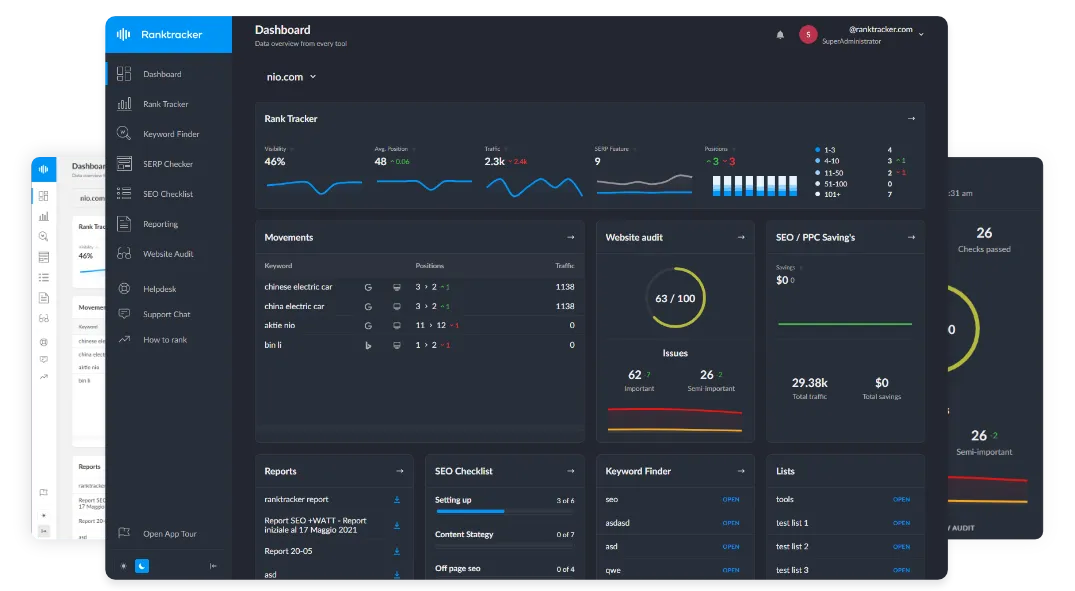
Behind every successful business is a strong SEO campaign. But with countless optimization tools and techniques out there to choose from, it can be hard to know where to start. Well, fear no more, cause I've got just the thing to help. Presenting the Ranktracker all-in-one platform for effective SEO
We have finally opened registration to Ranktracker absolutely free!
Create a free accountOr Sign in using your credentials
The practical implication is that ranking is no longer the whole game. Being cited is. Getting your content pulled into an AI-generated answer, sometimes called LLM SEO, depends on things that overlap with classic SEO but are not identical: clear, extractable answers to specific questions, strong topical authority, structured content a model can lift cleanly, and being mentioned across the wider web rather than just on your own page. You still do the fundamentals. You just also write in a way a model can quote.
Nobody has this fully figured out yet, and anyone claiming a guaranteed playbook for AI search is selling something. But the direction is clear enough to start adjusting for: answer questions directly, earn mentions, and structure content so a machine can understand and cite it.
Who builds the tooling behind all this
Most SEOs consume these AI capabilities through tools rather than building them, and that is the sensible default. But it is worth understanding where the tooling comes from, because it affects what you can trust. The AI features inside your SEO platform, the clustering, the content scoring, the AI-search tracking, are built by engineering teams making real decisions about which models to use, how to keep outputs accurate, and how to stop the tool from confidently inventing things.
When an SEO tool bakes in AI well, it is usually because there is serious engineering behind it, often built with dedicated AI development services rather than a thin wrapper around a public API. It matters to you as a user, because the difference between an AI feature that helps and one that quietly misleads you is entirely in that engineering. A clustering tool that is subtly wrong wastes your month, and you may not notice until your rankings tell you.
How to actually put this to work
If you are folding AI into your SEO workflow, a few practical principles hold up.
Automate the mechanical, keep the judgment. Point AI at clustering, auditing, drafting, and flagging. Keep strategy, editorial standards, and final calls with a person.
Treat AI content as a draft, never a deliverable. The model gets you to a strong first draft faster. It does not get you to something worth publishing on its own.
Verify anything factual. AI tools state wrong things with total confidence. On anything that drives a decision, keyword data, audit findings, competitor claims, sanity-check before you act.
Start optimizing for citation, not just ranking. Build the habit of answering specific questions clearly and earning mentions, because that is where search is heading.
Choose your tools on the engineering, not the marketing. Plenty of tools slapped an AI label on a weak feature. If you want to understand how the good ones are built, it is worth reading up on how serious AI software development companies approach model accuracy and evaluation, because that is the difference between a feature you can trust and one you cannot.
The realistic takeaway
AI is not the end of SEO. It is the end of the tedious version of SEO. The mechanical work is getting automated, the content bar is getting higher, and the target is shifting from ranking on a page to being cited in an answer. None of that removes the SEO. It just moves the value to the judgment that was always the hard part. The practitioners who thrive will be the ones who let AI take the grunt work and spend the reclaimed time on the things a model still cannot do: strategy, real expertise, and knowing what is actually worth optimizing for.