
Intro
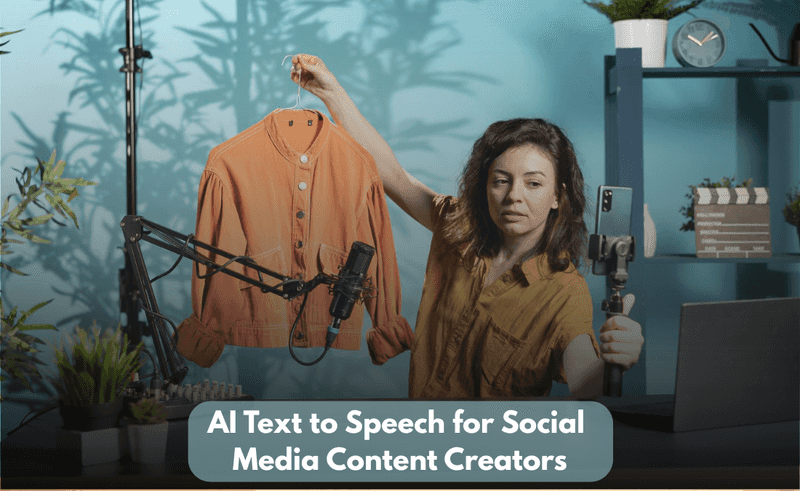
Social media moves fast. Creators need to publish videos, reels, shorts, tutorials, explainers, product clips, reaction content, educational posts, and promotional content on a constant schedule. The platforms reward consistency, clarity, and speed, but producing high-quality content every day can be exhausting.
One of the most time-consuming parts of social video creation is narration. A strong voiceover can make a post more engaging, easier to understand, and more memorable. It can hook viewers in the first few seconds, explain the value of the video, and guide the audience through the story. But recording voiceovers manually is not always easy. Creators may not have professional equipment, may dislike recording their own voice, may work in noisy environments, or may need to produce content faster than traditional recording allows.
This is where Text to Speech AI has become a powerful tool for social media content creators. It allows creators to turn written scripts into realistic voiceovers in minutes. Instead of recording every take manually, creators can write a script, choose a voice style, adjust tone and pacing, and generate audio that fits the video.
For TikTok creators, YouTubers, Instagram Reels editors, educators, marketers, influencers, and faceless channel owners, Text to Speech AI can make content production faster, more scalable, and more accessible.
What Is Text to Speech AI?
Text to Speech AI is technology that converts written text into spoken audio using artificial intelligence. A creator types or pastes a script into a tool, selects a voice, and generates a spoken version of that text.
Older text-to-speech tools often sounded robotic, flat, and unnatural. Modern Text to Speech AI is much more advanced. It can generate voices that sound clearer, smoother, and more human-like. Many tools also let users adjust speed, emotion, pitch, pronunciation, pauses, and delivery style.
The All-in-One Platform for Effective SEO
Behind every successful business is a strong SEO campaign. But with countless optimization tools and techniques out there to choose from, it can be hard to know where to start. Well, fear no more, cause I've got just the thing to help. Presenting the Ranktracker all-in-one platform for effective SEO
We have finally opened registration to Ranktracker absolutely free!
Create a free accountOr Sign in using your credentials
For social media creators, this means a written caption, hook, tutorial script, story, or ad message can become a polished voiceover without a microphone or recording setup. A creator can generate a calm voice for a wellness video, an energetic voice for a product demo, a dramatic voice for a storytelling reel, or a clear instructional voice for an educational short.
The result is a faster workflow and more creative flexibility.
Why Voiceovers Matter on Social Media
Social media is highly visual, but audio plays a major role in engagement. A good voiceover can stop the scroll, create a mood, explain context, and make a video easier to follow.
Many viewers watch short-form content while multitasking. They may be commuting, cooking, exercising, or browsing quickly between tasks. Voice narration helps them understand the video without needing to read every word on screen. Even when captions are included, hearing a clear voice can make the content feel more personal and guided.
Voiceovers are especially useful for educational videos, tutorials, product reviews, storytelling content, list videos, travel clips, recipe videos, and faceless channels. They help turn raw footage into a structured message. Without narration, the viewer may not understand what they are seeing or why it matters.
For creators who want to build authority, voice also adds personality. A consistent voice style can become part of a creator’s brand, just like visual design, editing style, or captions.
How Text to Speech AI Helps Social Media Creators
1. Faster Content Production
Speed is one of the biggest benefits of Text to Speech AI. Social media creators often need to move quickly, especially when responding to trends, news, memes, or viral formats. Recording a voiceover manually can take several attempts, especially if the creator makes mistakes, struggles with delivery, or needs to re-record after editing the script.
With Text to Speech AI, creators can generate narration almost instantly. If a line does not sound right, they can edit the text and regenerate it. If a video needs a shorter version for TikTok and a longer version for YouTube Shorts, the voiceover can be adjusted quickly.
The All-in-One Platform for Effective SEO
Behind every successful business is a strong SEO campaign. But with countless optimization tools and techniques out there to choose from, it can be hard to know where to start. Well, fear no more, cause I've got just the thing to help. Presenting the Ranktracker all-in-one platform for effective SEO
We have finally opened registration to Ranktracker absolutely free!
Create a free accountOr Sign in using your credentials
This makes it easier to publish more consistently without sacrificing audio quality.
2. Better Support for Faceless Channels
Faceless content has become popular across YouTube, TikTok, Instagram, and other platforms. These channels often focus on facts, documentaries, tutorials, finance explainers, history, motivation, product reviews, or curated clips without showing the creator’s face.
Text to Speech AI is especially useful for faceless creators because it provides a professional voice without requiring the creator to record themselves. This allows people to build content brands while staying private or focusing on editing, research, and storytelling.
A faceless YouTube Shorts channel can use AI narration for daily educational clips. A TikTok account can create list videos with a consistent narrator. An Instagram page can turn written tips into voice-led reels.
3. More Creative Voice Options
Different social media videos need different tones. A comedy skit may need a playful voice. A luxury product video may need a polished and calm voice. A fitness reel may need energy and motivation. A true crime short may need a serious, suspenseful delivery.
Text to Speech AI gives creators access to a variety of voice styles. Instead of being limited to their own voice, creators can test multiple options and choose the one that fits the content best.
This is useful for creators who manage multiple pages or content niches. One voice can be used for educational videos, another for entertainment clips, and another for brand collaborations.
4. Easier Script Revisions
Scripts change constantly during editing. A line may feel too long. A hook may need to be stronger. A call to action may need to be rewritten. With traditional recording, every change requires another take.
Text to Speech AI makes revisions simple. Creators can edit one sentence and regenerate the audio without redoing the entire voiceover. This is especially helpful for short-form videos where every second matters.
A creator can test different hooks, such as “Here’s why your videos are not getting views” or “Most creators make this mistake in the first three seconds,” then choose the version that sounds best with the visuals.
5. Consistent Brand Voice
Consistency helps audiences recognize content. If a creator uses the same voice style across many videos, that voice can become part of the brand identity.
For example, a productivity page may use a calm and clear narrator. A tech review page may use a confident and informative voice. A storytelling account may use a dramatic voice with slower pacing.
Text to Speech AI makes this consistency easier to maintain. Creators can use the same AI voice across platforms, campaigns, and video series. This creates a more polished and recognizable content experience.
6. Easier Multilingual Content
Many creators want to reach audiences in multiple languages. Translating captions is useful, but voice localization can make content feel more native and accessible.
Some Text to Speech AI tools support multiple languages and accents, allowing creators to produce voiceovers for different regions. A creator can turn an English tutorial into Spanish, French, German, Hindi, Arabic, or other language versions. This can expand reach and help creators build international audiences.
For creators who sell courses, digital products, or services, multilingual voiceovers can also improve conversion by making content easier for more people to understand.
Best Social Media Use Cases for Text to Speech AI
TikTok Videos
TikTok content often depends on strong hooks and fast pacing. Text to Speech AI can help creators produce narration for tips, stories, reactions, tutorials, product demos, and trend-based content.
A creator can quickly generate several versions of a voiceover and test which one fits the edit best. Since TikTok videos are usually short, AI narration can be especially efficient.
Instagram Reels
Instagram Reels often combine visuals, captions, music, and voice. AI voiceovers can help explain recipes, fashion looks, travel clips, workouts, business tips, or educational content.
For creators who post frequently, Text to Speech AI can reduce the time spent recording and help maintain a consistent style.
YouTube Shorts
YouTube Shorts rewards concise and engaging storytelling. AI voiceovers can help creators structure short videos around a clear beginning, middle, and end.
This is useful for fact-based channels, list videos, mini documentaries, tech explainers, motivational clips, and faceless channels.
Long-Form YouTube Content
While Text to Speech AI is popular for short-form content, it can also support longer videos. Creators can use it for intros, chapter narration, tutorials, product walkthroughs, documentary-style videos, or educational content.
For longer videos, quality control becomes even more important. The voice should be comfortable to listen to, properly paced, and edited to match the visuals.
Product Reviews and Affiliate Videos
Creators who review products or promote affiliate offers often need clear explanations. AI narration can help describe features, benefits, comparisons, pricing, and use cases.
This is useful for creators who make many product videos and need a repeatable workflow.
Educational Content
Text to Speech AI works well for educational creators who publish tips, facts, tutorials, lessons, and explainers. A clear voice helps viewers understand the information quickly.
Educational creators can also use AI narration to repurpose blog posts, newsletters, or course materials into social videos. Picking a flexible type to speech tool keeps that workflow straightforward, since the same script can be rendered in different voices or languages without re-recording.
How to Create Better AI Voiceovers for Social Media
Start With a Strong Hook
The first few seconds matter. Social media users decide quickly whether to keep watching. Your voiceover should begin with a clear reason to pay attention.
Examples include: “What if your content problem is not your editing?” “Here are three mistakes new creators make.” “This one AI tool can save hours every week.” “Most people use this feature the wrong way.”
A strong hook makes the voiceover more effective and gives the viewer a reason to stay.
Write Like You Speak
Social media narration should sound natural. Avoid overly formal sentences or long paragraphs. Write short lines that feel conversational.
Instead of saying, “This method can significantly improve the efficiency of your video production workflow,” say, “This can help you make videos faster.”
Text to Speech AI sounds better when the script is written for spoken delivery.
Keep Sentences Short
Short-form content needs speed and clarity. Long sentences can make the voiceover feel slow or confusing. Keep each line focused on one idea.
Short sentences also make it easier to sync narration with visuals, captions, and cuts.
Match Voice to Content Type
Choose a voice that fits the content. A finance explainer may need a trustworthy and calm voice. A comedy video may need a lighter tone. A motivational clip may need confidence and energy.
Do not choose a voice just because it sounds interesting. Choose the voice that supports the message and audience.
Use Pauses for Emphasis
Pauses can make AI voiceovers sound more natural. They also help highlight important moments. A short pause after a hook can create anticipation. A pause before a key tip can make the message feel more important.
For fast-paced videos, use pauses carefully so the content does not feel slow. For storytelling, pauses can improve emotion and rhythm.
Review Pronunciation
AI tools may mispronounce names, brand terms, slang, acronyms, or niche words. Always listen before publishing. Fix pronunciations using spelling adjustments, phonetic versions, or tool-specific pronunciation settings.
A mispronounced word can make a video feel less professional and distract viewers from the message.
Combine Voice With Captions
Many people watch social media videos with sound off. Others rely on captions for accessibility or better comprehension. AI voiceovers should still be paired with captions.
Captions also help reinforce the message and keep viewers engaged visually. For best results, match captions to the spoken audio and highlight key phrases.
Edit Audio With Music Carefully
Background music can make a video more engaging, but it should not overpower the voiceover. Keep music volume low enough that the narration remains clear.
For social media, clarity is more important than dramatic sound. If viewers cannot understand the voice, they will scroll away.
Text to Speech AI vs. Recording Your Own Voice
Both options have value. Recording your own voice can build trust, personality, and direct connection with your audience. It may be the best choice for personal brands, coaching content, storytelling, or creator-led videos where authenticity matters.
Text to Speech AI is better when speed, privacy, consistency, or scale matters. It is useful for faceless channels, multilingual content, frequent posting, product videos, and creators who do not want to record every day.
Many creators use both. They record personal messages in their own voice and use AI narration for tutorials, repurposed content, background explainers, or multiple content variations.
The best choice depends on the creator’s goals, audience, and workflow.
Ethical Considerations for Social Media Creators
AI voice tools should be used responsibly. Do not clone or imitate a real person’s voice without permission. Do not use AI narration to impersonate celebrities, creators, public figures, or private individuals. Avoid misleading viewers into thinking a real person said something they did not say.
Creators should also check licensing terms before using AI-generated voices for sponsored content, ads, monetized videos, or commercial campaigns.
Transparency can also build trust. In some cases, it may be helpful to disclose that a voice is AI-generated, especially for educational, branded, or sensitive content.
The Future of Text to Speech AI for Creators
The future of Text to Speech AI in social media will likely become more personalized and interactive. Creators may be able to build custom voice identities, generate multilingual versions instantly, match voice tone to video mood, and create voiceovers directly inside editing apps.
As AI voices become more natural, creators will have more freedom to produce content at scale. But strategy will still matter. A realistic voice cannot fix weak ideas, poor hooks, unclear editing, or content that does not serve the audience.
The All-in-One Platform for Effective SEO
Behind every successful business is a strong SEO campaign. But with countless optimization tools and techniques out there to choose from, it can be hard to know where to start. Well, fear no more, cause I've got just the thing to help. Presenting the Ranktracker all-in-one platform for effective SEO
We have finally opened registration to Ranktracker absolutely free!
Create a free accountOr Sign in using your credentials
The creators who benefit most will be those who use AI as part of a strong creative system: research, scripting, editing, voice generation, captions, analytics, and improvement.
Final Thoughts
Text to Speech AI is changing how social media content creators produce voiceovers. It helps creators move faster, maintain consistency, test different styles, create faceless content, localize videos, and publish more often.
For TikTok, Instagram Reels, YouTube Shorts, long-form YouTube, product reviews, educational posts, and branded content, AI-generated narration can make the production process easier and more flexible.
The key is to use it thoughtfully. Start with a strong script, choose the right voice, keep the pacing tight, review pronunciation, add captions, and test what works with your audience.
Text to Speech AI is not a replacement for creativity. It is a tool that helps creators turn ideas into polished content faster. When used well, it can make social media videos more engaging, accessible, and scalable.

