
Intro
Traffic problems rarely announce themselves. Rankings slide two positions, click-through rates sag, and your content calendar keeps churning while nobody can explain where the visitors went.
Underneath all of it, the search landscape keeps shifting: Similarweb data shows ChatGPT's share of worldwide generative AI web traffic falling from roughly 76% a year earlier to around 53% by May 2026, with Gemini and Claude absorbing most of the difference. Optimizing for a single destination used to cover the whole audience. It covers far less today.
Most teams react by buying another giant all-in-one platform and hoping the dashboard solves it. The real bottleneck sits elsewhere. You likely have plenty of data and very little leverage: no reliable way to turn keyword exports into topical maps, no system for catching pages as they decay, no idea what an AI assistant says when someone asks about your category.
The 11 tools below are smaller, cheaper, and sharper than the household names. Each fixes one specific traffic bottleneck, and each comes with a practical way to put it to work this week.
Use Keyword Insights to Cluster Thousands of Keywords Into Topics
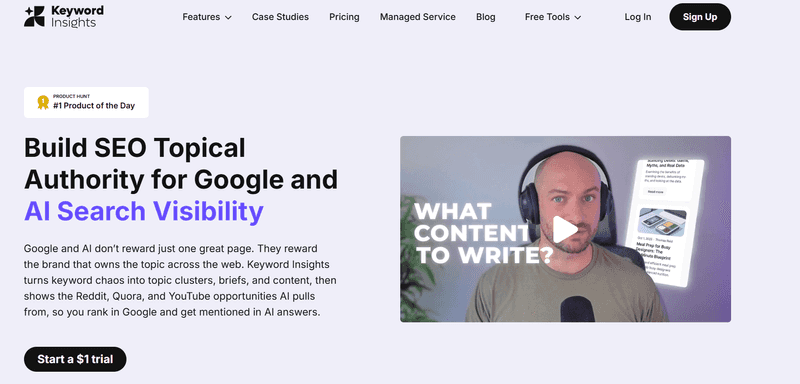
Export every query from Search Console, upload the CSV, and Keyword Insights groups the terms by how much their live SERPs overlap. Terms sharing results belong on one page, not five. Terms that diverge get their own page. That single distinction can end cannibalization on a bloated blog in an afternoon.
The team behind the tool describes lifting a steel doors retailer's traffic by roughly 1,200% through clustering and published topic clusters, and agency users report grouping 20,000 keywords in under an hour.
The All-in-One Platform for Effective SEO
Behind every successful business is a strong SEO campaign. But with countless optimization tools and techniques out there to choose from, it can be hard to know where to start. Well, fear no more, cause I've got just the thing to help. Presenting the Ranktracker all-in-one platform for effective SEO
We have finally opened registration to Ranktracker absolutely free!
Create a free accountOr Sign in using your credentials
Reach for it when:
- Three posts compete for the same query
- You inherit a site with 300 thin pages
- A keyword clustering project stalls in spreadsheets
Map Real Questions With AlsoAsked Before You Write Anything
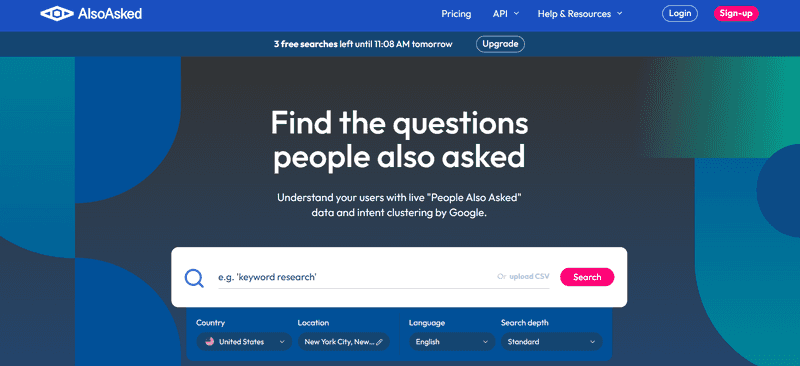
Type a seed keyword into AlsoAsked and you get a branching tree of questions Google surfaces, plus the follow-ups nested underneath each one. Rather than guessing at subheadings, you can lift that tree straight into an outline where every H2 answers something a person typed.
This matters more now that assistants pull answers from clearly structured pages. If your article covers the parent question but skips the four follow-ups beneath it, a competitor covering all five can get cited instead.
Try exporting three related trees and merging the overlap into one pillar page.
Build Better Content Briefs Using Scalenut's SERP Analysis Features

Drop a keyword into Scalenut's Cruise Mode and it pulls top-ranking pages apart, then hands back an outline with suggested headings, entities, and questions. You edit the skeleton, keep what fits your angle, and pass it to a writer who no longer needs fifteen open tabs.
The value sits in the brief, rather than the generated draft. Teams publishing raw output tend to sound like everyone else. Teams treating it as a research layer can cut briefing time from two hours to twenty minutes and still write something original.
The All-in-One Platform for Effective SEO
Behind every successful business is a strong SEO campaign. But with countless optimization tools and techniques out there to choose from, it can be hard to know where to start. Well, fear no more, cause I've got just the thing to help. Presenting the Ranktracker all-in-one platform for effective SEO
We have finally opened registration to Ranktracker absolutely free!
Create a free accountOr Sign in using your credentials
You can also use an AI infographic maker to turn key findings from your research into visual assets that make complex information easier to scan and share.
Once those visuals accumulate across dozens of briefs, finding them becomes its own bottleneck. Lean teams and mission-driven orgs tend to fix it with digital asset management for nonprofits, so nobody rebuilds a chart that already exists.
Fix Underperforming Pages With RivalFlow's AI Content Gap Reports
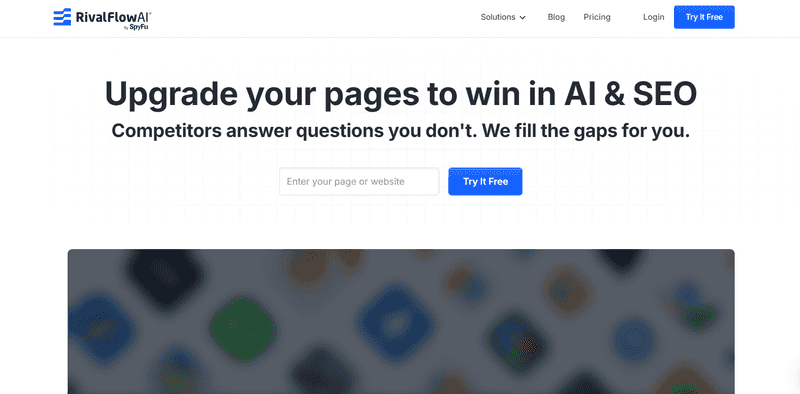
Paste in a URL and a target keyword, and RivalFlow compares your page against a competitor ranking above you, identifying the missing questions and subtopics, then drafting copy to fill them.
Pages stuck between positions 6 and 15 are the sweet spot. They already carry authority and impressions; they lose on coverage.
They already carry authority and impressions; they lose on coverage, and often on trust signals. Updating content is always important, from articles to author bio credentials. Replacing low-resolution or missing photos with an AI-generated headshot gives older posts an instant professional boost that complements the updated content.
A sensible workflow:
- Pull pages with high impressions and weak CTR
- Run each against its closest competitor
- Add only the gaps your reader would care about
Small, surgical updates tend to beat full rewrites when decay is the problem.
Let InLinks Handle Internal Links Across Your Growing Content Library
 Let InLinks Handle Internal Links
InLinks reads your pages, identifies the entities inside them, and suggests contextual links between related articles. On a 400-post blog, it can surface dozens of connections an editor would never spot manually.
Let InLinks Handle Internal Links
InLinks reads your pages, identifies the entities inside them, and suggests contextual links between related articles. On a 400-post blog, it can surface dozens of connections an editor would never spot manually.
Orphan pages remain a common cause of stalled growth. A post published in March with zero inbound links from newer articles gets crawled less and ranks worse, regardless of quality.
Set it to review every new publication, approve suggestions by hand, and your internal linking stays current without a quarterly audit nobody enjoys.
Add Structured Data Faster With WordLift's Knowledge Graph Tools
 Structured Data
WordLift analyzes your content, maps it to entities, and generates schema automatically, building a knowledge graph that connects your pages to recognized concepts. For publishers sitting on hundreds of articles, that beats hand-coding JSON-LD forever.
Structured Data
WordLift analyzes your content, maps it to entities, and generates schema automatically, building a knowledge graph that connects your pages to recognized concepts. For publishers sitting on hundreds of articles, that beats hand-coding JSON-LD forever.
Structured data helps machines understand what a page covers, which can influence rich results and how AI systems select sources. If you prefer manual control, you can also generate schema with a general-purpose model and validate it afterward.
Start with your money pages: products, services, and pillar articles.
Track Your Brand Inside AI Answers Using Otterly.AI Prompts
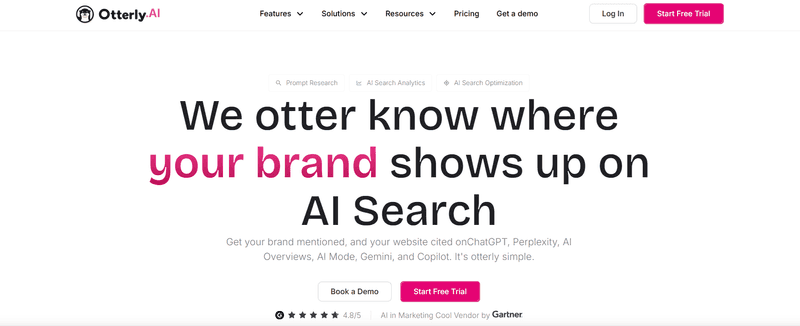
You build a library of prompts your buyers might type, and Otterly.AI runs them across ChatGPT, Perplexity, Google AI Overviews, and Copilot, logging which brands get cited and how often. The output is a share of AI voice figure you can act on.
Citation presence in US ChatGPT prompts climbed from about 1.6% in mid-2025 to roughly 6.8% by May 2026, so the surface area keeps widening.
When did you last check what an assistant says about your category?
Run Controlled SEO Experiments With SEOTesting Before Rolling Changes Out
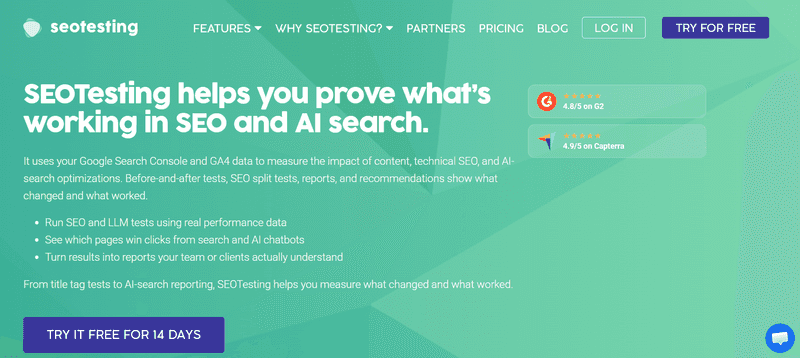
SEOTesting connects to Search Console, splits pages into test and control groups, and measures the click difference before and after a change. You get evidence instead of opinions about title tags, FAQ blocks, or template edits.
Orbit Media ran title and meta description tests on a nutrition client's blog posts, and clicks climbed roughly 70% while rankings improved by three positions.
Strong candidates to test:
- Title formats across one category
- Adding an FAQ block
- Removing dates from URLs
Turn Long Videos Into Short Clips With Klap AI

Klap takes a webinar, podcast, or long YouTube upload, finds segments with a natural hook, and cuts them into captioned vertical clips ready for Shorts, Reels, and TikTok. One 45-minute recording can yield ten distributable assets.
Traffic follows attention. Clips send viewers to the full video, the video sends them to your site, and the site captures the email address.
If you already record calls or webinars, you have a repurposing backlog sitting on a hard drive right now.
Scale Personalized Link Outreach With Respona's AI Email Assistant
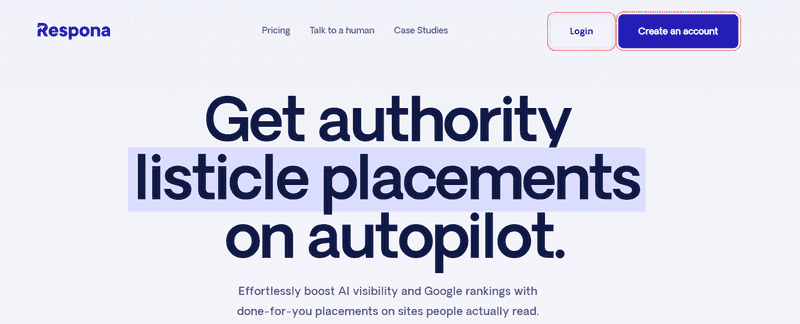
Respona finds relevant articles, pulls contact details, and drafts pitches referencing something specific from the prospect's page. You review each message before it sends, so quality stays under your control.
Links still move rankings, and rankings still feed AI citations. What changed is tolerance for generic templates, which has dropped close to zero.
Use it for resource page pitches, podcast bookings, and broken link replacements. If you keep volume low and relevance high, reply rates can hold up nicely.
Automate Repeatable Content Workflows Using AirOps Grids and Agents

AirOps lets you chain steps into one workflow: pull keywords, cluster them, research each, draft an outline, write a first pass, all running across a spreadsheet-style grid. Marketers use it for programmatic pages, product descriptions, and localization.
The All-in-One Platform for Effective SEO
Behind every successful business is a strong SEO campaign. But with countless optimization tools and techniques out there to choose from, it can be hard to know where to start. Well, fear no more, cause I've got just the thing to help. Presenting the Ranktracker all-in-one platform for effective SEO
We have finally opened registration to Ranktracker absolutely free!
Create a free accountOr Sign in using your credentials
The trap is volume without judgment. A grid can generate 500 pages by Friday, and 480 of them can be indexed as thin content by Monday.
Constrain it. Feed it proprietary data, add a human review gate, and publish only what a reader would thank you for.
Building a Traffic Engine Out of Underrated AI Tools
None of these tools will rescue a weak strategy. They can remove the friction that stops good strategies from getting executed: the spreadsheet nobody clusters, the page nobody refreshes, the video nobody clips.
So which bottleneck costs you the most right now? Pick one, run a single tool against it for 30 days, and measure the change in Search Console. If it moves, keep it. If it flatlines, drop it and test the next.
Smaller tools tend to do one job properly. Stack three or four of them thoughtfully and you can assemble something the giants sell as a suite, for a fraction of the price.

