Intro
Artificial intelligence is changing the way people create, edit, and distribute digital content. Tasks that once required advanced technical skills, expensive software, and hours of manual work can now be completed with intelligent tools that simplify the creative process. From visual storytelling to marketing campaigns, AI is helping individuals and businesses produce high-quality content more efficiently.
As digital platforms continue to prioritize engaging visual experiences, creators are increasingly exploring AI-powered solutions to improve their workflows, experiment with creative ideas, and produce content at scale.
The Growing Role of AI in Modern Content Creation
Content creation has become an essential part of digital communication. Businesses use visuals to promote products, educators create interactive learning materials, and social media creators rely on engaging content to attract audiences.
However, producing original content consistently can be challenging. AI tools help address this problem by automating repetitive tasks and turning simple instructions into creative outputs.
Modern AI platforms can interpret text prompts, understand visual references, generate images, and transform static concepts into animated videos. This allows creators to focus more on storytelling and creative direction rather than spending excessive time on technical production.
How AI Is Changing Digital Image Production
Visual content plays a significant role in how audiences interact with online information. Traditional image production often involves photography, graphic design skills, and professional editing software.
An AI image generator simplifies this process by allowing users to create original visuals from written descriptions or existing image references. Creators can describe a subject, specify an artistic style, and generate images that match their creative requirements.
These tools are particularly useful for:
- Creating product visuals for e-commerce websites.
- Designing social media graphics and promotional materials.
- Developing concept art for games and creative projects.
- Producing illustrations for blogs and digital publications.
- Exploring different visual styles without starting from scratch.
AI-generated imagery also makes creative experimentation more accessible. Users can test multiple concepts, adjust prompts, and refine visual details until they achieve the desired result.
The Evolution of AI-Powered Video Production
Video has become one of the most influential formats for digital storytelling. From short-form social media clips to product demonstrations, video content helps brands communicate information in a more engaging way.
The All-in-One Platform for Effective SEO
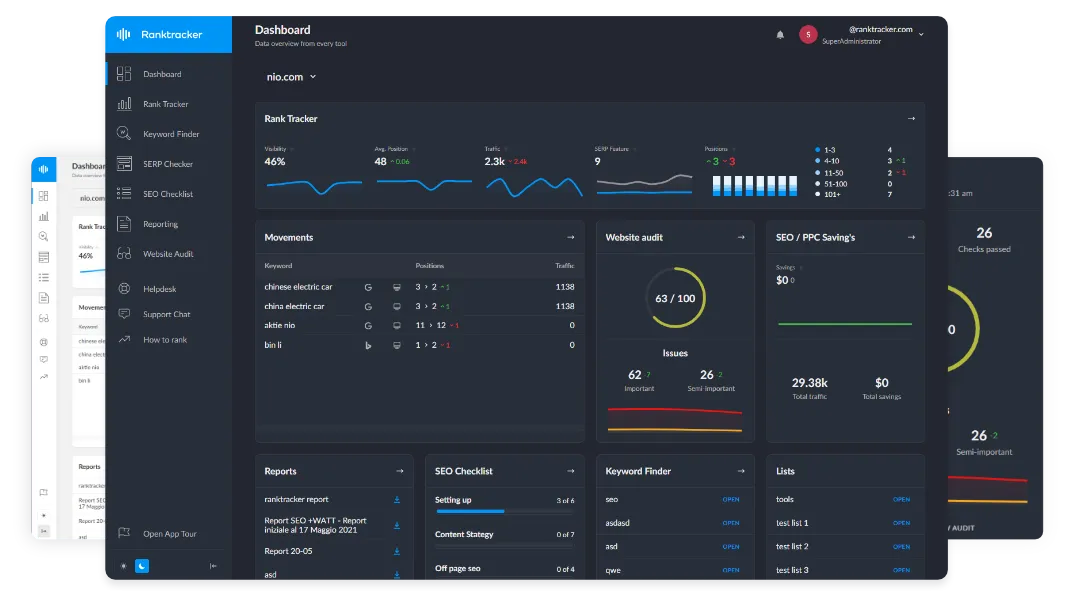
Behind every successful business is a strong SEO campaign. But with countless optimization tools and techniques out there to choose from, it can be hard to know where to start. Well, fear no more, cause I've got just the thing to help. Presenting the Ranktracker all-in-one platform for effective SEO
We have finally opened registration to Ranktracker absolutely free!
Create a free accountOr Sign in using your credentials
An AI video generator takes this process further by transforming text descriptions, images, and other visual inputs into video sequences. Instead of manually creating every scene, users can leverage AI models to generate footage, animate characters, and explore different cinematic styles.
Some practical applications include:
- Producing short promotional videos for businesses.
- Turning static product images into animated presentations.
- Creating educational videos and visual explainers.
- Developing storytelling sequences with AI-generated characters.
- Experimenting with different scenes, camera movements, and visual effects.
These capabilities are especially valuable for creators who need to produce video content regularly but have limited production resources.
Combining AI Image and Video Generation for Better Results
One of the most interesting developments in AI content creation is the ability to combine image and video generation within a single workflow.
For example, a creator can begin by developing a visual concept using an image generation tool. Once the desired image is ready, it can be used as a reference for creating an animated video.
This approach offers several advantages:
Visual consistency: Reference images can help maintain a recognizable appearance across different scenes.
Creative flexibility: Creators can experiment with different environments, styles, and compositions.
The All-in-One Platform for Effective SEO
Behind every successful business is a strong SEO campaign. But with countless optimization tools and techniques out there to choose from, it can be hard to know where to start. Well, fear no more, cause I've got just the thing to help. Presenting the Ranktracker all-in-one platform for effective SEO
We have finally opened registration to Ranktracker absolutely free!
Create a free accountOr Sign in using your credentials
Faster production: Generating visual assets and animating them with AI can reduce the time required for early-stage production.
Lower creative barriers: People without professional design or filmmaking experience can explore more advanced visual storytelling techniques.
Combining these technologies creates opportunities for more efficient workflows across advertising, entertainment, education, and digital marketing.
How Businesses Can Benefit from AI Content Creation
Businesses increasingly need fresh visual content to remain competitive across digital channels. AI-powered creative tools can help marketing teams develop campaign assets, test different creative directions, and adapt content for multiple platforms.
For example, an e-commerce business can create product imagery for its website, generate promotional videos for social media, and develop seasonal campaign visuals without organizing an entirely new production process for every asset.
Similarly, agencies can use AI tools to create early design concepts, present visual ideas to clients, and speed up content development.
The key advantage is flexibility. Teams can experiment with different approaches and adjust creative assets according to campaign requirements.
Choosing the Right AI Tools for Your Creative Workflow
Not every AI tool serves the same purpose. Some specialize in image generation, while others focus on animation, video production, editing, or audio creation.
The All-in-One Platform for Effective SEO
Behind every successful business is a strong SEO campaign. But with countless optimization tools and techniques out there to choose from, it can be hard to know where to start. Well, fear no more, cause I've got just the thing to help. Presenting the Ranktracker all-in-one platform for effective SEO
We have finally opened registration to Ranktracker absolutely free!
Create a free accountOr Sign in using your credentials
When evaluating AI creative platforms, consider the following factors:
- Output quality: Does the platform generate visuals that meet your project requirements?
- Creative control: Can you customize styles, prompts, references, and other generation settings?
- Model variety: Does it provide access to different AI models for different creative needs?
- Workflow integration: Can you move between image creation, video generation, and editing without unnecessary complications?
- Ease of use: Is the platform accessible to beginners as well as experienced creators?
Selecting tools based on actual project requirements can make AI-assisted production more productive and consistent.
The Future of AI-Driven Creativity
Artificial intelligence is continuing to reshape digital production. As generative models become more capable, creators can expect improvements in visual realism, motion quality, character consistency, and creative control.
The relationship between image and video generation will likely become even more integrated. Rather than treating each production stage as a separate task, creators will increasingly use connected AI workflows to develop complete visual experiences.
However, human creativity will remain important. AI can generate visual assets and automate production tasks, but storytelling, originality, creative judgment, and understanding audience expectations will continue to shape successful content.
Ultimately, the most effective approach is to combine human imagination with AI-powered capabilities to create meaningful and engaging digital experiences.