Intro
We consistently analyze the backlink profiles of various B2B companies, and believe it or not, most of them have plenty of referring domains, but when you filter by editorial links and organic traffic, the average number drops below 50.
Honestly, that doesn’t surprise us. Generally, B2B brands struggle to earn links because their topics don’t appeal to broader audiences. What does surprise us, though, is how many B2B companies, especially in SaaS and similar sectors, still rely on the same outdated link-building techniques, expecting them to move the needle in just a few months.
That’s probably the main reason we decided to pause our original content schedule and focus on a topic that feels more urgent for our audience right now. So, in this guide, we’ll break down link-building strategies, tips, and techniques specifically for B2B companies. Hope you find it useful.
Create Comparison Assets
If there’s one thing we’ve noticed repeatedly work in B2B, especially when we’re talking about link-building, it’s comparison assets. Those “X vs Y” style pages, or “Top 5 tools for [job to be done],” they’re really great for links, if you know how to organize everything.
First of all, you should figure out what people are searching for. We don’t think there’s anything complicated here; just add your preferred keywords and filter them by “vs” to find all the options.
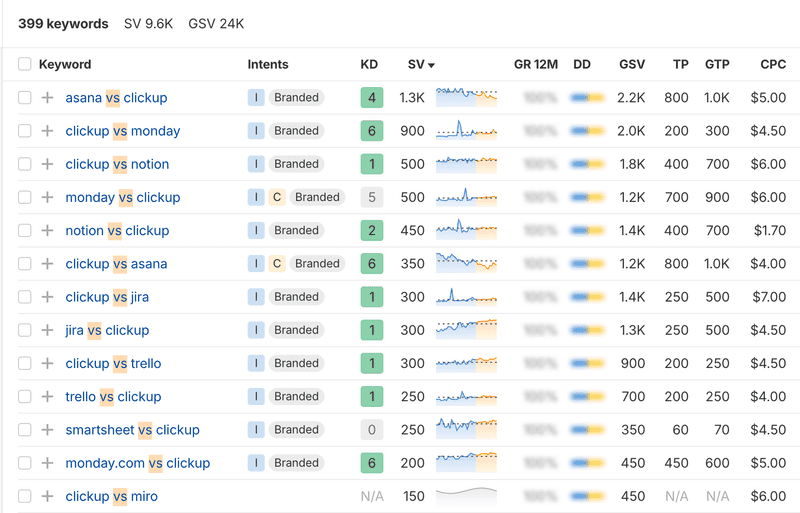
Next, open each keyword in a new tab to check the top SERP results and see if the top page-level competitors for that keyword are earning backlinks.
The All-in-One Platform for Effective SEO
Behind every successful business is a strong SEO campaign. But with countless optimization tools and techniques out there to choose from, it can be hard to know where to start. Well, fear no more, cause I've got just the thing to help. Presenting the Ranktracker all-in-one platform for effective SEO
We have finally opened registration to Ranktracker absolutely free!
Create a free accountOr Sign in using your credentials
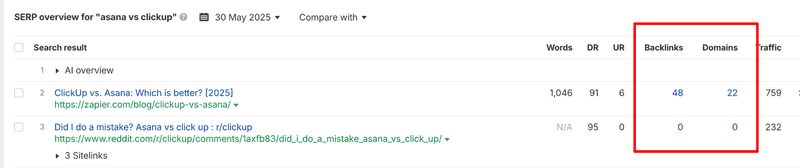
If that’s the case, there’s a good chance that once your comparison asset appears in top SERP positions, you’ll also earn links organically. Do the same for all the keywords that make sense for your business, then prioritize and start building those comparison pages.
However, Ahrefs is not enough sometimes. Also, talk to your sales team, look at LinkedIn threads, and Reddit. Where are people stuck choosing between options? Which tools or platforms keep coming up in the same breath?
Go broader than just tools; compare approaches, strategies, pricing models, and even philosophies if your industry is niche enough.
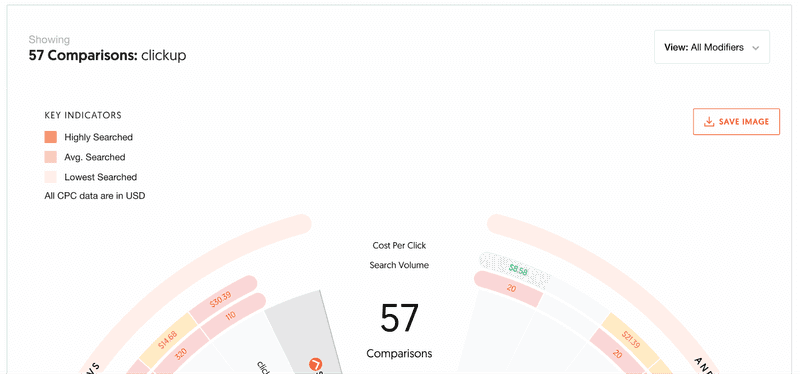
Steve Morries, the founder of a marketing company, also suggests using tools like AnswerThePublic to find low-hanging fruit that maybe SEMrush, Ubersuggest, or even Ahrefs do not show in their reports.
The All-in-One Platform for Effective SEO
Behind every successful business is a strong SEO campaign. But with countless optimization tools and techniques out there to choose from, it can be hard to know where to start. Well, fear no more, cause I've got just the thing to help. Presenting the Ranktracker all-in-one platform for effective SEO
We have finally opened registration to Ranktracker absolutely free!
Create a free accountOr Sign in using your credentials
In B2B, what works best is context-rich comparison. Don’t just list features. Translate them. Explain what those features mean for different types of users. If you're comparing CRM software, talk about how one fits a 5-person startup while the other scales better for an enterprise.
Add original data if you have any: usage stats, customer feedback, screenshots of actual dashboards to give your asset a level of credibility most content lacks.
To maximize your chances, add tables, pros, and cons side-by-side breakdowns.
If your comparison page looks like it was crafted in 30 minutes, good luck getting journalists or bloggers to take it seriously. Invest time. Make it clean, useful, and honest.
Partner With Non-Competing B2B Brands for Link Swaps
Let us start by being honest: link swaps or link exchanges are risky. If you’re new to this game and just diving into random “let’s exchange links” threads or DMs, you're asking for trouble. Google’s not stupid. However, smart and strategic partnerships still work, just not in the way most people think. You have two options:
Option 1: Imagine you're a CRM software company and you team up with a B2B email marketing platform. You serve the same audience, solve different problems, and have zero competition between you.
You can just exchange links if you’re both in a good relationship with each other.
This option is very straightforward, and it’s not like Google’s going to penalize you just for doing 1–2 link exchanges.
Option 2: Three-way exchanges are way safer and just plain smarter, especially in the SaaS or B2B SaaS sectors, and if you hire a trusted B2B SEO agency, they can tap into networks you didn’t even know existed.
In this case, instead of you linking to them and them linking right back (which is a big red flag), you do it like this: you link to their site from one of your blogs or partner sites, and they link back to your site from theirs. No direct A-to-B exchange.
For example, you might mention a productivity tool on one of your B2B SaaS clients’ blogs and have that company link back to your B2B company site on their resource page. Clean, relevant, and safe.
You need two things: relevance and trust. You can’t fake your way into a good link. You need to offer value, whether it’s through your content, your product, or just a real working relationship.
Publish Industry Data Studies
If you're serious about building high-quality backlinks for your B2B company, publishing original industry data or studies is one of the smartest moves you can make. Believe me, people naturally link to credible sources, especially when those sources bring something new to the table.
We usually look for what people are already discussing in the industry. Go on Reddit, jump into niche Slack groups, scroll through comment sections on LinkedIn: what are people constantly asking, guessing, or arguing about?
That’s where your study should live.
We’d definitely say another approach that works incredibly well is publishing statistics roundups. Meaning proper ones, not a copy-paste of 50 numbers from other blogs. Curate stats from sources, update them, and make the content useful for journalists, bloggers, and B2B content creators.
To find similar content ideas, you can pick one of your top organic competitors or even ones that aren’t direct competitors but still fall within the same industry.
Then, check out their “Best by Links” report on Ahrefs and filter the URLs using words like “studies,” “statistics,” or “surveys” to spot similar ideas.

After that, just focus on creating something 10 times better to earn those backlinks.
Contribute Thought Leadership to B2B-Focused Sites
One of the most effective ways to build long-term credibility and earn backlinks is by sharing real expertise with websites that already have your audience’s attention.
We're not talking about buying backlinks, investigating free guest posting sites, or similar tactics. We’m talking about the big players: Forbes, HubSpot, Shopify, and other major publications.
Believe us, money won’t get you in. In most cases, you can’t even send a generic outreach email offering a guest post.
The only way to earn links from these sites is by using platforms, especially helpab2bwriter.com. Instead of scrolling through hundreds of irrelevant requests, you get media and content teams from B2B brands or SaaS blogs looking for insights.
However, this is just the beginning. There are more advanced tips and tactics to earn PR backlinks for your B2B website.
For example, if you’re eyeing websites like Zapier, Moz, G2, or SEMrush, or even mid-tier SaaS blogs, you can find out who runs the content.
Next, you can find their LinkedIn and Twitter profiles. Of course, you should not ask them for a link. Instead, comment on what they post. Share something valuable without asking for anything.
Then, when the time’s right, you can naturally ask if they’re open to a contribution or collaboration.
You can also host private roundups or expert panels and invite mid-tier brands. However, instead of begging to be featured, be the host. Set up a monthly expert roundup around a niche B2B topic and invite marketers or product managers from other B2B companies to contribute 2-3 sentences.
Then publish and promote it. Over time, those contributors will invite you into their own content, mention you, or ask for a quote.
Turn Podcasts into Backlink Opportunities
We receive numerous podcast invitations every week. Some days it feels like we could spend half the day just replying to them.
However, we’ve only joined a handful of them so far because time is limited, and I’ve had to say no to a lot. But, even with just a few appearances, we’ve earned some solid brand mentions and backlinks from those episodes.
So, podcasting is a seriously underrated link-building strategy if you're someone who can dedicate time to it.
We admit that this technique doesn’t work the same way as niche edits or traditional guest posting. There’s no “insert anchor text here” or DA-50 blog accepting your article by the weekend. Things are different here.
Most website owners or SEO agencies want quick wins, easy placements, and things they can control fully. Podcasts require you to spend a lot of time, which is why most of them ignore this low-hanging fruit.
Now, will every podcast give you a dofollow backlink? No. Will some forget to link at all? Yeah, sometimes. But the value comes from the mix of exposure, credibility, and yes, link juice.
We would say, in this case, you’re strengthening your backlink profile and overall brand reputation with contextual, brand-driven mentions that support long-term authority.
Monitor Brand Mentions and Reclaim Unlinked Ones
As we always say, link building doesn’t always have to start with competitor backlink analysis or dozens of cold emails you know will get ignored. Many link-building specialists spend 40 hours to find a few backlinks through outreach, but forget that they already have people talking about them.
We’re not joking at all. If your brand is getting mentioned across the web: reviews, podcasts, data reports, or even press releases, and those mentions aren’t linked, you’re leaving equity on the table.
This is a great opportunity, especially in the B2B sector, where there is a lot of noise. You scan the web for your brand name and look for cases where you’ve been mentioned without a link.
But how do you find these mentions? Actually, there are a few ways. For instance, Ahrefs has a "Mentions" alert tool.
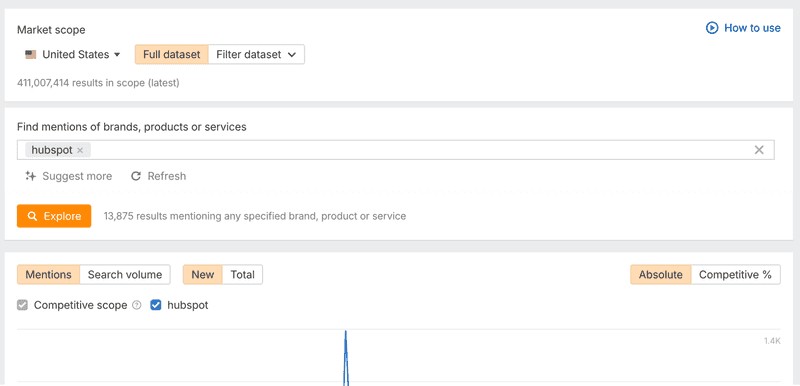
But Brand24 and Google Alerts also work if you're on a tighter budget. You can also go manual and search your brand in Google using something like this:
"your brand name" -site:yourdomain.com
If you’re actively running link-building campaigns, you should absolutely include this in your process. It’s cost-effective, doesn’t mess with your link velocity, and it helps you build backlinks in places that are already relevant to your brand.
The only thing you should understand is that most of these links will be branded anchors, which isn’t bad, especially if you’re trying to build trust signals, but don’t expect to get commercial anchor texts into every request.
If you’ve been scaling aggressively and seeing an increase in brand talk, this is a great way to smooth out your link-building pricing, too. So, instead of throwing more money into cold outreach, which usually has a lower hit rate, spend a few hours each month cleaning up these unlinked mentions.
So yeah, don’t overcomplicate it. Sometimes the best links are already halfway built. You just need to go get them.
Offer Free Resources
We never recommend anything we haven’t tested or don’t have real experience with. For example, just a few days ago, we pushed out a batch of free SEO templates: simple, practical stuff for our top-of-funnel content strategy.
Our goal is to generate TOFU traffic and earn a few clean backlinks along the way.
Remember, you don’t need to wear your nerves out finding every single link. Sometimes the smartest move is building something that earns links on its own.
It could be a case study with some great data, a checklist people bookmark, or even a calculator that solves a simple, annoying problem.
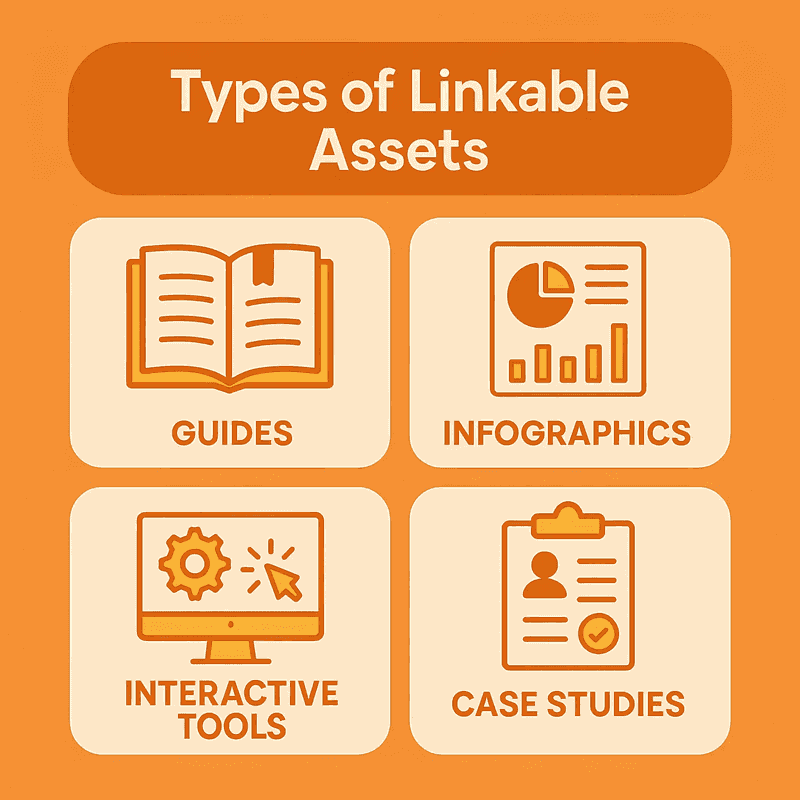
Especially in B2B link-building, these kinds of assets mean a lot. The same goes for SaaS link-building or nearly every other sector. If your resource saves time or teaches something with clarity, people will naturally reference it.
We just ask ChatGPT to help brainstorm ideas that don’t require APIs or constant maintenance. Then I use Lovable to design the layout, clean up the presentation, and get the page live in a few hours. That’s it.
But, of course, you should not build random tools because you saw someone else do it. Look at your niche. Run a proper competitor backlink analysis and see what assets are earning them the most links.
Is it a downloadable checklist? A mini-course? A cost calculator? Reverse-engineer that. If they got 40 links for a generic Google Sheet, imagine what you could do with a clean design and real UX thinking.
Write Guest Posts on B2B Service Agency Blogs
We’re not reinventing the wheel here. Guest posting has been around forever, and yeah, it’s one of the most widely used link-building techniques. Most folks either go to free backlinking sites, fall into backlink marketplaces, or worse, get involved with Private Blog Networks (PBNs), thinking they’ve found an easy way out.
They might work for a minute, but if you’re building a serious B2B brand, playing games like that will cost you not just rankings, but trust.
Here’s what we recommend:
First, figure out how to create really good SEO optimized AI content.
Once you’re confident with that, start publishing high-quality content in your niche, on your own blog or Medium or wherever, just to show you're not some random SEO ghost. Build a small body of work that proves you know your stuff.
Then, look for respected SaaS or B2B blogs that are open to guest contributors. Some big names like HubSpot or SEMrush occasionally accept submissions, but they’re not going to hand over a spot to someone who just throws a generic pitch.
The All-in-One Platform for Effective SEO
Behind every successful business is a strong SEO campaign. But with countless optimization tools and techniques out there to choose from, it can be hard to know where to start. Well, fear no more, cause I've got just the thing to help. Presenting the Ranktracker all-in-one platform for effective SEO
We have finally opened registration to Ranktracker absolutely free!
Create a free accountOr Sign in using your credentials
Start following editors and content managers on X (Twitter) and LinkedIn. Engage with their posts, reply with real thoughts, not emojis or “Nice one!” spam.
If you’re pitching regularly, writing consistently, and trying to scale this, you need some sort of system. Whether it’s a spreadsheet, a CRM, or even a simple Notion doc, organize your outreach, your pitch angles, and track where your links are published.
You can even automate some of this; link-building tools like BuzzStream or Pitchbox help, but if that’s overkill, just keep things tidy and predictable.
The Bottom Line
The main link-building foundation is the same in SEO, regardless of your industry and business model. However, in B2B SEO, there are some strategies and techniques that work better than anything else.
In this guide, we list out everything you need to start your B2B link-building campaign from A-to-Z. We also provided some examples and data you won’t find anywhere else. Hope you enjoyed every paragraph! See you next time.