Intro
If your business runs on Salesforce, your forms shouldn't live in a separate world. Every registration, lead, application, or support request should land in the right Salesforce object the moment someone hits submit: no CSV exports, no copy-paste, no duplicate records to clean up later. The wrong form tool creates busywork and dirty data. The right one turns each submission into a clean, connected record your team can act on.
The challenge is that “Salesforce integration” means very different things across tools. Some only push basic leads through a one-way connector. Others read from Salesforce to prefill forms, write to multiple objects at once, and update existing records. That's the difference between a toy and a real system of record. Below are the strongest options, what each does well, where each falls short, and how to choose the one that fits how your team actually works.
How we evaluated these tools
We judged each form builder on the things that actually matter when Salesforce is your backbone:
-
Depth of integration: can it write to standard and custom objects, not just leads?
-
Prefill and lookups: can it pull existing Salesforce data into the form?
-
Record updates: can it update existing records, or only create new ones?
-
Security and governance: encryption, permissions, and admin control over data flow.
-
Ease of building: how quickly a non-developer can ship a working form.
Quick comparison
| Tool | Best for | Salesforce integration | Standout strength |
| FormAssembly | Enterprise teams treating Salesforce as source of truth | Any standard/custom object; create, update, look up, prefill | Data governance and mapping |
| Titan | Salesforce-native teams and developers | Built on the platform; data stays in Salesforce | No-code customization in Salesforce |
| Formstack | Forms, docs, and signatures together | Managed package with solid object mapping | All-in-one document suite |
| Jotform | Small teams that need speed | Connector for common lead/contact use cases | Ease of use and templates |
| FormTitan | Budget-conscious teams | Dynamic forms with Salesforce connectivity | Generous free tier |
| Gravity Forms | WordPress-based sites | Salesforce add-on for lead capture | Tight WordPress fit |
The best Salesforce form builders
1. FormAssembly: best overall for Salesforce
FormAssembly is built around Salesforce first, and it shows. Its Salesforce form builder connector can send data to any Salesforce object or field (standard or custom) through the Salesforce API, and it doesn't just create records. It can look up existing records, prefill a form with their data, and update that same record on submission, which is what keeps your data clean instead of piling up duplicates. A single submission can flow into several related objects at once, and an AppExchange app lets your team build and manage forms inside Salesforce using single sign-on. With 350+ five-star AppExchange reviews and more than 5,500 organizations (including Amazon, CVS Health, and the University of Michigan), it's a proven choice at scale.
Standout features
Create, update, and look up records across multiple objects in one submission; dynamic prefill and Salesforce-driven picklists; conditional logic; secure payments; and an approval and workflow layer that turns forms into full processes. Because its connector works alongside Salesforce rather than only inside it, it's especially strong for public-facing and unauthenticated forms that live outside your Salesforce license boundary.
-
Deepest Salesforce mapping here: custom objects, prefill, and record updates handled natively through the API.
-
Strong data governance, encryption, and admin controls for enterprise teams.
-
Scales from a single form to organization-wide processes, with SSO and an in-Salesforce app.
-
More setup investment than a basic connector: you're configuring a system, not a quick form.
-
Priced for teams that need depth, so it's more than hobby-tier tools.
Best for: mid-market and enterprise teams that treat Salesforce as their source of truth and need clean, connected data at scale.
2. Titan: best native, no-code option
Titan is built directly on the Salesforce platform, so data never leaves the Salesforce environment. That native architecture appeals to teams with strict data-residency needs and to admins who want to build sophisticated forms, documents, and flows without writing code. It's a broad platform, so it can cover far more than forms once you invest in it.
-
Runs inside Salesforce, no data leaves the platform.
-
Highly customizable with no-code tooling.
-
Spans forms, documents, and more in one suite.
-
A learning curve, and pricing that adds up as you scale modules.
-
Most valuable if you're all-in on the Salesforce platform.
Best for: Salesforce-centric teams and admins who want deep customization kept entirely within the platform.
3. Formstack: best all-in-one suite
Formstack pairs a capable form builder with document generation and e-signatures, all connected to Salesforce through a managed package. If you want forms, documents, and signatures from one vendor, it's a practical single-vendor choice that reduces the number of tools your team has to learn. Its object mapping and workflow tools are solid for most mainstream use cases.
-
Forms, documents, and signatures under one roof.
-
Solid object mapping and workflow tools.
-
Reduces vendor sprawl for document-heavy teams.
- The suite can be more than teams that only need forms want to pay for.
Best for: teams that want forms plus documents and signatures in a single platform.
4. Jotform: best for speed and simplicity
Jotform is fast to learn and backed by a huge template library, which makes it a favorite for teams that want to ship a form today. Its Salesforce integration covers common lead- and contact-capture use cases well, so smaller teams can connect submissions to the CRM without much setup. Where it trails the native tools is deep, multi-object mapping for complex processes.
-
Very easy to use, with thousands of templates.
-
Affordable entry tiers.
-
Quick to connect for standard lead and contact capture.
- Integration depth trails the Salesforce-native tools for complex mapping.
Best for: small teams that need to ship forms quickly for straightforward CRM use cases.
5. FormTitan: best free tier
FormTitan offers dynamic forms with Salesforce connectivity and a genuinely generous free plan, which makes it attractive for teams testing the waters before committing budget. It supports conditional logic and reasonably advanced form design for the price. Enterprise governance features are lighter than the top options, so it fits lower-volume needs best.
-
Generous free tier to start.
-
Dynamic forms with Salesforce connectivity.
-
Good design flexibility for the price.
- Fewer enterprise governance features than the top options.
Best for: budget-conscious teams and lighter, lower-volume use cases.
6. Gravity Forms: best for WordPress sites*
If your web presence is built on WordPress, Gravity Forms is a natural fit. Its Salesforce add-on sends captured leads into your CRM, keeping form building close to the site your marketing team already manages. Licensing is straightforward, though the depth of Salesforce mapping depends on add-ons rather than a purpose-built connector.
-
Tight fit with WordPress workflows.
-
Straightforward, flexible licensing.
-
Large ecosystem of add-ons.
- Salesforce mapping is basic compared with dedicated CRM form tools.
Best for: WordPress-based sites that need simple lead capture into Salesforce.
How to choose the right one
Match the depth to your data. If you only capture leads and hand them to sales, a lightweight connector is fine. If forms feed multiple objects, update existing records, and drive downstream processes, you need a tool built for that depth: FormAssembly, Titan, or Formstack.
Decide where data should live. Native tools like Titan keep everything inside Salesforce, which matters for strict data-residency rules. Connected tools like FormAssembly give you more flexibility for public-facing and unauthenticated forms while still writing cleanly to Salesforce.
Weigh governance, not just features. At scale, controlling who can build forms, how fields map, and how sensitive data is handled matters more than any single feature. This is where enterprise tools separate from hobby-tier ones.
Factor in total cost. A cheaper tool that creates duplicate records or needs manual cleanup can cost more in staff time than a pricier tool that keeps data clean automatically.
Frequently asked questions
Does Salesforce have a built-in form builder?
Salesforce offers basic options like Web-to-Lead and Web-to-Case, plus form capabilities through Flow and Experience Cloud. They work for simple capture but are limited on design, conditional logic, prefill, and multi-object mapping, which is why most teams add a dedicated form builder.
The All-in-One Platform for Effective SEO
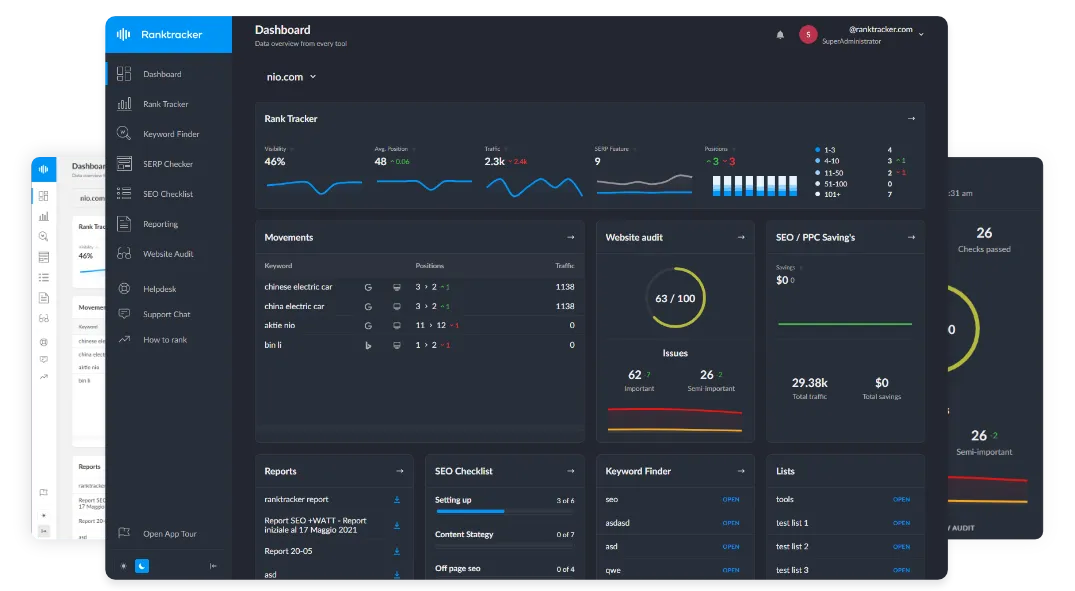
Behind every successful business is a strong SEO campaign. But with countless optimization tools and techniques out there to choose from, it can be hard to know where to start. Well, fear no more, cause I've got just the thing to help. Presenting the Ranktracker all-in-one platform for effective SEO
We have finally opened registration to Ranktracker absolutely free!
Create a free accountOr Sign in using your credentials
Can a form builder update existing Salesforce records, not just create new ones?
The stronger tools can. FormAssembly, for example, can look up an existing record, prefill the form with its data, and update that same record on submission, which is essential for avoiding duplicates. Lighter connectors often only create new records.
What's the difference between a native and a connected form builder?
A native builder (like Titan) is built on the Salesforce platform, so data stays inside Salesforce. A connected builder (like FormAssembly or Formstack) runs alongside Salesforce and integrates through the API or a managed package, which is often better for public-facing forms outside your license boundary.
Can I build and manage forms inside Salesforce itself?
With some tools, yes. FormAssembly offers an AppExchange app that opens the form builder inside Salesforce using single sign-on, so admins can do their data-collection work without leaving the browser tab.
Are these forms secure enough for sensitive data?
The enterprise tools support encryption, access controls, and compliance frameworks suitable for sensitive data. FormAssembly, for instance, supports HIPAA (with a BAA), PCI DSS, SOC 2, and FedRAMP on the appropriate plans, confirm the specific certification you need with the vendor before you buy.
The bottom line
For most teams that treat Salesforce as their source of truth, FormAssembly is the strongest all-round choice: its multi-object mapping, prefill, record updates, and governance go well beyond a basic connector. Titan is the pick if you need everything to stay native inside Salesforce, Formstack if you want forms, documents, and signatures from one vendor, and Jotform or FormTitan if speed or budget outweigh integration depth. Start by matching the tool's depth to how much of your business your forms really drive.