Intro
You can rank in Germany, Brazil, and Japan and still lose those customers at their first support ticket. A shopper who lands on your localized page expects the help desk to answer in the same language. When the reply arrives in English, trust drops, and repeat purchases drop with it.
Most growing brands can't hire native-speaking agents for every market and keep them on shift 24/7. That staffing gap pushes more teams to buy help desk outsourcing services from partners that already run multilingual desks across time zones.
This guide covers eight providers worth a spot on your 2026 shortlist. You'll get a side-by-side comparison table, the criteria behind the ranking, a selection checklist, and answers to the questions buyers ask most before signing.
What is multilingual help desk outsourcing?
Multilingual help desk outsourcing means you hand your support queue to an external provider that staffs native or fluent agents in your customers' languages. The provider works inside your ticketing tool, follows your SLAs, and covers the hours your team can't, with AI handling routine tickets, routing, and translation.
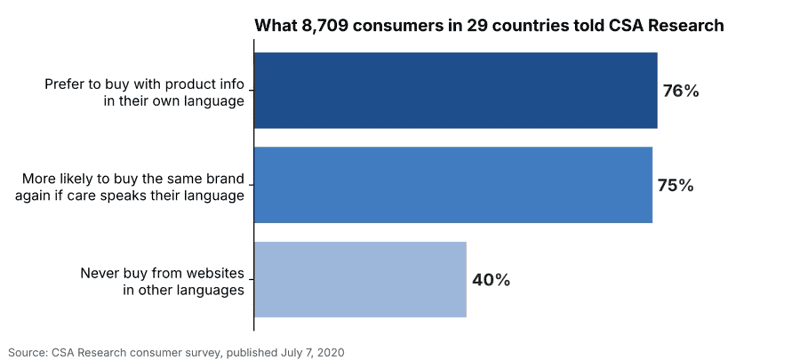
For marketers, the help desk is the last step of localization. CSA Research surveyed 8,709 consumers in 29 countries and found that 76% prefer to buy products with information in their own language. Forty percent said they never buy from websites in other languages, and 75% said they are more likely to buy from the same brand again when customer care speaks their language.
The All-in-One Platform for Effective SEO
Behind every successful business is a strong SEO campaign. But with countless optimization tools and techniques out there to choose from, it can be hard to know where to start. Well, fear no more, cause I've got just the thing to help. Presenting the Ranktracker all-in-one platform for effective SEO
We have finally opened registration to Ranktracker absolutely free!
Create a free accountOr Sign in using your credentials
If you've already translated your site and your sales collateral, support is the next gap to close. Ranktracker has a useful piece on why website translation isn't enough without localized PDFs, and the same logic carries into every ticket, chat, and call after the sale.
How we ranked these providers
We scored each company on six criteria that matter to a global brand buying help desk support. All figures come from each provider's own website or investor materials as of October 2026, so confirm them again during your RFP.
- Language coverage: How many languages the provider staffs, and whether it says which ones run on native speakers versus AI translation.
- Help desk depth: Named help desk or service desk services, L1 and L2 coverage, and work inside common ITSM tools.
- AI plus human model: How AI handles triage, self-service, and translation, and where people take over.
- Security and compliance: Certifications such as SOC 2, ISO 27001, HIPAA, GDPR, and PCI DSS.
- Scale and ramp speed: Footprint, headcount, and how fast a program can go live.
- Fit: Whether the provider suits mid-market programs, enterprise programs, or both.
Multilingual help desk outsourcing companies compared
| Provider | Languages | Footprint | Team size | Best for |
| Helpware | 45+ | 19 locations, 11 countries | 4,000+ | Mid-market and enterprise help desks that want L1/L2 technicians plus AI triage |
| TP (formerly Teleperformance) | 400+ languages and dialects | Presence in ~100 countries | Not listed | Global enterprises launching in many markets at once |
| Concentrix | Not listed (AI agent speaks "dozens") | 70+ countries | Not listed | Enterprises building AI-first support with human backup |
| TELUS Digital | 50+ CX languages | 35+ countries | 80,000+ | Brands that want an IT service desk and customer support in one contract |
| Foundever | 60+ | 45 delivery countries | 130,000 | High-volume consumer brands |
| Transcom | 99+ (24/7) | 29 countries | 30,000+ | Long-tail language coverage around the clock |
| TaskUs | 30+ | 14 countries | 63,000+ | Digital-first brands pairing agentic AI with human teams |
| SupportYourApp | 60+ | 30+ countries | Not listed | SaaS and app companies with smaller support teams |
1. Helpware
Helpware runs help desk outsourcing as one blended AI and human service, with certified L1 and L2 technicians working inside your existing ITSM tool. The company supports 400+ brands with 24/7 coverage in 45+ languages from 19 locations across 11 countries, and night and weekend shifts run on the same SLAs as weekday ones.
Help desk strengths
- AI triage: AI clears routine password resets through self-service, triages the Tier 1 volume (about 70% of the queue), and tags and routes tickets with 95%+ accuracy.
- Reported results: 98% SLA compliance, a 98% QA score, 90% CSAT, 10 to 35% fewer escalated tickets, and 20 to 40% lower IT support cost.
- Tools: Technicians work in ServiceNow, Jira Service Management, Zendesk, Freshservice, and Zoho Desk, so you skip a migration.
- Compliance: SOC 2 Type II, ISO 27001, ISO 9001, HIPAA, GDPR, and PCI DSS.
- Ramp speed: A focused L1 desk launches through a pilot in about 30 to 60 days, and programs scale to 500+ technicians in 90 to 120 days.
Best for: Mid-market and enterprise brands in healthcare, SaaS, ecommerce, and logistics that want help desk staffing and AI under one partner.
Keep in mind: The language list is shorter than TP or Transcom, so confirm coverage for rarer languages. Onboarding starts with a pilot, so plan a few weeks before full go-live.
2. TP (formerly Teleperformance)
TP offers the widest language reach on this list, with 400+ languages and dialects, a presence in nearly 100 countries, and clients served in around 170. Tech support sits inside its omnichannel customer service, and the company sells its AI tools under the TP.ai brand.
- Reach: 400+ languages and dialects, the largest count among the providers we reviewed.
- Client tenure: TP says its top 100 clients have worked with it for an average of 14 years.
- AI: The TP.ai suite includes Connect, Assist, Growth, Collect, and Dataservices products.
Best for: Global enterprises that need dozens of languages live at the same time.
The All-in-One Platform for Effective SEO
Behind every successful business is a strong SEO campaign. But with countless optimization tools and techniques out there to choose from, it can be hard to know where to start. Well, fear no more, cause I've got just the thing to help. Presenting the Ranktracker all-in-one platform for effective SEO
We have finally opened registration to Ranktracker absolutely free!
Create a free accountOr Sign in using your credentials
Keep in mind: TP's scale fits large programs. If your desk is small, ask how the account will be staffed and who manages it day to day.
3. Concentrix
Concentrix operates in 70+ countries and serves 2,000+ clients, including 160+ Fortune Global 500 companies. Its help desk pitch leans on AI: an AI product support agent built on iX Hello that handles up to 70% of inquiries in dozens of languages, plus live voice translation for phone support.
- Footprint: 70+ countries on six continents, expanded by the 2023 merger with Webhelp.
- AI in production: The company reports AI deployed across 1,000+ clients.
- Services: Technical support is a named service within its customer experience offering.
Best for: Enterprises that want AI-first support with a large human workforce behind it.
Keep in mind: Concentrix doesn't publish a language count for human agents. Ask for a language-by-language staffing plan in writing.
4. TELUS Digital
TELUS Digital has 80,000+ team members in 35+ countries and supports 50+ customer experience languages. It sells a dedicated Managed IT and Service Desk offering next to customer support, and it builds generative AI tooling on its Fuel iX platform.
- Languages: 50+ CX languages, plus 500+ languages and dialects for AI data annotation.
- Service desk: Managed IT and Service Desk sits in its enterprise technology practice.
- Agent training: TELUS Digital says its Agent Trainer tool cuts new agent training time by 50% or more.
Best for: Brands that want an internal IT service desk and a customer-facing help desk under one contract.
Keep in mind: Confirm which of its 35+ countries staff your priority languages.
5. Foundever
Foundever, formerly Sitel Group, employs 130,000 associates in 45 delivery countries and supports 60+ languages for 800+ brands. Technical support is a named service, and its AI lineup includes conversational AI, generative AI, and intelligent automation.
- Scale: 130,000 associates, the largest headcount published by any provider on this list.
- Languages: 60+ languages spread across 45 delivery countries.
- AI: Generative and agentic AI services, plus a "generative AI product of the year 2025" award.
Best for: High-volume consumer brands that need many languages at once.
Keep in mind: Foundever lists technical support rather than an IT help desk service, so check L2 scope and ITSM tool experience.
6. Transcom
Transcom offers 24/7 coverage in 99+ languages with 30,000+ employees across 29 countries. It runs 80+ contact centers and work-at-home networks, which helps when you need less common languages covered around the clock.
- Language range: 99+ languages, the second-largest count on this list after TP.
- AI: AI-powered interactive voice routing and AI chatbots sit in front of human agents.
- Tech support: Transcom cites tech support work for a specialized optics company.
Best for: Brands that need long-tail language coverage.
Keep in mind: Ask which site will host your desk and how it handles L2 escalations.
7. TaskUs
TaskUs, founded in 2008, employs 63,000+ people in 14 countries, and its teams speak 30+ languages. It positions itself around AI-powered execution, with a service line that pairs customer experience work with agentic AI.
- Model: Hybrid delivery that combines human teams with agentic AI.
- Footprint: Delivery sites in 14 countries.
Best for: Digital-first brands that want agentic AI and human support teams working together.
The All-in-One Platform for Effective SEO
Behind every successful business is a strong SEO campaign. But with countless optimization tools and techniques out there to choose from, it can be hard to know where to start. Well, fear no more, cause I've got just the thing to help. Presenting the Ranktracker all-in-one platform for effective SEO
We have finally opened registration to Ranktracker absolutely free!
Create a free accountOr Sign in using your credentials
Keep in mind: TaskUs covers fewer languages than most providers here and doesn't list IT help desk as a named service, so confirm scope early.
8. SupportYourApp
SupportYourApp has run customer support since 2010, covers 60+ languages, and staffs consultants across 30+ countries, with an office in Wilmington, Delaware. It sells IT help desk support, help desk outsourcing, and technical support as named services, which keeps scoping clear for SaaS and app teams.
- Clients: Named clients include Calm, MacPaw, HERE, Glovo, and Mastercard.
- Pricing: Custom quotes and preset packages, so smaller teams can start without an enterprise-sized contract.
Best for: SaaS and app companies with smaller support teams.
Keep in mind: SupportYourApp doesn't publish a headcount, so ask about bench depth for each language and for L2 cases.
How to choose a multilingual help desk partner
Pick the partner whose staffed languages match your ticket volume by market, whose technicians work in your ITSM tool, and whose compliance covers your industry. Run a paid pilot on real tickets before you sign a long contract, and track CSAT and SLA results for each language.
-
Map demand by language. Pull 90 days of tickets and tag each one by language and country. Then use Ranktracker's Keyword Finder to see how much support-intent search volume each market produces, such as "Passwort zurücksetzen" in Germany.
-
Ask who answers in each language. Request a written split of native speakers, fluent speakers, and AI translation for every language you need.
-
Test inside your own tools. Run the pilot in your ticketing system with your macros, tags, and escalation paths.
-
Check compliance for your sector. Healthcare needs HIPAA, payments need PCI DSS, and EU customers need GDPR.
-
Set KPIs per language. Track CSAT, first-contact resolution, and SLA compliance for each market, since a blended average hides weak languages.
-
Fix your self-service content. Run your localized help center through Ranktracker's Web Audit to catch missing hreflang tags and broken pages, and check the SERP Checker to see which help articles rank in each market.
Final thoughts
The right partner depends on where your customers live and how complex their tickets get. TP and Transcom lead on language count, Concentrix and TELUS Digital on enterprise AI, Foundever on volume, and TaskUs and SupportYourApp on digital-first teams. Helpware ranks first for brands that want certified technicians, AI triage, and measurable SLA results in one help desk. Shortlist two or three, run a pilot in your own tools, and let the per-language CSAT decide.
FAQ
How much does multilingual help desk outsourcing cost?
Providers price per agent hour, per ticket, or per package. Expect higher rates for scarce languages and overnight shifts. Ask every vendor to quote the same scenario, with the same languages, hours, and ticket volume, so you compare like for like.
What is the difference between a help desk and a service desk?
A help desk fixes user issues as they come in, such as password resets, login errors, and how-to questions. A service desk adds broader IT service management, including requests, changes, and asset tracking, often built on ITIL practices.
Can AI translation replace native-speaking agents?
AI handles routine tickets and fast translation well. Complex, emotional, or regulated cases still need fluent people. CSA Research found that 75% of consumers are more likely to buy again when customer care speaks their language, so test AI replies with native reviewers before you scale them.
How long does it take to launch an outsourced help desk?
Most providers start with a pilot on one or two languages and expand from there. Ask for a written ramp plan with dates, headcount, and training milestones for each language.
Which languages should a global brand cover first?
Start with the markets that bring the most revenue and the most tickets. Then add languages where search demand is growing, because support needs follow traffic.