
Intro
Every parent knows the familiar sound of a crumpled sheet of paper flying across the kitchen table. Teaching children How To Draw usually starts with boundless enthusiasm and ends with frustrated tears over a crooked circle.
Young creators struggle with cognitive overload when tutorials move too fast or books skip vital middle steps. The modern web offers two completely different answers to this classic problem: algorithmic step-by-step line builders and energetic video-led family studios.
I spent three weeks testing both formats with a 7-year-old and a 10-year-old to measure their real-world impact. Here is an honest, field-tested breakdown of how both platforms perform when real crayons hit the paper.
The Sketchbook Stumble: Why Most Drawing Lessons Lose Young Minds
Children do not quit art because they lack imagination. They quit because their fine motor skills cannot match the vivid scenes in their heads.
According to visual literacy studies from the Arts Education Partnership, structured visual scaffolding increases task completion rates among elementary students by 42%. When instructions break shapes down into basic geometric blocks, intimidation drops immediately.
The real challenge is matching the child's learning temperament with the right digital medium. Some kids thrive on interactive pacing, while others need human connection and playful humor to stay engaged.
Contestant One: Inside the Generative Canvas of How To Draw
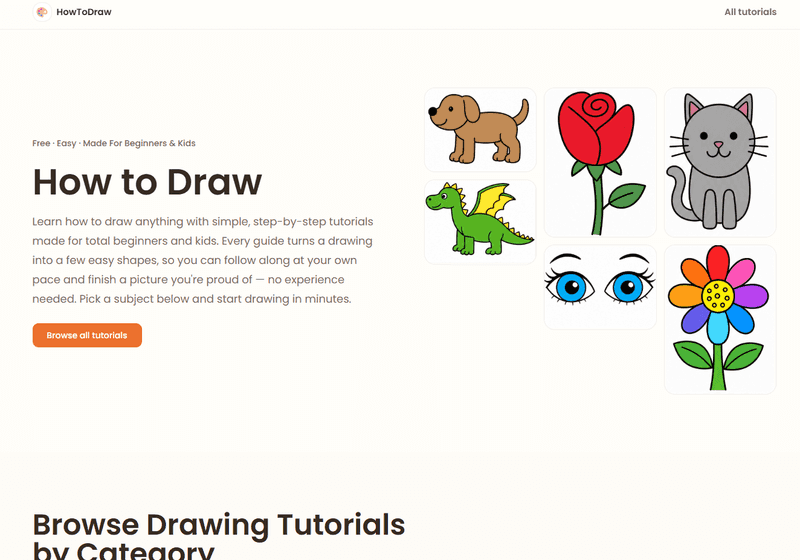
The first tool on our test bench takes a modern, technological approach to step-by-step sketching. Built as an interactive web platform, How To Draw deconstructs any object prompt into sequential vector outlines.
The All-in-One Platform for Effective SEO
Behind every successful business is a strong SEO campaign. But with countless optimization tools and techniques out there to choose from, it can be hard to know where to start. Well, fear no more, cause I've got just the thing to help. Presenting the Ranktracker all-in-one platform for effective SEO
We have finally opened registration to Ranktracker absolutely free!
Create a free accountOr Sign in using your credentials
Instead of browsing through pre-recorded video catalogues, learners type what they want to sketch into a clean prompt bar. The platform instantly generates an incremental, line-by-line guide tailored to their chosen subject.
This browser-based system strips away all decorative fluff to focus entirely on structural linework. It treats every sketch as an accessible visual recipe.
The Adaptive Line Breakdown
The core engine works by turning complex silhouettes into foundational shapes like ovals, arches, and triangles. Each step highlights the newest mark in a contrasting color so children never lose their spot.
Young artists can click forward at their own speed rather than constantly pausing and rewinding a video. This gives reluctant drawers full control over their visual workflow.
The clean interface keeps sensory distractions to a minimum. There are no loud advertisements or autoplaying audio clips pulling attention away from the page.
Hands-On Field Test: The 8-Minute Robot Challenge
I asked our 7-year-old tester to generate a friendly retro robot using the prompt generator. In past attempts with static library books, he abandoned the project within four minutes due to messy limb proportions.
Using the step-by-step progression on How To Draw, he finished the entire outline in eight minutes flat. He clicked through the steps six times, pausing only to double-check his wheel alignment.
Tracking his attention showed zero off-task distractions during the session. He felt proud because the resulting drawing looked balanced and structurally intentional.
The Honest Scorecard: Wins and Rough Edges
- Pacing Autonomy: Children control the exact moment each new line appears without video buffering lag.
- Infinite Prompt Variety: Kids can request unusual subjects like a skateboarding penguin or a futuristic treehouse.
- Minimalist Canvas: The clutter-free design helps children with attention challenges stay locked on their linework.
- Missing Color Coaching: The application focuses primarily on outlines, offering minimal guidance for blending colors and marker shading.
- Screen Required Throughout: Young users must stay in front of a screen to click through the instructional sequence.
Contestant Two: The Warm Family Energy of Art for Kids Hub
The All-in-One Platform for Effective SEO
Behind every successful business is a strong SEO campaign. But with countless optimization tools and techniques out there to choose from, it can be hard to know where to start. Well, fear no more, cause I've got just the thing to help. Presenting the Ranktracker all-in-one platform for effective SEO
We have finally opened registration to Ranktracker absolutely free!
Create a free accountOr Sign in using your credentials
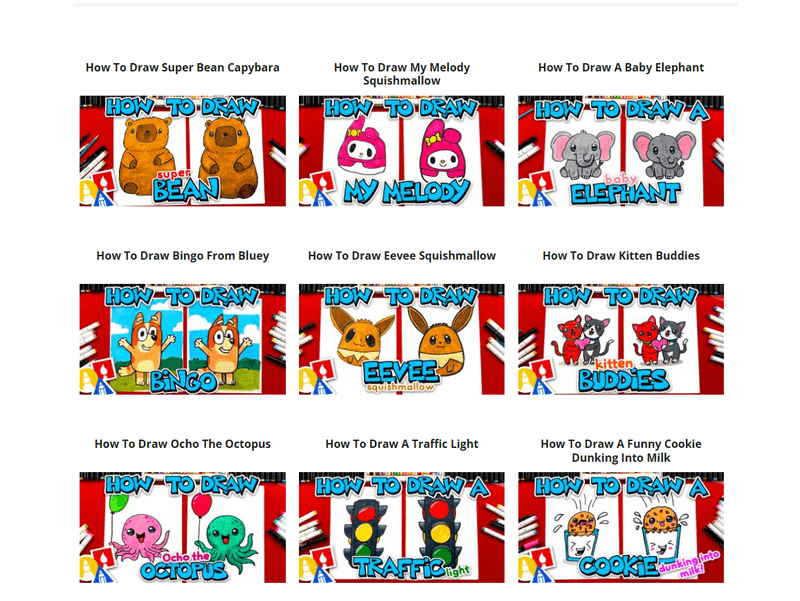
If algorithmic platforms represent focused digital efficiency, Art for Kids Hub represents the warm comfort of a shared family art desk. Hosted by Rob and his children, this platform delivers hundreds of high-spirited video lessons.
Every lesson is recorded with two camera angles showing parent and child drawing side by side. This setup creates an inviting atmosphere that celebrates small imperfections as part of the creative journey.
The platform has become an absolute classroom staple across the globe. It turns learning how to draw into a social, shared game rather than an isolated exercise.
The Dual-Artist Co-Drawing Method
The defining feature of this studio format is having an actual child co-host every episode alongside an adult instructor. When the young co-host makes a wobbly line, Rob explains how to turn that wobble into a cool stylistic detail.
This visual dynamic removes the pressure of perfectionism right away. Young viewers see that even the demonstrator's kid does not draw flawless geometric shapes.
Each lesson finishes with vibrant marker coloring and oil pastel blending techniques. It provides a complete start-to-finish creative cycle in every video.
Hands-On Field Test: Following the Folding Surprise Monster
We queued up the famous "Folding Surprise Monster" lesson for our 10-year-old tester on a rainy Saturday afternoon. The video format immediately sparked laughter as the paper unfolded to reveal giant cartoon teeth.
She paused the video three times to catch up on intricate eye details, finishing the full project in 18 minutes. The final piece was fully colored, textured, and proudly displayed on the refrigerator.
Her engagement remained high throughout the entire session because of the cheerful commentary. She treated the exercise like playing along with a friend rather than doing schoolwork.
The Honest Scorecard: Wins and Rough Edges
- Infectious Emotional Safety: The supportive parent-child dynamic eliminates the fear of making mistakes.
- Complete Color Lessons: Every episode demonstrates rich coloring, shading, and highlight techniques with everyday supplies.
- Physical Paper Engagement: Children spend most of their time looking down at real paper rather than staring at a UI.
- Rigid Video Pacing: Fast drawers get bored waiting, while slower kids must constantly reach for the pause button.
- Fixed Content Library: Learners are limited to the existing catalog and cannot generate customized prompts on demand.
Head-to-Head Showdown: Where the Two Philosophies Diverge
Comparing these two tools highlights a fundamental division in modern digital arts education. One favors modular visual autonomy, while the other prioritizes warm community energy.
The algorithmic approach on How To Draw shines when a child has a hyper-specific visual idea and wants clear, frictionless structural steps. It functions like an on-demand drawing calculator that solves structural geometry in seconds.
On the flip side, Art for Kids Hub shines when a child needs emotional encouragement and motivation to get started. The vocal reinforcement and colorful demonstration turn passive screen time into lively hands-on crafting.
Finding the Sweet Spot: Who Should Use What?
Choosing between these platforms comes down to identifying what stops your child from finishing their sketches. Different creative personalities require different types of support.
Pick How To Draw If:
- Your child gets overwhelmed by noisy video tutorials and prefers self-directed pacing.
- They love drawing unique, niche concepts that standard YouTube channels never cover.
- You want to reinforce structural geometry, proportion logic, and clean line discipline.
Pick Art for Kids Hub If:
- Your child struggles with artistic perfectionism and needs verbal reassurance that mistakes are fine.
- They enjoy coloring, blending markers, and completing full multi-media projects.
- You want a family-friendly activity where siblings of different ages can draw together.
The Shifting Canvas: How Digital Learning Empowers Young Creators
The creative learning landscape has shifted dramatically away from rigid, formal textbooks. Digital platforms now provide personalized scaffolding that adapts to different learning speeds and preferences.
The All-in-One Platform for Effective SEO
Behind every successful business is a strong SEO campaign. But with countless optimization tools and techniques out there to choose from, it can be hard to know where to start. Well, fear no more, cause I've got just the thing to help. Presenting the Ranktracker all-in-one platform for effective SEO
We have finally opened registration to Ranktracker absolutely free!
Create a free accountOr Sign in using your credentials
Assistive web technologies allow kids to explore complex visual subjects without waiting for adult intervention. This self-guided exploration builds confidence that carries over into general problem-solving.
Whether through smart line generation or cheerful video mentorship, accessible tools make visual expression fun for everyone. They ensure that creative exploration remains playful rather than stressful.
The Final Stroke: My Take on the Future of Guided Sketching
Both of these resources offer outstanding, honest value for parents and educators looking to support young artists. Neither platform replaces the tactile joy of holding a real pencil, but both make the learning curve infinitely friendlier.
If your young learner wants instant, distraction-free steps to sketch custom ideas, the interactive flow on How To Draw provides unmatched utility. If they crave warm encouragement and complete coloring adventures, Art for Kids Hub remains a world-class companion.
The best strategy is often combining both: use interactive line guides to master quick structural forms, and use community video lessons to build lasting artistic joy.

