
Intro
SEO proxies route rank-tracking and SERP-monitoring requests through proxy IPs instead of one company connection. They help teams collect localized search results, run scheduled keyword checks, and keep tracking activity separate from internal networks.
According to Google, its search engine handles more than 5 trillion searches annually. For SEO teams, this scale makes reliable tracking across keywords, locations, and search-result types essential. The right proxy setup can help make rank checks more controlled, localized, and scalable. It also helps teams compare how visibility changes between markets without relying on a single generic search view.
How Can the Best Dedicated Proxy Service Improve SEO Tracking?
For SEO workflows that need a consistent network identity for repeated checks, choosing the best dedicated proxy service can provide more control over where and how requests are routed. It does not guarantee access or rankings, but it can help keep tracking conditions more stable across scheduled monitoring.
Stable IP Identity
A dedicated or privately allocated IP can reduce unexpected identity changes during recurring rank checks. This is useful when a tracking tool needs a stable connection for a defined market, client, or reporting workflow. It can also make repeated checks easier to standardize across reporting periods.
Long-Running Rank Checks
Larger SEO tasks may involve many keywords, locations, and result pages. Stable sessions can support longer checks that move through multiple search pages without changing network identity unnecessarily. This is helpful when one monitoring job needs to complete before the selected session expires.
Consistent Geo-Location
Keeping a selected location stable helps avoid mixing results from different regions. This makes it easier to compare ranking changes over time and keep local SEO reports cleaner. It also helps teams identify whether a visibility change reflects real ranking movement or simply a different local SERP context.
Dedicated Workflows
Dedicated configurations can help separate client projects, testing environments, and internal SEO operations. This is particularly useful for agencies that manage several campaigns with different geographic targets.
How Does Geo-Targeting Improve SERP Accuracy?
Search results can vary by country, city, language, device, and user location. Geo-targeted proxies help SEO teams review the results page that more closely matches what a local searcher may see. This provides a more reliable basis for evaluating local rankings, map-pack visibility, and market-specific competitors.
- Country-level rankings: Compare organic visibility across national markets and language versions.
- City-specific SERPs: Check local search results for city-level campaigns, service pages, and regional competitors.
- ZIP-level results: Review highly localized results where a specific area affects local packs and business visibility.
- Local pack tracking: Monitor map results and local business placement from the intended market.
- Regional competitors: Identify which businesses, directories, and publishers appear in a defined location.
- Consistent geo signals: Use the same target location across repeated checks to make reports more comparable.
Why Are the Best Enterprise Proxy Providers Important for Large-Scale SERP Tracking?
Enterprise SEO teams often need to monitor many keywords across multiple regions, devices, domains, and client accounts. The best enterprise proxy providers can offer the scale, session control, and targeting needed to manage those requests more consistently. This helps teams keep data collection organized as reporting coverage, keyword volume, and market complexity increase.
High Keyword Volumes
Large websites and agencies can track thousands of keywords across several clients or business units. Proxy infrastructure helps distribute those checks instead of concentrating every request on one IP. It also gives teams more flexibility when reporting schedules require frequent updates.
Parallel SERP Requests
Enterprise workflows may run multiple tracking workers at the same time for different markets, search engines, devices, and client accounts. Sufficient concurrency helps these jobs run without creating a single operational bottleneck. This is especially important when large reports must be completed within a limited collection window.
Multi-Market Tracking
International SEO requires localized visibility data from different countries, cities, and languages. Providers with broad coverage and advanced targeting help teams collect results that match each intended market. This makes it easier to compare local competitors, rankings, and search-result layouts between regions.
API Integrations
Proxy services and managed SERP products can connect to internal dashboards, custom scripts, rank trackers, and reporting systems. This reduces manual checking and supports scheduled monitoring at scale. It can also help teams standardize how data is collected, processed, and delivered across recurring reports.
What Makes a Good SEO Proxy?
A good SEO proxy should match the search engine, target location, request volume, and collection method used by the tracking workflow. The lowest advertised rate or largest IP pool does not automatically produce accurate data, so teams should compare the controls that affect consistency in real rank checks.
- IP quality: Use IPs that fit the sensitivity of the search target and the required location context.
- Geo-targeting: Confirm that the provider supports the countries, cities, states, ZIP codes, or ASNs needed for reporting.
- Rotation and sticky sessions: Choose controlled rotation for broad collection and stable sessions for repeat checks or browser-based workflows.
- Concurrency: Check whether the plan supports the number of parallel keyword checks required without restrictive thread limits.
- Protocol and tool support: Make sure HTTP, HTTPS, or SOCKS5 compatibility matches the rank tracker, browser tool, API client, or custom script.
- Total pricing: Compare traffic, IPs, targeting, expected retries, and future keyword growth rather than the headline rate alone.
What Are the 10 Best SEO Proxies for Rank and SERP Tracking in 2026?
The best SEO proxies for rank and SERP tracking combine reliable IP quality, precise geo-targeting, flexible session control, and enough scale for recurring search queries. The table below compares 10 providers by proxy type, targeting options, session behavior, SERP tracking fit, use case, and starting price.
| Provider | Proxy Type | Geo-Targeting | Session Control | SERP Tracking Fit | Best For | Starting Price |
| 1. Live Proxies | Rotating residential, rotating mobile | Country, city, ASN | Sticky up to 24 hours | Private, localized tracking | Persistent and parallel SEO workflows | $70 for 4GB / 30 days.
Enterprise: from $2,000/month for 1TB |
| 2. Decodo | Dedicated ISP, dedicated datacenter | Country, state, city, ZIP code | Rotating and sticky options | Proxy and SERP API collection | Flexible SEO automation | $3.75/GB for 3GB.
Enterprise: from $2/GB |
| 3. Oxylabs | Dedicated ISP, dedicated datacenter | Geo-specific targeting | Rotating and sticky options | Enterprise SERP monitoring | Global, high-volume SEO teams | $30 for 5GB.
Enterprise: $2,500 for 1TB |
| 4. IPRoyal | Private datacenter, dedicated ISP, dedicated mobile | Country, state, city, ZIP code, ASN | Sticky sessions up to 7 days | Recurring rank checks | Flexible, smaller SEO workflows | $7.35/GB for 1GB.
Enterprise: from $1.75/GB at 10TB+ |
| 5. SOAX | Residential, mobile | Country, region, city, ISP, ASN | Rotating and sticky options | Localized SERP checks | Detailed geo-targeting | From $2/GB.
Enterprise: $3,000/month + VAT |
| 6. Webshare | Private datacenter, dedicated datacenter, private static residential, dedicated static residential | Country, city, state, ASN, ZIP code | Rotating and static options | Budget-conscious tracking | Scalable self-service workflows | $3.50/GB for 1GB.
Enterprise: custom pricing |
| 7. Rayobyte | Dedicated datacenter, static ISP | Country, region, city | Sticky sessions | US and regional monitoring | Controlled location testing | $3.50/GB for 1GB.
Enterprise: from $0.50/GB at 5TB+ |
| 8. DataImpulse | Residential, mobile, datacenter, premium residential | Country, city, ZIP code, ASN | Rotating and sticky options | Cost-focused rank tracking | Lightweight and growing projects | $1/GB with a $5 entry package.
Enterprise: from $4,000 for 5TB+ |
| 9. ProxyEmpire | Rotating residential, unlimited residential, static residential, rotating mobile, dedicated mobile, rotating datacenter | Country, region, city, ISP | Rotating and sticky options | Regional SERP collection | Flexible traffic models | $3.50/GB for rotating residential.
Enterprise: $1.50/GB for 1TB |
| 10. Infatica | Dedicated static ISP, dedicated datacenter | Country, region, city | Rotating and timed options | Automated search-data collection | API-driven monitoring | $4/GB PAYG.
Enterprise: custom pricing |
1. Live Proxies
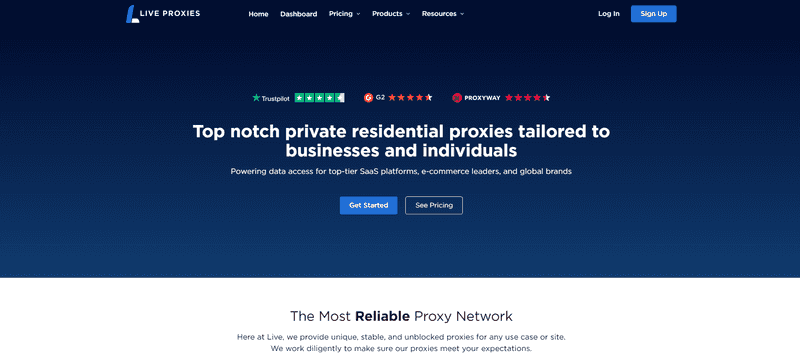
Live Proxies is a strong option for SEO teams that need controlled, location-specific rank and SERP tracking without restrictive concurrency limits. Its residential proxies and mobile products combine private IP allocation, millions of IPs, unlimited threads, country, city, and ASN targeting, HTTP and SOCKS5 support, and sticky sessions of up to 24 hours.
This combination is particularly useful for agencies and in-house teams running recurring local rank checks, multi-market monitoring, and parallel keyword workflows. A rotating residential proxy setup can help distribute broader SERP requests, while sticky sessions support checks that need a more stable identity.
SEO Strengths
- Private allocation: Keeps SEO tracking workflows more controlled and reduces unnecessary overlap with unrelated users.
- Millions of IPs in 55 countries: Supports flexible rotation and broad coverage for larger sets of keyword and location checks, with particularly strong availability in the US, Canada, and the UK.
- Unlimited threads: Enables multiple simultaneous tracking workers for parallel client, keyword, and market workflows.
- Geo-targeting: Allows country, city, and ASN selection for more accurate local SERP monitoring.
- Sticky sessions: Maintains the same IP for up to 24 hours when a workflow requires session continuity.
- HTTP and SOCKS5: Works with common rank trackers, browser automation tools, and custom collection scripts.
Best Use Cases
- Local rank tracking: Check rankings and local packs from the city or market that matters to the campaign.
- Multi-market monitoring: Run recurring SERP checks across several countries, cities, or client regions.
- Large keyword sets: Process many keyword and location combinations in parallel without a thread cap.
- Repeated SERP checks: Maintain more consistent tracking conditions across scheduled reports.
2. Decodo
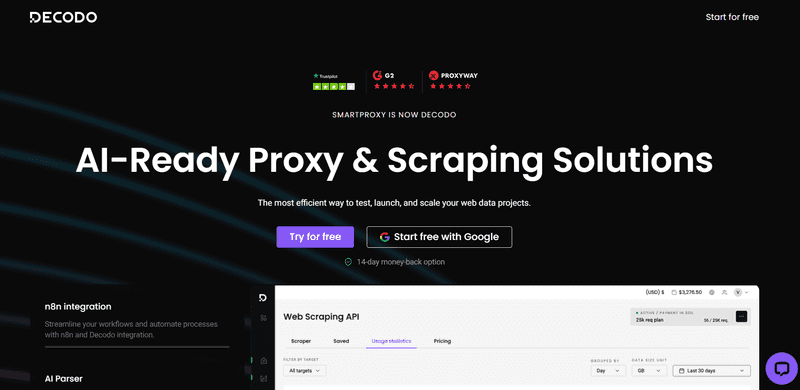
Decodo combines residential, ISP, mobile, and datacenter proxies with SERP scraping tools, making it flexible for SEO teams that use more than one collection method. Its residential proxy network supports country, state, city, and ZIP code targeting, while its SERP API can return structured search results without requiring teams to manage every proxy request directly.
The provider fits growing agencies and technical SEO teams that need both direct proxy control and managed search-data collection. This makes it easier to use one platform for localized rank tracking, large-scale SERP collection, and recurring automated reports.
SEO Strengths
- Proxy variety: Lets teams match the network type to the specific SEO task or target sensitivity.
- Location targeting: Supports localized SERP checks at country, state, city, and ZIP-code levels.
- Rotation control: Helps distribute repeated ranking requests across residential IPs.
- SERP API: Provides managed search-result collection for automated workflows.
Best Use Cases
- Rank tracking: Run recurring keyword-position checks across selected markets.
- Local SEO: Monitor city-level and ZIP-level visibility for local businesses.
- SERP scraping: Collect structured result pages for reporting or competitor analysis.
- Mid-scale workflows: Support teams expanding from manual checks to automated SEO monitoring.
3. Oxylabs
The All-in-One Platform for Effective SEO
Behind every successful business is a strong SEO campaign. But with countless optimization tools and techniques out there to choose from, it can be hard to know where to start. Well, fear no more, cause I've got just the thing to help. Presenting the Ranktracker all-in-one platform for effective SEO
We have finally opened registration to Ranktracker absolutely free!
Create a free accountOr Sign in using your credentials
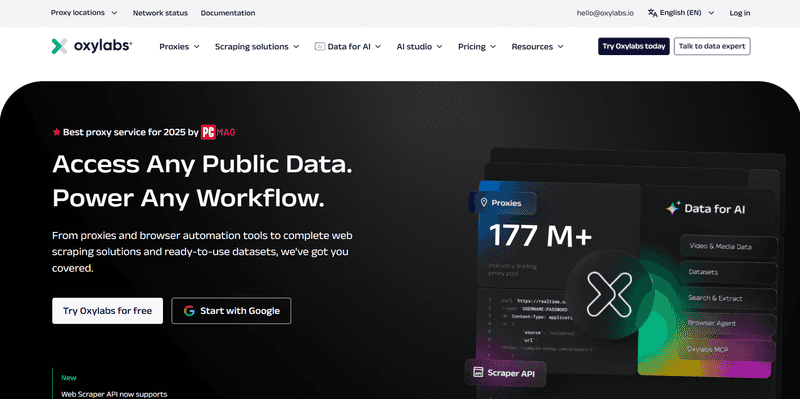
Oxylabs is an enterprise-focused provider with proxy infrastructure and managed SERP collection tools for larger SEO operations. Its products can support teams that need geo-specific targeting, automated rotation, and a broad proxy network for continuous search-data collection.
It is a practical fit for agencies, marketplaces, and enterprise SEO teams that monitor many keywords across international markets. Its managed tools can reduce the operational work involved in collecting, parsing, and delivering search-result data at scale.
SEO Strengths
- Large proxy network: Supports broader request distribution for high-volume SEO and search-data workflows.
- Geo-targeting: Helps collect localized SERP data from selected markets.
- SERP tools: Offers managed search-result collection for teams that prefer an API over direct proxy management.
- Enterprise scale: Fits larger tracking operations with ongoing support and infrastructure requirements.
Best Use Cases
- Enterprise SEO: Monitor large keyword portfolios across several websites, markets, and reporting cycles.
- Global SERPs: Compare search visibility across countries and language versions.
- Automated collection: Connect managed SERP data collection to internal reporting tools.
- High-volume tracking: Support recurring requests across many locations and keyword groups.
4. IPRoyal
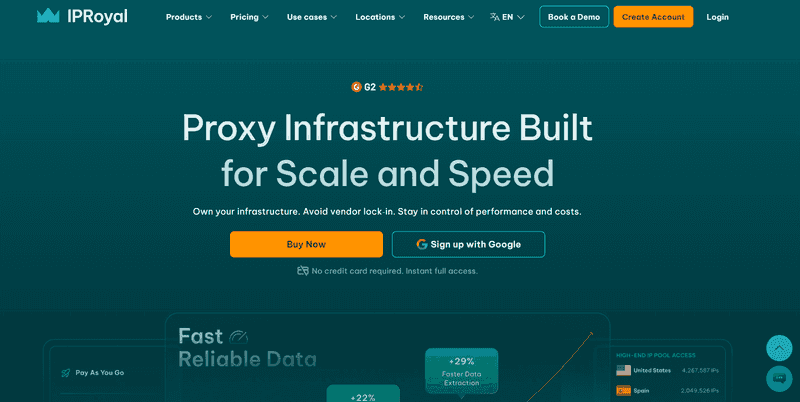
IPRoyal offers residential, ISP, mobile, and datacenter proxies with flexible pay-as-you-go and subscription options. Its residential traffic does not expire, and the provider supports precise location filters plus sticky sessions that can last up to seven days.
This makes IPRoyal useful for smaller SEO teams and agencies that need flexible purchasing without a large initial commitment. Non-expiring traffic can be particularly practical for irregular rank checks, short client projects, and monitoring workflows that do not use the same volume every month.
SEO Strengths
- Flexible rotation: Supports both distributed requests and longer sticky-session workflows.
- Geo-targeting: Offers country, state, city, ZIP code, and ASN targeting options.
- Proxy variety: Provides several network types for different SEO and research tasks.
- Non-expiring traffic: Can suit teams that run rank checks irregularly rather than every day.
Best Use Cases
- Small SEO teams: Support moderate keyword volumes and defined client campaigns.
- Local tracking: Collect rankings from selected geographic markets.
- Keyword monitoring: Run scheduled updates without committing to unused monthly traffic.
- Budget-conscious workflows: Start with a smaller amount of traffic and scale as requirements grow.
5. SOAX
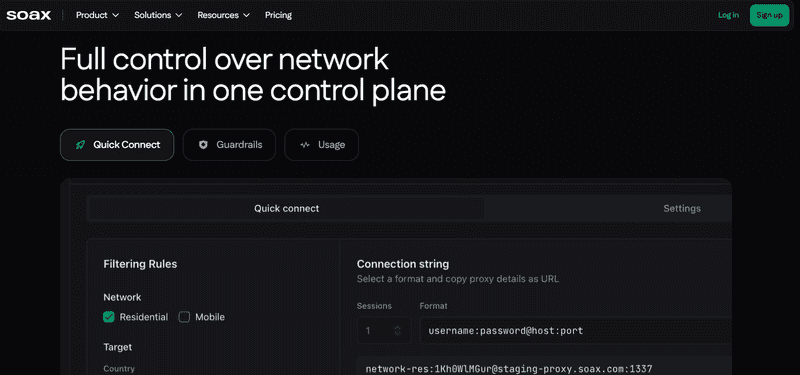
SOAX is well-suited to SEO workflows where location precision is a priority. Its residential network supports targeting by country, region, city, ISP, and ASN, alongside rotating and sticky session options. This allows teams to check how search results vary between local markets and network contexts.
The provider offers residential, mobile, ISP, and datacenter products, giving teams more flexibility as a tracking workflow changes. This can be useful when one SEO operation needs different proxy types for broad SERP collection, stable repeat checks, and location-sensitive testing.
SEO Strengths
- Granular targeting: Supports routing through a country, region, city, ISP, or ASN.
- Session control: Provides rotating and sticky sessions for different collection stages.
- Residential coverage: Helps with location-sensitive search requests and local SEO research.
- Flexible filtering: Allows more specific proxy selection when country-level targeting is not enough.
Best Use Cases
- Local SEO: Check city-specific visibility, local pack placement, and nearby competitors from the target market.
- Regional SERPs: Compare rankings, content, and competitor presence between countries, cities, or language markets.
- Localized testing: Review search results from the intended customer location before publishing or adjusting a campaign.
- Recurring checks: Support scheduled monitoring with consistent targeting rules across reporting periods.
6. Webshare
The All-in-One Platform for Effective SEO
Behind every successful business is a strong SEO campaign. But with countless optimization tools and techniques out there to choose from, it can be hard to know where to start. Well, fear no more, cause I've got just the thing to help. Presenting the Ranktracker all-in-one platform for effective SEO
We have finally opened registration to Ranktracker absolutely free!
Create a free accountOr Sign in using your credentials
Webshare is a self-service provider that offers residential, ISP, and datacenter proxies for cost-focused SEO workflows. Its rotating residential network includes country, city, state, ASN, and ZIP code targeting, which can support localized rank tracking without enterprise-level complexity.
The platform can work well for teams that manage their own scripts, tracking tools, and proxy lists. Its dashboard and API-based controls can help automate proxy retrieval and adjust locations as keyword-monitoring needs change.
SEO Strengths
- Large residential pool: Provides access to 80M+ residential IPs across 195 countries for broader request distribution and international SEO checks.
- Location controls: Supports country, city, state, ASN, and ZIP code targeting for more precise local rank monitoring.
- API access: Helps integrate proxy retrieval, location selection, and authentication into automated tracking tools.
- Cost flexibility: Offers several traffic tiers, allowing teams to adjust usage as monitoring volumes change.
Best Use Cases
- Bulk rank tracking: Process larger keyword sets through self-managed tools without relying on one connection.
- Automated SEO: Connect proxy access to custom scripts, rank trackers, and recurring reporting workflows.
- SERP collection: Run repeated checks for organic results, competitors, local packs, and location-specific visibility.
- Budget scaling: Increase traffic gradually as keyword coverage, tracked markets, and reporting frequency grow.
7. Rayobyte
Rayobyte provides residential, ISP, and datacenter proxy products for teams that need controlled traffic and location-specific data collection. Its residential network includes country, region, and city targeting, sticky sessions, and pay-as-you-go options that can suit regional SEO tracking.
It is particularly relevant for US-focused campaigns, though its targeting is not limited to the United States. The mix of residential, ISP, and datacenter products can support teams that need separate configurations for localized checks, stable repeat monitoring, and larger technical workloads.
SEO Strengths
- Proxy variety: Offers residential, ISP, and datacenter options for different tracking needs.
- Location targeting: Supports country, region, and city routing for localized SERP checks.
- Sticky sessions: Helps maintain a consistent IP identity during longer workflows.
- Scalable access: Lets teams adjust traffic volume as their SEO monitoring grows.
Best Use Cases
- US rank tracking: Monitor US search results for national, regional, and local campaigns.
- SERP monitoring: Run recurring checks for keyword positions and competitor visibility.
- Bulk queries: Support larger recurring request volumes through controlled rotation.
- Mixed workflows: Combine different proxy types where search targets have varying requirements.
8. DataImpulse
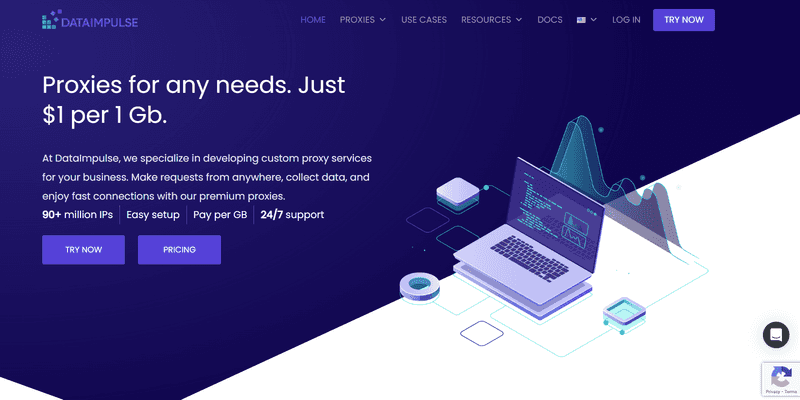
DataImpulse is a cost-focused provider for SEO teams that need residential, mobile, or datacenter proxy access without a recurring traffic-expiration deadline. Its residential service supports rotating and sticky sessions, HTTP(S) and SOCKS5, country targeting, and selected city, ZIP code, and ASN options.
The service can work well for smaller teams, testing projects, and growing tracking workflows. Its non-expiring pay-as-you-go traffic can be useful when keyword volumes change from month to month or when SEO checks are run only when a campaign requires them.
SEO Strengths
- Cost-focused access: Starts at $1 per GB for residential traffic, which can suit smaller or irregular tracking workloads.
- Geo-targeting: Includes country targeting, with more granular targeting options available for selected needs.
- Rotation and sessions: Supports both rotating and sticky configurations for different SERP tasks.
- Flexible billing: Uses a pay-as-you-go model with non-expiring traffic, allowing teams to use purchased bandwidth when their tracking schedule requires it.
Best Use Cases
- Cost-conscious tracking: Run smaller rank-tracking projects without a large upfront plan.
- Local SERPs: Review localized rankings and public search results from selected markets.
- Keyword monitoring: Support recurring search-position checks as a project expands.
- Growing projects: Add traffic gradually as keyword volumes and reporting needs increase.
9. ProxyEmpire
ProxyEmpire offers residential, mobile, and datacenter proxy products for teams that need rotating IPs, geo-targeting, and flexible session behavior. Its rotating residential service supports country, region, city, and ISP targeting, unlimited concurrent sessions, and several rotation options.
The All-in-One Platform for Effective SEO
Behind every successful business is a strong SEO campaign. But with countless optimization tools and techniques out there to choose from, it can be hard to know where to start. Well, fear no more, cause I've got just the thing to help. Presenting the Ranktracker all-in-one platform for effective SEO
We have finally opened registration to Ranktracker absolutely free!
Create a free accountOr Sign in using your credentials
The provider can fit SEO teams that need to test regional search results without purchasing a large fixed plan. Its flexible traffic model can be useful for projects with changing keyword volumes, temporary local SEO audits, and multi-country SERP research.
SEO Strengths
- Residential coverage: Uses real-user IPs for localized SERP collection and public-web research.
- Geo-targeting: Supports country, region, city, and ISP selection.
- Sticky sessions: Maintains connection continuity when a workflow requires a stable identity.
- Rotation options: Supports repeated keyword requests across a larger set of IPs.
Best Use Cases
- Regional SERPs: Compare search visibility between countries, cities, and market segments.
- Local rankings: Check location-specific results for local SEO campaigns.
- Recurring tracking: Run repeated monitoring with rotating or sticky sessions.
- International SEO: Collect search data from multiple countries under one service.
10. Infatica
Infatica provides residential, mobile, ISP, and datacenter proxy options, as well as web-data and SERP collection products. Its residential network supports country, region, and city targeting and can be used with flexible rotation for recurring public search-data workflows.
The provider can suit SEO teams that use API-driven collection or need to combine proxy traffic with other web-data tools. This can simplify recurring SERP monitoring when the workflow needs both localized access and a structured way to collect search-result data.
SEO Strengths
- Residential proxies: Support location-sensitive search requests and public SERP collection.
- Geo-targeting: Provides country, region, and city controls for localized checks, helping teams collect SERPs that reflect the intended market.
- SERP tools: Offers products for managed search-result and web-data collection, which can reduce the work required to build and maintain a custom parser.
- Scalable requests: Supports teams that need to increase collection volume over time.
Best Use Cases
- Automated SERP collection: Use managed tools or proxies in API-based tracking workflows.
- Local SEO: Check rankings and search results from selected locations.
- Keyword monitoring: Schedule recurring position tracking for reports and dashboards.
- Search-data collection: Build recurring datasets for competitive and visibility analysis.
How Can You Choose an SEO Proxy?
A suitable SEO proxy should match the actual tracking workflow, not only the advertised pool size or lowest price. Start with the keyword volume, required locations, and frequency of rank checks, then test the provider against the relevant search engine and reporting process.
- Define the tracking scope: Estimate keyword volume, search engines, reporting frequency, and the number of markets that need to be monitored.
- Confirm location precision: Check that the provider supports the required countries, cities, states, ZIP codes, or ASNs for accurate local reporting.
- Match the proxy type: Use residential, ISP, datacenter, or mobile connectivity according to target sensitivity, session needs, and expected request volume.
- Review rotation and sessions: Compare rotation rules and sticky-session duration for repeated checks, browser-based workflows, and long monitoring jobs.
- Check capacity and integrations: Make sure concurrency, protocol support, authentication, and API options work with the rank tracker or internal tools.
- Run a practical test: Test the provider with real keywords, locations, and collection volume before scaling the tracking workflow.
Why Do Rank Trackers Need Proxies?
Rank trackers can generate frequent and repetitive requests, particularly when they check many keywords, search engines, and locations on a schedule. Proxies help distribute this activity and provide more accurate local search visibility. They also allow teams to keep recurring monitoring separate from their main business infrastructure.
Avoid Search Engine Blocks
Concentrating many requests on one source IP can create avoidable rate limits, CAPTCHAs, or access interruptions. Proxy pools distribute approved tracking requests more carefully and keep monitoring traffic separate from primary office or server IPs, particularly during larger recurring keyword checks.
Track Local Rankings
A ranking report is only useful if the collection location matches the intended market. Localized proxies help teams compare country-level, city-level, and ZIP-level SERPs, review local packs, and identify competitors in the target area rather than one generic search view, improving reporting accuracy.
Scale Keyword Checks
SEO monitoring becomes more demanding as a team adds clients, keywords, search engines, and locations. Proxy capacity can support multiple controlled workers, making it easier to run parallel queries and scheduled monitoring without relying on one connection.
Which Proxy Type Works Best for SEO?
The best proxy type depends on the target search engine, required location accuracy, number of requests, and session stability needed for the workflow. Many SEO teams use more than one type, assigning each network to the tasks where it provides the most practical balance of consistency, speed, and cost.
- Residential proxies: Use consumer-network IPs for local SERPs, granular targeting, and search targets that may be more sensitive to repetitive datacenter traffic.
- ISP proxies: Use stable ISP-issued identities for repeat checks, longer sessions, and workflows that benefit from the same IP over time.
- Datacenter proxies: Use fast, lower-cost server IPs for bulk requests and lower-sensitivity public targets, while testing their effectiveness for each search engine.
- Mobile proxies: Use carrier-based IPs for mobile SERP research, carrier-sensitive results, and mobile-specific testing where network context matters.
When Are Proxies Better Than SERP APIs?
The choice between raw proxies and a SERP API depends on how much control a team needs over the collection process, resulting data, and technical setup. Raw proxies provide flexibility, while APIs reduce maintenance and operational work for recurring tracking tasks, especially when structured results are sufficient.
Raw Proxies
Raw proxies give teams control over request timing, rotation, browser setup, parsing logic, and collection tools. They fit workflows that need custom data fields or proprietary reporting, but the team must manage parsing, access challenges, and monitoring internally.
SERP APIs
SERP APIs provide a managed way to collect search-result data. The provider handles proxy routing and common access challenges, then returns structured results instead of raw pages. This can reduce engineering work and simplify scheduled reporting for recurring SEO workflows.
Conclusion
The best SEO proxy depends on the scale of rank tracking, the precision of the required location, and whether the workflow needs direct control or managed SERP data.
Prioritize accurate geo-targeting, suitable session control, and enough concurrent capacity for the real keyword workload. Use residential or ISP proxies when location realism and stable sessions matter, and consider a SERP API when managed collection and parsed results are more valuable than full control over the proxy layer.

