Intro

Canadian betting affiliates are carrying far more technical SEO risk than they were two years ago. Bigger sites, heavier mobile pages, and constant sportsbook updates are making audits harder to ignore.
Google updates have become a lot less forgiving toward affiliate sites running on old technical foundations. Canadian betting affiliates sit in a particularly rough corner of search right now because the market is growing fast, pages change constantly, and competition is packed into a relatively small set of commercial keywords. A site can lose rankings without losing content quality at all; sometimes the problem sits deeper in the architecture, buried inside crawl waste, mobile rendering problems, or bloated page templates.
Technical Debt Builds Fast on Sportsbook Affiliate Sites
Canadian betting affiliates are operating inside one of the busiest regulated search environments in North America. Ontario alone generated CA$18.7 billion in wagers during Q2 of FY2024-25, representing 31.7% year-on-year growth. More traffic means more landing pages, more review content, and more commercial competition packed into the same SERPs.
That growth quickly creates technical pressure. Affiliate sites in this sector rarely stay small for long. One promo page becomes twenty. One province page becomes ten. Then come sportsbook reviews, app pages, payment-method breakdowns, bonus comparisons, and odds content. The structure expands faster than most teams maintain it.
Canadian sportsbook affiliates now compete across dozens of commercial search terms tied to province pages, promo comparisons, payment methods, and mobile betting apps. That creates enormous pressure on site structure because every section needs regular updates and clean internal linking to remain crawlable.
Pages covering betting sites in Canada, like those on Covers.com, already have to manage sportsbook reviews, province-specific sections, mobile betting app coverage, payout discussions, promo updates, and constantly changing operator pages at the same time That creates a technical workload most affiliate operators underestimate until rankings begin slipping across large sections of the site.
The All-in-One Platform for Effective SEO
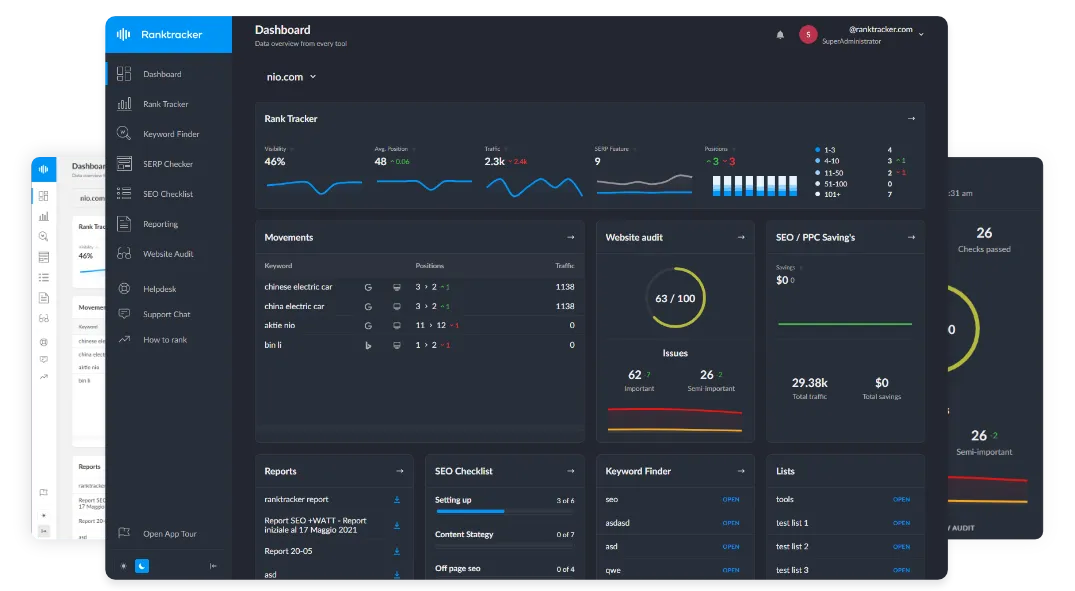
Behind every successful business is a strong SEO campaign. But with countless optimization tools and techniques out there to choose from, it can be hard to know where to start. Well, fear no more, cause I've got just the thing to help. Presenting the Ranktracker all-in-one platform for effective SEO
We have finally opened registration to Ranktracker absolutely free!
Create a free accountOr Sign in using your credentials
Search visibility starts fading when that technical debt stacks up. Rankings often drop long before anybody notices the deeper issue sitting underneath the site structure.
Desktop rankings no longer tell the full story. Google has been indexing mobile versions of pages first for years now, but a lot of affiliate operators still audit sites from desktop environments because that is where the reporting work usually happens.
The problem becomes obvious once sportsbook pages start loading heavy comparison tables, JavaScript widgets, rotating promo panels, and tracking scripts onto mobile layouts. Pages that look perfectly usable on desktop can slow down badly on phones, particularly once ads and dynamic elements start firing.
Rankings can differ sharply between desktop and mobile search results because Google treats those environments differently. A page sitting comfortably near the top on desktop can lose visibility on mobile once load performance starts deteriorating.
Sports betting traffic leans heavily toward mobile usage. Somebody checking odds during a hockey game is probably using a phone, not sitting behind a monitor with fifteen browser tabs open. That changes the stakes around technical audits. Mobile rendering problems stop being minor UX annoyances once they begin affecting crawl behaviour, page speed scores, and visibility inside commercial search terms.
The gap between desktop performance and mobile performance has become large enough that technical audits now need separate workflows for each environment.
Core Web Vitals Become Harder at Affiliate Scale
Core Web Vitals problems usually take their time to arrive. A site adds another widget. Another tracking script. Another promo module. Then somebody adds live odds feeds across multiple templates. Six months later, the site takes nearly four seconds to become interactive on mobile.
The All-in-One Platform for Effective SEO
Behind every successful business is a strong SEO campaign. But with countless optimization tools and techniques out there to choose from, it can be hard to know where to start. Well, fear no more, cause I've got just the thing to help. Presenting the Ranktracker all-in-one platform for effective SEO
We have finally opened registration to Ranktracker absolutely free!
Create a free accountOr Sign in using your credentials
Affiliate ecosystems create this problem constantly because commercial pages never stay static. Betting operators update offers every week, which means affiliate sites are continuously adjusting layouts and page components. Technical stability becomes difficult once hundreds or thousands of URLs rely on dynamic elements.
Recent Chrome UX Report analysis showed a massive performance gap between stronger CMS environments and weaker implementations. Top-performing platforms recorded Core Web Vitals pass rates of almost 85%, while lower-performing systems dropped below 47%. That difference becomes important once search updates begin rewarding cleaner technical environments more aggressively.
Affiliate pages are especially vulnerable because they often combine comparison tables, tracking scripts, live data widgets, ad placements, and constantly refreshed commercial content.
The result is usually page bloat. A site might still look visually fine to users while Googlebot is dealing with unstable rendering behaviour underneath the surface.
Technical audits catch those issues before they spread deeper into the architecture. Left unchecked, they accumulate across templates and category pages until rankings start slipping across entire sections of the site.
Google’s Site Reputation Rules Changed the Risk Profile
Google’s site reputation abuse policy update changed the conversation around affiliate SEO. The company made it clear that sections of a site can now be evaluated independently when they appear designed to exploit existing authority signals.
That created immediate concern across affiliate publishing because a large percentage of betting ecosystems rely on repeated templates, syndicated structures, or highly commercial landing pages sitting inside otherwise authoritative domains.
Google also clarified that affiliate content itself is not automatically a problem. The issue comes from scaled pages built primarily to manipulate rankings without delivering strong standalone value. That distinction becomes important during technical audits because the underlying structure starts carrying more weight.
Thin province pages can create problems. Duplicate sportsbook reviews can create problems. Large numbers of near-identical promo URLs can create problems. Once Google starts treating sections independently, technical clutter becomes easier to isolate algorithmically.
This is where audits stop being routine maintenance and start becoming defensive work. Teams now need to check:
- canonical consistency,
- crawl segmentation,
- orphan pages,
- duplicate templates,
- expired landing pages,
- indexing bloat.
Search Console warnings often arrive after the damage has already started. Strong technical hygiene gives affiliate operators a better chance of avoiding those situations before the next update cycle rolls through.
AI Search Volatility Is Compressing SEO Reaction Time
Search environments are moving faster than they did two years ago. AI-generated summaries, changing SERP layouts, and faster content reassessment cycles have shortened the amount of time affiliate operators get to react after rankings move.
That creates a rough environment for betting affiliates because these sites already deal with constant commercial updates. Odds pages change daily. Promo pages expire constantly. Operator reviews need regular edits. The technical layer underneath all of that becomes harder to maintain once search volatility increases.
AI plays a growing role inside SEO workflows and search visibility analysis. One practical consequence of this is that slower audit cycles are becoming a liability. Quarterly reviews no longer catch issues quickly enough in highly competitive sectors.
Search updates now expose technical weaknesses faster because Google is processing quality signals more aggressively across large sites. Rendering delays, broken canonicals, duplicate sections, and stale landing pages can sit unnoticed until visibility drops sharply across a category.
Affiliate operators working in regulated Canadian betting markets are dealing with particularly dense SERPs. Ontario’s market generated nearly CA$100 billion in wagers during 2025, which pushed more publishers into the same commercial keyword space.
Technical audits are becoming less about optimisation and more about maintaining stability in an environment where rankings move faster than most teams expect.
Crawl Efficiency Is Becoming a Competitive Advantage
Large affiliate sites generate technical noise very easily. Expired promo pages stack up. Redirect chains start growing in the background. Old province pages remain indexed long after they stop serving a purpose.
Before long, Googlebot is spending time crawling junk instead of reaching important commercial pages.
That creates crawl inefficiency, which becomes more serious once sites scale into thousands of URLs. Betting affiliates are particularly exposed because the business model naturally produces high page turnover. Promotions expire, sports seasons change and operators enter or leave provinces while review structures evolve constantly.
A technical audit usually uncovers far more dead weight than operators expect. Thin pages sit buried in archives and internal links point toward redirected URLs while duplicate category paths appear after CMS migrations. the result: Mobile rendering slows down once scripts pile up across templates.
The All-in-One Platform for Effective SEO
Behind every successful business is a strong SEO campaign. But with countless optimization tools and techniques out there to choose from, it can be hard to know where to start. Well, fear no more, cause I've got just the thing to help. Presenting the Ranktracker all-in-one platform for effective SEO
We have finally opened registration to Ranktracker absolutely free!
Create a free accountOr Sign in using your credentials
Google’s recent update cycle has pushed more attention toward technically clean environments. Search systems are getting better at identifying weak sections sitting inside otherwise strong domains. That changes the economics of maintenance work because technical clutter now carries direct ranking consequences.
The affiliates holding rankings consistently are usually the ones reducing complexity before updates arrive. Cleaner architecture gives Google fewer reasons to waste crawl resources and fewer weak signals to interpret incorrectly.
Early Audits Usually Recover Faster
Search updates rarely damage sites evenly. Two affiliate domains can publish similar content and still experience completely different outcomes because the underlying technical structure is carrying different levels of debt.
Canadian betting affiliates are operating inside a highly competitive search environment with heavy commercial intent and fast-moving pages. That combination rewards operators who identify weaknesses early instead of reacting after rankings collapse.
Technical audits have become part of basic operational maintenance for affiliate SEO. The sites recovering fastest after updates are often the ones already cleaning up crawl waste, improving mobile performance, tightening internal linking, and reducing unnecessary complexity before Google forces the issue publicly.