Intro
Canthal tilt has become a popular topic on TikTok and in looksmaxxing communities, where small differences in eye shape often attract considerable attention. For beauty brands, this growing interest creates an opportunity to develop educational content about facial features, eye aesthetics, and personalized styling.
Understanding what canthal tilt means is the first step toward creating useful AI beauty guides. Rather than reinforcing narrow beauty standards, brands can explain facial anatomy, introduce AI analysis tools, and help readers explore their natural features.
This guide explains how to interpret canthal tilt, identify relevant search interests, and turn those insights into informative beauty content.
What Is Canthal Tilt?
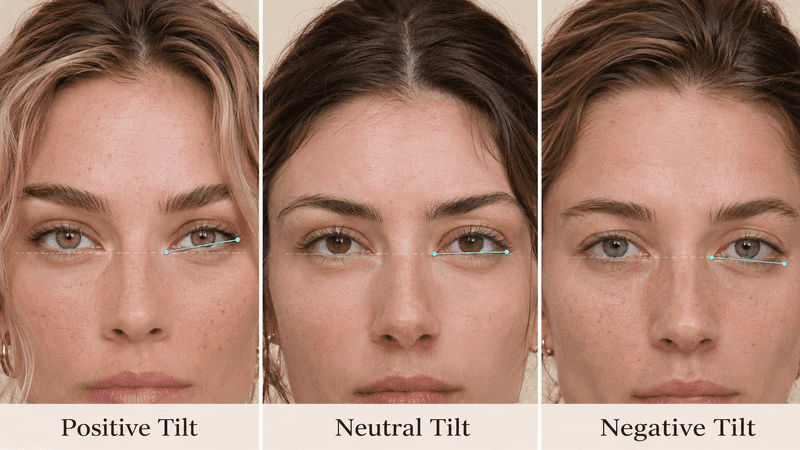
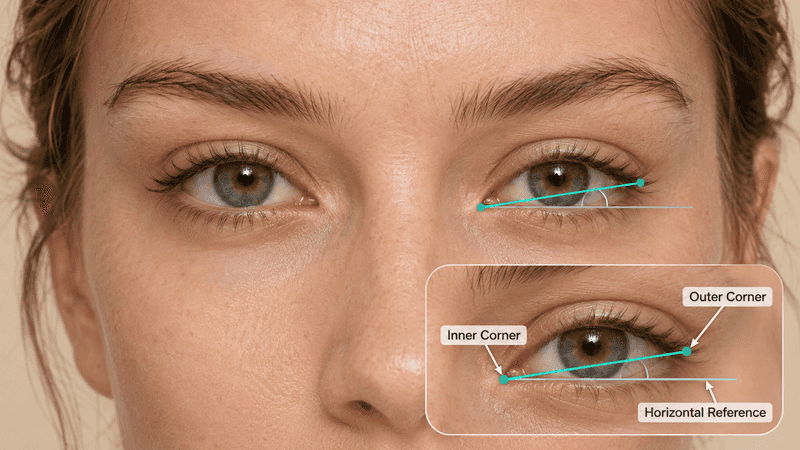
Canthal tilt describes the angle between the inner corner of the eye, called the medial canthus, and the outer corner, called the lateral canthus.
Canthal tilt refers to this angle, which readers can use to determine whether the eyes have a positive, neutral, or negative tilt.
- Positive canthal tilt: The outer eye corner sits higher than the inner corner and is often associated with youthfulness and alertness.
- Neutral canthal tilt: Both corners are approximately level.
- Negative canthal tilt: The outer eye corner sits lower than the inner corner.
Canthal tilt contributes to eye appearance alongside eyelid shape, eyebrow position, eye spacing, and surrounding facial proportions.
Although small angular differences can influence appearance, no universally ideal eye angle exists.
Why Canthal Tilt Search Trends Matter for Beauty Brands
Searches related to facial aesthetics can reveal questions people want answered, from understanding eye shapes to exploring makeup techniques.
The All-in-One Platform for Effective SEO
Behind every successful business is a strong SEO campaign. But with countless optimization tools and techniques out there to choose from, it can be hard to know where to start. Well, fear no more, cause I've got just the thing to help. Presenting the Ranktracker all-in-one platform for effective SEO
We have finally opened registration to Ranktracker absolutely free!
Create a free accountOr Sign in using your credentials
For beauty brands, these questions can inspire educational articles, tutorials, and personalized styling guides.
Understanding Search Intent
People researching canthal tilt may have different goals.
Some want to understand the difference between positive and negative tilt. Others want to measure their eye orientation or learn whether makeup can change their appearance.
Brands should develop content around these distinct needs rather than repeating the same explanations across multiple articles.
Connecting Search Interest With AI Beauty Tools
AI-powered facial analysis can make educational beauty content more interactive.
For readers interested in understanding their eye orientation, Facefy's canthal tilt analysis tool offers a convenient way to explore eye-corner positioning using a photograph.
Brands can reference this type of analysis when explaining facial features, while emphasizing that results are estimates rather than clinical measurements or objective beauty judgments.
Understanding Positive, Neutral, and Negative Canthal Tilt
Positive Canthal Tilt
Positive canthal tilt occurs when the outer eye corner sits higher than the inner corner.
This creates a slightly upward-slanting appearance sometimes associated with lifted or alert-looking eyes.
The All-in-One Platform for Effective SEO
Behind every successful business is a strong SEO campaign. But with countless optimization tools and techniques out there to choose from, it can be hard to know where to start. Well, fear no more, cause I've got just the thing to help. Presenting the Ranktracker all-in-one platform for effective SEO
We have finally opened registration to Ranktracker absolutely free!
Create a free accountOr Sign in using your credentials
Online communities frequently connect this characteristic with "hunter eyes," although that informal term also involves eyelid exposure and eye depth.
A greater positive angle does not automatically indicate greater attractiveness.
Neutral Canthal Tilt
Neutral canthal tilt means the eye corners are approximately aligned horizontally.
Depending on eyelid structure and surrounding features, neutral eyes may appear rounded, almond-shaped, or elongated.
Neutral tilt is a normal anatomical variation.
Negative Canthal Tilt
Negative canthal tilt occurs when the outer eye corner sits lower than the inner corner.
This may create a softer or slightly downturned appearance.
Some online communities use the term "prey eyes," but this is not a scientific classification.
Negative tilt is neither inherently unattractive nor unhealthy.
How to Create an Educational Guide for Measuring Canthal Tilt
A practical measurement tutorial can address readers who want to understand their own eye orientation.
Step 1: Take a Clear Photograph
Recommend a front-facing photograph taken at eye level.
Readers should keep their heads straight, expressions relaxed, and lighting even.
Close-up selfies may introduce perspective distortion.
Step 2: Identify the Eye Corners
Explain how to locate the medial canthus near the nose and the lateral canthus at the outer edge.
Readers should identify the actual corners rather than eyelashes or eyeliner.
Step 3: Draw Reference Lines
Using a photo editor, connect the eye corners and compare the resulting line with a horizontal reference.
An upward line suggests positive tilt, while a downward line suggests negative tilt.
Step 4: Explain Measurement Limitations
Angles can be estimated in degrees, but no universally accepted aesthetic cutoff separates the categories.
Head positioning, camera perspective, and landmark identification can influence measurements.
How AI Beauty Guides Can Explain Facial Anatomy
Understanding the anatomy behind eye orientation helps brands provide more reliable information.
Genetics and Bone Structure
Orbital bones, cheekbones, and surrounding skeletal structures contribute to eye positioning.
Inherited characteristics establish much of a person's natural eye orientation.
Eyelid Tendons and Soft Tissue
The medial and lateral canthal tendons support the eyelids and help maintain eye-corner positioning.
Skin elasticity, connective tissue, and surrounding fat also influence appearance.
Aging and Photography
Changes in skin elasticity and eyelid support can affect the eye area over time.
Camera angles, facial expressions, and lighting can also change how eye orientation appears in photographs.
These photographic differences should not be confused with anatomical changes.
Using Facefy to Support Personalized Beauty Content
Educational beauty guides become more useful when readers can connect general explanations with their individual features.
Facefy offers AI-powered facial analysis tools that help users explore eye characteristics, facial proportions, and other visible features through photographs.
For brands developing content about eye aesthetics, Facefy provides a relevant example of how AI analysis can support personalized beauty exploration without presenting one facial characteristic as universally preferable.
Connecting Eye Shape With Makeup Recommendations
Eye orientation is only one consideration when choosing makeup techniques.
Eyelid exposure, eyebrow placement, and overall eye shape also influence how eyeliner and eyeshadow appear.
Facefy's AI eye shape analysis offers another way to explore these characteristics.
Brands can use these concepts to explain why different techniques produce different visual effects.
Can Makeup Change the Appearance of Canthal Tilt?
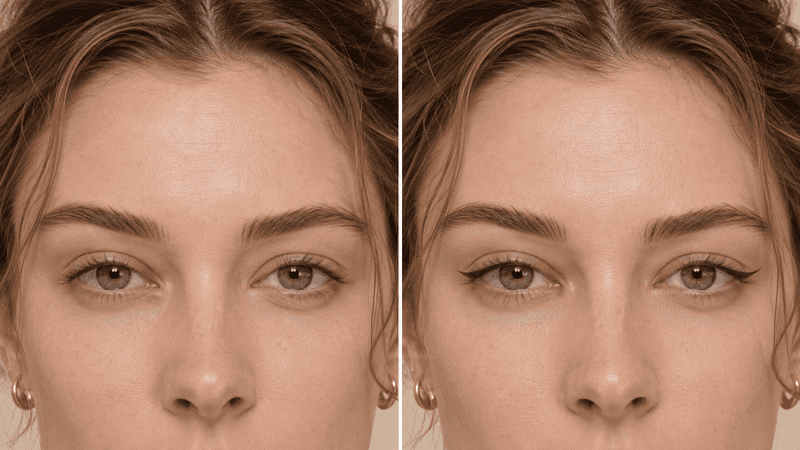
Makeup cannot permanently reposition eye corners, but it can influence perceived eye orientation.
Winged Eyeliner
Extending eyeliner slightly upward beyond the outer corner can create a lifted visual effect.
The angle and thickness should complement the individual's eyelid structure.
Eyeshadow and Eyebrow Styling
Strategic eyeshadow placement can emphasize the outer eye area.
Eyebrow shaping may also influence how lifted or balanced the eyes appear.
Skincare and Sleep
Adequate sleep may reduce temporary puffiness, while gentle skincare and sun protection support the surrounding skin.
However, these habits do not permanently change anatomical canthal tilt.
Facial Exercises and Mewing
Some online discussions recommend facial exercises, chewing routines, or mewing to increase positive tilt.
Reliable evidence that these techniques permanently reposition eye corners is insufficient.
Beauty guides should distinguish temporary visual effects from structural changes.
Should Beauty Guides Discuss Surgical Options?
Some readers researching canthal tilt may encounter surgical procedures.
Brands can provide general educational context without presenting surgery as a routine beauty requirement.
Lateral Canthopexy
Lateral canthopexy supports or tightens the outer eyelid attachment and may be performed to improve eyelid support.
Lateral Canthoplasty
Lateral canthoplasty modifies the outer eye corner and supporting structures.
Depending on the technique, it may change the position or contour of the lateral canthus.
Risks and Professional Assessment
Potential complications include scarring, asymmetry, dry eyes, eyelid malposition, and difficulty closing the eyes.
Anyone considering these procedures should consult a qualified oculoplastic surgeon.
Building Responsible AI Beauty Guides Around Search Trends
Search interest should guide educational topics without determining what brands present as desirable facial features. Online discussion of canthal tilt began on 4chan around 2013 and later spread across other platforms and website communities. It became a TikTok meme trend in 2023 as short videos and related posts circulated more widely.
Address Common Questions
Useful guides can explain eye orientation, measurement techniques, makeup options, and the limitations of AI analysis.
Avoid Universal Beauty Rankings
Positive canthal tilt is frequently promoted online, but attractiveness preferences vary across individuals and cultures.
Brands should avoid suggesting that negative or neutral tilt requires correction.
Explain What AI Can and Cannot Measure
AI can estimate visible facial characteristics from photographs.
In 2023, viral TikTok videos often treated canthal tilt as a meme or filter trend, with users posting a comment in response to trend clips, so AI-based beauty guides should not confuse that with clinical assessment.
It cannot establish universal attractiveness or replace professional medical evaluation.
The All-in-One Platform for Effective SEO
Behind every successful business is a strong SEO campaign. But with countless optimization tools and techniques out there to choose from, it can be hard to know where to start. Well, fear no more, cause I've got just the thing to help. Presenting the Ranktracker all-in-one platform for effective SEO
We have finally opened registration to Ranktracker absolutely free!
Create a free accountOr Sign in using your credentials
Clear explanations help readers interpret results realistically.
Final Thoughts
Canthal tilt provides an interesting topic for beauty brands developing educational content around facial aesthetics and AI analysis.
By understanding search intent, explaining anatomical differences, and offering practical styling information, brands can create guides that answer genuine reader questions.
The most valuable content encourages readers to explore their natural features while recognizing that positive, neutral, and negative canthal tilts are all normal variations.
AI beauty education should expand personal styling possibilities rather than reinforce restrictive appearance standards.