Intro
Many potential patients make quick decisions based on what appears in search results, how clear a website feels, and whether basic details are easy to trust. A clinic that looks credible on the ground can appear uncertain online if its digital presence is neglected.
That is where avoidable search mistakes begin to matter. Many dentists assume websites simply need to exist, while others are sold expensive promises without a clear plan for what actually improves rankings and enquiries. According to SEO expert Paul Hoda, the biggest weakness in many campaigns is not a lack of budget but a lack of focus: practices often chase broad traffic rather than the local intent that leads to bookings. He advises clinics reviewing their digital strategy to treat dental seo as a practical visibility issue tied to trust, service pages, and local relevance rather than as a technical add-on.
For a British audience, that distinction is important. Most patients are not searching in abstract terms. They are looking for a hygienist in a certain town, emergency care near their workplace, orthodontic options for a child, or clear pricing before they commit. Search engines try to match those needs with pages that appear useful, accurate, and local. When a dental website fails to meet those standards, it does not just lose rankings. It loses confidence at the exact moment a potential patient is ready to choose.
The most common errors are not dramatic. They are usually ordinary problems that build up over time: thin service pages, recycled copy, weak location signals, poor mobile experiences, and content that speaks more to algorithms than to people. These mistakes can make an otherwise excellent clinic hard to find. Understanding them is the first step towards fixing them.
Mistake One: Treating Every Patient Search as the Same
One of the most damaging errors in dental marketing is assuming all searches have the same purpose. They do not. Someone typing “dentist near me” is in a different frame of mind from someone searching “Invisalign cost Leeds” or “same day emergency dentist Bristol.” Yet many practice websites respond to every search with the same generic homepage language. That flattens patient intent and weakens relevance.
Search engines have become much better at understanding what people mean, not just what they type. A person looking for emergency treatment wants speed, reassurance, and immediate contact information. A parent researching orthodontics wants clarity, credibility, and perhaps evidence of experience with children or teenagers. A private patient comparing implants may want finance information, case detail, and signals of long-term care. When one page tries to serve all those needs at once, it rarely satisfies any of them well.
This mistake often comes from convenience. It is easier to create a few broad pages than a properly structured site. But dental practices that rely on vague, catch-all copy usually end up invisible for the searches that matter most. Pages should match real services and real concerns. That means dedicated, well-written pages for treatments, emergencies, hygiene, cosmetic work, and any specialist services offered. It also means writing in a way that reflects how patients actually decide, rather than how clinics describe themselves internally.
The All-in-One Platform for Effective SEO
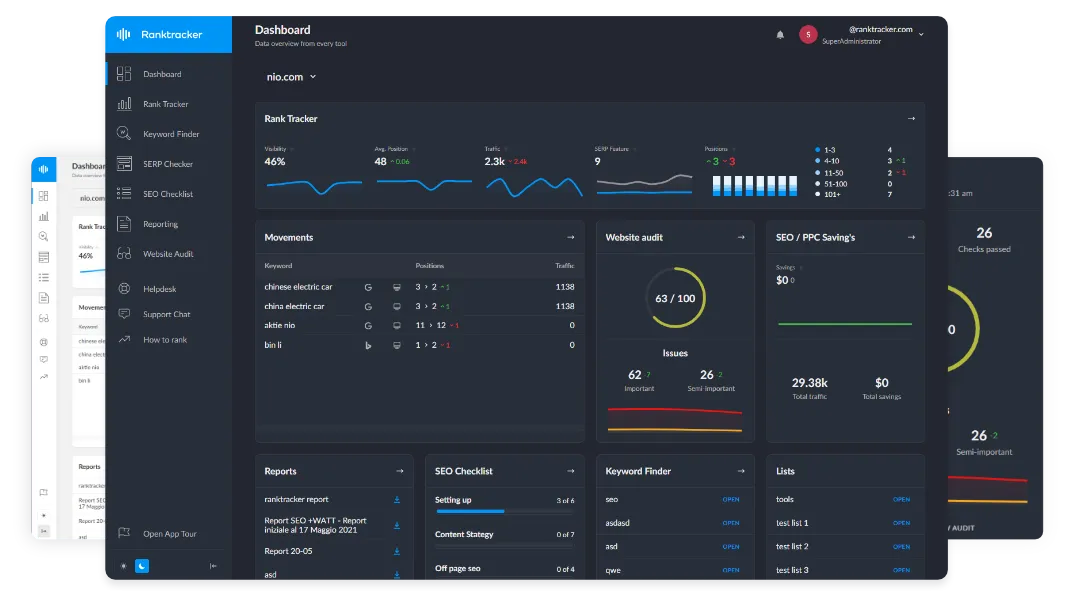
Behind every successful business is a strong SEO campaign. But with countless optimization tools and techniques out there to choose from, it can be hard to know where to start. Well, fear no more, cause I've got just the thing to help. Presenting the Ranktracker all-in-one platform for effective SEO
We have finally opened registration to Ranktracker absolutely free!
Create a free accountOr Sign in using your credentials
There is also a distinctly British dimension to this. Patients here often compare NHS availability, private care options, waiting times, and location convenience before anything else. A website that does not address those practical concerns can feel detached from how people choose a practice in the UK. Relevance is not only about keywords. It is about whether the page solves the right problem for the right person in the right place.
Clinics that get this right usually see stronger engagement because visitors feel understood quickly. Search visibility improves for the same reason: the website is more clearly aligned with actual intent. That alignment is what too many practices overlook when they pursue seo for dentists without first thinking about the patient’s decision journey.
Mistake Two: Building Thin Service Pages That Say Almost Nothing
A surprising number of dental websites have service pages that are visually neat but substantively weak. They often contain a short paragraph, a stock image, and a button to book. While that may look modern, it does little to help search engines understand the page or to help patients feel informed enough to take the next step. Thin pages are one of the most common reasons practices fail to rank for valuable local services.
A strong dental service page should do more than name a treatment. It should explain what the treatment is, who it suits, what concerns it addresses, what patients can expect, how long it may take, and what next steps look like. It should also reflect the tone of a trustworthy clinic rather than a sales brochure. This is especially important in dentistry, where people are often anxious, cost-conscious, or embarrassed about delaying treatment. A page that answers likely questions calmly can perform far better than one that simply lists features.
Thin content also creates a credibility gap. If a clinic claims to provide implants, composite bonding, root canal treatment, and orthodontics, but each service page is just a brief paragraph with no useful detail, patients may doubt the depth of expertise. Search engines can respond in a similar way by preferring richer, more helpful results from competing practices. This is not about writing for the sake of volume. It is about demonstrating substance.
In the UK market, trust signals matter heavily. Patients often want to know whether consultations are available, whether treatment plans are explained clearly, whether finance is offered, and whether the practice is used to dealing with nervous patients. Those are not side notes. They are part of how people evaluate care. When service pages ignore them, they lose both practical usefulness and search value.
The clinics that outperform competitors tend to publish pages with genuine depth, not jargon-heavy filler. They answer real questions, use clear language, and show that the practice understands patient concerns. A service page should feel like the beginning of a good consultation, not a placeholder on a template website.
Mistake Three: Ignoring Local Proof and Real-World Signals of Trust
Many dental practices think local visibility means adding a town name to page titles and headings. That is a start, but it is nowhere near enough. Search performance in local services depends heavily on trust signals that connect the business to a real place and a real community. Practices often overlook these in favour of more abstract marketing work, which leaves their websites feeling detached from the area they serve.
The All-in-One Platform for Effective SEO
Behind every successful business is a strong SEO campaign. But with countless optimization tools and techniques out there to choose from, it can be hard to know where to start. Well, fear no more, cause I've got just the thing to help. Presenting the Ranktracker all-in-one platform for effective SEO
We have finally opened registration to Ranktracker absolutely free!
Create a free accountOr Sign in using your credentials
Patients in Britain want reassurance that a clinic is established, accessible, and known. That can come through accurate address details, consistent contact information, clear opening hours, local reviews, maps integration, travel guidance, parking information, and references to nearby areas genuinely served. These details may seem ordinary, but they reduce uncertainty. Search engines notice the same consistency and use it as part of local relevance.
The mistake becomes clearer when comparing two practices. One has a polished website but little evidence of place beyond a postcode in the footer. The other has detailed service pages, a well-maintained business profile, reviews that mention real experiences, and content that reflects local needs. The second practice often appears more trustworthy because it looks rooted in its area rather than digitally generic. For dentistry, that matters. Patients are not choosing a national brand in the abstract. They are choosing where to take their child, where to go in pain, or where to invest in long-term treatment.
There is also the issue of inconsistency. Some clinics have one address on their website, another on a directory, outdated phone numbers elsewhere, or mixed branding across platforms. These gaps can weaken trust quickly. A potential patient may simply move on rather than untangle the confusion. Search systems can also struggle to interpret a business cleanly when its details vary from one source to another.
Strong local visibility is built through proof, not just optimisation. The more a practice looks like a reliable part of its community, the more likely it is to earn both clicks and enquiries. Trust is not a decorative extra in dental search. It is central to whether a patient believes a clinic is worth contacting.
Mistake Four: Letting the Website Undermine the Practice
Some dental websites rank reasonably well but still fail to convert visitors into enquiries because the site experience works against the practice. This is often treated as a design issue, but it is also a search issue. Search visibility and user experience are now closely connected. If a site is slow, awkward on mobile, difficult to navigate, or unclear about next steps, it can lose both rankings and patients.
This matters especially in dentistry because many searches happen in moments of urgency or hesitation. A person with dental pain may search on a mobile phone while commuting or late in the evening. A parent may be comparing practices quickly between other tasks. If the site loads poorly, hides contact details, buries the emergency number, or forces users through a cluttered menu, that patient may leave before even reading the content. Search engines interpret poor engagement as a sign that the result did not satisfy the visitor well.
A common problem is over-designed websites that prioritise aesthetic trends over usability. Large images, moving banners, vague menu labels, and oversized blocks of promotional language can make even good clinics feel less trustworthy. Patients want clarity. They want to know what is offered, where the practice is, whether appointments are available, and how to make contact. The path from search result to action should feel direct.
Another issue is the lack of practical friction testing. Many practices never check how their site works on an ordinary smartphone, with average signal strength, from the perspective of a new patient. They assume the website is fine because it looks good in a desktop preview. In reality, booking forms may be awkward, phone buttons may fail, and pricing pages may be hard to find. These are not minor annoyances. They directly affect whether interest turns into revenue.
A dental website does not need to be flashy to perform well. It needs to be reliable, understandable, and easy to act on. In many cases, a simpler site with clearer information will outperform a more expensive one that confuses visitors. Good search performance cannot rescue a poor user journey for long.
Mistake Five: Publishing Content That Sounds Like Marketing Rather Than Help
The final mistake is one of tone and purpose. Many dental practices produce content because they have been told to keep their blog active or add fresh pages regularly. The result is often bland, over-optimised writing that says little of value. Articles are filled with familiar phrases, broad claims, and repetitive wording that may satisfy a checklist but do not help a reader make a decision. Search engines have become increasingly effective at detecting this sort of low-value material.
For dental practices, content works best when it answers the questions patients are already asking. These are often simple but important concerns: how long whitening results may last, whether a chipped tooth needs urgent treatment, what to expect after an extraction, whether children should see a hygienist, or how private and NHS options differ in practice. Useful content does not need to be dramatic. It needs to be accurate, readable, and grounded in real patient concerns.
British readers, in particular, tend to respond well to clear and measured explanations rather than exaggerated claims. Overpromising language can feel especially misplaced in healthcare. When articles sound like adverts, they risk damaging trust. When they sound like practical guidance from a competent clinic, they can improve both engagement and authority over time.
There is also a strategic benefit. Helpful content can support service pages by answering related questions and building topical depth around what the practice actually offers. That creates a stronger site overall. By contrast, generic articles on loosely related subjects often add little. A post written merely to include phrases repeatedly is unlikely to attract the right traffic or convert it.
The All-in-One Platform for Effective SEO
Behind every successful business is a strong SEO campaign. But with countless optimization tools and techniques out there to choose from, it can be hard to know where to start. Well, fear no more, cause I've got just the thing to help. Presenting the Ranktracker all-in-one platform for effective SEO
We have finally opened registration to Ranktracker absolutely free!
Create a free accountOr Sign in using your credentials
The most effective content strategy is not to publish more for the sake of it. It is to publish better. A smaller number of genuinely useful pages will usually outperform a larger archive of forgettable copy. For dental practices, clarity beats noise nearly every time.
What a Better Approach Looks Like for UK Practices
Avoiding these five mistakes does not require gimmicks. It requires a more disciplined view of what search visibility is supposed to achieve. A dental website should not merely chase rankings. It should help the right local patient feel confident enough to take action. That means building pages around real services, matching real search intent, proving local credibility, improving usability, and publishing content that earns trust rather than demanding it.
For UK practices, this is especially relevant because patients are often comparing several factors at once: convenience, reputation, treatment range, pricing clarity, and whether the practice feels approachable. The strongest websites do not excel by accident. They remove doubt at every stage. They make it easy to understand what is offered and easy to move forward. Search engines tend to reward those same qualities because they are aligned with usefulness.
There is still a tendency in parts of the industry to treat search work as a hidden technical craft, separate from the patient experience. In reality, the best-performing dental websites are usually the ones that communicate clearly, reflect their community, and answer the questions that matter most. Technical performance still matters, but it works best when the basics of trust and relevance are already in place.
The wider lesson is simple. A good dental practice can lose business online for reasons that have little to do with dentistry itself. Visibility depends on structure, clarity, credibility, and consistency. When those elements are neglected, even excellent clinics can disappear behind less capable competitors. When they are handled well, search becomes less about gaming visibility and more about earning it. That is the shift many practices need to make if they want their online presence to reflect the quality of care they already provide.