Intro
Most agencies budget for the rank tracking tool and stop there. What the subscription leaves out is the infrastructure behind bulk keyword checks: the IPs that fetch results pages, the bandwidth those fetches burn, and the retries that stack up when search engines start blocking. Past a few hundred keywords, that infrastructure becomes its own line item, and it behaves nothing like a SaaS fee. It scales with keyword volume, check frequency, device and location splits, and how aggressively Google happens to be rate limiting that month. This article puts real numbers on all of it. You'll see how per-IP and per-GB pricing change the math, what a single check costs on each, where cheap datacenter IPs carry the load, where spending more pays off, and how to build a blended budget that survives the day you triple your keyword list.
The hidden cost of rank tracking at scale
Every position check is a live request to a results page. Google doesn't sell API access to rankings, so every tool and in-house script fetches SERPs. Check a few thousand keywords daily and you're into six figures of monthly requests before a single retry. Google starts blocking repeated automated queries from one address within minutes. That's the reason proxies for rank tracking exist as a category: you spread requests across enough IPs that no single one trips a rate limit.
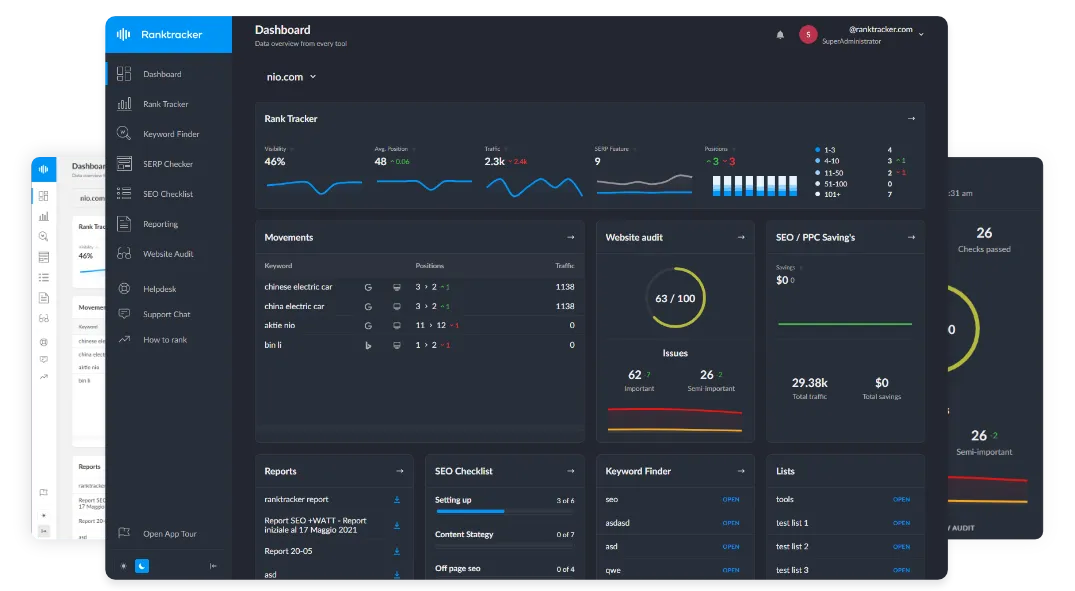
The spend hides in more places than IP rental. Every SERP you pull costs bandwidth, and blocked requests get retried, so failures cost you twice. Frequency multiplies all of it. Moving from weekly checks to daily keyword rank tracking grows request volume sevenfold, and one term tracked on desktop and mobile across three cities is six checks, not one. Managed platforms like Ranktracker's rank tracker fold that stack into the subscription, a number worth comparing once you've priced the DIY route.
Per-IP vs per-GB pricing models
Two billing models dominate the proxy market. Datacenter proxies bill per IP per month, roughly $1.00 to $2.50 per address according to IPRoyal's 2026 pricing research, usually with unmetered or generous bandwidth. Cost stays flat: 100 IPs cost the same whether you push 50,000 checks through them or 500,000, provided you stay under block thresholds. Residential proxies bill per gigabyte, roughly $4 to $15 per GB in the same IPRoyal data, so cost floats with usage. Every retry costs money, and so does every extra widget Google stuffs into the page.
The split matters beyond rank tracking. Any workload that fetches the same public pages on a schedule leans toward flat per-IP billing, which is why tracking price changes across regions runs on the same economics, and why ecommerce and SEO teams often share infrastructure. Predictable high-volume fetching favors per-IP billing. If volume is low or blocks are brutal, per-GB is the safer buy.
The cost-per-check math
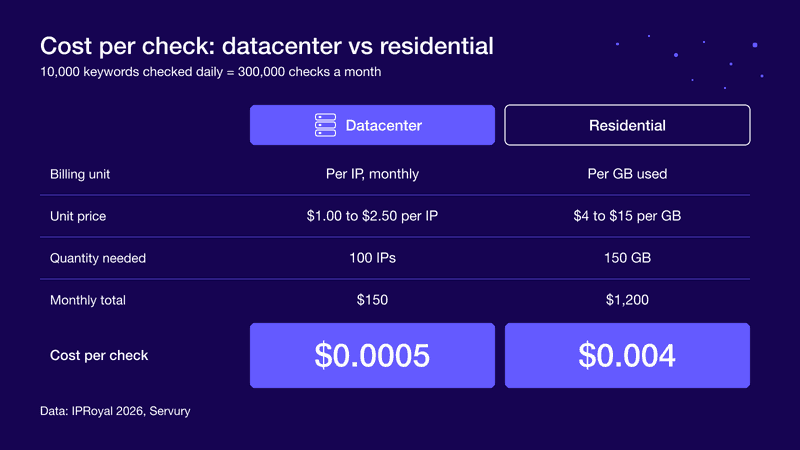
Rank tracking cost gets concrete when you price a single check. Take a real workload: 10,000 keywords, checked daily, desktop, one location. That's 300,000 checks a month.
On datacenter, a rotated IP handles about 100 to 150 SERP requests a day before block rates climb, so you need 70 to 100 addresses. Take 100 IPs at $1.50: $150 a month, or $0.0005 per check.
On residential, the unit is data. A Google results page runs 300 to 700 KB as raw HTML, so call it 0.5 MB per check with retries averaged in. 300,000 checks is roughly 150 GB, and at a mid-range $8 per GB that's $1,200 a month, or $0.004 per check.
| Datacenter | Residential | |
| Billing unit | Per IP, monthly | Per GB used |
| Unit price | $1.00 to $2.50 per IP | $4 to $15 per GB |
| Quantity for 300,000 checks | 100 IPs | 150 GB |
| Monthly total | $150 | $1,200 |
| Cost per check | $0.0005 | $0.004 |
Same workload, eight times the spend. That matches Servury's finding that datacenter runs 5 to 10x cheaper for high-bandwidth workloads, and bulk SERP fetching is exactly that.
Where cheap IPs save the most
Datacenter should carry every check where the SERP doesn't care who's asking. National desktop rankings and the head terms you monitor every morning return the same results to a server in a colo facility as to a home connection, so paying residential rates for them is a waste.
The All-in-One Platform for Effective SEO
Behind every successful business is a strong SEO campaign. But with countless optimization tools and techniques out there to choose from, it can be hard to know where to start. Well, fear no more, cause I've got just the thing to help. Presenting the Ranktracker all-in-one platform for effective SEO
We have finally opened registration to Ranktracker absolutely free!
Create a free accountOr Sign in using your credentials
Volume discounts sharpen the advantage. Because billing is per address, how datacenter proxy pricing scales tells you most of what your monthly bill will look like. Bulk tiers typically cut the per-IP price 20 to 40% once you pass a few hundred addresses, and that compounds fast at agency volume.
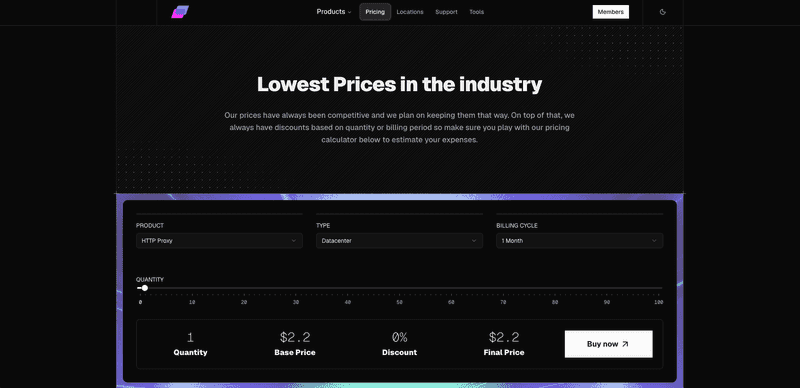
Default every keyword to datacenter and move individual terms to pricier IP types only when the data forces it.
Where paying more is worth it
Some checks fail on cheap IPs no matter how carefully you rotate. Local pack results are the clearest case. Google serves them based on where the searcher appears to be, so tracking a plumber's map pack in Austin needs an IP that looks like it lives in Austin. The best local rank tracking tools lean on residential and mobile IPs for this reason, and mobile-specific SERPs behave the same way when carrier-level accuracy matters.
The quieter case is verticals where datacenter ranges get flagged hard. A cheap IP with a 40% block rate stops being cheap once you count the retries, the wasted bandwidth, and the holes it punches in your data. Sometimes the expensive IP costs less per successful check.
Building a blended budget
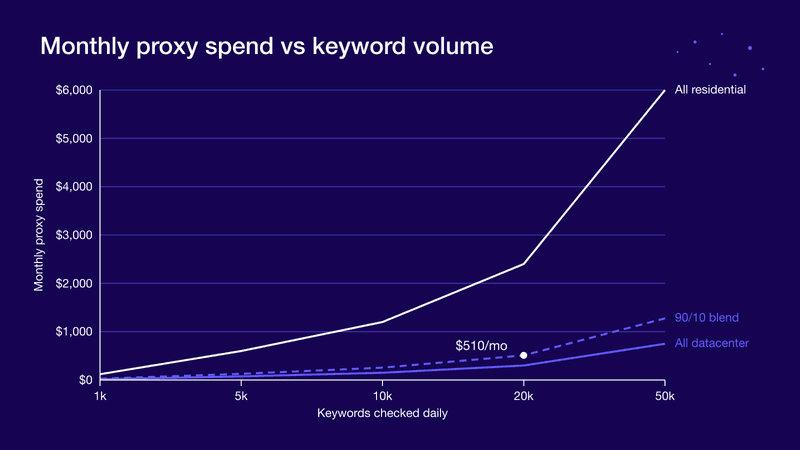
Split the keyword list by what each term needs. A worked example at 20,000 keywords checked daily: put 18,000 national desktop terms on datacenter, where 180 IPs at $1.50 come to $270 a month, and 2,000 local terms on residential, where 60,000 monthly checks at 0.5 MB each is 30 GB, or $240 at $8 per GB. Blended total: about $510 a month. Run entirely through residential, the same workload costs roughly $2,400, so the blend cuts spend by almost 80% and keeps geo accuracy where it matters.
Datacenter spend rises in steps as you add IP blocks, while residential rises with every extra check and every kilobyte Google adds to the page. Model both curves before signing an annual deal.
The bottom line
Proxy spend for rank tracking is a per-keyword decision, and the split you set today won't hold. Keyword lists drift toward local and mobile terms as clients grow, so recheck your datacenter-to-residential ratio quarterly and rebudget when it moves. Then put the blended total next to a managed subscription for the same volume and let the smaller number decide.
FAQ
How many IPs do I need for X keywords?
Work backward from a safe request rate. A rotated datacenter IP handles roughly 100 to 150 SERP checks a day, so divide your daily check count by 120 and add a 25% buffer for burned addresses:
- 1,000 keywords daily: 10 to 12 IPs
- 10,000 keywords daily: 85 to 105 IPs
- 50,000 keywords daily: 420 to 525 IPs
Multiply the check count first if you track several devices or locations, since each combination is its own request. And keep the buffer. Blocks arrive in bursts, and running thin means blank spots in your data on the days a competitor moved.
Can I cut costs by checking some keywords less often?
Yes, and it's the cheapest lever available. Most long-tail rankings barely move day to day, so tier the schedule: money keywords daily, the long tail weekly. An agency tracking 20,000 terms rarely needs daily data on more than the top few thousand, and cutting the rest to weekly removes most of the request volume, so the IP pool and the bandwidth bill shrink with it.
Can I use free proxies for rank tracking?
No. Free IPs are shared by thousands of users, so most arrive pre-flagged and the block rate erases any savings once you count retries and missing data. They also route your traffic through servers you don't control, which is a bad trade for numbers that end up in client reports.
Do SERP APIs replace proxies for bulk keyword checks?
They can, at a different point on the cost curve. A SERP API bundles IPs, retries, and parsing into one per-query fee, so each check costs more than raw datacenter but nothing breaks at 3 a.m. for you to fix. APIs suit teams where engineering time is the scarce resource. Raw proxies win once volume is high and the scraper already exists.