Intro
In the fiercely competitive landscape of digital marketing, capturing a user's attention is only half the battle; keeping them engaged is where the real challenge lies. For SEO professionals and digital marketers operating in saturated B2B or high-stakes B2C markets, metrics like dwell time and bounce rate are critical indicators of a site's health and its potential to rank on search engine results pages (SERPs). While traditional tactics often focus on long-form content or interactive infographics, some of the most innovative retention strategies are currently emerging from the iGaming sector.
One prominent example of this strategy in action can be seen with platforms like Roobet, which have successfully leveraged custom-built, proprietary content to keep users engaged for extended periods. By integrating exclusive mini-games and interactive mechanics directly into their ecosystem, they have fundamentally shifted the user journey from passive browsing to active participation. This approach offers valuable lessons for marketers looking to improve their site's behavioral metrics and, consequently, their organic search performance.
The SEO Value of Dwell Time in Competitive Niches
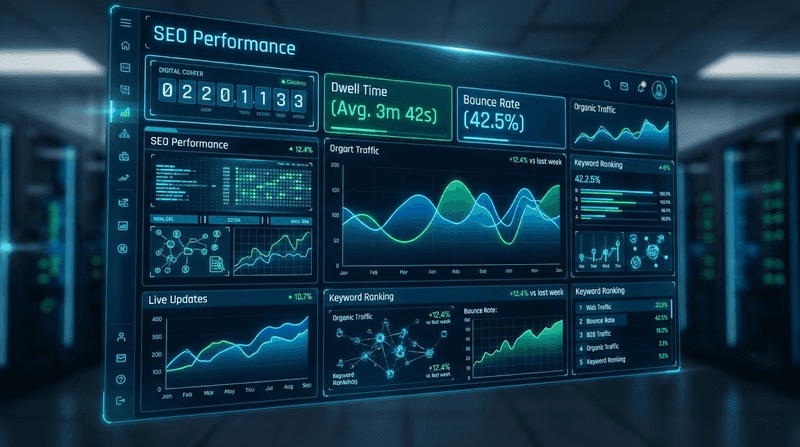
Dwell time—the length of time a visitor spends on a page before returning to the SERPs—is widely considered a crucial, albeit unconfirmed, ranking signal for major search engines. A long dwell time indicates to algorithms that the user found the content valuable, relevant, and engaging, which can positively influence future rankings.
However, achieving high dwell time in competitive niches is notoriously difficult. Users are quick to bounce if a site is slow, difficult to navigate, or fails to immediately deliver on the promise of its title tag. To combat this, innovative brands are moving beyond standard text and video content, investing heavily in interactive elements that require sustained user input.
The Strategy Behind Proprietary Content: A Case Study
When a platform relies solely on third-party content, it risks blending in with countless competitors offering the exact same experience. Developing proprietary content serves a dual purpose: it creates a unique selling proposition (USP) and significantly enhances user retention.
[Brand Image Placeholder: Background with an empty screen header, logo inserted manually from official partner materials, or a real website screenshot in a mockup]
- Creating Exclusivity: By offering content that cannot be found anywhere else on the web, a brand immediately gives users a compelling reason to stay and explore. This exclusivity directly combats the high bounce rates typical of generic affiliate or comparison sites.
- Fostering Community: Proprietary games often feature live chat functions or real-time leaderboards. These social elements transform a solitary activity into a communal experience, encouraging users to linger on the page to interact with others, thereby artificially inflating dwell time organically.
- Micro-Interactions and Engagement: Custom mini-games are designed around rapid micro-interactions. Whether it is adjusting a bet slider, watching a multiplier climb, or interacting with a physics-based mechanic, the user is constantly required to act, preventing them from passively scrolling and ultimately bouncing back to the search results.
Mechanics of Custom Mini-Games: Plinko, Crash, and Beyond
The specific types of custom content that drive these metrics are worth examining. They are not complex, narrative-driven experiences; rather, they are highly optimized, fast-paced loops designed for maximum engagement.
Crash Mechanics and the Psychology of Anticipation
Games based on 'Crash' mechanics involve a multiplier that increases steadily from 1x upwards, with the risk of 'crashing' at any random moment. The user must decide when to cash out. This simple premise taps into the psychology of anticipation and risk assessment. Because a single round can last anywhere from a few seconds to over a minute, and players often watch multiple rounds to identify patterns or simply out of curiosity, the time spent on the page accumulates rapidly without the user even realizing it.
Physics-Based Drops and Visual Engagement
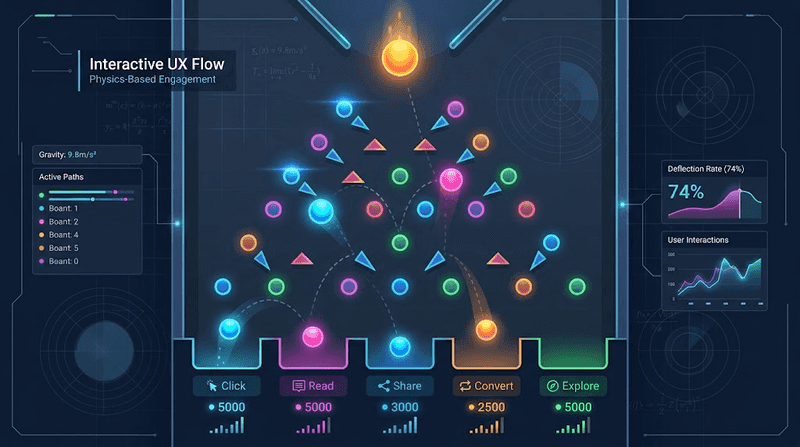
Similarly, games inspired by physical mechanics, such as a ball dropping through a pegged board (often called Plinko), rely heavily on visual engagement. The unpredictability of the physics engine creates a mesmerizing effect. Users are visually locked onto the screen, waiting for the resolution of the drop. From an SEO perspective, this translates to active user sessions and a near-zero bounce rate for that specific URL.
Implementing Interactive Elements in B2B and SaaS
While the specific games mentioned above are tailored to the iGaming sector, the underlying principle—using proprietary, interactive content to boost dwell time—is highly applicable to B2B SaaS and other industries. Marketers can adapt these strategies by implementing:
- Interactive Calculators: Developing custom ROI calculators, SEO audit tools, or pricing estimators that require users to input their own data and play with variables to see different outcomes.
- Gamified Onboarding: Transforming standard product tutorials into interactive, step-by-step challenges that reward users for exploring different features of the software.
- Data Visualization Dashboards: Providing users with interactive dashboards where they can filter, sort, and manipulate industry data, keeping them engaged on the page far longer than a static report would.

Conclusion
In a digital ecosystem where attention is increasingly fragmented, relying on static content is no longer sufficient to guarantee high search rankings or user retention. By analyzing how brands utilize proprietary games and interactive mechanics to captivate their audience, marketers can discover new ways to keep visitors engaged. Whether it is through a highly visual physics engine or a sophisticated B2B calculator, creating content that demands interaction is a proven strategy for boosting dwell time, reducing bounce rates, and ultimately climbing the SERPs.