Intro
For food businesses selling online, the margin on each order can be eroded by a range of small costs. Packaging is easy to overlook because the price of an individual box, bowl, or cup can appear insignificant when considered on its own.
The issue is that packaging does not create cost only when it is purchased. Packaging choices can affect packing labour, the protection of food during delivery, and the additional costs that arise when an order goes wrong. As a result, packaging with a lower unit price is not necessarily the option that helps a business retain more margin.
This article examines the hidden costs behind packaging an online food order, how they affect margins, and what businesses should consider when choosing packaging to reduce total cost rather than simply purchase price. The insights draw on PandaPak's experience supplying foodservice packaging through https://pandapak.ai/ across the UK, serving restaurants, takeaways, delivery kitchens, food trucks and catering operations.
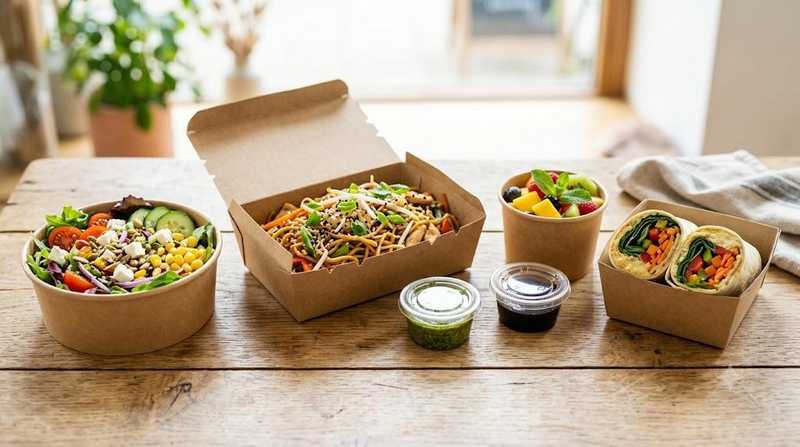
Hidden costs from packaging that can drain profits
Material costs beyond the unit price
A business can increase packaging costs by choosing containers larger than the portion requires, or by adding unnecessary layers or components. It may also pay a premium for higher-specification or more sustainable packaging.
These choices can affect margin in different ways. Oversized formats and unnecessary components create avoidable material costs when they do not provide a corresponding functional benefit. However, higher packaging costs do not automatically mean the business is wasting money. If a higher specification helps protect the food, support brand positioning, or meet a customer priority, the additional spend may create value elsewhere.
The key is therefore to distinguish between avoidable material waste and packaging costs that serve a clear commercial or functional purpose.
Storage and inventory inefficiency
Businesses may purchase packaging in large quantities to secure a better price, maintain multiple SKUs for different menu items, or choose bulky formats that are difficult to stack without considering their available storage capacity.
The All-in-One Platform for Effective SEO
Behind every successful business is a strong SEO campaign. But with countless optimization tools and techniques out there to choose from, it can be hard to know where to start. Well, fear no more, cause I've got just the thing to help. Presenting the Ranktracker all-in-one platform for effective SEO
We have finally opened registration to Ranktracker absolutely free!
Create a free accountOr Sign in using your credentials
Bulky or excess packaging takes up more storage space than necessary while tying up cash in inventory that has not yet generated value. That space and capital could otherwise be used for inventory with greater operational or commercial value.
Packaging can also deteriorate if it is stored for too long or under unsuitable conditions. Paper materials may warp, become less resistant to grease, or no longer be suitable for their intended food-contact application. In that situation, part of the original purchasing cost is lost before the packaging has been used for an order.
Packing labour
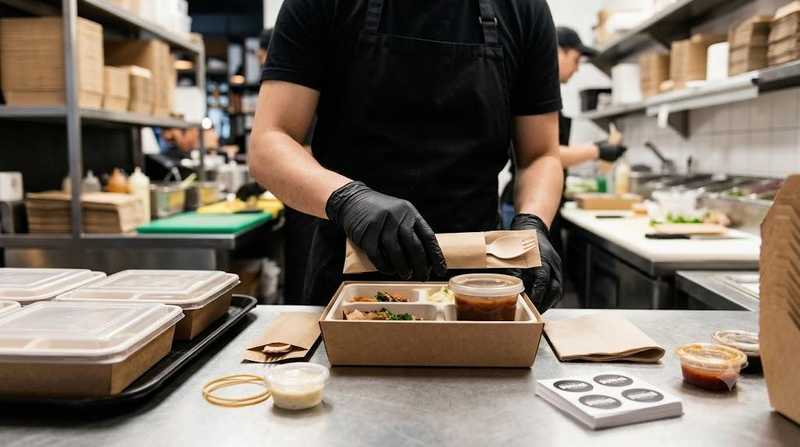
During food preparation, staff may need to complete additional steps such as placing an absorbent pad into a tray or adding extra materials or layers to secure the packaging for an order.
Each additional step may appear minor, but multiplied across daily or weekly order volumes, the extra time can become a meaningful labour cost.
Handling additional materials or layers also creates more points of contact with the food, which can increase the hygiene controls that need to be maintained during the packing process.
Food loss, refunds, and delivery-related failure
During delivery, packaging can fail mechanically through leakage, crushing, or movement, or functionally when it does not maintain the heat or moisture conditions needed to preserve food quality.
Food that is spilled, damaged, or degraded generally cannot be reused, creating an immediate loss of ingredient cost on that order.
The All-in-One Platform for Effective SEO
Behind every successful business is a strong SEO campaign. But with countless optimization tools and techniques out there to choose from, it can be hard to know where to start. Well, fear no more, cause I've got just the thing to help. Presenting the Ranktracker all-in-one platform for effective SEO
We have finally opened registration to Ranktracker absolutely free!
Create a free accountOr Sign in using your credentials
When an order does not arrive in an acceptable condition, food delivery platforms may charge the restaurant for a refund or require the order to be remade when the issue is considered to be within the restaurant's control. A small saving on packaging at the purchasing stage can therefore become a much higher cost when a delivery failure occurs.
These hidden costs point to a broader sourcing issue: packaging decisions need to account for the food application, specification and order volume together, rather than treating the unit price as the main cost consideration.
With experience supplying foodservice packaging across different applications and order requirements, PandaPak understands where these additional costs can arise and addresses them through a full range of disposable food packaging. The range covers different cups, boxes, trays and containers, giving restaurants more flexibility to match the packaging format and specification to each dish without adding unnecessary components. Secure locking rims on lids help reduce the risk of leaks during transit, limiting the potential for product loss or replacement costs. Standard packaging lines are also available without a fixed minimum order quantity, making it easier to order according to actual demand rather than holding excess stock simply to meet an MOQ.
How to choose packaging that lowers your total cost
The starting point is choosing the right specification for the food. Dry or relatively stable foods can use standard packaging, while hot foods with sauces or liquids may require packaging with greater heat resistance and resistance to leakage. This avoids both extremes: using packaging that is under-specified and creates the failures described above, or using packaging with specifications that the food does not require and paying for unnecessary material.
For foods containing sauces or liquids, the lid or closure is particularly important. The ability to secure the lid directly affects whether the contents remain contained during delivery, linking the packaging choice directly to the risk of food loss, refunds, and remade orders.
Container size should also match the actual portion. Oversized packaging uses more material than necessary and takes up more storage space, connecting the choice directly to both material cost and inventory efficiency.
Standardising packaging formats and SKUs can address several cost channels at once. Fewer packaging variations can reduce packing time and simplify storage, while consistent purchasing volumes can provide greater buying leverage.
The All-in-One Platform for Effective SEO
Behind every successful business is a strong SEO campaign. But with countless optimization tools and techniques out there to choose from, it can be hard to know where to start. Well, fear no more, cause I've got just the thing to help. Presenting the Ranktracker all-in-one platform for effective SEO
We have finally opened registration to Ranktracker absolutely free!
Create a free accountOr Sign in using your credentials
The most useful approach is to evaluate packaging by total cost rather than purchase price. A packaging option with a higher unit price may still be cheaper overall if it reduces enough of the costs associated with labour, waste, inventory loss and delivery failures. This reinforces the central principle of the article: unit price is only the starting point.
A simple formula for comparing two packaging options is:
Actual packaging cost per order = purchase price + packing labour + waste/loss + failure costs
This can be used to compare packaging options based on their overall financial impact rather than their unit price alone.
Conclusion
Packaging will rarely be the largest line on a food business's cost sheet, but it is one of the few costs that sits at the intersection of margin, customer experience, and long-term brand perception. A container that fails costs more than its price tag once refunds, wasted food, and lost repeat orders are counted, while a container matched properly to the food it carries protects the margin that online ordering is meant to deliver in the first place. Reviewing packaging as a total cost rather than a unit price is a small but measurable place to start protecting that margin.