Intro
Paid media can get messy fast.
One platform says your campaigns are working. Another shows cheap clicks. Your analytics tool shows people dropping off after the landing page. Then your CRM brings the final reality check: many of those leads never became real customers.
This is usually where CAC starts creeping up.
The problem is not always your ads. It could be the offer. It could be the landing page. It could be the audience, the follow-up, or the way each channel gets credit.
Full-funnel campaign measurement helps you connect these pieces. It shows how people move from first impression to final sale, where budget leaks, and which campaigns create customers at a cost your business can sustain.
In this guide, we’ll break down eight practical ways full-funnel measurement helps brands reduce CAC, clean up paid media waste, and scale with more confidence.
What Full-Funnel Campaign Measurement Actually Means
Full-funnel campaign measurement tracks performance across awareness, consideration, conversion, and post-conversion stages. Instead of judging every channel in isolation, it shows how each campaign supports the customer journey.
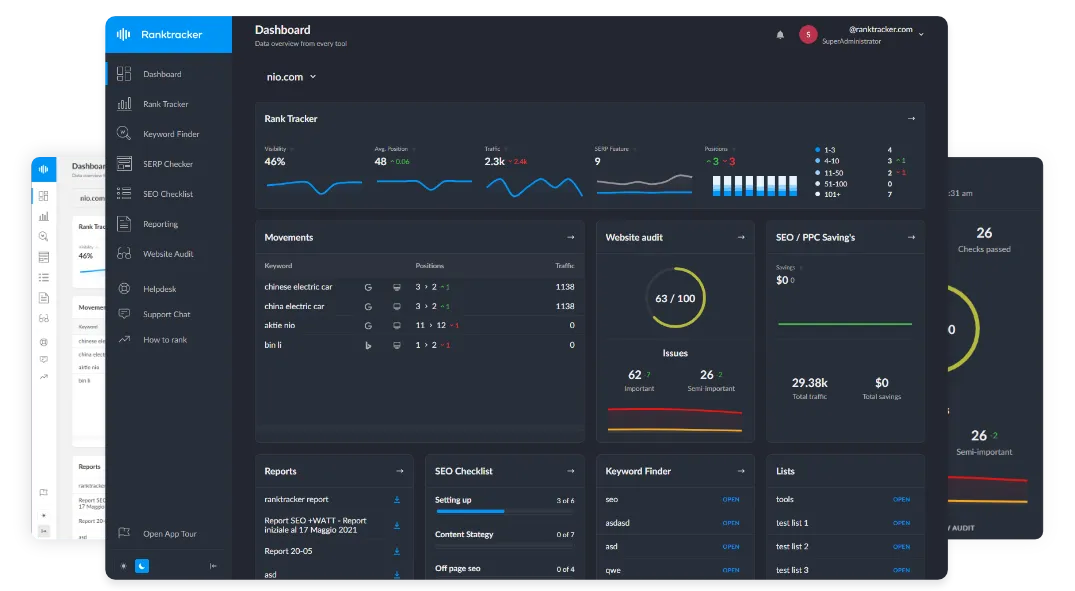
The All-in-One Platform for Effective SEO
Behind every successful business is a strong SEO campaign. But with countless optimization tools and techniques out there to choose from, it can be hard to know where to start. Well, fear no more, cause I've got just the thing to help. Presenting the Ranktracker all-in-one platform for effective SEO
We have finally opened registration to Ranktracker absolutely free!
Create a free accountOr Sign in using your credentials
For paid media teams, this matters because CAC depends on more than ad cost. Low CPC can still lead to expensive customers when the post-click path, lead quality, or sales handoff is weak.
A full-funnel view connects ad platform data, website analytics, CRM data, and revenue outcomes. It helps you see which campaigns create demand, which ones capture intent, and which parts of the journey need attention before you scale.
How Full-Funnel Measurement Lowers CAC Across Paid Media: 8 Key Ways
The eight points below show how full-funnel measurement can make the biggest difference.
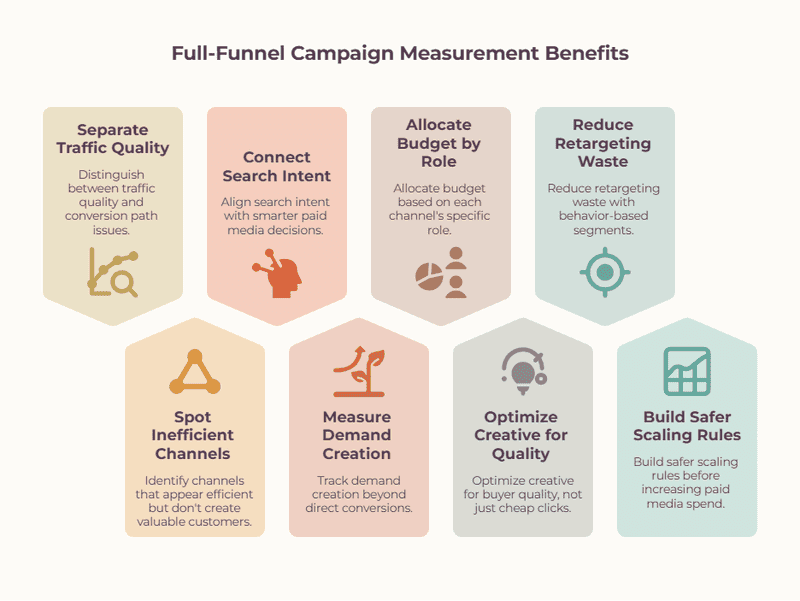
1. Separate Traffic Quality Issues from Conversion Path Problems
A campaign can look healthy on the surface and still create expensive customers. You might see a low CPC, strong CTR, and plenty of landing page visits. But if people leave before starting a form, bounce on mobile, or fail to match your ideal customer profile, the campaign will still push CAC higher.
Full-funnel measurement shows where the drop-off happens after the click.
This helps you avoid blaming the ad when the real issue sits somewhere else, such as the offer, page speed, message match, form length, or follow-up process.
Page speed is a good example. Google notes that 53% of visits are likely to be abandoned if pages take longer than 3 seconds to load. So if your paid traffic lands on a slow mobile page, your CAC problem may begin before visitors even see the offer.
The All-in-One Platform for Effective SEO
Behind every successful business is a strong SEO campaign. But with countless optimization tools and techniques out there to choose from, it can be hard to know where to start. Well, fear no more, cause I've got just the thing to help. Presenting the Ranktracker all-in-one platform for effective SEO
We have finally opened registration to Ranktracker absolutely free!
Create a free accountOr Sign in using your credentials
Start with a simple drop-off check:
- Track ad click to landing page view.
- Track landing page view to form start.
- Track form start to completed lead.
- Compare conversion rate by device (desktop vs. mobile).
- Review page speed and page issues before increasing spend.
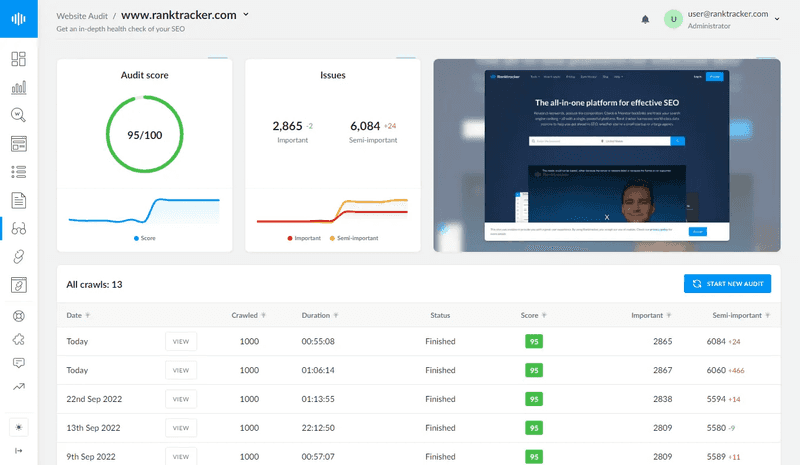
Pro tip: Before increasing spend, run your landing page through a tool like Ranktracker’s Web Audit. It can help you check technical and page-level issues that may be hurting conversions.
2. Spot Channels That Only Look Efficient in Platform Reports
Some channels look efficient because they capture buyers who were already close to converting. Branded search, retargeting, and direct-response campaigns can show strong CPAs because the demand already exists.
Other channels may look expensive because they introduce new people to the brand earlier in the journey. If you judge every channel by last-click CPA, you may cut campaigns that help create future customers.
Full-funnel measurement fixes this by giving each channel a clear role.
It helps you compare first-touch, assisted, and last-touch performance, then connect that data to qualified leads, customer value, and payback period.
Remember: a cheap lead source does not always create low-cost customers.
You can use a simple channel check:
- Compare first-touch, assisted, and last-touch performance.
- Track CAC by channel and funnel stage.
- Review qualified leads instead of total leads alone.
- Compare acquisition cost with customer value and payback period.
3. Connect Search Intent with Smarter Paid Media Decisions
Search behavior tells you what people want, how close they are to buying, and how competitive a category is. Google says it sees more than 5 trillion searches each year, which gives marketers a huge pool of intent signals to learn from.
Full-funnel measurement helps you separate awareness keywords from comparison and purchase-intent keywords.
A broad educational search may be better served with content or retargeting, while a high-intent search may deserve stronger paid coverage.
This also helps you avoid overspending on keywords that bring clicks but fail to create qualified leads.
Tools like Ranktracker’s Keyword Finder can help you validate keyword ideas, traffic metrics, and trends before you commit more paid budget.
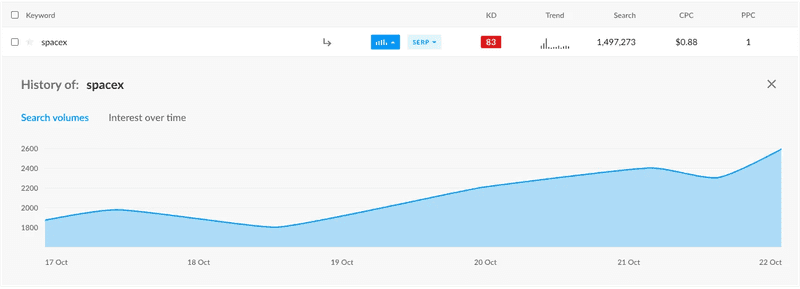
A simple keyword check can help:
- Group keywords by funnel stage.
- Compare branded and non-branded demand.
- Track which paid search terms create qualified leads.
- Use organic visibility data to decide where paid coverage is still needed.
Read Next: Optimizing Your Content For Search Intent
4. Measure Demand Creation Beyond Direct Conversions
Some campaigns influence buyers before they are ready to click “buy” or “book a demo.” Awareness campaigns may not convert right away, but they can increase branded search, direct visits, returning visitors, and retargeting performance later.
The problem is that platform dashboards rarely show this journey clearly. If you only review direct conversions, demand creation campaigns can look weak even when they are helping future buyers move closer to action.
Full-funnel measurement helps you track those signals. It shows which campaigns create interest, which ones capture intent, and which ones support the final conversion.
You can track demand creation with a few simple checks:
- Monitor branded search lift after major paid campaigns.
- Track direct traffic and returning visitors.
- Compare retargeting performance before and after awareness campaigns.
- Review assisted conversion paths.
5. Allocate Budget by Channel Role
Every paid channel has a different job. Paid social may introduce people to your brand. Paid search may capture active intent. Display may support recall. Retargeting may bring interested visitors back.
CAC gets harder to control when every channel is judged by the same KPI. If everything is measured by platform CPA, budget can move toward campaigns that look efficient on paper but do not create better customers.
Full-funnel measurement gives each channel a clearer role. It helps you compare spend against funnel movement, lead quality, and revenue outcomes.
This is where marketing analytics measurement becomes useful. It connects channel performance with what the business actually needs from each stage.
Before shifting spend, ask:
- What role should this channel play?
- Which KPI matches that role?
- Is the channel moving people closer to conversion?
- Does the platform CPA match lead quality and revenue?
- Are we scaling because the channel creates value, or because the dashboard looks good?
6. Optimize Creative for Buyer Quality Instead of Cheap Clicks
Creative testing usually starts with CTR, CPC, thumb-stop rate, or video views. These metrics matter, but they do not tell you if the ad is attracting the right buyers.
This is a costly blind spot. Kantar and WARC research found that top-tier creative can deliver 4.7 times higher returns than average content.
So creative quality should be measured past the click, where lead quality and revenue become clear.
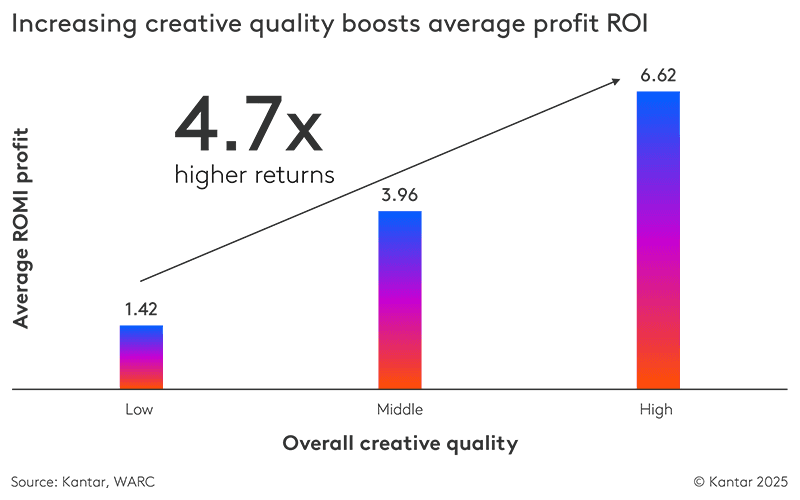
Full-funnel measurement shows which hooks, messages, offers, and formats lead to qualified leads and real customers.
One ad may drive cheaper clicks. Another may bring fewer clicks but stronger opportunities. The second one may be doing more to reduce CAC.
To make creative testing more useful:
- Tag ads by message angle.
- Compare creative themes by lead quality.
- Track post-click behavior for each creative.
- Feed sales or CRM insights back into creative planning.
7. Reduce Retargeting Waste with Behavior-Based Segments
Retargeting gets expensive when every visitor is treated the same. Someone who bounced after 2 seconds should not receive the same budget as someone who viewed pricing, started checkout, or returned to the site twice.
Baymard Institute’s 2025 research puts the average cart abandonment rate at 70.19%. This shows how many high-intent visitors still leave before buying. Smarter segmentation helps you spend more carefully on the visitors most likely to come back and convert.
Full-funnel measurement helps you group audiences by behavior and intent. A pricing page visitor may need proof, comparison, or an offer. A blog visitor may need more education before seeing a sales-focused ad.
To reduce retargeting waste:
- Build audiences by intent level.
- Exclude recent converters.
- Suppress poor-fit leads and weak segments.
- Match creative to the user’s last meaningful action.
- Track frequency, fatigue, and conversion decay.
8. Build Safer Scaling Rules before Increasing Spend
Scaling paid media should mean more than increasing the budget on the campaign with the lowest CPA. A campaign may look efficient on the platform, but still create weak leads, slow payback, or poor-fit customers.
Full-funnel measurement gives teams clearer rules for when to scale, pause, or fix a campaign. It connects spend with conversion rate, qualified lead rate, CAC, revenue, and payback period. That makes budget decisions easier to explain to leadership.
The All-in-One Platform for Effective SEO
Behind every successful business is a strong SEO campaign. But with countless optimization tools and techniques out there to choose from, it can be hard to know where to start. Well, fear no more, cause I've got just the thing to help. Presenting the Ranktracker all-in-one platform for effective SEO
We have finally opened registration to Ranktracker absolutely free!
Create a free accountOr Sign in using your credentials
Before increasing spend, you can set a few simple rules:
- Define a target CAC range.
- Review conversion rate and qualified lead rate together.
- Increase budgets when funnel signals stay healthy.
- Pause scaling when lead quality drops.
- Watch the payback period before committing to more spend.
- Run weekly measurement reviews before major budget changes.
Strong scaling rules work best when creative, media, analytics, and commercial teams are looking at the same signals. This can be hard to manage in-house, particularly when reporting is split across platforms and teams.
If you need help connecting those pieces, you can partner with experts like Fieldtrip to turn campaign activity into clearer growth decisions.
A Simple Full-Funnel Measurement Framework for Paid Media Teams
Once each channel has a clear role, the next step is choosing the right metrics for each stage. This keeps your reporting focused and helps you spot where CAC is rising before budget gets wasted.
| Funnel stage | Campaign role | What to measure | CAC risk to watch |
| Awareness | Create demand | Reach, engaged visits, branded search lift | Cutting campaigns too early |
| Consideration | Build trust | Returning visitors, content engagement, comparison page visits | Measuring only direct conversions |
| Conversion | Capture demand | Leads, purchases, demos, CPA, conversion rate | Scaling poor-quality leads |
| Revenue | Prove business value | Qualified leads, pipeline, customer value, payback period | Optimizing for cheap leads instead of customers |
You do not need to track every metric in every report. Focus on the few signals that explain where CAC is rising, which campaigns deserve more spend, and what needs to change before you scale.
Final Thoughts
Paid media becomes easier to scale when your measurement shows the full path from attention to revenue. Clicks, conversions, and platform CPA still matter, but they need context from landing pages, search intent, lead quality, and customer value.
Full-funnel campaign measurement gives you that context. It helps you find weak points, protect your budget, and scale the campaigns that bring in customers your business can profitably keep.
Before you increase spend, make sure your reporting can answer one simple question: which campaigns are creating the right customers at the right cost?