Intro
Most website owners believe they need to publish new blog posts every week to grow traffic. This is not true. Many high-traffic websites grow their visitor numbers by improving what they already have. You can increase traffic by updating old pages, fixing link structures, claiming business listings, and reusing content across platforms.
This article covers four proven methods to grow traffic without writing a single new article. Each method uses assets you already own. You will see real examples from businesses that applied these strategies and got measurable results.
How to Grow Traffic by Adding Internal Links to High-Value Pages
Internal links connect one page on your website to another page on the same website. Search engines use these links to discover pages, understand site structure, and distribute ranking power. Many websites have strong pages that receive no internal links. These pages lose ranking potential because search engines cannot find them easily.
Start by identifying your high-value pages. Open Google Search Console and go to the Performance report. Sort pages by impressions. Pages with high impressions but low clicks often sit on page two of search results. These pages need a small push to reach page one. Internal links provide that push.
Next, find related pages on your site that already rank well or receive steady traffic. Add contextual links from these strong pages to your high-value targets. Use descriptive anchor text that matches the target page topic. Avoid generic phrases like "click here" or "read more." Instead, use specific terms that describe the linked content.
Real example: Siege Media, a content marketing agency, ran an internal linking audit on a client site in 2022. They added internal links from 15 existing blog posts to a single underperforming guide. That guide moved from position 14 to position 5 within six weeks. Organic traffic to that page increased by 74% without any content changes.
How to execute this in practice:
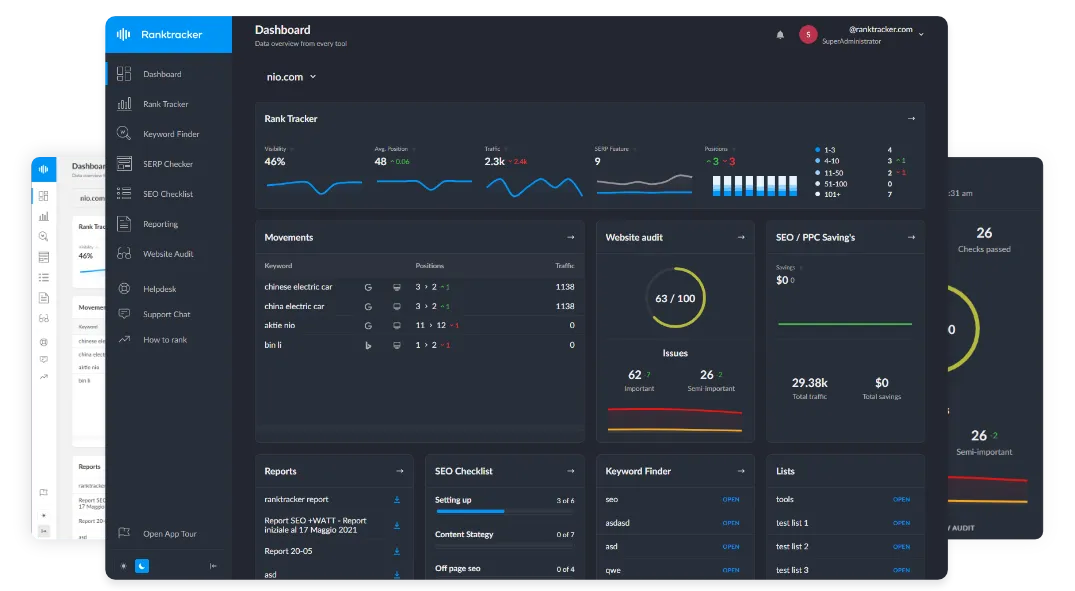
The All-in-One Platform for Effective SEO
Behind every successful business is a strong SEO campaign. But with countless optimization tools and techniques out there to choose from, it can be hard to know where to start. Well, fear no more, cause I've got just the thing to help. Presenting the Ranktracker all-in-one platform for effective SEO
We have finally opened registration to Ranktracker absolutely free!
Create a free accountOr Sign in using your credentials
Use a tool like Screaming Frog or Ahrefs Site Audit to crawl your website. Export a list of all pages and their internal link counts. Pages with fewer than three internal links pointing to them are candidates for improvement. Then search your own site using Google with the query site:yourwebsite.com "keyword" to find pages where you can naturally insert a link.
HubSpot applied this method at scale in 2020. Their team identified 50 blog posts with declining traffic. Instead of rewriting the posts, they added 5 to 10 internal links to each one from other high-authority pages on their domain. The result was a 40% average increase in organic traffic across those 50 posts within three months.
Another useful tactic is to add internal links from your homepage or main navigation pages. These pages carry the most link equity on most websites. A single link from your homepage to a deep page can significantly improve that page's crawl priority and ranking position.
Keep your anchor text varied. If every internal link uses the exact same phrase, search engines may view it as manipulative. Use natural variations that still describe the target page content accurately.
How to Increase Local Traffic Through Business Profiles and Directories
Local search drives a large percentage of website visits for service businesses, restaurants, retail stores, and professional firms. Google Business Profile (formerly Google My Business) is the most important local listing. A complete and optimized profile can appear in the local pack, maps results, and knowledge panels without any content creation on your website.
Start by claiming or verifying your Google Business Profile. Fill in every field: business name, address, phone number, hours, categories, services, and attributes. Add at least 10 high-quality photos. Google reports that businesses with photos receive 42% more direction requests and 35% more click-throughs to their websites than those without.
Write a clear business description using keywords your customers search for. If you run a plumbing company in Denver, include terms like "emergency plumber Denver" and "water heater repair" in your description. Keep the language natural and factual.
The All-in-One Platform for Effective SEO
Behind every successful business is a strong SEO campaign. But with countless optimization tools and techniques out there to choose from, it can be hard to know where to start. Well, fear no more, cause I've got just the thing to help. Presenting the Ranktracker all-in-one platform for effective SEO
We have finally opened registration to Ranktracker absolutely free!
Create a free accountOr Sign in using your credentials
Reviews play a major role in local rankings. Ask satisfied customers to leave reviews on your Google profile. Respond to every review, both positive and negative. Google's algorithm considers review quantity, quality, and recency when ranking local results.
Beyond Google, submit your business to relevant directories. Yelp, Bing Places, Apple Maps, Yellow Pages, and industry-specific directories all send referral traffic. Consistency matters. Your business name, address, and phone number must match exactly across all listings. Inconsistent information confuses search engines and reduces trust signals.
Real example: A dental practice in Austin, Texas, optimized its Google Business Profile in early 2023. The practice added 25 new photos, responded to all 80 pending reviews, and updated service categories. Within 90 days, their profile views increased by 60%, and website clicks from Google Maps grew by 45%. They published zero new pages during this period.
Some website owners also use a traffic bot to test how changes in visitor behavior metrics correlate with search visibility during local optimization experiments. While organic strategies remain the foundation of sustainable growth, understanding traffic patterns helps refine your approach.
Directory listings also create backlinks to your website. Many directories have high domain authority. A listing on Yelp or the Better Business Bureau passes link equity to your site. This strengthens your domain authority without any content production.
Additional directories to consider: Nextdoor for neighborhood businesses, TripAdvisor for hospitality, Healthgrades for medical professionals, Avvo for lawyers, and Houzz for home service providers. Each directory serves a specific audience that actively searches for services.
Update your listings quarterly. Add new photos, respond to recent reviews, and correct any outdated information. Fresh activity on your profiles signals to search engines that your business is active and relevant.
How to Turn Existing Backlinks Into More Traffic
Backlinks remain one of the strongest ranking signals for search engines. Most websites already have backlinks they do not use effectively. Some of these links point to deleted pages, old URLs, or low-value content. Redirecting and reclaiming these links can recover lost traffic and boost rankings for important pages.
Start with a backlink audit. Use Ahrefs, Moz, or SEMrush to export all backlinks pointing to your domain. Filter the list to find links pointing to 404 pages (broken links). These are lost opportunities. Every broken backlink wastes the ranking power that the linking site passes to you.
Set up 301 redirects from broken URLs to relevant live pages on your site. A 301 redirect tells search engines that the old page has permanently moved to a new location. The new page receives most of the link equity from the original backlink. This is one of the fastest ways to recover lost traffic.
Real example: Ahrefs published a case study in 2021 about their own backlink reclamation process. They found 845 backlinks pointing to pages that no longer existed on their site. After setting up redirects to relevant live content, they recovered an estimated 14,000 monthly visits within two months. No new content was needed.
Another strategy is to find unlinked brand mentions. People sometimes write about your brand, product, or service without linking to your website. Use tools like Google Alerts, Mention, or BuzzSumo to find these mentions. Then contact the author or site owner and ask them to add a link. Most publishers will add the link because it improves their content for readers.
How to write an effective outreach email:
Keep it short. Mention the specific article where your brand appears. Thank the author for the mention. Politely ask if they can add a link to your website. Include the exact URL you want them to link to. Avoid long introductions or sales pitches. A three-sentence email converts better than a long one.
Brian Dean of Backlinko used this method to build links for his SEO guides. He identified over 200 unlinked mentions of his brand across blogs and news sites. His team sent brief outreach emails, and 15% of recipients added the link. This generated dozens of new backlinks and a measurable increase in referral traffic.
You should also check for backlinks pointing to outdated content that still exists on your site. If a page has strong backlinks but poor content, update the content to match current search intent. This preserves the backlink value while improving the page's ability to rank and convert visitors.
Monitor your backlink profile monthly. New broken links appear as websites restructure their pages. Regular audits prevent link equity from leaking away over time.
How to Drive More Traffic From Social Media Without New Posts
Social media platforms offer multiple ways to drive traffic from content you have already published. Most businesses post once and never promote that content again. This approach wastes the long-term value of good content. Reposting, resharing, and repurposing old content can generate consistent traffic without any new creation.
Start by identifying your best-performing social posts from the past 12 months. Check analytics on each platform. Look for posts that received high engagement, clicks, or shares. These posts proved their value with your audience. Share them again with a fresh caption or a different visual. Most of your followers did not see the original post due to algorithm limitations.
Twitter (now X) shows posts to roughly 2% to 5% of followers at the time of posting. Instagram reach has declined to approximately 9% for most accounts. Facebook organic reach sits near 5% for business pages. This means 90% or more of your audience missed your original post. Resharing is not repetitive. It is smart distribution.
Real example: Buffer, the social media management company, tested a resharing strategy in 2019. They reposted their top 20 blog post links across Twitter and Facebook over a 60-day period. Each repost used a different headline and image. The result was a 686% increase in click-through traffic compared to posting each link only once. They created zero new pieces of content during the test.
Repurpose blog content into platform-native formats. Turn a blog post into a Twitter thread. Convert key statistics into Instagram carousel slides. Extract quotes and turn them into LinkedIn text posts. Each format reaches a different segment of your audience and drives traffic back to the original page.
Pinterest deserves special attention for traffic generation. Unlike other platforms, Pinterest functions as a visual search engine. Pins have a long lifespan. A pin posted today can drive traffic for months or years. Create multiple pin images for your existing blog posts and link each pin back to the original article.
Practical steps for Pinterest traffic:
Design two to five pin images per blog post using Canva or a similar tool. Use vertical images with a 2:3 ratio (1000 x 1500 pixels). Add clear text overlays that describe the content. Pin each image to relevant boards with keyword-rich descriptions. Whole Foods Market uses this approach to drive significant traffic to their recipe pages without creating new recipes.
Update your social media bios and profile links regularly. Many businesses set their bio link once and forget about it. Change it to promote your best-converting pages. Use a link-in-bio tool like Linktree to feature multiple pages simultaneously.
Join relevant Facebook Groups, LinkedIn Groups, and Reddit communities. Share your existing content when someone asks a question your article answers. This drives highly targeted traffic because the reader has already expressed interest in the topic.
Reddit is particularly important for driving traffic through AI search engine citations and brand mentions. AI search engines tend to cite Reddit content, so being active in communities is important to improve AI visibility.
Dedicated AI optimization tools, like HubSpot AEO, can help here: they spot brand-specific Reddit citation trends (along with other channels) and offer personalized suggestions to build up a Reddit presence and boost AI visibility.
Email newsletters also count as a distribution channel. Feature older content in your newsletters. Curate "best of" roundups or highlight articles that relate to current trends. Your email subscribers may have missed these posts the first time.
The All-in-One Platform for Effective SEO
Behind every successful business is a strong SEO campaign. But with countless optimization tools and techniques out there to choose from, it can be hard to know where to start. Well, fear no more, cause I've got just the thing to help. Presenting the Ranktracker all-in-one platform for effective SEO
We have finally opened registration to Ranktracker absolutely free!
Create a free accountOr Sign in using your credentials
Final practical tips for maximum impact:
Schedule reshares at different times and days. Your audience uses social media at various hours. A post shared at 9 AM on Tuesday reaches different people than one shared at 7 PM on Thursday. Test different posting times to find your best windows.
Track UTM parameters on every shared link. This lets you measure exactly how much traffic each social post generates. Google Analytics shows this data under Acquisition, then Campaigns. Use this data to double down on what works and stop what does not.
These four strategies prove that traffic growth does not require constant content creation. Internal linking, local profile optimization, backlink management, and social media redistribution can deliver significant results using the assets you already have. Audit your current resources, apply these methods systematically, and measure results monthly. Growth is available without a single new page.