
Intro

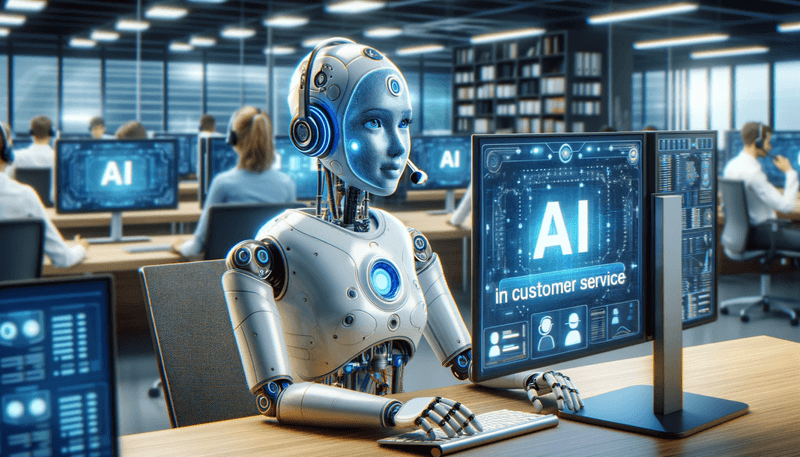
The year 2026 marks a decisive shift in how AI is changing customer service across every stage of the support journey. Brands face rising expectations for precision, speed, personalization, and continuity, and those expectations reshape service architecture at a rapid pace. Advances in automation and language intelligence transform support workflows that once depended on labor-intensive processes. AI in customer service now operates as a core engine rather than an add-on feature.
Customers demand immediacy and clarity, and AI-powered systems deliver that experience without breaking stride. This evolution shows how AI is changing customer service through uninterrupted assistance, accurate classification, predictive responses, and context-rich interactions. A familiar idiom captures the reality of this transformation: actions speak louder than words. A witty line fits the moment as well: if AI had a résumé, “relentless multitasker” would sit confidently at the top.
A single reference illustrates this shift clearly. One unified platform, text.com, demonstrates how intelligent agents, automation, and conversational flows can reshape tasks that once required separate tools and fragmented workflows.
Acceleration of Intelligent Agents
Agentic models represent one of the clearest examples of how AI is changing customer service. These systems analyze context, execute steps, trigger workflows, and escalate cases to human specialists when complexity requires deeper reasoning. They update their internal logic continuously, adapt to new patterns, and refine accuracy with every interaction.
This shift eliminates the limitations of script-driven bots. Autonomous resolution becomes standard for order issues, billing changes, subscription updates, and account actions. Increased consistency, lower handling times, and reduced ticket load emerge as predictable outcomes once intelligent agents take over routine tasks.
Unified Conversations Across Channels
Customers move between chat, email, voice, mobile messages, and embedded widgets with little patience for repetition. Fragmented contexts slow teams down and frustrate customers. AI in customer service solves this bottleneck through unified conversational visibility.
AI systems present a consolidated record of past messages, intent signals, sentiment patterns, and customer details across all channels. This structure demonstrates how AI is changing customer service with synchronized information flow and uninterrupted transitions between touchpoints. Conversations progress without duplication, misrouting, or unnecessary verification steps.
Predictive and Proactive Engagement
Predictive logic defines a major breakthrough in how AI is changing customer service. Advanced models detect early patterns that indicate churn risk, recurring confusion, operational delays, or failed customer tasks.
The All-in-One Platform for Effective SEO
Behind every successful business is a strong SEO campaign. But with countless optimization tools and techniques out there to choose from, it can be hard to know where to start. Well, fear no more, cause I've got just the thing to help. Presenting the Ranktracker all-in-one platform for effective SEO
We have finally opened registration to Ranktracker absolutely free!
Create a free accountOr Sign in using your credentials
The system pushes proactive updates, guides users through next steps, or escalates issues before frustration escalates. This shift strengthens customer trust, reduces complaint volume, and improves transparency across digital journeys. Proactive service moves from enhancement to expectation as more brands adopt anticipatory workflows.
Human Specialists Supported by AI Systems
Human expertise remains essential for sensitive, complex, or nuanced issues. AI complements that expertise by handling repetitive actions, retrieving details instantly, and guiding customers through initial steps. Specialists enter conversations with full context, which eliminates unnecessary backtracking.
This hybrid model highlights how AI is changing customer service by amplifying human effectiveness instead of replacing it. Emotional cases, bespoke solutions, and creative problem-solving benefit from human attention, while AI absorbs the operational strain.
Continuous Quality Monitoring and Operational Insight
AI evaluates every conversation for sentiment, topic frequency, anomalies, compliance issues, and performance patterns. Leaders gain real-time visibility into service quality and operational constraints.
Such insight illustrates how AI is changing customer service at the management level. Instead of relying on sampled reviews or delayed reporting, decision-makers respond to live data. Coaching becomes more precise. Resource planning becomes more predictive. Improvement cycles accelerate.
Efficiency, Cost Reduction, and Scale
AI interactions reduce operational costs by resolving large portions of service volume automatically. Classification, summarization, routing, and multi-step processes shift from manual handling to automated execution.
This expansion reflects how AI is changing customer service from an efficiency standpoint. Wait times fall, queues shrink, and customers receive accurate answers faster. Brands scale operations without proportional increases in staffing or infrastructure.
Emotional Recognition and Adaptive Engagement
Sentiment-aware systems detect tone, urgency, frustration levels, and conversational dynamics. They adjust responses accordingly, escalate sensitive cases to human specialists, and prevent stressful moments from turning into full complaints.
This capability underscores how AI is changing customer service through adaptive communication. Customers feel understood even when automated systems handle the majority of interactions. Escalations become smoother because the system identifies emotional triggers instantly.
Self-Service With Real Depth
Self-service no longer means static FAQs—AI knowledge bases like DocsBot when used for Customer Support can instantly answer customer questions using your documentation and past support content. This advancement shows how AI is changing customer service by giving customers the power to solve complex issues without waiting in queues. Automated self-service reduces ticket volume, speeds resolution, and raises overall satisfaction. Reducing wait times extends beyond digital ticketing - solutions like WaitWell AI-powered appointment and queue management help organizations eliminate friction in physical service environments by intelligently scheduling, routing, and managing customer flow in real time.
Workforce Evolution and New Operational Roles
AI reshapes workforce composition. Specialists receive AI copilots that assist with research, suggestions, conversation summaries, and decision support. New roles gain traction, including escalation strategist, AI performance curator, and conversation architect.
The All-in-One Platform for Effective SEO
Behind every successful business is a strong SEO campaign. But with countless optimization tools and techniques out there to choose from, it can be hard to know where to start. Well, fear no more, cause I've got just the thing to help. Presenting the Ranktracker all-in-one platform for effective SEO
We have finally opened registration to Ranktracker absolutely free!
Create a free accountOr Sign in using your credentials
These shifts demonstrate how AI is changing customer service by redirecting human talent toward strategic, relationship-driven, and exception-focused work. Operational teams evolve into higher-skilled units that collaborate with intelligent systems.

Security, Privacy, and Deepfake Defense
Advanced identification threats make strong security architecture essential. AI detects anomalies, behavioral inconsistencies, and potential deepfake interactions at speeds beyond human capability.
These safeguards highlight how AI is changing customer service for industries that manage sensitive data. Fraud attempts become easier to identify and harder to execute. Customers benefit from stronger identity protection and trustworthy authentication procedures.
Outlook for 2026 and Beyond
AI-first workflows define the strategic direction of customer service. Automation handles scale, consistency, and speed. Human specialists manage empathy, reasoning, and high-stakes problem-solving. The growing adoption of unified AI-driven systems reinforces how AI is changing customer service across the entire lifecycle of digital support.
Brands that invest early gain loyalty, operational stability, and competitive strength. Those that hesitate face rising gaps in efficiency and customer satisfaction. The next era of service belongs to teams that blend AI-driven intelligence with human insight in a coordinated, disciplined structure.
Frequently Asked Questions
Q1: How will AI change customer service in 2026?
AI strengthens speed, predictive accuracy, automation, and personalization. Many organizations track how AI is changing customer service to improve resolution quality and customer satisfaction.
Q2: What makes AI in customer service valuable for daily operations?
AI handles repetitive work, classification, routing, and context retrieval at high speed. These gains highlight how AI is changing customer service for teams with heavy case volumes.
Q3: Will AI replace human agents?
Human agents remain essential for emotional, complex, or unique cases. This hybrid direction reflects how AI is changing customer service without removing human involvement.
Q4: How does AI improve customer self-service?
AI guides users through detailed flows, retrieves account information instantly, and resolves complex issues autonomously. These improvements show how AI is changing customer service for customers who prefer immediate solutions.
The All-in-One Platform for Effective SEO
Behind every successful business is a strong SEO campaign. But with countless optimization tools and techniques out there to choose from, it can be hard to know where to start. Well, fear no more, cause I've got just the thing to help. Presenting the Ranktracker all-in-one platform for effective SEO
We have finally opened registration to Ranktracker absolutely free!
Create a free accountOr Sign in using your credentials
Q5: What advantage does proactive AI bring to support teams?
Predictive models identify trends, detect emerging issues, and notify customers before problems escalate. These strengths reinforce how AI is changing customer service by reducing friction and complaints.
Q6: What long-term impact will AI have on customer experience?
AI increases personalization, reduces resolution delays, and stabilizes service quality. These outcomes demonstrate how AI is changing customer service for future digital-first brands.

