Intro
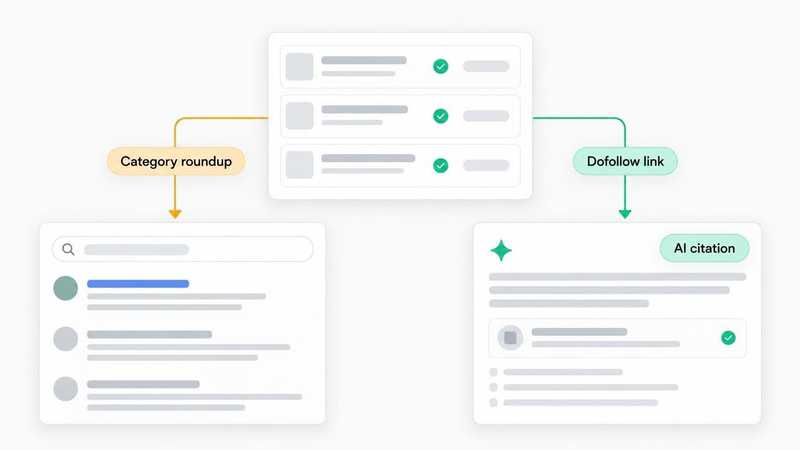
Shipping a clean SaaS product and publishing sharp documentation no longer gets a new domain discovered on its own. Newly registered sites start with zero link equity and almost no third-party mentions, so product pages stall past page four of Google while ChatGPT, Perplexity, and Google AI Overviews leave the brand out of buyer recommendations.
Both search crawlers and retrieval-based AI assistants look for independent corroboration before trusting a startup's claims. Yet blasting a launch across fifty unvetted submission forms wastes time: in October 2026, WitsCode checked 25 popular AI directory domains and had to drop eight that were offline, parked, or repurposed, while a September 2026 HTML audit by stork.ai found directories advertising dofollow links while serving rel="nofollow" in live code.
Used selectively, curated software directories bridge that early authority and citation gap. Below is how to understand why directories feed both Google rankings and AI answers, audit listings before submitting, sequence launches across six months, assemble a canonical submission packet, and track real referral and search ROI.
Why new SaaS domains stay invisible in organic search and AI answers
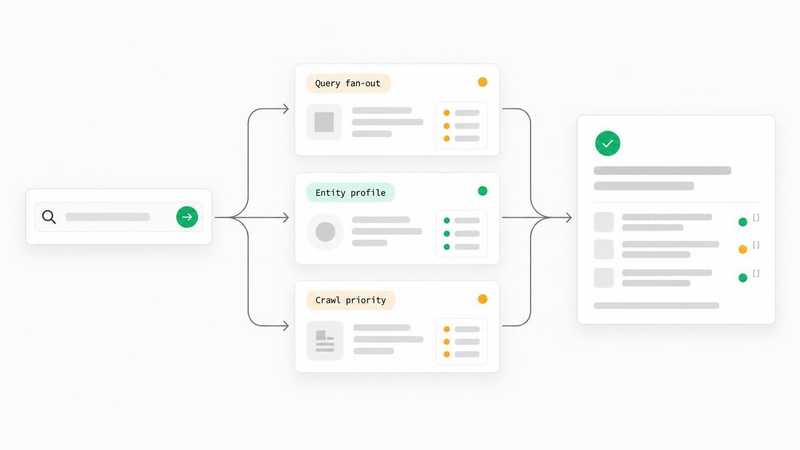
Traditional search engines and large language models evaluate software brands through different pipelines, yet both filter out uncorroborated domains for the same core reason. Until independent sites categorize, compare, and link to your product, neither system has an external signal that real buyers consider it relevant.
Crawl priority and referring-domain corroboration
In classic organic search, domain-level link authority governs how quickly new pages get crawled, indexed, and tested in competitive SERPs. When a domain has fewer than ten referring domains, even a thorough feature guide or comparison page struggles to break into the top thirty for commercial queries like "automated API load testing" or "AI slide deck generator."
Earned dofollow links from moderated, topic-aligned software catalogs solve that cold-start problem. Because established directories maintain clean category hierarchies that search bots crawl daily, a live product profile gives crawlers both an immediate discovery path to your domain and a topical vote of confidence.
Query fan-out in AI search and answer engines
Search-grounded AI assistants add a second discovery filter: query fan-out and multi-source synthesis. When a buyer prompts ChatGPT Search, Perplexity, Gemini, or Google AI Overviews for "the best tools to transcribe customer calls with transparent pricing," the retrieval layer does not visit forty separate startup homepages and audit each pricing table from scratch.
The All-in-One Platform for Effective SEO
Behind every successful business is a strong SEO campaign. But with countless optimization tools and techniques out there to choose from, it can be hard to know where to start. Well, fear no more, cause I've got just the thing to help. Presenting the Ranktracker all-in-one platform for effective SEO
We have finally opened registration to Ranktracker absolutely free!
Create a free accountOr Sign in using your credentials
Instead, the model fans the prompt out into web searches for category roundups, structured directories, and comparison tables where ten to thirty tools already sit side by side with standardized pricing, workflow tags, and trade-offs. If your product is missing from the high-authority category pages that rank for those underlying searches, the synthesized AI answer rarely names you.
Entity disambiguation across independent domains
Search knowledge graphs and language models map your brand name to a specific software job by comparing how independent domains describe it. Inconsistent positioning fragments that signal fast.
If your homepage calls the app an "autonomous revenue workspace," one launch board files it under "CRM extensions," and another describes it as an "email warmup utility," retrieval pipelines cannot confidently match your brand to a buyer's prompt. Consistent category nouns, pricing figures, and use-case definitions across trusted directories lock in one unmistakable entity profile.
Five signals that separate a high-value directory from a link farm
Hundreds of pop-up software lists launched over the past three years to sell fast "Featured" badges to founders, and most carry zero organic search value. Submitting indiscriminately burns founder hours and surrounds your domain with unmoderated spam. Run five quick technical checks before spending ten minutes on any directory form.
1. Live HTML link attributes and clean redirect paths
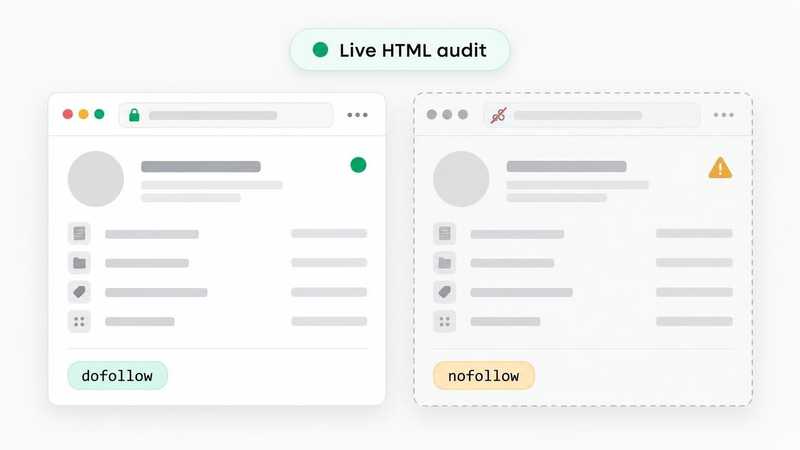
Never take a submission form's promise of a "permanent dofollow backlink" at face value. In stork.ai's September 2026 HTML inspection of 27 AI directories, two directories advertised dofollow links on their submission pages while rendering rel="nofollow" on live outbound buttons, and seven of the 27 sites did not appear in the Tranco top one million websites at all.
Open two published product listings on the directory, right-click the outbound Visit Website link in browser DevTools, and verify three details:
- Anchor
relattribute: Confirm that the<a>tag does not containnofollow,sponsored, orugcattributes if your goal for that tier is link equity. - Direct href vs. masked redirect: Some catalogs route outbound clicks through
/go/tool-nameor?ref=redirect endpoints. Open the Network tab and check the HTTP response headers: during WitsCode's October 2026 audit, one well-known AI directory servedX-Robots-Tag: noindex, nofollowheaders on its outbound redirect URL, potentially limiting link equity. - Server-rendered crawlability: View the raw page source (or disable JavaScript briefly) to make sure the product link exists in crawlable HTML rather than firing only via client-side click handlers.
2. Active maintenance and live HTTP status
Published "Top 100 startup directories" spreadsheets rot faster than almost any other marketing resource. When WitsCode audited its initial AI directory list in October 2026, eight older domains had gone offline, failed DNS resolution, parked their domains for sale, or pivoted into unrelated apps, while another major catalog's legacy /submit URL returned a 404 error. Check that the directory published or updated real reviews within the past 30 days before preparing assets.
3. Crawled category architecture instead of flat logo feeds
A site that dumps ten thousand tools onto an infinite-scroll homepage with two-line taglines passes minimal internal link equity and almost never ranks for buyer searches. Look for directories organized around crawlable category hubs, task filters, and structured comparison pages.
For example, an AI tools directory that groups software into dedicated workflow pages (such as coding agents, slide generators, video transcription, and AI search tools) while documenting real free-tier limits, credit meters, and concrete caveats gives both human buyers and LLM retrieval crawlers structured, high-intent pages they can actually cite.
4. Editorial moderation and honest product caveats
Auto-approve directories that publish every submission within ten seconds quickly fill up with thin affiliate clones and lose search visibility. Human-moderated catalogs that test the live app and include balanced "watch out for" notes, such as two-seat minimums, non-refilling signup credits, or export paywalls, earn far higher reader engagement. Those specific caveats are also the exact details AI answer engines extract when summarizing pros and cons for buyers.
5. Verified organic rankings and clean backlink profiles
High third-party authority scores can be faked with cheap redirect chains, expired-domain merges, or reciprocal badge rings. Before prioritizing a directory, run two or three of its category URLs through SERP Checker to confirm the site actually ranks on page one or two of Google for real buyer queries, and inspect its referring domains in Backlink Checker to verify its authority comes from editorial citations rather than link farms. A focused niche catalog with modest authority that ranks for commercial category terms will send more qualified trials than an inflated domain with zero search impressions.
How to sequence directory submissions across your first six months
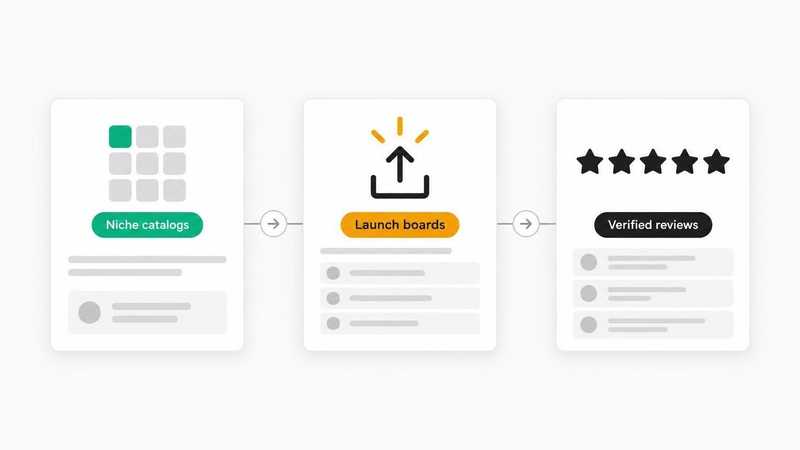
Treating every software catalog as a launch-day blast leads to stalled, empty profiles. Enterprise review portals penalize accounts with zero verified customer reviews, while community voting boards reward concentrated single-day momentum. Sequencing submissions across three waves aligns each platform type with your product's stage of traction.
| Launch wave | Directory type | Typical link attribute | Primary search and AI value | Ideal timing |
| Wave 1 | Curated niche, AI, and developer workflow catalogs | Often permanent dofollow on vetted editorial profiles
| Foundational referring domains, category page crawl paths, and structured LLM entity facts | Days 1 to 14 after public launch |
| Wave 2 | Community launch boards and builder showcases | Profile or maker dofollow / nofollow mix
| High-intent launch traffic, early adopter feedback, and secondary newsletter or blog pickups | Weeks 2 to 4, once onboarding and pricing are stable |
| Wave 3 | Enterprise peer-review portals (G2, Capterra, Gartner Digital Markets) | Typically nofollow or ugc
| High-converting <competitor> alternatives visibility, enterprise buyer trust, and review-count citations in AI answers
| Months 2 to 6, once 10 to 20 active users can post verified reviews |
Wave 1 (days 1 to 14): curated niche and workflow directories
Start with five to ten moderated niche directories during your first two weeks live. Because editorial catalogs evaluate your live product, documentation, and pricing clarity rather than waiting on twenty enterprise customer testimonials, a newly shipped SaaS app can earn permanent dofollow links and category placement right away. Those initial referring domains help search engines index your deeper product, integration, and comparison pages weeks faster.
Wave 2 (weeks 2 to 4): community launch boards and builder showcases
Schedule community-driven launches (such as Product Hunt, Hacker News Show HN, Peerlist, Uneed, and curated GitHub category repositories) once your signup flow handles cold traffic without friction. Beyond the direct profile link, strong community launches trigger a valuable second-order effect: tech newsletters, indie roundups, and regional blogs routinely scrape top weekly launches, multiplying independent brand mentions across dozens of domains without extra outreach.
Wave 3 (months 2 to 6): peer-review enterprise portals
Claim your vendor profiles on G2, Capterra, and AlternativeTo early so your canonical product name, category, and URL are locked, then hold off on review campaigns until paying users have completed real workflows. Ten detailed reviews describing specific team outcomes carry far more weight in both G2 category grids and ChatGPT enterprise software comparisons than fifty empty star ratings collected during launch week.
Building a canonical submission packet that AI answer engines cite
Most founders rewrite their product description from memory on every directory form, introducing vague slogans and conflicting pricing numbers across the web. Spending forty-five minutes assembling one canonical submission packet before your first batch keeps your entity facts tight across every listing and makes your profile effortless for both human editors and retrieval models to parse.
| Profile element | Weak buzzword copy (ignored by buyers and LLMs) | Citation-ready entity copy (quoted in comparisons) |
| One-line definition | "Next-generation AI productivity and storytelling workspace for modern teams." | "Turns PDFs, URLs, and prompts into editable PowerPoint decks via web studio and MCP server." |
| Pricing and limits | "Flexible plans for startups and enterprises. Start for free today." | "Free tier includes 30 cloud minutes/month; Pro starts at $10/month for 600 minutes with $5 non-expiring top-ups." |
| Fit and caveat | "Built for everyone from solo creators to Fortune 500 enterprises." | "Best for engineering and product teams; lacks built-in MDM laptop enrollment for 500+ seat IT departments." |
Lock these five components in a single shared document before opening submission tabs:
-
A 140-character task definition (
user + job + output): State who uses the product, the exact job it performs, and the concrete output format. Retrieval models match specific workflow nouns ("Postgres query profiler," "iOS voice memo transcriber," "SOC 2 evidence collector"), not abstract positioning slogans. -
Exact pricing tiers and usage meters: Buyers and AI answer engines routinely filter software by hard budget ceilings ("under $50/month," "free tier without watermark," "no seat minimum"). Document your exact free allowance, entry paid price, billing cadence, and how credits, seats, or API calls scale.
-
One honest boundary or trade-off: Write down the ideal team profile alongside one scenario where another category of tool fits better. Answer engines frequently quote balanced "best for / watch out for" lines nearly word-for-word when assembling side-by-side buyer guides.
-
Small-format visual assets that stay legible across languages: Export a high-contrast
512x512square icon that remains recognizable at32x32pixels in dense comparison tables, plus three clean interface screenshots cropped tightly around the core product workflow rather than marketing hero banners with tiny headline text. Clean UI crops also translate far better when directories or blogs localize listings across multiple languages. -
Standardized batch intake (and agent-ready endpoints): Submit in focused 45-minute batches of five to eight vetted catalogs rather than trickling forms out sporadically. Prioritize curated platforms where you can submit your AI or developer tool directly with your canonical URL, or via a structured JSON submission endpoint if your team automates launch checklists, so reviewers can verify your live app, domain metrics, and category placement in one pass.
How to measure directory ROI across referrals, rankings, and AI citations
The All-in-One Platform for Effective SEO
Behind every successful business is a strong SEO campaign. But with countless optimization tools and techniques out there to choose from, it can be hard to know where to start. Well, fear no more, cause I've got just the thing to help. Presenting the Ranktracker all-in-one platform for effective SEO
We have finally opened registration to Ranktracker absolutely free!
Create a free accountOr Sign in using your credentials
Submitting listings without an attribution loop leaves you guessing which catalogs drive trials and which ones sit unindexed. Set up three lightweight measurement checks before Wave 1 goes live and review them at day 30 and day 60.
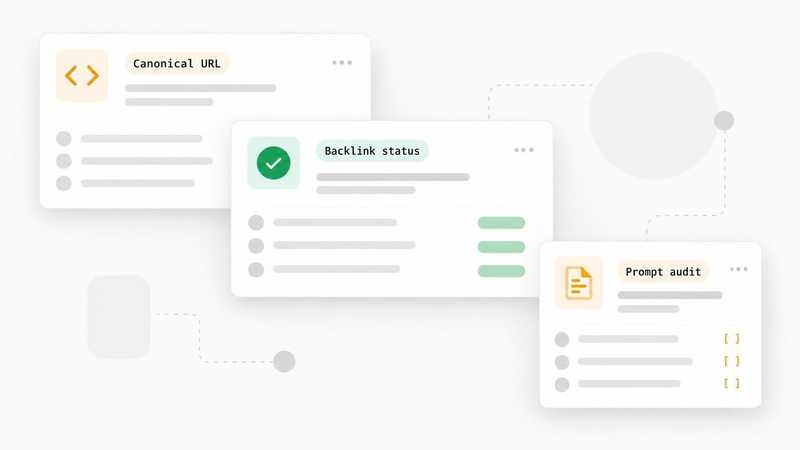
1. Protect canonical URLs before appending UTM tags
Adding ?utm_source=directory_name&utm_medium=directory makes it easy to isolate referral conversion rates inside your web analytics. However, if a dofollow directory links straight to the exact URL you paste into its form and your landing page lacks a self-referencing <link rel="canonical"> tag that strips query parameters, search crawlers can split link equity across parameterized URLs.
Verify in your page <head> that <link rel="canonical" href="https://yourdomain.com/" /> resolves cleanly to the bare URL before submitting tagged links. On high-authority dofollow catalogs where link equity is the primary goal, submitting the clean canonical URL and reading referral conversions from HTTP Referer attribution is often the safest choice.
2. Monitor backlink attributes and mid-funnel comparison rankings
Directory listings are not static: sites redesign templates, change outbound link attributes, or sunset old category slugs. Add every live directory URL to Backlink Monitor so you get alerted immediately if an earned dofollow link switches to nofollow, redirects through a blocked tracker, or drops off the page.
Pair that link check with a dedicated keyword group in Rank Tracker covering fifteen to twenty mid-funnel commercial terms, such as <your category> software, best <workflow> tools, <competitor> alternatives, and <brand> pricing. New directory placements typically take two to six weeks to be recrawled and credited; on young SaaS domains, five to eight clean niche directory links routinely lift product and comparison subpages from unranked into top-thirty testing range.
3. Run a monthly 15-prompt AI citation audit
Build a fixed spreadsheet of fifteen non-branded buyer prompts that mirror real pre-purchase questions in your category, such as "best software for automated retail hardware ordering with spend caps" or "lightweight customer support helpdesk under $100/month." Run that exact prompt set once a month across ChatGPT Search, Perplexity, and Google AI Overviews, and log two columns:
- Brand inclusion: Whether your product is named in the synthesized answer and whether its pricing and use case are stated accurately.
- Cited source URLs: Which third-party pages appear in the footnote links. On domains under a year old, you will almost always see structured directory category pages cited as the grounding source weeks before your own blog earns direct citations, showing you exactly which catalogs influence AI discovery in your niche.
Frequently asked questions
Do software directory backlinks trigger Google link spam penalties?
Moderated, niche-relevant software directories where editors review real products are normal editorial citations, not link spam. Penalties and algorithmic link ignoring happen when sites buy automated blasts across hundreds of unmoderated, auto-approve link farms or reciprocal badge rings built solely to manipulate PageRank. Stick to selective catalogs with human review, clear category taxonomy, and real human readers.
How quickly do directory listings show up in ChatGPT and Perplexity answers?
Search-grounded assistants like Perplexity, ChatGPT Search, and Google AI Overviews retrieve live web results at query time. Once an authoritative directory category page lists your product and gets recrawled by Google or Bing, your tool can appear in cited answers within days to a few weeks, long before static pre-trained model weights refresh.
Should a B2B SaaS founder list on AI-specific directories or general software catalogs?
List on both if your product includes genuine AI capabilities, because buyers search through two different lenses. AI-focused catalogs reach early adopters and builders searching by capability ("AI voice note transcriber"), while general B2B SaaS and developer directories capture buyers searching by department or workflow ("field sales note software" or "API documentation tools").
Are paid featured directory placements worth buying at launch?
Treat paid featured slots, homepage pins, and newsletter sponsorships strictly as conversion advertising rather than SEO link building. Under Google Search spam policies, paid placements must qualify outbound links with rel="sponsored" or rel="nofollow", and live HTML checks confirm that major directories enforce nofollow on paid ad slots. Test a directory's standard editorial listing first, check whether its category traffic converts in your analytics, and pay for featured sponsorship only when the direct trial signups justify the ad spend.