
Intro
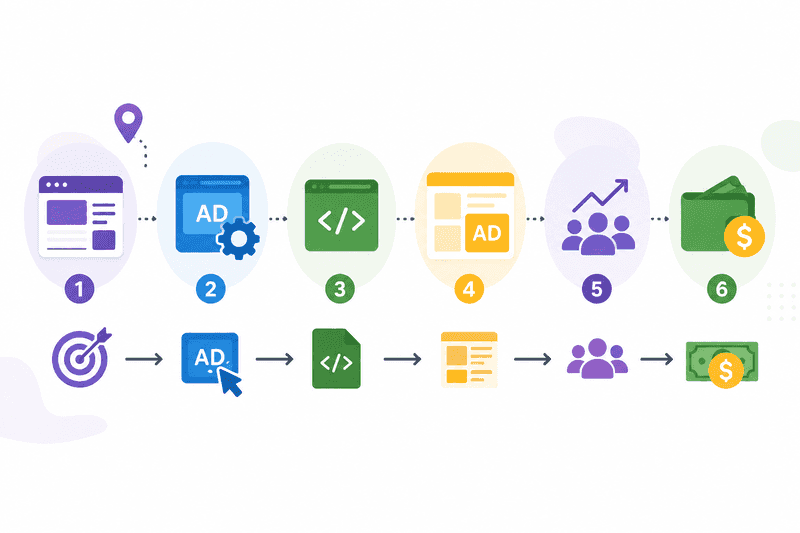
Picking an ad network sounds simple until there are fourteen tabs open and every platform claims to be the top pick for publishers. The right choice across advertising networks for websites comes down to a few concrete factors: traffic volume, audience geography, content niche, and what ad formats the site supports. Not every network is worth the application time. This guide breaks down what to look at, with a clear framework for making the call.
Start With the Site, Not the Network
Most publishers browse networks before understanding what their own site brings to the table. That's backwards. Advertising networks for publishers use traffic data to set rates and approve applications; having the numbers ready first saves time.
Three things worth knowing upfront:
- Monthly page views and unique visitors, pulled from analytics;
- Primary audience geography, since Tier 1 traffic (US, UK, Canada) commands higher CPMs;
- Content category, as some networks exclude certain niches or pay premium rates for others.
For example, a travel blog with 40,000 monthly US visitors sits in a different position than a general blog pulling 200,000 from Southeast Asia. Same volume. Very different monetization potential.
What Separates One Network From Another
Once the site's profile is clear, the comparison gets more useful. Here is what moves the needle.
Ad Format Availability
Display banners are the baseline. The more interesting question is what else a network offers: native ads, popunders, in-page push, interstitials, video pre-rolls. Different placements perform differently depending on how readers use the site. A news publication and a recipe blog are not the same ad environment.
Revenue Model
CPM pays per thousand impressions. CPC pays per click. Some advertising networks for publishers blend both, or run hybrid revenue-share models. CPM suits high-traffic sites; CPC works when the audience is targeted and click-prone.
Minimum Traffic and Approval Time
Some accept publishers from day one. Others set thresholds at 10,000, 50,000, or 100,000 monthly page views. Approval times range from a few hours to two weeks.
Ad Network Types at a Glance
| Network Type | Revenue Model | Traffic Requirement | Best For |
| Premium display networks | CPM / hybrid | High (50k+ pageviews) | Established authority sites |
| Performance networks | CPM / CPC | Low to medium | Niche and growing sites |
| Native ad networks | CPM / CPC | Medium | Content-heavy blogs |
| Self-serve platforms | CPM | None to low | New publishers |
Adsterra operates as a performance network: multi-format support, low entry bar, decent geographic coverage. Practical for publishers not yet at premium-network traffic levels.
How to Evaluate a Network Before Committing
Test before committing.
- Sign up and get approved: most networks offer a free publisher account;
- Generate one ad unit in the format that fits the site best;
- Place it mid-page and run for at least 14 days;
- Record the CPM, fill rate, and total revenue from that placement;
- Compare against any existing network already running on the same site.
Two weeks of live data beats any review article. Fill rate shows how much inventory a network sells in practice, and it varies more than most publishers expect.
FAQ
Can a site run multiple ad networks at once?
Yes, and most publishers do. Inventory gets allocated based on which network performs best per placement or geographic segment.
Do advertising networks for publishers take a revenue share?
Most do, though the split varies by network. The CPM rate quoted already reflects the cut, so the dashboard figure is what lands in the account.
How long before a new network shows reliable data?
Two to four weeks. Early numbers can look skewed while the network calibrates to the site's audience.

