Intro
People type "best X," "X alternatives" and "X vs Y" when they are close to choosing, so comparison pages sit near the moment of decision. They are also hard to write well when your own product is on the list. The reader suspects a rigged ranking, and Google's published guidance asks for evidence that the author used the products.
The AI companion niche makes a good test case. Nika, an AI companion app, publishes comparisons of the apps it competes with, so every page has to survive the question of why a reader should believe it. What follows is the playbook that case suggests, with the reasons behind each step.
Start from what Google says it wants
Google's guidance on writing high-quality reviews is short and specific. It asks for evidence of first-hand use such as your own photos, video or audio, for pros and cons based on original research rather than the manufacturer's claims, for quantitative scores across the categories that matter to buyers, and for coverage of comparable alternatives with a note on which one suits which need. It also says that when you name a "best overall" or "best for" pick, you should explain why, using first-hand evidence. Focus on quality and originality rather than length, it adds.
Each of those points is a checklist item. If a section of your comparison cannot point to something you did, measured or saw, it is the weakest section of the page.
Disclose before the first recommendation
Put the affiliation where the reader meets it first, and write it as a plain sentence. In an eight-app roleplay comparison on the Nika blog, the list opens by saying the publisher makes Nika and that the categories are ranked on the job each app does. Nothing there is hidden in a footer or phrased as a hint.
A useful template has three parts: who you are, which products on the page you make or earn money from, and what that changes about the ranking (ideally, nothing). Hiding the relationship does not remove the bias. It only makes a reader who finds out later trust the whole page less.
Publish the method, and make it repeatable
A ranking with no method is an opinion. A method lets readers judge how much to trust the result and lets you defend it when a vendor disagrees.
That comparison scores five factors: character consistency over long scenes, memory, content freedom, barrier to entry and monthly cost. The memory test is concrete. A specific fact and a plot detail are stated, and the tester returns a couple of days later to see whether they come back. Barrier to entry is the time from first click to first line of dialogue. Cost includes media tokens and, for one service, a third-party model fee that the headline price leaves out.
A memory-focused comparison on the same blog goes further and checks ten details after a day, a week and a month. It also swaps a stated fact for its opposite and watches what the service says next. Write down your equivalents for your own niche. For a SaaS comparison that might be time to first working integration, behavior at the free-tier limit or what happens to exported data.
The All-in-One Platform for Effective SEO
Behind every successful business is a strong SEO campaign. But with countless optimization tools and techniques out there to choose from, it can be hard to know where to start. Well, fear no more, cause I've got just the thing to help. Presenting the Ranktracker all-in-one platform for effective SEO
We have finally opened registration to Ranktracker absolutely free!
Create a free accountOr Sign in using your credentials
State what you could not verify. In the memory comparison, claims from vendors about their own architecture are flagged as unverified, and prices are marked approximate. A page that admits where its evidence ends reads as more credible than one that sounds certain about everything.
Rank by job, not by a single winner
A single ranked list forces a winner, and when the author sells one of the entries, readers assume the winner is predetermined. Categories avoid that. In that roleplay comparison, one service wins for character variety, another for uncensored writing, a third for customization, two for long memory and Nika for starting with no setup inside Telegram.
That structure matches how people choose. Someone who wants a free sandbox needs a different answer than someone who wants memory that holds for weeks. It also keeps your product from winning categories where it does not belong, which is the quickest way to lose a reader's trust.
Write down your own weaknesses
Nobody believes a comparison in which the author's product has no flaws. Name them, specifically.
Nika's guide to the Character.AI bankruptcy, for example, says outright that Nika has far fewer ready-made characters than Character.AI. A reader who sees one concrete limitation stated plainly is more willing to believe the strengths listed next to it.
These admissions do two jobs. They show the reader you are describing the product rather than selling it, and they match Google's request for pros and cons from original research. They also pre-empt the question a sales-minded reader would ask next.
Show dates, and update the page
Comparisons age quickly. Prices change, features move between tiers and services shut down. A page with no date looks abandoned, and a page with a date and no revisions looks the same.
Show the publication date and the last update. One alternatives page on that blog went live in June 2026 and was revised in September. When you update, change the substance and the stamp together. Changing the stamp alone is exactly the kind of low-effort signal that readers and search systems learn to discount.
Build the cluster around intent
Searches in this format fall into a few shapes: "best X," "X alternatives," "X vs Y" and "is X still worth it." Each shape deserves its own page, because the person typing it is at a different point. Someone who searches for an alternative already uses the product and is unhappy with something specific. The page should open with that complaint, such as price, limits or a policy change, and sort the options by the reason for leaving.
Link the pages to each other in the way a reader would move between them. An alternatives page can send a reader to the head-to-head comparison, and the roundup can link to every alternatives page. Keep a hub for the whole set.
Track the whole cluster, not one keyword
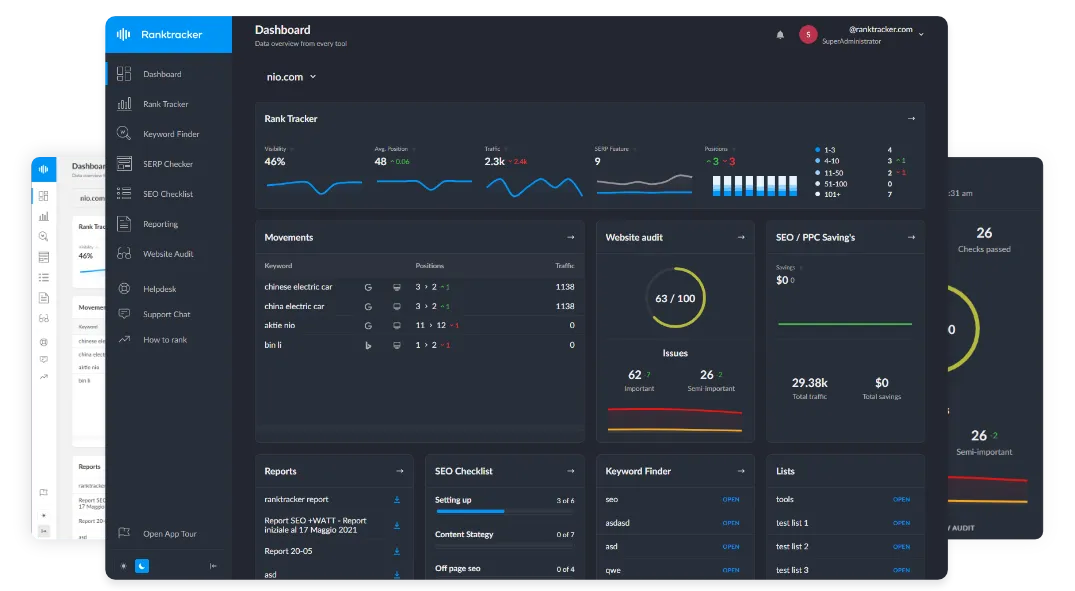
Rank a handful of terms per page rather than a single head term. Group them by intent (best, alternatives, versus) in your rank tracker and watch each group separately. Movement in "alternatives" queries after a competitor's pricing change tells you something different from movement in "best" queries, and you can act on the difference. Add a column for the date you last updated the page, so you can see whether revisions line up with recoveries.
Structure the page so the method is easy to find
Readers skim comparison pages, so the proof has to be near the top. A layout that works: a short summary with the verdict per use case, the affiliation sentence, a comparison table with the same columns for every product, the category picks with the reasoning for each, a short section titled "How we tested," and a FAQ. Keep the table honest by filling in every cell, including the unflattering ones for your own product. An empty cell next to a competitor and a checkmark next to yours is the quickest way to make the table look staged.
The All-in-One Platform for Effective SEO
Behind every successful business is a strong SEO campaign. But with countless optimization tools and techniques out there to choose from, it can be hard to know where to start. Well, fear no more, cause I've got just the thing to help. Presenting the Ranktracker all-in-one platform for effective SEO
We have finally opened registration to Ranktracker absolutely free!
Create a free accountOr Sign in using your credentials
Use the same criteria for every entry, in the same order. If you praise a competitor's memory for being inspectable, apply the same test to your own and report the result in the same sentence structure. Readers compare how you describe the rivals with how you describe yourself, whether or not they say so.
Common mistakes
The first is the invisible author. A page with no named person, no testing details and no date gives a reader nothing to trust and gives Google's raters nothing to evaluate. Name an author with a reason to know the subject, and say what they did.
The All-in-One Platform for Effective SEO
Behind every successful business is a strong SEO campaign. But with countless optimization tools and techniques out there to choose from, it can be hard to know where to start. Well, fear no more, cause I've got just the thing to help. Presenting the Ranktracker all-in-one platform for effective SEO
We have finally opened registration to Ranktracker absolutely free!
Create a free accountOr Sign in using your credentials
The second is the fake loser. Some pages place the author's product second or third to look modest, then write twice as much about it. Length and enthusiasm give the game away. Give each product the depth its role in the ranking deserves.
The third is the stale price. A table that says "$10 per month" with no month attached is wrong within a quarter. Write "about $10 in September 2026," and recheck on a schedule.
The fourth is the unlabeled vendor claim. When a service says it has a 200,000-token context or a new memory architecture, and you did not verify it, say so in the text. A claim you repeated without checking becomes your claim in the reader's mind.
The fifth is the one-way link. If every internal link on the page points to your own product, the page reads as an advertisement. Link to the competitors' official pages where a reader would want to check a detail, as Google's own guidance suggests when it recommends linking to other useful resources.
What to do when a vendor disagrees
Eventually a company you reviewed will email to say you got something wrong. Treat it as a fact check. If they are right, fix the page, add a note with the date of the correction and thank them. If they are wrong, reply with your test notes. Do not change a ranking because a vendor asked, and do not hide a correction. A visible correction history is one more piece of evidence that a real person maintains the page.
A short pre-publish checklist
Before a comparison goes live, check that:
- the affiliation sits above the first recommendation and says what you make or earn from
- the method fits in one paragraph and a stranger could repeat it
- each pick has a reason tied to something you did or measured
- your own product has at least two stated weaknesses
- unverified vendor claims are labeled as such
- prices carry a month and a year
- the page shows when it was last revised, and the revision is real
None of this guarantees a ranking. It does remove the reasons a reader or a search system would have to doubt you, and in a format where trust decides the click, that is most of the work.