Intro
POV: I’m your potential client, and I just clicked on your Instagram.
What am I going to see?
An active profile I can tell is an actual human still in business? Someone who can help me with this giant, expensive problem that keeps me up at night?
You don’t need to be an influencer with thousands of followers to answer “yes” to those questions, or to successfully grow your law firm clientele through Instagram.
So here’s your guide to making Instagram _really _work for your practice.
What Instagram Can (and Can't) Do for Lawyers
People rarely hire attorneys without doing some research first. Significant financial, personal, and emotional stakes are involved.
Social media gives prospective clients an opportunity to get familiar with their lawyer’s expertise, personality, and approach before making that first contact.
The All-in-One Platform for Effective SEO
Behind every successful business is a strong SEO campaign. But with countless optimization tools and techniques out there to choose from, it can be hard to know where to start. Well, fear no more, cause I've got just the thing to help. Presenting the Ranktracker all-in-one platform for effective SEO
We have finally opened registration to Ranktracker absolutely free!
Create a free accountOr Sign in using your credentials
But make no mistake: Instagram isn't equally valuable for every practice.
A family law or personal injury attorney serving individuals may find more success connecting with potential clients than a corporate attorney whose work primarily comes through professional referrals.
It's also important to distinguish visibility from actual business growth.
A reel with 20,000 views might look impressive, but those views mean little if they're coming from people outside your jurisdiction who have no need for your services.
So you have to think of Instagram as just one piece of your marketing strategy. It’s not a replacement for your website, referrals, or other client acquisition channels.
How to Use Instagram to Successfully Grow Your Law Practice
You don't need professional video equipment, a dedicated social media manager, or hours of free time every day to build an effective Instagram presence.
What you do need is strategy, and here’s what it should include.
1. Make Your Profile Answer Three Questions Immediately
When someone lands on your Instagram profile, they should be able to quickly identify three things:
- What type of law do you practice?
- Who do you help, and where?
- How can they contact you?
Consider these two Instagram bios:
The All-in-One Platform for Effective SEO
Behind every successful business is a strong SEO campaign. But with countless optimization tools and techniques out there to choose from, it can be hard to know where to start. Well, fear no more, cause I've got just the thing to help. Presenting the Ranktracker all-in-one platform for effective SEO
We have finally opened registration to Ranktracker absolutely free!
Create a free accountOr Sign in using your credentials
Bio A: "Attorney | Justice Advocate | Helping People Win"
Bio B: "Austin Family Law Attorney | Divorce & Custody | Helping Texas Families Navigate Difficult Transitions | Book a Consultation ↓"
The second immediately tells visitors whether the attorney offers the services they're looking for and how to get started.
Now let’s look at an example. Take a look at Zehl & Associates’ bio:

Just from two lines and a limited character count, you immediately know:
✅They’re personal injury lawyers
✅They’ve recovered billions of dollars
✅They serve Texas, Louisiana, and other states
✅Their address
✅Their website link
Make sure your profile includes:
- A recognizable photo
- Relevant contact information
- A working link to your website or consultation booking page
This is another example of this with Greg Baumgartner’s personal injury law firm: \
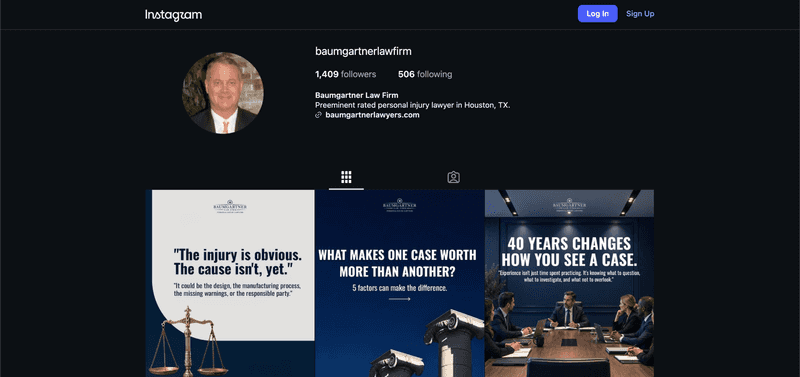
You can also use Instagram Highlights to organize important information. Some ideas are your practice areas, team introductions, and frequently asked questions.
2. Create Content Around the Questions Clients Actually Ask
You should never run out of things to post.
For as long as you’ve been practicing law—and much before that, too—people have been asking questions. And they’re going to continue to.
And now that you’re a social media creator, this is a treasure chest to you.
The best source of content ideas is the questions prospective clients ask during consultations.
Think about the concerns, misconceptions, and recurring questions you encounter throughout your work.
For example:
- Family law: "Can my spouse refuse to sign divorce papers?"
- Estate planning: "What happens to your assets if you die without a will?"
- Personal injury: "Should you speak to an insurance adjuster after a car accident?"
Here’s an example from Anderson Injury Lawyers, who did a fantastic video explaining how long it takes to settle a car wreck case:

Each question presents an opportunity to educate potential clients while demonstrating your expertise.
You can also choose the content format based on what you're explaining.
Instagram carousels work well for breaking complicated topics into manageable steps. Short reels are useful for answering individual questions. Stories can highlight office updates or everyday moments from your practice.
The key is to make your content specific and genuinely helpful.
Instead of posting something vague like "Know your rights," explain a particular legal issue your audience might encounter and what they should understand about it.
3. Show the Person Behind the Practice
Asking clients to spend thousands of dollars on a problem that they’re likely very emotional about requires _a lot _of trust.
Your Instagram content can help nurture that trust.
Introduce your team. Explain what happens during an initial consultation. Share why you chose your practice area or highlight your involvement in the local community.
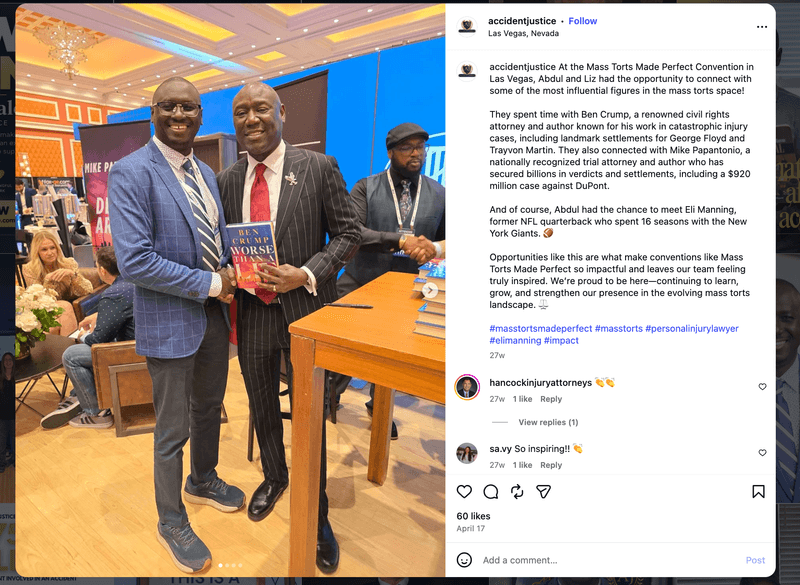
For example, AJ Law made an excellent post after their experience at a convention, sharing some of the impactful leaders they got to interact with.
A two-minute video walking prospective clients through your intake process could ease some of the uncertainty they feel about contacting an attorney.
Relax, you don't need to dance in your office.
Simply explaining what a nervous first-time client can expect is much more valuable.
4. Give Every Interested Visitor a Clear Next Step
Even excellent Instagram content won't generate many clients if interested visitors don't know what to do next.
Make it easy for someone to move from browsing your content to contacting you.
For example, an attorney discussing child custody disputes could end a post with:
"Dealing with a custody dispute in Texas? Visit the link in our bio to learn how our consultations work."
Time for one final example.
Rafi Law Firm clearly tells visitors to book a call, includes the link in his bio, and emphasizes that it’s completely free, incentivizing them to do it.

5. Measure Consultations, Not Just Engagement
Likes, views, and follower counts tell whether people are engaging with your content. But alone, they don’t say anything about how successful they are at getting you clients.
Pay closer attention to metrics that connect Instagram activity to solid business results.
These include profile visits, website clicks, qualified inquiries, consultations scheduled, clients acquired, and ultimately, clients retained.
You can use a trackable consultation link or ask new inquiries how they discovered your firm to gather data on these metrics.
Instagram Mistakes Lawyers Should Avoid
Marketing a law firm on Instagram introduces challenges that other businesses don't necessarily face.
Beyond creating effective content, lawyers must consider professional responsibilities involving confidentiality, advertising, and client communication.
So without further ado, here are four mistakes definitely worth avoiding.
1. Sharing Client Stories Without Considering Confidentiality
Client success stories can make compelling marketing content, but legal confidentiality requirements deserve serious attention.
Changing someone's name doesn't always make a story anonymous. Details about the circumstances, location, or outcome could still identify the client.
And just because information appears in public court records doesn't automatically mean you're free to share it.
The American Bar Association's Formal Opinion 480 addresses attorneys' confidentiality obligations when publishing social media content, including information already in public records.
Before sharing case details or testimonials, review your professional obligations and obtain appropriate authorization where required.
And when in doubt, use clearly identified hypothetical scenarios to explain legal concepts without exposing actual client information.
2. Making Promises Your Practice Can't Guarantee
"We'll win your case" and "get the settlement you deserve" can create misleading expectations.
ABA Model Rule 7.1 states that lawyers have to avoid false or misleading communications about their services, and Rule 7.2 goes further into addressing attorney advertising and certain claims about legal specialization.
So be especially careful when discussing past results, publishing testimonials, or describing your qualifications.
The ABA Model Rules is always a great reference point.
Remember that your jurisdiction's rules control, too, so review your state bar's advertising requirements before publishing promotional content.
3. Treating Instagram Comments and DMs Like Legal Consultations
When you start sharing legal information, people naturally respond with questions about their own situations.
But answering individualized legal questions through Instagram can create problems involving confidentiality, conflicts of interest, and potential attorney-client relationships.
Messages about an ongoing divorce case probably include sensitive information about the other spouse, for example.
So don’t analyze their circumstances through DMs. Direct them to your firm's established intake process.
You can still engage with followers and answer general educational questions, but establish clear boundaries between social media interaction and professional legal representation.
4. Chasing Trends at the Expense of Credibility
Not every bandwagon needs lawyers to jump on.
Don’t worry about getting videos to go viral or participating in any and every trend.
Worst case scenario, rushing to publish can lead to inaccurate legal information, especially when repurposing content from attorneys practicing in other jurisdictions.
And some trends just might not age well with your reputation.
Final Thoughts
The day you ever need a lawyer, what would you want to see on their Instagram?
The All-in-One Platform for Effective SEO
Behind every successful business is a strong SEO campaign. But with countless optimization tools and techniques out there to choose from, it can be hard to know where to start. Well, fear no more, cause I've got just the thing to help. Presenting the Ranktracker all-in-one platform for effective SEO
We have finally opened registration to Ranktracker absolutely free!
Create a free accountOr Sign in using your credentials
Congratulations—now you have the first piece of your social media strategy.
Instagram is a powerful tool for lawyers. Don’t let analysis paralysis, overwhelm, or hyperfixation on follower count stop you from reaching the people you could help.
Understand what potential clients need to know, communicate your expertise clearly, and give interested visitors a straightforward way to contact you. (Things you can do today.)
The best Instagram strategy for your law firm isn't the one that gets the most attention. It's the one that helps the right people feel confident taking the next step.