Intro

Every marketing team eventually hits a wall with written content. You publish weekly. You optimize the title tags. You build foundational links. Traffic crawls up, flattens out, and then you find yourself just trying to maintain rank against competitors doing the exact same thing. Google changes a core algorithm, and half those generic articles drop off page one anyway. There is a more reliable way to search real estate. You build utilities.
The internet is already overflowing with text. What users actually want is a way to get their specific job done faster.
Moving Past the Standard Content Playbook
Written content tries to tell someone how to solve a problem. Interactive tools actually solve it for them. When a user lands on a page and finds a calculator, a template generator, or a configuration tool, their behavior changes entirely. They stop skimming text and start clicking buttons.
This fundamentally alters the user experience and the metrics search engines care about most. People stay longer. They bookmark the page for future use. They return three days later to run another calculation. You stop competing on who can write the longest definitive guide and start competing on who provides the most practical value.
Matching B2B Search Reality
A lot of industrial and manufacturing SEO strategies miss the mark completely. They rely on basic educational articles that real buyers simply never read. Let us say your company designs and manufactures an Automotive Wiring Harness. The professionals searching for this product don't need a two thousand word history of electrical systems in passenger vehicles. They know what the product is.
These are engineers or procurement managers looking for technical specifications, load capacities, or compatibility matches. If you replace that dense block of text with an interactive pinout diagram or a custom voltage drop calculator, you immediately match their actual intent. They input their requirements and get an answer in five seconds. Google sees this successful interaction and continuously rewards the page because it actually satisfies the user.
Earning Backlinks Without Asking
Manual link building is usually a brutal grind of cold emails and ignored pitches. Utilities change this dynamic because they are inherently linkable assets. People naturally share things that save them time.
You see this constantly across different technical niches. Someone gets tired of doing manual formatting and builds a free letter to number converter for their specific industry. It sits on a simple webpage with minimal text. Within six months, it has hundreds of organic links from college forums, coding tutorials, and message boards. Nobody had to pitch those links. Webmasters happily link to it because it acts as a helpful resource for their own readers.
The All-in-One Platform for Effective SEO
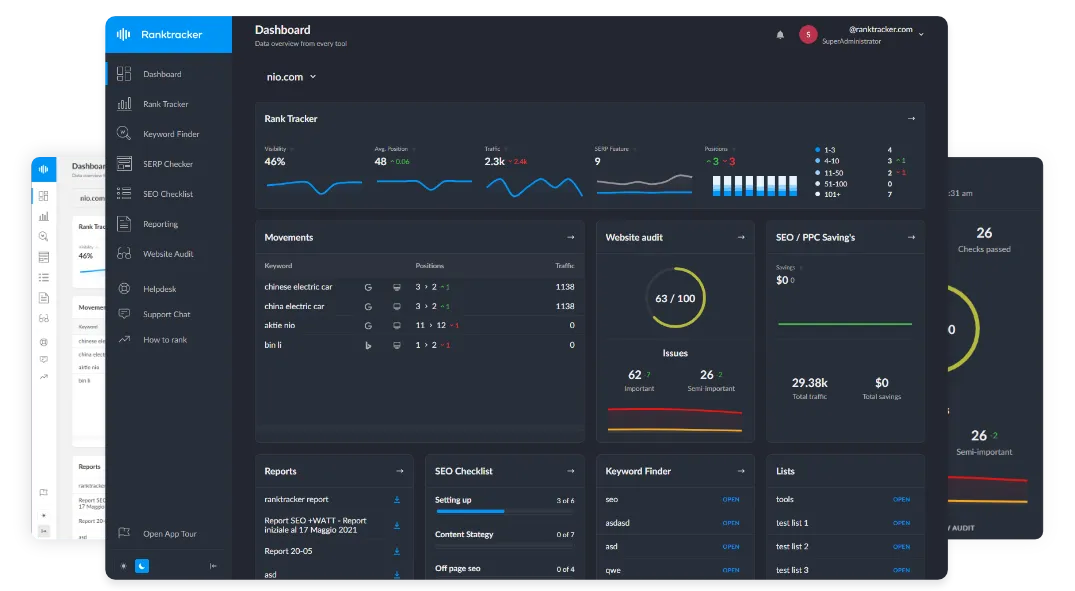
Behind every successful business is a strong SEO campaign. But with countless optimization tools and techniques out there to choose from, it can be hard to know where to start. Well, fear no more, cause I've got just the thing to help. Presenting the Ranktracker all-in-one platform for effective SEO
We have finally opened registration to Ranktracker absolutely free!
Create a free accountOr Sign in using your credentials
The utility of the tool does all the heavy lifting. The same principle applies to mortgage calculators, tax estimators, material yield calculators, and color palette generators. They become permanent fixtures in the industry ecosystem.
Addressing Regional Sourcing Pain Points

Interactive features also help capture difficult geographic search queries. International procurement is notoriously complicated. Buyers have to filter through language barriers, shipping zones, regulatory differences, and regional compliance standards. A block of text rarely covers all the permutations a user needs to make a decision.
Consider a US based manufacturer trying to locate a specialized supplier for a wire harness in italy to meet specific European automotive regulations. A standard landing page might struggle to rank if it just lists European countries in bullet points. A dynamic supplier map tool that lets users filter certified facilities by country, production capacity, and ISO standards becomes a massive asset. The user gets exactly the localized information they need. It organizes complex global data into an actionable format.
The Shift in Engagement Metrics
Search algorithms rely heavily on user signals to determine if a page is actually good. When someone clicks a search result, reads one sentence, and bounces back to Google three seconds later, that page loses authority. This is known as pogo sticking. Interactive tools effectively destroy high bounce rates.
A user typing inputs into a calculator is actively engaged. They might spend four minutes adjusting sliders to see different price outcomes or material limits. That active dwell time tells search engines the page is highly relevant to the query. It builds a protective moat around your ranking. Competitors can't just write a slightly longer blog post to beat you. They have to spend actual development time building a better software tool.
Translating Internal Processes into Public Tools
You don't need a massive software budget to start executing this strategy. The best ideas are usually already hiding inside your company. Look at the Excel spreadsheets your sales team uses to quote projects. Look at the sizing formulas your technical support team relies on to answer common customer questions.
These internal documents can be turned into simple web applications using basic JavaScript or lightweight plugins. A diagnostic wizard that helps a customer troubleshoot a machine fault saves your support team time while generating organic traffic. A return on investment calculator helps your sales team close deals while serving as a magnet for top of funnel search queries.
Executing the Strategy
Start small. Don't try to build a massive industry platform on day one. Build one practical tool that solves a single repetitive problem for your core audience.
Put it on a dedicated URL so it is easy to share. Keep the design clean and focused entirely on functionality. Optimize the title tags and meta descriptions around the exact action the tool performs rather than generic industry terms.
Once it goes live, watch the engagement data in your analytics platform. Compare the time on page and return visitor rate to your standard blog posts. The numbers usually make a compelling case for shifting your marketing budget away from endless articles and toward functional utilities.