Intro

Most link reports still lead with the same number. Domain Rating, Domain Authority, Authority Score: a single figure that promises to tell you how valuable a link is. It is quick, it is easy to compare, and it is increasingly misleading. Plenty of sites with impressive metrics have little real readership, publish anything for a fee and sit in neighbourhoods search engines learned to discount years ago.
Meanwhile, a link from a modest but genuinely relevant publication, read by the right audience, can move rankings and send customers in a way a high-DR guest post on a generic blog never will. The challenge for SEOs is knowing how to tell the difference before a link is bought, pitched or reported to a client.
What Authority Metrics Miss
Third-party authority scores are useful shortcuts, but they measure the strength of a site's own backlink profile, not whether it is a good place for your link. A site can build a high score through link schemes, expired domains or years of selling guest posts, while its actual traffic and editorial standards quietly decline.
That is why the strongest approaches to editorial link building judge each opportunity on a wider set of signals: real authority, relevance to the business, actual readership and the publication's own editorial standards. Metrics become one input rather than the decision.
Relevance First
The first question is simple: would this publication plausibly write about this business or topic if nobody asked? A regional news site covering a local firm, a trade magazine featuring a specialist supplier or a lifestyle title discussing a consumer product all pass that test. A general "business tips" blog that also publishes casino reviews and crypto guides does not, whatever its DR.
Relevance works at two levels. The site itself should sit close to the client's industry, location or audience. And the specific article should give the link a genuine reason to exist, with a topic that a reader would expect to lead to the linked page.
Check the Traffic Is Real
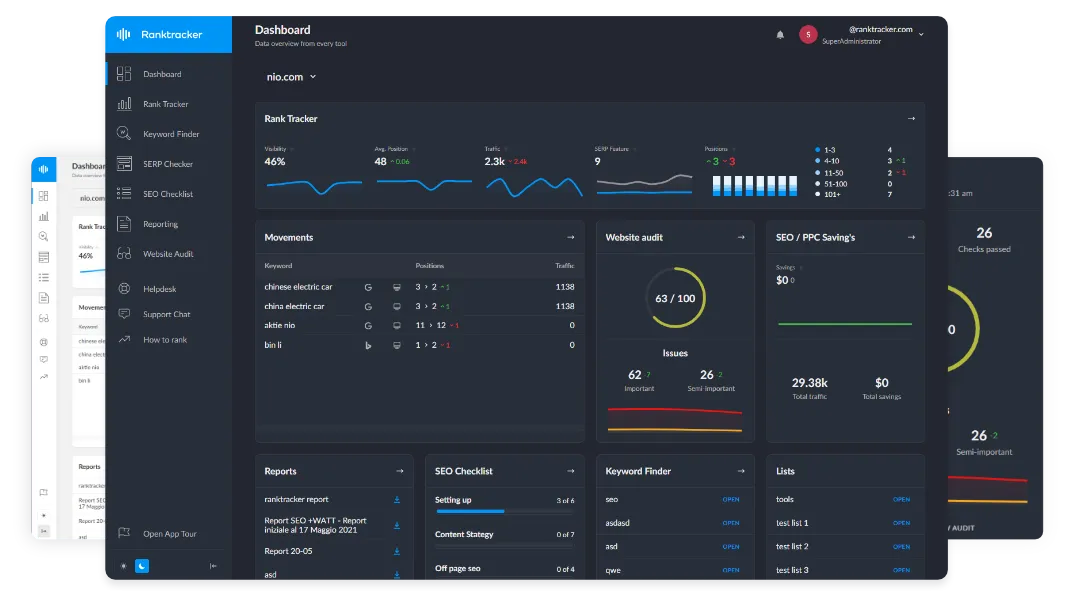
Use a rank tracking or traffic estimation tool to look at the shape of a site's organic visibility over time, not just the current number. Steady or growing traffic across a range of relevant keywords suggests a healthy publication. A sharp drop after a core update, or traffic concentrated on a handful of unrelated pages, is a warning sign.
The All-in-One Platform for Effective SEO
Behind every successful business is a strong SEO campaign. But with countless optimization tools and techniques out there to choose from, it can be hard to know where to start. Well, fear no more, cause I've got just the thing to help. Presenting the Ranktracker all-in-one platform for effective SEO
We have finally opened registration to Ranktracker absolutely free!
Create a free accountOr Sign in using your credentials
Look at where that traffic comes from too. A UK client usually benefits most from a site whose audience is largely in the UK. A site with impressive global traffic but almost none in the target market will do little for local rankings or referral visits.
Read the Site Like an Editor Would
Spend five minutes browsing recent articles. Are they written for readers or for links? Do posts carry a clear byline, sensible headlines and a consistent editorial focus? Or is every article a thin 600 words with three outbound links to unrelated businesses?
Sites that publish anything for a fee tend to show it quickly: wildly varied topics, repetitive templates, "sponsored" labels on most posts and outbound links to the same handful of risky niches. If you would not be comfortable showing the page to the client, it is not worth the link.
How the Link Sits in the Content
Placement matters as much as the site. A contextual link within the body of a relevant article, on anchor text that reads naturally as part of the sentence, carries far more weight and attracts far more clicks than one tucked into an author bio or a block of links at the bottom of the page.
Across a campaign, vary both anchors and link destinations. A profile built entirely on exact-match anchors pointing to the same commercial page looks manufactured. A healthy mix of branded, natural-phrase and partial-match anchors, pointing to the homepage, service pages and useful content, looks like the result of genuine coverage.
Don't Forget AI Search
There is a newer reason to care about quality. AI assistants and AI-generated search summaries increasingly draw on trusted, well-cited publications when they describe businesses and recommend services. Mentions in respected, relevant outlets are more likely to shape how a brand is represented in those answers than links scattered across low-quality blogs.
Fewer, Better Links
The practical takeaway is to report fewer, better links and explain why each one was chosen. Clients may initially expect volume, but rankings, referral traffic and AI visibility tend to reward relevance and credibility. One placement in the right publication, read by the right people, will almost always do more than ten links that only look good in a spreadsheet.