Intro

A customer looking for a nearby service might find a business through Google Search or Maps. Someone else might notice a postcard, then search for the business before deciding whether to get in touch. Those paths are possible, but a postcard does not automatically cause a search, and a search visit does not reveal every earlier influence. For local marketers, the useful question is how to give each channel a clear role, connect it to a relevant next step, and evaluate the resulting signals without claiming more than the data shows. A Google Business Profile and landing page can capture digital responses, while campaign URLs or codes make some responses easier to measure.
Give Search and Mail Different Jobs in the Same Local Journey
Local search is particularly useful when someone is already looking for a product, service, or business in an area you serve. Local SEO helps make your website useful for those searches through relevant service information, clear location details, and pages that answer practical questions. A Google Business Profile gives people another place to check details about the business on Search and Maps. Neither channel guarantees that a prospect will choose you, but both can help someone assess whether your offer fits an immediate need.
A physical postcard has a different job: it can put a specific offer in front of addresses along selected mailing routes, including people who are not searching for it at that moment. That makes the creative decision important. A card promoting a seasonal service, for example, should make the service area, offer, and next action easy to understand at a glance. The online destination then needs to answer the questions the card cannot cover. Treating search and mail as distinct opportunities to reach a local customer gives you a better plan than assuming one channel simply feeds the other.
Prepare the Search Experience Before the Mailer Lands
Before sending a card, check what someone will find if they search your business name, service, or location. Keep your Google Business Profile’s business details accurate, and make sure its website destination leads to information that helps a prospective customer take the next step. Review the corresponding website pages for consistent service descriptions, contact details, and geographic coverage. A postcard offering a service in one neighborhood creates friction if the landing page makes visitors hunt for confirmation that you serve it.
A dedicated local landing page can do more than repeat the postcard headline. It can explain who the offer suits, where it applies, what is included, and how to request a booking or estimate. Use a clear call to action that matches the campaign: a restaurant might invite an online order, while a home-service business might ask for a consultation request. Keep the page useful for people who arrive through search as well as those who type an address from the card. The goal is a coherent experience, not a claim that adding a page or editing a profile will produce a particular ranking change.
Give the Postcard a Dedicated Response Path
A campaign-specific page makes a direct response easier to distinguish from general website traffic. Print a short, readable address on the postcard, and consider adding a QR code that leads to the same destination. The page can carry a recognizable offer code so a customer can also mention the campaign when calling or visiting. Keep the printed address simple enough to type; tracking should not make the offer harder to use. Test the printed address and QR code before the mailing goes out, including how the page works on a phone.
For links encoded in a QR code or used in other digital campaign materials, consistent campaign URL parameters can help organize visits in your analytics reporting. Decide on the campaign names before printing so they remain consistent across variants and reporting views. Pair page visits with actions that matter to the business, such as completed forms, tracked calls where appropriate, or redeemed offer codes. These measures identify some direct responses, not everyone who saw a postcard. A recipient could search for your business later, use an untagged profile link, or walk in without presenting a code; none of those paths will necessarily appear as a postcard-sourced visit.
Match Carrier Routes and Offers to the Real Service Area
Every Door Direct Mail (EDDM) lets a business plan a mailing around selected USPS carrier routes rather than a list of individually chosen recipients. Start with the area you can actually serve, then examine which routes fit the campaign. ZIP codes can be useful for finding a starting area, but a broad ZIP code boundary may not match a restaurant’s practical delivery range or a contractor’s preferred travel area. Route selection should follow the offer and the business’s capacity, not simply the largest available address count.
Suppose a restaurant wants to promote a neighborhood lunch special. It could choose routes near the location, print the offer’s relevant terms on the card, and send readers to a page with the menu and ordering information. A local service business might instead choose routes within its appointment area and direct readers to a page explaining what happens after an inquiry. These are planning examples, not predictions of response. Before committing to either, check that the printed promise matches what staff can deliver and what a visitor will see online.
Simplify Mailing Operations Without Losing Visibility
The route plan and creative are only part of an EDDM campaign. Someone still has to print the pieces, organize them for the selected routes, prepare the required USPS paperwork, and get the mailing to USPS. EDDM2GO’s full-service EDDM marketing brings those steps together: the company prints the mailing, bundles it by route, prepares the paperwork, and delivers it to USPS. For a small team coordinating a search campaign at the same time, handing off those production tasks can make the combined plan easier to manage.
The All-in-One Platform for Effective SEO
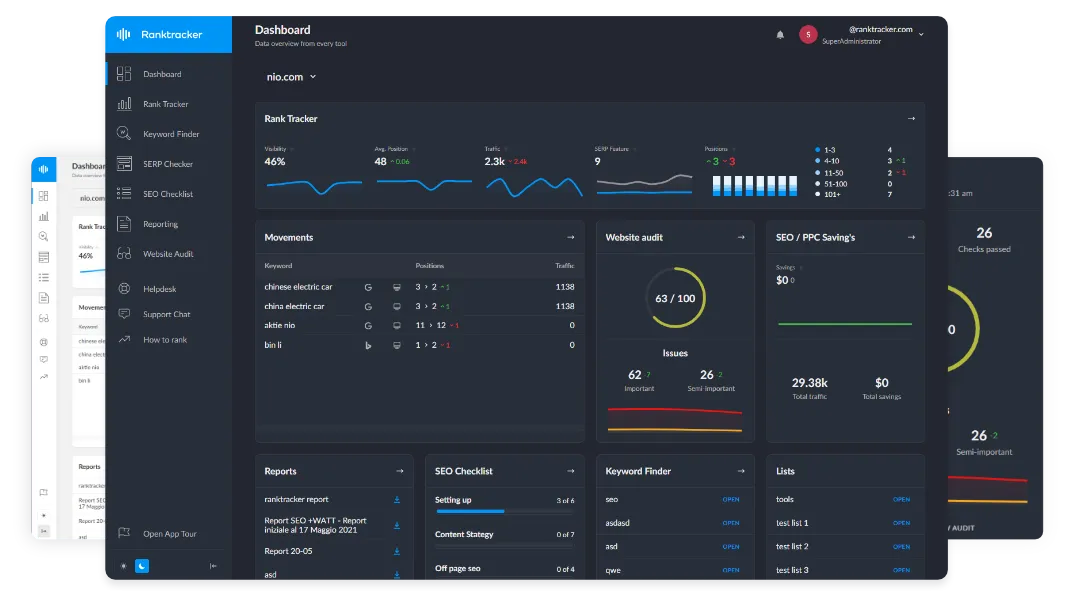
Behind every successful business is a strong SEO campaign. But with countless optimization tools and techniques out there to choose from, it can be hard to know where to start. Well, fear no more, cause I've got just the thing to help. Presenting the Ranktracker all-in-one platform for effective SEO
We have finally opened registration to Ranktracker absolutely free!
Create a free accountOr Sign in using your credentials
Full service does not remove the marketer’s responsibility for the decisions that shape the campaign. You still need to choose routes that suit the service area, approve a useful offer, and check that the page and response tracking are ready. EDDM2GO also offers a Print Only option, in which the customer handles USPS entry and postage after receiving the printed pieces. The practical choice is about where production responsibility sits. In either case, keep a record of the selected routes, final creative, destination URL, and mailing details so the later evaluation has a clear campaign reference.
Read the Results as Signals, Not Proof of Causation
Evaluate the campaign at the level of business outcomes as well as channel activity. Put campaign-page visits, form submissions, calls, and code redemptions alongside relevant search and profile activity for the same period. UTM-tagged website clicks from a Google Business Profile can be evaluated in Google Analytics; calls and direction requests are profile interactions in Google Business Profile. Those views can help you spot changes worth investigating. They cannot, by themselves, show that a particular mailing caused a later search or customer inquiry.
Where the business has enough comparable territory, consider mailing one group of routes while leaving another similar area unmailed for the initial test. Record the timing, offer, and other marketing activity in both areas, then compare inquiry patterns rather than relying on a single traffic spike. Differences in local demand, existing customer relationships, and exposure to other campaigns can still affect the result, so treat such a comparison as directional unless the test design supports a stronger conclusion. The most useful next-campaign question is specific: which routes, offers, and response paths produced evidence of interest that you can act on? Search and mail can share an acquisition plan without forcing every customer journey into a single attribution label.