
Intro
Paid and organic teams usually work from separate dashboards, separate reports, and separate assumptions about what’s working and what’s not. The SEO team knows which queries convert, but the paid team is often left guessing, running keyword research from scratch, and bidding on terms the brand already ranks for.
That’s a major gap, and that gap costs money.
With SEO data, teams can uncover real search behaviour, like which queries convert, which pages hold attention, and which terms are genuinely competitive versus which just look that way on paper. Paid media teams using this data and implementing it into their targeting decisions waste less budget and reach the right audience faster.
Here's how that actually works in practice.
1. Using organic keyword data to sharpen paid keyword targeting
Most paid search campaigns start with a keyword planner tool and a volume estimate. While a reasonable starting point, it tells you nothing about intent. Organic search data tells you more.
If a query is already driving organic traffic that converts, that’s a real signal, not just an estimate. A tool like Ranktracker's Keyword Finder shows which terms are already pulling qualified traffic to a site, with actual click-through and ranking data behind them.
The All-in-One Platform for Effective SEO
Behind every successful business is a strong SEO campaign. But with countless optimization tools and techniques out there to choose from, it can be hard to know where to start. Well, fear no more, cause I've got just the thing to help. Presenting the Ranktracker all-in-one platform for effective SEO
We have finally opened registration to Ranktracker absolutely free!
Create a free accountOr Sign in using your credentials
Look for terms with:
- Strong organic click-through rate relative to ranking position
- A consistent conversion trail (form fills, signups, purchases) tied back to that query
- Stable rankings over time, not a one-off spike
Any terms that check these boxes are worth testing in paid campaigns before those that only look promising based on raw search volume.
This is important for B2B and considered-purchase categories, where search volumes do not reveal where someone is in their buying journey.
2. Mining SERP data to avoid overpaying for keywords already winning organically
If a page already ranks in the top 3 for a term, and that ranking is stable, bidding heavily on the same term in paid search is often wasted spend. That's a click the brand could have gotten for free.
Paid and SEO teams rarely check each other's keyword lists before setting budgets, so paid campaigns end up reinforcing positions that don't need reinforcing.
With SERP tracking data, this overlap is made visible.
By cross-referencing the organic ranking report against the paid keyword list where a term already holds a strong organic position, you can redirect that budget toward terms with weaker organic visibility or genuine competitive gaps.
The All-in-One Platform for Effective SEO
Behind every successful business is a strong SEO campaign. But with countless optimization tools and techniques out there to choose from, it can be hard to know where to start. Well, fear no more, cause I've got just the thing to help. Presenting the Ranktracker all-in-one platform for effective SEO
We have finally opened registration to Ranktracker absolutely free!
Create a free accountOr Sign in using your credentials
This kind of budget logic is exactly what performance marketing teams like 9am build into their media buying process. Rather than treating paid spend as a flat allocation across a keyword list, spend gets weighted based on where organic is already doing the work and where paid needs to do the heavy lifting.
3. Identifying high-intent, low-competition keywords for cheaper paid targeting
SEO research tools are built to surface long-tail keywords with real intent behind them. These terms tend to come with two advantages for paid teams:
- Lower CPCs, since fewer advertisers are bidding on them
- Higher conversion rates, because the specificity filters for intent
An SEO team running content around "best CRM for small accounting firms" instead of just "CRM software" has already identified a more qualified audience. Paid teams can mirror that specificity in their own targeting instead of competing for the same broad, expensive terms everyone else is bidding on.
4. Using on-site search and content engagement data to refine ad audiences
What people search for once they're already on a site is one of the most underused signals in paid targeting.
On-site search queries show exactly what visitors are looking for, in their own words. Combine that with content engagement data, and you start to get a clearer audience picture. Useful signals to pull from here include:
- Top on-site search terms by volume and by conversion
- Blog posts or product pages with high time-on-page or scroll depth
- Repeat visits to the same category or product type
The type of content someone engages with also signals where they sit in the buying journey. Search behaviour generally splits into three intent types:
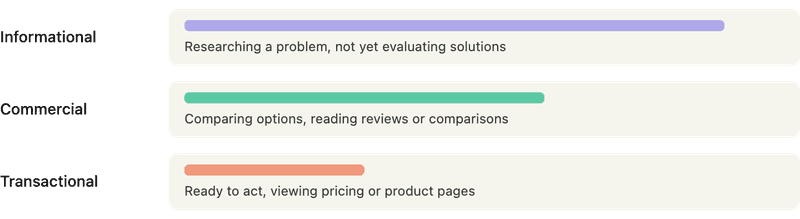
A visitor who spent a few minutes on an educational blog post belongs in a different campaign than one who looked at a pricing page twice. Paid teams can route the first into an awareness campaign and the second into a conversion-focused one, instead of putting both into the same generic retargeting pool.
Lookalike audiences built from this kind of behavioural and intent data tend to outperform broad interest-based targeting, because they're built from what people actually did, not an inferred category.
5. Aligning paid landing pages with SEO-validated content that already converts
A generic campaign landing page built specifically for a paid push often converts worse than an existing organic page that's already proven itself with real traffic over time.
If an organic page already ranks and converts well for a specific query, sending paid traffic to that same page, rather than a freshly built campaign landing page, often performs better. The page has already been refined through real user behaviour and organic search signals. It matches intent in a way a brand-new page hasn't had the chance to prove yet.
For this to happen, paid and SEO teams must actually share data on which pages are working, which is a coordination problem more than a technical one.
6. Cross-referencing SEO and paid data to catch wasted spend early
The clearest waste signal is also the easiest to miss: a brand ranks well organically for a term, but is still spending heavily on that same term in paid search with a mediocre return.
Catching this requires looking at SEO and paid performance side by side, not in separate reports reviewed by separate teams. A few checks worth running monthly include:
- Cross-reference top organic rankings against the active paid keyword list
- Flag any term with both a stable top-3 organic position and an active paid bid
- Compare paid ROAS on that term against the cost of the bid itself
This is where attribution and cross-channel measurement matter. A platform that tracks performance across channels, rather than reporting paid and organic in isolation, makes it possible to see exactly where budget is being duplicated and where it should move instead.
Without that visibility, this kind of waste can run for months before anyone notices.
7. Pulling ad messaging language directly from search queries
Most ad copy is written in brand language, but customers don't search in brand language.
Let’s say a company describes its product as a "workflow optimisation platform,” but people might be searching for "how to stop missing project deadlines" or "best tool for managing remote teams." That gap between how a brand talks and how customers search is one of the more common reasons ad copy underperforms.
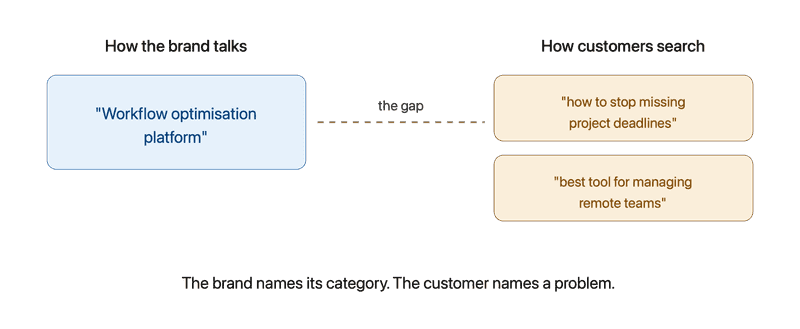
SEO research surfaces this gap directly. Keyword reports and Search Console queries show the actual phrases people use when they're trying to solve a problem, not the phrases a brand assumes they use.
Paid teams can lift this language straight into headlines and ad copy. If "reduce project delays" consistently shows up in organic queries with strong engagement, that phrase belongs in the ad, not a rewritten version of it.
This is a small change with outsized effect. Ad copy that mirrors a searcher's own words tends to read as more relevant, which usually means better click-through and lower cost per click.
Conclusion
Paid media teams getting the most out of their budgets right now aren't necessarily working with bigger budgets. They're using SEO data that was already sitting there, instead of starting every targeting decision from zero.
FAQs
What is SEO data, and how does it apply to paid media? SEO data covers organic keyword rankings, search volume, click-through rates, on-site search behaviour, and content engagement. Paid teams use this data to identify proven keywords, avoid overlapping spend, and build more accurate audience targeting.
The All-in-One Platform for Effective SEO
Behind every successful business is a strong SEO campaign. But with countless optimization tools and techniques out there to choose from, it can be hard to know where to start. Well, fear no more, cause I've got just the thing to help. Presenting the Ranktracker all-in-one platform for effective SEO
We have finally opened registration to Ranktracker absolutely free!
Create a free accountOr Sign in using your credentials
Can SEO keyword data replace paid keyword research? Not entirely. SEO data shows what's already working organically, but paid campaigns often need broader keyword coverage to reach new audiences. The two work best combined, with SEO data informing priority and intent.
How do teams avoid bidding on terms they already rank for? By cross-referencing organic ranking reports against paid keyword lists on a regular basis, ideally monthly, so budget shifts away from terms with stable top-3 organic positions.
What tools connect SEO and paid performance data?
SEO platforms like Ranktracker provide the organic side (rankings, keyword data, SERP tracking). Cross-channel analytics and attribution platforms connect that data to paid performance, so both can be reviewed together.

